

Early Photography in Colonial Australia
Early Photography in Colonial Australia provides the first substantial study of the arrival and early practice of photography in the Australian colonies. Written from a contemporary perspective, it considers these earliest photographs — their value, their entangled relationships with other elements of visual culture, their loss, and the conversations on colonial reckoning and repair to which they still belong.
The book is composed from archival research in over 70 national and international collections, consultation with First Nations communities, and discussions with First Nations artists who use historic photographic processes in their practice.
Our panel of leading writers, curators and artists who work in the field of photography and at the interface of colonial and Indigenous knowledge, examined the multiple perspectives and conversations which propel the narrative of the book.
Early Photography in Colonial Australia
Jo Ritale: Good evening everybody. Welcome to the National Library of Australia and to this wonderful event. My name is Joe Ali and I'm the branch manager of Collections here at the National Library. Before we begin, can I please ask that mobile phones are switched off or placed in silent mode? Thank you. I'd like to acknowledge Australia's First Nations peoples as the traditional owners and custodians of this land, and pay my respects to their Elders past and present, and through them to all Australian Aboriginal and Torres Strait Islander people. The Library sits on the beautiful lands of the Ngunnawal and Ngambri people. I thank them for their continued care of this place we call home and recognise that they, along with all First Australians, are the original storytellers, performers, and keepers of culture and knowledge.
It is a privilege to be here to celebrate the launch of Dr Elisa deCourcy's groundbreaking book, 'Early Photography in Colonial Australia'. The National Library is the perfect venue for this occasion as the home of collections that preserve the shared Australian story and the place where conversations about culture, memory, and identity continue to evolve.
Dr deCourcy's book offers this first substantial study of the arrival and early practise of photography in the Australian colonies. It invites us to look beyond the surface of these earliest photographs and to consider their aesthetic and historical value, their entangled relationships with visual culture and the ongoing conversations about colonial reckoning and repair to which they belong. This work draws on archival research across more than 70 national and international collections. And importantly, it is grounded in consultation with First Nations communities and dialogue with First Nations artists. A book that bridges scholarship, creativity and cultural responsibility.
Today we are honoured to hear from a distinguished panel who bring unique perspectives to these themes.
Dr Elisa deCourcy, the author of Early Photography in Colonial Australia, whose research illuminates the origins and legacies of photography in this country.
James Tylor, a contemporary multidisciplinary artist who uses photography, video, painting, drawing, sculpture, installation, sound sense and food. James's practise focuses largely on the history of 19th century Australia and its continual effect on present day issues surrounding cultural identity and the environment.
And Professor Emerita Helen Ennis, a leading scholar in photographic history and visual culture. Helen is a good friend of the library as a renowned photography curator and award-winning writer, a fellow of the Australian Academy of Humanities, Professor Emerita at the A NU Centre for Art History and Art Theory and recipient of the J Dudley Johnson Medal by the British Royal Photographic Society.
Together they will explore the multiple perspectives that propel this book, conversations about loss and recovery, about the power of images, and about the responsibilities we carry when engaging with colonial archives. Thank you for joining us here at the National Library for what promises to be a rich and thought provoking discussion. Please join me in welcoming Elisa to commence this event.
Dr Elisa deCourcy: Perfect. Thank you so much, Joe. I acknowledge the [unclear] people on whose unseated country I was born, the Ngunnawal and Ngambri People on whose country I live and work and that we meet tonight and the country of all First Nations people where this book was researched.
'Early Photography in Colonial Australia' is one of the major outcomes of my Australian Research Council early career fellowship, which I held at A NU. I found out that I received funding for this multi-year project in the summer of 2020 when fires, a direct result of climate change and land mismanagement, burnt over 90,000 hectares of bush in and around the ACT resulting in an air quality far worse than Beijing on a high pollution day. My funding kicked in during the third week of April, 2020 in incidental perfect synchronicity with the global infectious disease pandemic. And much of this book was researched through a 'Yes 'referendum turned 'No', and a gamut of other human made catastrophes.
It does not take deep research though to reify with absolute clarity that the colonial is not a past, but a present. A series of reaffirm choices made with devastating consequence.
Despite this, the story of reckoning and repair presented in this [unclear] volume is shaped by incredible kindness and conversation. It is a distillation of looking, listening, reading, and looking again and again. Rather than masquerading as a timeless hermetically sealed study, it is porous self-consciously, a product of its time when institutional collections closed and travel halted. I was fortunate to have the chance to connect with and listen to First Nations artists working with historic photographic processes. It is those conversations which open the book. They are its impetus. The work of contemporary First Nations artists calls for our critical attention of historic images, but the stories each of these artists tell are more vibrant and not purely reactionary to the restrictive colonial frame.
I'm grateful to Brenda Crot, Dany Miller, and James Tylor for their trust and conversation, and particularly James, who you'll hear from soon, who let me peer over his shoulder in the dark room.
I also want to acknowledge Craig Tuffin, who taught me to a T exactly what it takes to make a [unclear] type. When I made it to archives, curators from [unclear], Hobart to Edinburgh, Scotland took time out of their frenetic schedules to help me access and understand their collections. Their investment and generosity in sharing their knowledge made this study possible and much richer.
The title, 'Early Photography in Colonial Australia', capaciously attempts to hold two meanings. Although many of the images look physically different to our photographs, which is to say they have a physicality, they too belong to a period of seismic upheaval in visual culture, not dissimilar to the one we're currently navigating.
This book is an exercise in thinking through what that context invested in them: materially, politically, aesthetically. But these early photographs also meet us today predominantly in institutional contexts. Their structures of ownership, collection, cataloguing, and identification are themselves colonial. I made the decision early on in this project not to illustrate this book with images of First Nations people where the provenance and documentation could not trace those images to a community and rich and meaningful conversations couldn't take place. I write about forms and uses of photography that intersected with First Nations lives, like studio portraits and missionary images, but where a more fulsome and decolonial story couldn't be told, I have not illustrated those images, for risk of repeating their colonisation.
The strongest parts of this project's journey, were thinking about photographs on country with community framed by indigenous genealogies and cultural knowledge, which weren't acknowledged or collected at the time of their creation.
I would particularly like to acknowledge the 7 Menang families who met at the Museum of the Great Southern in [unclear] Albany in 2022 to speak about photographs of ancestors and Shona and Leicester coin specifically who gently prompted me to consider the minute nature of photography's temporal span in terms of the knowledge and rhythms of Country.
Shona can't be here tonight because her father had significant surgery earlier this week, and she has to be at home understandably. But I hope the conversation about this book honours her and her community's contribution to the project.
To me, and we'll talk more about this in the discussion. The Manang story changes the history of photography on this continent as we know it, but also prompts a new thinking about how we engage with colonial archives.
Lastly, this book would not have been possible without a cohort of proponents and [unclear]. Helen Ennis, who you'll hear from shortly met with me on regular intervals upstairs at Bookplate to discuss drafs and ideas while completing her own book, no less. No one has written more broadly or more sensitively about Australian photography as Helen.
Jane Leiden championed this work and me, as did Rachel Weaver and Ken Gelder, who as academic editors pushed this book's publication with Miegunyah Melbourne University Press and read and reread draughts to make sure it was accessible to a non-photo audience.
The Library here is a place where knowledge is valued, inquiry is met with curiosity and scrutiny is encouraged. I can't think of a more perfect location either to launch it. So thank you to Joe Ritale, Sharon Berkley, Kelly Arnold, Dan Gleeson, and Mike Shuttleworth and your teams for supporting this event and organising it with such grace.
It seems foreign to me that this book has my name on the front. It is a publication for me, so [unclear] with so many conversations. And in that spirit, I'd like to invite Helen and James to the front to speak to those dialogues. Thanks.
All right, so this is going to be a really casual conversation. So I mean, I guess a way to open it would be to talk about how everyone engages with historic photography in their own practise. So starting with you James, why do you evoke historic processes and what benefit do you find in your own practise in recreating them?
James Tylor: Yeah, so I kind of went to art school to be a journalist, and I also had a keen interest in history and the 2 kind of married at art school. And I sort of did this historical, and so I did my study in Adelaide and I had two really great opportunities. One, my grandmother lived there and down my grandmother's line is my Kaurna ancestry, and Adelaide is also on Kaurna land. So I had opportunity to practise culture and I also had the opportunity to study photography. But the art school there offered experimental and historical photographic processes, not the daguerreotype, which I do, but we were doing a lot of paper processes like cyanotype, Van Dyke, salt printing, and those kind of paper-based processes. But there was this emergence of tin type photography that was coming up.
And then there was a lot of, I dunno, people really valued the daguerreotype and no one really had done it, but I was really keen to try it because it sits at a very interesting time in Australian history, particularly in South Australia where it's invented in 1839, and Adelaide was colonised in 1836. So this idea that the frontier, the South Australian frontier, which is Kaurna land, would be photographed using this process, which was kind of in place for about 20 years before the tin type came in. So I was interested to know what it could have captured.
But the reality is not very much because it was a very precious process and people were still being skilled up in Europe and then moving out to the colonies. So there are some portraits of aboriginal people and other people from the South Australian colony, which Elisa can speak to more.
But essentially what is missing is the landscape. And so a lot of my practise has been these daguerreotypes of the Australian, well, the South Australian landscape, repositioning from a Kaurna perspective and just kind of re-contextualising the colonial frontier. And because the process is from that period, it sort of transcends you back to the 1830s, 1840s.
And so yeah, it's become like this, I guess photographic medium that allows us a little porthole in that time and I can kind of rework what the colonists couldn't capture. And so that gives me as a Kaurna person agency over the telling of history.
Dr Elisa deCourcy: Perfect. And can you tell us a little bit about the series that of slides that are on the screen now?
James Tylor: Yeah, so this is from Darkness of i[unclear] and essentially the places around the Adelaide region. And a lot of it's also there's a juxtaposition with bronze objects, little objects of Kaurna cultural material. And the two are having a conversation about like what wasn't documented by colonists. So for Kaurna we have about, I don't know, maybe about 10 to 15 books that have language recorded in it and probably about maybe 30 to 40 colonial journals and books that sort of reflect on what Kaurna people were going through at that time. And you've got to remember that there's thousands of colonists. So this is actually a very small amount of people who actually are interested in Aboriginal people in South Australia at the time, it's really, really quite low. Not even 1% of the people are documenting Kaurna culture.
So there's actually a lot of gap. We actually have quite a lot of cultural material, we have quite a lot of language because of the missionaries, but we probably have somewhere like 10% of that recorded in the colonial records. And so there's this gap of about 90% that I'm trying to sort of capture in these places into these Kaurna spaces and bring these objects back into play. We don't have any images of the objects, so you just have to imagine what they might look like, but here's the photos of the landscapes where they would've been taken from and where culture would've been practised.
Dr Elisa deCourcy: That's incredible. And I think that segues really nicely into Helen. I mean, your multi-decade career has been so engaged with critical archival studies. What do you see as changes in that space in the time you've been working and how have they affected your approach?
Helen Ennis: Well, that's been really great having the opportunity to come tonight and think about this very question because there's a fundamental difference between the books and work that I've done and then the books and that work that Elisa has already done. Because my research on the 19th century is totally embedded in a pre-digital era, and yours is totally embedded in the digital era in the sense that when I began working in the 1980s and 1990s, you have to remember that Google wasn't even invented. It wasn't there with us until the late 90s, and then Trove didn't come along until 2009. And so I think what Elisa and I have in common is that what the research is very much based on archives, our engagement with the physical objects, the material that's in archives, but the way that we accessed archives decades ago and the way we accessed them now is so different.
And so for me, it was always a very, very driven physical process, very material process. We were very dependent on the existing cataloguing systems, but as you will know, they were often card catalogues or there would be ledgers and even handwritten things that would be a way of accessing your material. Certainly things were registered by subjects and so on, but it meant we were very dependent on the physical, on interactions with the objects themselves, but also with librarians. Those very special people in the world because the librarians here who have taken care of the extraordinary photography collection, just taking this as an example, they would know intimately where stuff was. And so all that information that wasn't recorded, we're already talking about gaps and absences, often was held in the mind of a very astute and really efficient librarian. So there could be connections that were made in ways that are so less likely now. And I think that that is important to note.
But there are other dimensions to that research with the historical archive that were less sensory, surprisingly, because as things have become digitised, I'm just going to use The Voice as an example, I can go home, go online and listen to a photographer speaking while I'm in my room upstairs looking out the window. So there are things that the digital era has brought as other kinds of presences, physical presences, auditory experiences, and that that weren't available when I was doing my research.
But yeah, that's what I would stress the interactions with collections, the interactions with librarians, and then the building of knowledge that came so much more from what had been published because someone like me was really dependent on the primary and secondary resources that were already in the public domain. And so it was just a slow process of accretion.
What we have to remember in Australia, our first so-called history of photography didn't come out until the 1950s. And then we had to wait another 30 odd years until 1988 when 'Shades of Light' that Gail Newton wrote and 'Picturing Australia' that Anne Marie Willis wrote till they came out. So there was a long period, and then certainly there've been lots of publications since then. But Elise's is the first in all this time to actually just hone in on a small slice of the colonial experience, just those first 20 years.
So I knew when I was doing a book photography in Australia for Reaction Press, that was a field that was still so thin, so not covered, and we've had to wait a long time to have these really extraordinary insights into that.
So yeah, the way that the research has done, but where we've ended up I think is there is a lot in common that the ways that you and I would've worked.
Dr Elisa deCourcy: Yeah, thank you Helen. I just want to share because Shona is not here, but I want to kind of honour her placing this conversation as well. I think that idea that the digital has kind of allowed for the, I guess, transparency of the material in a collection to a sense. But I think lots of collections are also digitising catalogue records that are legacy objects and not always adding to them. I mean, I know the Library does that. So it's this, you kind of have to be in archival art historian as well as thinking through different digital taxonomies that could impact how you search for that material online.
And in the speech I gave at the beginning, one of the most transformative experiences for this project and for me as a person, a scholar slash slash was to think about images that literally were encased in those architectures of the institution.
So the State Library of New South Wales has a not unproblematic album called the MacArthur Album of Family Photographs, which was compiled by Arthur Onslow who came to Australia first on a surveying ship, and he was a trained photographer. And you can see the ship on this slide. And this album of salted paper prints sits in the State Library of New South Wales, but its architecture is in the context of the MacArthur family. And so its cataloguing is all about the MacArthur family and the images elsewhere in the album are about their early years in Warrane colonial Sydney. But also within that album, these pictures taken in [unclear] the most southwesterly part of the Australian continent. And so I knew when I saw these images, which of course are kind of known, they're not like secreted away, that the actual archive couldn't really flesh out their value and their meaning and bring them into the present space.
And it was taking, not the physical album because obviously that couldn't leave the Library but facsimile of those images, to country and talking about what community saw in these pictures, which was a kind of absolutely revelatory experience and being taken to the same places. And I only really tweaked on this once I left, which was that Arthur Onslow was there as part of the Herald Expedition, and he was photographing Menang people, but also the shoreline while the rest of the party was mapping the tides and documenting the depths of the sound as a place where colonial trade was prospectively going to take place. And he was really in there, that group didn't take into consideration any first Nations knowledge, and I was there with this colonial artefact asking for their interpretation, which of course just put me in a whole lineage of colonial visitors, which is an uncomfortable position to be in when you realise it.
And I was taken so graciously to see the fish traps that sat on Country that also visitors like Arthur Onslow were shown, but George Vancouver and a whole series of colonists who passed through Albany were shown. And just to think about the ingenuity and the long histories and the long knowledge of tides and currents and places that was held by oral histories and people.
And then to think about where photography sits in that, which was so tiny, but then to also look at photographs of ancestors, which I'm going to show on the next slide and see how they could be read outside the context of the album and community talked to me. And Shona and Lester talked to me about the bookers, the cloaks, and the practise in Menang culture of stretching them in the high summer so that the residue flesh on the underside was eaten away by ants in the warm summer sun. And we can see this in the pictures in of ancestors in the MacArthur album.
So they have this whole legibility that is absolutely undocumented by Arthur Onslow and the colonists who took them, but they are this document of culture that survives and oral history that recognises that culture now. And to think about those 2 economies, 1 which is this kind of colonial taking of photographs, and then 2, their value which actually exists in how they can be read now because of that inheritance.
And I think maybe that speaks to another element, which is those meeting points between different ways of
archiving. We think of archiving as physical or digital, but actually they're also verbal as well. And we need to think about those different kind of modalities and how they come together in the colonial space.
Maybe moving along. So James and I worked on a project for the National Portrait Gallery in London where we made daguerreotype. James, do you want to talk about that and why you think it's important that this is a self-portrait and what self-portraiture lets you express?
James Tylor: Yeah. Well, so this work specifically is, it's also in context to your project that you did with Craig Tuffin who did the mercury version of the daguerreotype process, which is the common practise that was done in the 19th century. I do a, one also from the 19th century, but it's a slightly different process. But on the day of the photo, we had a portrait done of my son and [unclear]. And so it was this picture of our family, and essentially it was for a project that Elisa was working on.
And then I had this opportunity just to get a photo of me in the cloak wearing the feathers that, I'd recently got gifted the feathers by an elder Uncle Michael O'Brien. And I kind of just wanted to wear the full kind of traditional Kaurnaclothing. And I got a photo of me just holding the shield, the [unclear], the feathers and the [unclear] cloak. And yeah, I asked Elisa to take a bunch of photos on my phone. And then, yeah, so this photo's actually taken by Elisa, not by me, but I'm the subject.
Dr Elisa deCourcy: You're the architect of the image.
James Tylor: I did ask.
Dr Elisa deCourcy: We could be here for 40 minutes if we discussed who pressed the shutter and who's creative agency outweighs the other.
James Tylor: That's okay. But yeah, so the outcome was that there was this portrait taken, and at the same time we were offered an opportunity to present a daguerreotype in the National Portrait Gallery in London because they actually didn't, they wanted a contemporary one to show how the process is made along with pictures of royalty and lords and stuff in London. And so the next best thing was to, they couldn't find someone in the UK, so they asked someone from the colony. And I happened to be, I was the person from the colony. So yeah, this daguerreotype got made, which do you want to go to the next slide?
Dr Elisa deCourcy: Yeah, sure.
James Tylor: So we made this daguerreotype, and this is a photo of doing it, and we did a film of it as well of how the process works. So when people are looking at these pictures of British royalty, they can then see how it's been made.
So I mean, it's quite an honour to have my work in repositioning this colonial institution in Europe against being able to have the agency to talk about both the experience as an Aboriginal person talking about how Aboriginal people were documented at that time, whilst being the practitioner that's showing them how the daguerreotype being made. It's really interesting. But yeah, it was a really good opportunity for us to work a bit more closer together and go through the process.
So just so you know what a daguerreotype is, normally I tell it at the start so people kind of know, but here's a picture of the process being made so you can kind of see it a bit better. But essentially a daguerreotype is this process where a piece of copper is polished to a mirror and then it's coated in silver and then it's polished again until it's highly reflective.
And then in the Becquerel method, you take that and you put it into a box with iodine gas, and that makes the plate light sensitive. If you're doing the mercury process, you then can also add brimonidine gas onto the plate, making it relatively faster and easier to use, but a lot more dangerous.
Then that plate is taken in a dark, put into a dark slide, which you can see in the top right hand, top left hand side up there, and then shoot it in the camera as you can see below it. And then the images then put in behind some ruby lift glass and exposed to the sun, which brings the image out. And this is where the two processes, Becquerel and mercury differ. The mercury process used mercury gas, which is really dangerous, which killed a lot of photographers in that period or made them quite unwell.
So I don't use that. I use this other method, it's a bit slower, but with digital technology, like the fact that I could take the image off the phone and print it essentially means I can make the process a bit safer, but still giving you the same image experience or almost the same image experience. And then the images then fixed with sodium sulphate, then it's put into a gold chloride solution, heated up to a certain temperature and the gold bonds with the silver and makes it quite stable because gold being one of the more stable elements with one of the most reactive metals being silver. The 2 essentially stabilise it, you put it behind glass and you keep it sealed up.
And they rushed them a lot in the old days. So they deteriorate over time a lot depending on how well the photographer were doing the processes back then.
Dr Elisa deCourcy:
And how well they're sealed as well.
James Tylor: Yeah, so there's all these other things. A lot of them are not fully trained properly, so they're making mistakes, not fully understanding the chemistry. And so yeah, these days we know a lot more about them, they're a lot more stable. But yeah, essentially, yeah, this was a good opportunity to sort of reposition the colonial process of the daguerreotype against images in Europe.
Dr Elisa deCourcy: Do you just want to talk briefly about the physicality of this image and your choice in the lining and how that?
James Tylor: No, no, no. I'll, no.
Dr Elisa deCourcy: For people who might not have seen historic images,
James Tylor: So they come in these beautiful cases historically, I don't normally display them this way. This is kind of more in the legacy of the process and the tradition of the process are these beautiful little leather cases. They're made out of wood, then they're lined with really thin leather, and then normally inside they have red velvet. And then essentially that, yeah, so this case was made by Craig Tuffin and the photographer I mentioned earlier, and we decided to put some grey kangaroo, skin, fur on the inside, which is the same thing as the cloak that I'm wearing. So I kind of wanted to have the physicality of the cloak present, so my body present. It was the idea of it.
Dr Elisa deCourcy: Perfect. Thanks.
Helen Ennis: Could I just say I've been lucky enough to go into that room at the National Portrait Gallery. It was done at a time when the Portrait Gallery was thinking about the whole decolonization project, but how to represent England or the United Kingdom as empire, but also what the colonial project meant for portraiture obviously. And Magda Keeney, who was the Senior Curator of Photography, put together that room.
And what is so interesting, what I found so fascinating seeing your work in there is of course it's all the stool photographs. The portraits are there, and then you have this little subversion, which is the video that is there where these 2 are talking and are present. So you have this whole double vision about the past where things from the historical past and things from the living present are in that room, and the whole disruption is through the living presence in fact of you with your work. So it functions incredibly well, I thought in its subversion because of this whole temporal mixing up that happens because your work itself is dealing with the past and the present, the kind of legacies, but physically you 2 are there in the process video.
Dr Elisa deCourcy: That's so nice to hear because neither James or I actually saw the exhibition.
James Tylor: Never saw it.
Helen Ennis: It worked so well.
James Tylor: But I think a lot of Aboriginal artists will use these kind of processes, colonial processes. And because history and culture is so important to us that unlike the colonial project that moves in this linear thing and drops technologies as it goes along, as it picks new ones up, and then you get some people who are interested in these old processes, I think that's different for Aboriginal people is that this is actually still part of our history. It's still something that's being practised. So when you're making a shield, a club, a cloak, it's no different to making a daguerreotype.
Essentially you are still practising your culture. So they're essentially, they're vessels that allowed us to communicate, but they're still important to us because they tell us a story about the past. If it's making food, specifical, colonial foods or anything like that, it does come back to how did that happen? And this is the same thing, so don't see it as being different.
But I do think that often it's not quite valued in the same way by a western audience or even in Australia, that these processes are as important as a practise of telling history, yeah.
Dr Elisa deCourcy: That's interesting. Maybe Helen, we'll come back to what you were saying earlier about archival research and stories that were perhaps marginalised from the archive. Picking up on what James just said, now you are a biographer of women's stories as well. Do you want to talk about this photograph that you have in the beginning of your Olive Cotton biography and how it's kind of lit motif for your research more generally?
Helen Ennis: Sure. So I've said about starting points always being photographs themselves and the kind of physical engagement with them. But what we've seen in recent years, which is incredibly exciting, is the expansion, if you like, of our evidence base, what we might think of as what constitutes documents. And this is crucial for an understanding of women's work because there is not a lot of photography by women that is apparent from the 19th century. And there've been fantastic efforts, the whole global effort now to uncover global histories of women's photography. But you can't just use a standard methodology, look for the standard documents and that, because women might not have traversed the same or had the same kind of power publicly that their work might not have ever been spoken about by them or by others. So you really have to adapt your methodology, I think. And if we go back to the digital, of course, a lot more in different kinds of documents are coming into play.
And so for you, even with the 1840s to 1860s, you have a really expanded text base that wouldn't have been available to someone like me 30, 40 years ago. It could be patents, it could be letters. It's so different.
But we can't assume that all those things have been catalogued in the same way either because here we are referring to library and archival collections, but they're of course important works in the National Gallery's collection in 19th century objects, and they've been catalogued differently and available differently and at different times. So it goes like this.
But what I've had to find, I think is just new ways then of dealing with archives and understanding archives. You use the word capacious. It's a word I like too, because that for me, Olive Cotton who was a photographer who had a high profile in the 1930s, but within the limits of a male dominated society. And then she does disappear from view, however we like to look at it. But she had that trunk, and inside that trunk was all sorts of stuff that came from her Sydney life when she did have that high profile. So personal documents, programmes of musical concerts, music and different things she'd attended in Sydney.
But it was so random and so such a surprise because that's just on the porch of the dilapidated house that she had lived moved to in Cowra in central New South Wales where she spent a long time in her life. But that thing for me was revelatory.
There's this idea comes from Christian Boltanski. For me, it's influenced a lot of my archival research where he says he's not interested in history with a capital 'H' or memories with a capital 'M', but little memory, emotional memory. And so it's memories with the little 'm's, and that's what I'm interested to. It's not the grand events and the great things. So the encounters with ordinary things that are very prosaic and have a lot of power are important. And that made me think about the expanded archive.
So it wasn't just the fact of Olive Cotton's photographs, but it was also Olive Cotton's house, the yard where she had lived and places where even where she was absent and what that might mean.
So I now consider gossip, anecdote, all sorts of things as part of an archive. I'm not just looking at official documents because if we need to represent the rich full lives that women have led, and you just have to look at the idea of document and archive quite differently if you want to be able to accommodate that.
Dr Elisa deCourcy: Yeah, definitely. I have 2 women photographers in this book. One, we don't have any photographs surviving from. And it's a real, I mean, it really tests your kind of training as an art historian to think about the threshold of what you can say about things where you have no reference. No women's, Theresa Walker who I talk about, we don't have her photographs. We have secondhand knowledge of her images in the letters of men. So she can't speak for her own practise, but we also don't have any examples of her practise.
But I still think it's worth documenting as something that happened. And just how you deal with that kind of as honestly as possible, while throwing speculation on what it could have been like for her and what her practise meant in a secondhand nature to the people who saw it.
And the other woman photographer I talk about is Louisa [unclear], who, I'll give you the briefest of brief versions running out of time. And actually we have heaps more slides, but Louisa [unclear] is incredible because she migrates to the colonies. She's trained as a miler. She's part of the working poor in London. She marries a labourer and her fortunes in Colonial Australia, specifically in [unclear] country and then in [unclear] country, so in Victoria and then in New South Wales, skyrocket because she's a free settler.
So she produces this album of salted paper prints made from colonial negatives, but it's for herself, it's not for publication or presentation. And it operates to something of a guest book for people that come through her house. We have no letters by Louisa. She has absolutely no archival images other than this album. So this is kind of like my trunk, I guess.
But we have a whole raft of other information about the photographic practises in the male dominated sphere that are happening around her. And I think she's an interesting figure. She's not a heroine in the book by any sense of the term. I mean her rising fortunes and her ability to practise photography are based on a commercial benefit from the colonial project. Her husband's involved in a maritime enterprise. He's leasing out warves on unceded [unclear] country, so I definitely don't want to glorify her. But she's also ostracised from kind of an official colonial photographic record that was underway by this point. So she's not participating in the land survey movement or anything like that. She has this domestic practise which is totally bound to her house. And if we had more time, we could talk about how important porches are to the history of women's photography in Australia, but just keep that for your own exploration.
So she lives in Carig or country very close to where Kirribilli House is now, and she sets up this mock studio on her sandstone balcony. And when she has guests coming, she takes their picture and they're all kind of very quirky images. And she's obviously looking and listening to the photography that's happening in colonial Sydney around her, but she's not part of those fraternities where the official discussions are taking place.
And just to think about how we consider her pictures, they're not made for an audience outside her family, but I think they're still really significant because they tell us so much about a conversation that she's kind of hosting about photography. And that's really exciting to me to think about trying to recover her practise and her voice where we have, at least in this case, her images, but definitely not her voice, what she was thinking, how many attempts she was making and how she trained herself or who trained her in this process.
We might keep on moving along. So narratives of place and country are obviously really key to the colonial period. Helen, you've written a lot about this in terms of a photographer called Charles Bayliss where you make a really evocative argument about how photography is part of, I guess, how the colonial psyche imagines land and how it imagines land as available. Do you want to talk a little bit more about that?
Helen Ennis: Look, I won't say much, but someone like Bayliss, that's right, in the 1870s, he is just in one way just perpetuating the settler vision, which is that the land is there for the taking. There is no acknowledgement of prior settlement at all or the violence of the frontier wars or anything like that. But he is somebody who comes to us as a small boy. He grew up in Australia from 4 or 5-year-old at the time when most of the photographers who came were itinerant when they came, and then they went, they made their money. So he's one of those really important ones who stays here.
But I guess I was relating his interest in these expansive spaces and the kind of beginnings of settlement in some of the places that he photographed was to an idea about modernity. There's something about the emptiness that I also was relating to. Contingency, the beginnings of settlement, not just a triumphal list, settler narrative, although it is that, but something in his work that disrupts that a bit because there's something very poetic about things. But the settlements, often the things don't look so solid, they look ordinary.
And this is one of our. I think you've got to take into account what was unique about Australian photography in this whole period, not just looking at us in relation to the work overseas, which of course much easier to do now, but you see that provisionality, that contingency in a lot of photographs.
Sure, we celebrate the sublime and the spectacular. It's only such a tiny part of what was done. There's so much more that's so ordinary. And then how do we accommodate ordinary into a nationalist narrative or a narrative about nation?
Dr Elisa deCourcy: Yeah, I think that comes back to James's point in the beginning, that land is really pictured on the doorsteps of studios. It's not taken out in the expanse of the land, and we see really the periphery of the city in a way that European photography doesn't present.
Helen Ennis: That's right.
Dr Elisa deCourcy: European photography is that kind of Dickensian view of density and urban smog and soot. Whereas I think Australian photography, colonial Australian photography is about the colonial project in creation, which is actually what makes it so haunting because we all know what comes next, what happens after the picture is developed.
And I think that's something really interesting that you picked up on is that the photograph then itself, the act of photographing, is also an emptying out because lots of these processes relied on such long exposure times. Like James said, the Bayliss panoramas that Helen was talking about, people are moving. You can't stage people in a panorama to stand still. So there's a literal depopulation of the landscape happening as a incidental result of the technology. And I think as we move through the colonial period, this has really weaponized lots of the early salter paper prints, which is the technology, unlike the daguerreotype that could have be taken further out along the colonial frontier. Really, the photographs themselves, like the physicality and the processes and emptying out as well as the view of the subject that they're picturing
Helen Ennis: And materially, they're almost fugitive. They're only just still there. Some of them, aren't they, you get the sense of that.
Dr Elisa deCourcy: Definitely.
Helen Ennis: They're almost disappearing before our eyes.
Dr Elisa deCourcy: Yeah. And how you reconcile that materiality with of course, how they were used and what vision to use, your title, what vision they presented. And James, your work really thinks about responding to that. And I guess lots of the images that I encountered in my archival research, they're annotated on the back with colonial names or they're annotated with processes, they're literal physical renaming of these places that already have First Nations names. And James's work well, I'll let you talk to that.
James Tylor: Yeah. So this series is, we call this Place [unclear], but essentially the idea is that I was also doing a lot of, I was doing my PhD on place names, Northern Kaurna Place names specifically, and Chester Schultz was another historian who worked with our community to do the southern ones. So I worked really closely with him on these bodies of work, but it was about this idea of repositioning these places by putting the names of the places back in the locations where they're from.
So it was a bit of me going, taking photos and asking, is this the correct name? Because a lot of the time it was quite vague, the colonial record, when it's documenting Aboriginal life on the colonial frontier, it's actually not very accurate. It's very vague. We often say, oh, that wasn't the right word, or whatever. And that is sometimes the case. Sometimes it's a displaced name. You see it with Noarlunga in Adelaide. Noarlunga is actually a place that's about 5 kilometres away at Old Noarlunga. And the name just got displaced as the port moved down, as they moved closer to the port.
And so yeah, it was a bit of work of finding important Kaurna places, places that had European names imposed on them, and then decolonising them by putting the text back in. The text is really important, the style, the font. So when I was researching this project, there was a lot of letters written by kids in the first mission in Adelaide. So with the story of missions, you get Wybalena happening first, and then this idea that this could be replicated on the mainland. And then the first place they replicated it was in the Adelaide Park Lands at a place called [unclear]. It means possum house. But it was where everyone from the Adelaide region was pushed onto so that the land could be sold and then sold and renamed.
And so this idea of taking the same font style as the kids were writing and recording Kaurna language for the first time in written script, I then imposed that onto these images. So in a way, it's like the children writing them, or at least Kaurna people from that period writing the names back into the daguerreotype.
Just one other interesting fact, it's actually not a 19th century script, it's an 18th century script because the missionaries were German, and then they were learning a script that was a hundred years older because they were learning English in Germany and then coming out to the colonies. So because everything moves slower, a hundred years slower, they learned this 18th century script.
So yeah, and Kaurna was first recorded in the missionaries writing in this 18th century script, but then so did, Kaurna people were writing letters to, I think to the governor. There might've been one to the royal family, I can't remember. But there was essentially a lot of letters written to very specific people in colonial administration of Britain.
But yeah, I just kind of wanted to put these names back where they belong and they are, the most important thing is Adelaide's really a fortunate place in many ways that the Kaurna community had started this project independently back in the 90s. And then for whatever reason, as the social politics changed, the Adelaide Council wanted to start doing dual place names like they were doing in New Zealand. And when they approached the Kaurna community, we were like, we're ready for this. Because the Kaurna community tried originally and they knocked it back, but then once they wanted it just were like, we've done all the research, here you go. And then there's this been this methodical renaming of or naming back the place Kaurna places, which has been a really amazing project, which has brought Kaurna language back, makes it easier for someone like me who's learning Kaurna language to practise it.
Yeah, and these names are really important, like [unclear] means stinky place. They say it's a contemporary colonial name because the offal coming off the whaling station at [unclear], which is on [unclear] country, but it's also on [unclear] country. They had a whaling station there before the Adelaide colony, and the offal would come around and then land on that bay. [unclear]. It's actually the same current that brought the algae from the darling and the Murray in and into the St. Vincent's Gulf that's killed all the fish. So that's that current flow. It's the same one that was getting the offal coming up onto the beach and stinking [unclear].
Then [unclear]. So yeah, Pintingga means dead, dead people, grave or white people. And actually, so Kangaroo Island is called Pintingga, but so is Europe because it's the dead place or the place where these people came from. So it has the same name, but for us it's really important because Kaurna people buried in the South, always face towards the island. The way that your ancestors leave before going up into the sky, then becoming stars, and then becoming important figures in basically this celestial landscape of stories. So these names are really important. And Kangaroo Island's just named, I literally was reading it yesterday. It was just because they slaughtered a lot of kangaroos on the Flinders Expedition and on the second day they called it a massacre. They killed that many kangaroos. So it's got this really nice name, but it's actually on the back of massacring kangaroos, and that's the words that they were using.
So for us, there's a nice unity there, but equally we think our names are more important. We also call it Karta which means lap for the, which they do think that that's when they used to take aboriginal women there and used as sexual slaves during the whaling period because there was a slavery trade. So all these names have very important signifies to our history. So the importance of language is important. So being able to put that back over these 19th century photographs is really important.
Dr Elisa deCourcy: I think we could keep on talking for many hours, but I think it's probably about time to throw to questions in the few minutes that we have left. So if anyone has any questions,
Audience member 1: James, I'm curious to know that when you were for the daguerreot-y, how do you say it?
James Tylor: Daguerreotype. It's okay. People mess it up all the time. It's fine.
Audience member 1: Did you have to be, I know that people in the past had to have a stand or they were wrapped around to keep them still because the process takes minutes. Did you have to go through that?
James Tylor: Yeah, yeah. So I have done a few over the years.
Dr Elisa deCourcy: We did that with the one we did with Craig.
James Tylor: Yeah. So I was going to say not the one that was present on the slide, that was digital photographs. So just did it on the phone perfectly fine. But for Craig's one, yes, we did have to have, I can't remember what the apparatus was that we had. Did we have a traditional one?
Dr Elisa deCourcy:
Yeah, there was a headstand. And this other image is actually in the Portrait Gallery in Canberra. With your son/
James Tylor: Yeah, with Mark, my son.
Dr Elisa deCourcy: Yes.
James Tylor: And he was not having a great time, and so he is moving.
Dr Elisa deCourcy: It is like the perfect mistake because [unclar]'s little face has moved during the exposure. So he's this cute tiny blur, which really speaks to the durational process of the photograph. Whereas you and Rebecca have really champion staying still for a long time. So you have these different registers of movement.
James Tylor: And to Rebecca's credit, she had her teeth out and her face was swollen, and then Mark who's like this and then whack right into her face and you just this. So it was a pretty funny, and it was hard. I think even my cloak moved and it was really hard to stay still for that long.
Dr Elisa deCourcy: And I mean, Helen was also involved in that portrait exercise I guess, so she could perhaps talk to this too, but it's really hard to hold your face in this, as a smile or really any attitude. So I mean, we think people in the 19th century look really full on and sad, and that may well be the case, but it is actually much easier to hold a neutral expression that it is to hold a smile. And so photographers were training their customers to hold neutral expressions because of exactly what you said, that the exposure takes so long.
Audience member 1: How long was it?
Dr Elisa deCourcy: Well, the daguerreotypes that we did were a minute and a half, and you just have to breathe really shallowly too, because obviously you can't hold your breath for a minute and a half. But unless you're a kind of iron person. You breathe, you move. So incidentally as part of your normal just being in the world, it's really hard to be still, I think Helen, if you have any.
Helen Ennis: Yeah, I agree. Absolutely. It's when you want your chair and you want the table, you actually need a solid objects, don't you, to sort of position yourself against, because your own body feels weirdly wobbly. So you do want supports.
James Tylor: And with the Becquerel process, that's the mercury process. And that's how fast the mercury is. A minute and a half. I remember having, I don't do them very often, real life portraits because they just, they're like 7 minutes for a Becquerel. And I had think Mark had lean up against the wall who's a Australian photographer, and he was leaning there, and even he was so still because he loved the process, he just really wanted a portrait of himself, and he essentially just, he's got a beautiful collection of them, but he was just sitting there and even just the soft little bit of breath was enough just to blur the entire photo. And he had to stay there for 7 minutes in full sun. And it was just him being beamed by the sun on a Adelaide summer day. It was full on.
Dr Elisa deCourcy: And I think that's actually a really important point that you've illuminated that this is a foreign technology. It is invented in smoggy, soot filled environments. And for at least the first, I write about this in the book, at least the first half decade of practise in the colonies, photographers had to recalibrate exposure times because especially in the high summer, you are beamed with light in a way that the people who were training them, it was completely foreign to them. And so the first experiences of recorded portraits, people say, oh, I look kind of sick or unwell or cadaverous is one of the expressions used because they're overexposed. There's too much light. So light is such an important topic, not just to photography generally, but particularly to photography in Australia. Sunlight. Yeah.
Audience member 1: Thank you.
Dr Elisa deCourcy: I can't quite see.
Staff member: I have a question. If there are no other questions, is that allowed, Dan? You all kind of spoke about how the technology of photography takes things, it takes people out of long exposure, landscapes, it takes, the photographs get taken out of the leather enclosures. What kind of considerations are taken by the fact that photography is inherently an extractive process in that the silver gets removed from the ground and transformed into silver nitrate?
Dr Elisa deCourcy: That is a great question and a really hot topic in art history at the moment. And I allude to it a little bit in the book. I mean copper, the daguerreotype substrate, South Australia is the third largest copper mining location in the world. And copper from [unclear] land is mined and taken back, made into photographic plates in London, in the Cornwell smelters, and then sent back here to use in those processes. So there's a whole lot of material economies. Paper is rag trade paper in the late 18th and early 19th century, but then it changes to be much more feasible to have timber based papers. And of course those are used as substrates. There is no possible way you can divorce those larger economies of the colonial space from the materiality of photography specifically. But I think if we really dig deep colonial art more generally, as a short answer,
James Tylor: I made a body of work last year or the year before based on mining, and the sites of mine sites in Adelaide, which could have made the daguerreotype was based on. Curator Lee Rob, who has a history in mining with her dad, but was looking at the idea that these precious metals make these photographs, but they're actually documenting the colonial frontier, and she called it where the sun meets the Earth, being that these come from big bangs and stuff like that and so they had quite precious resources. And essentially, yeah, the colonial frontier of Adelaide was mining the photographs that would be taking it and then documenting it.
And these mines made so much money. BHP made most of its money in the Second World War for selling lead for bullets in the First World War, and it's one of the biggest mining companies, so this extractive resource on this, and they came through the South Australian colony. So essentially they're just reaping the benefits of it. And I mean, for photography it's something very different. But for BHP, they've made a lot for that industry. But yeah, these smaller mines, like the ones in Kadina, Moonta and Wallaroo in the Copper Triangle and Narungga country, yeah, we'd use some of those photos as well. But they essentially end up making these, which is super interesting.
Dr Elisa deCourcy: And I mean, there is so many synergies if you think about nuggets and the gold rush being the subjects of the photographs, but also materially embroiled in the materiality of the process, like James was saying. And the same goes for copper and silver. So there are all these circularity, definitely.
Jo Ritale: Okay, I'm really sorry, but we have run out of time and I know that a lot of you will want to purchase a copy of the book and have it signed. So we do need to leave a little bit of time for that.
So I just want to thank Elisa, James and Helen for that fascinating conversation. I think it was a really insightful exploration of early photography and the profound impact of imagery from this period, but also contextualising it in a modern context as well. Also, thank you for, I know we only had a couple of questions, but thank you for those.
So as I said, Elisa will now be valuable to sign copies of the book in the foyer. So I invite you all to join us for refreshments and also to continue the conversation upstairs. And you can purchase a copy of her book from the bookshop upstairs. So please join me again in thanking Elisa, James and Helen.
About the author
Dr Elisa deCourcy is a writer and curator living and working on Ngunnawal and Ngambri Country. Between 2020 and 2023 she was an Australian Research Council DECRA fellow at the Centre for Art History and Art Theory at the Australian National University. This book is a major outcome of this project. Elisa has written about photography and colonial art for the National Portrait Gallery, London; the Musée du quai Branly, Paris and the National Gallery of Victoria, as well as a range of national and international scholarly journals.
About the speakers
Shona Coyne
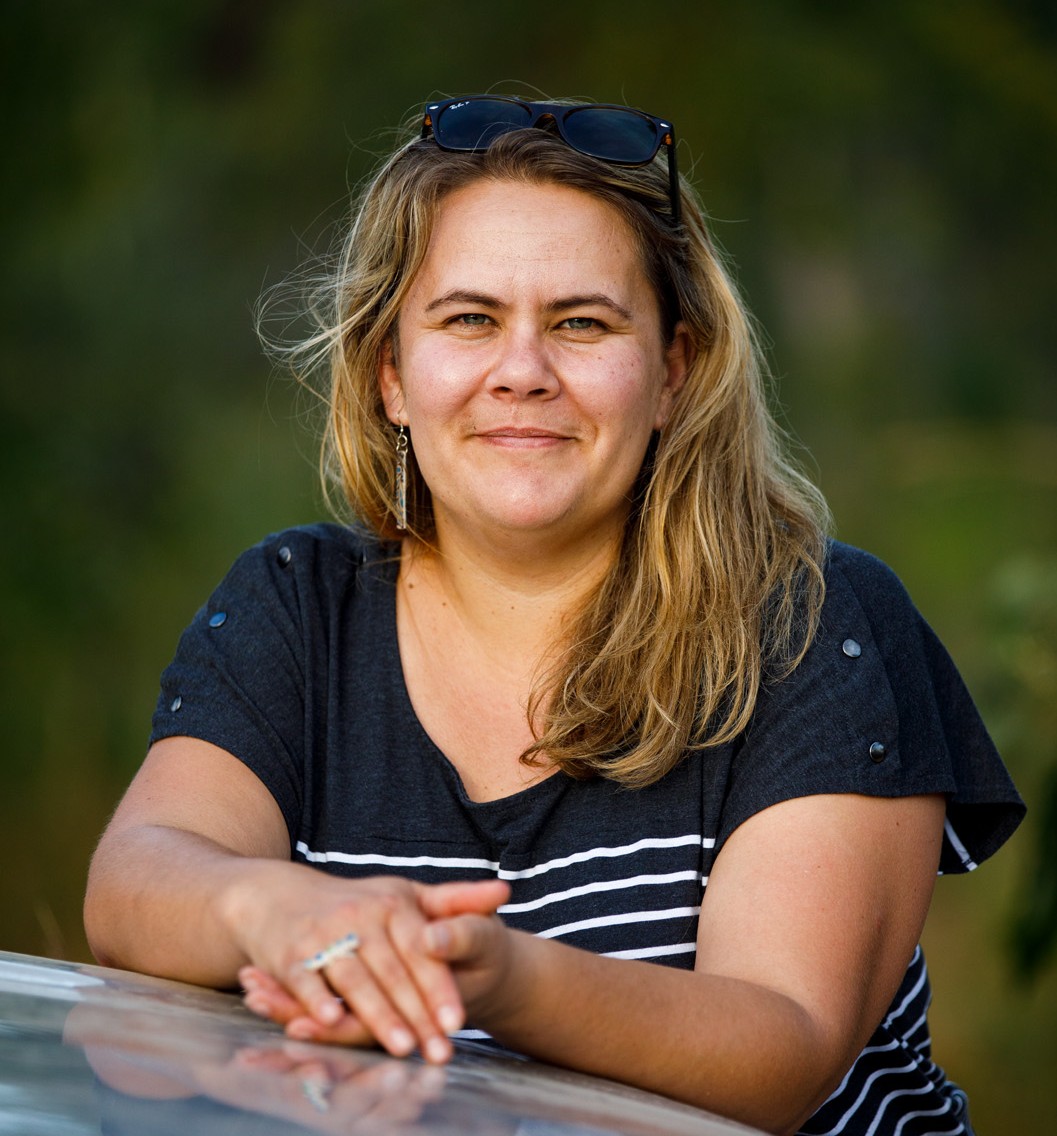
Shona Coyne of Menang Noongar and Scottish heritage, is Manager of First Nations Outreach and Senior Curator at the National Museum of Australia, where she works at the meeting point of community knowledge, museum practice, and research. She is currently leading Kalyagul: Connections to Menang Country, a major 2026 exhibition with the Museum of the Great Southern that places Menang voices and cultural knowledge at its heart through collaboration with Elders, community members, scientists, and historians.
James Tylor
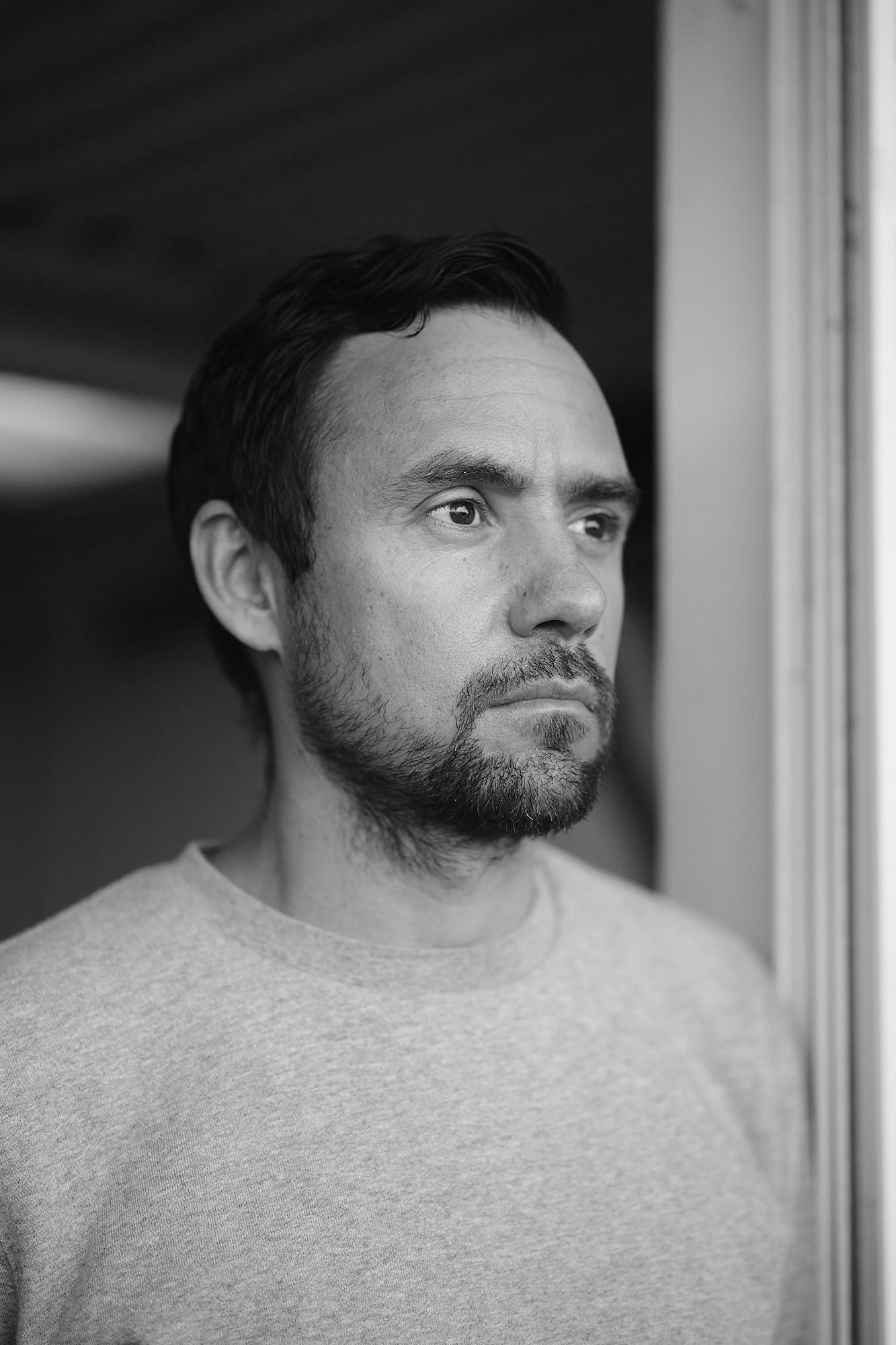
James Tylor is a multi-disciplinary visual artist whose practice explores Australian environment, culture and social history. These mediums include photography, video, painting, drawing, sculpture, installation, sound, scents and food. He explores Australian cultural representations through the perspectives of his multicultural heritage that comprises Nunga (Kaurna Miyurna), Māori (Te Arawa) and European ancestry. Tylor’s work focuses largely on the history of 19th century Australia and its continual effect on present day issues surrounding cultural identity and the environment. His research, writing and artistic practice has focused most specifically on Kaurna indigenous culture from the Adelaide Plains region of South Australia and, more broadly, European colonial history in Southern Australia.
Professor Emerita Helen Ennis
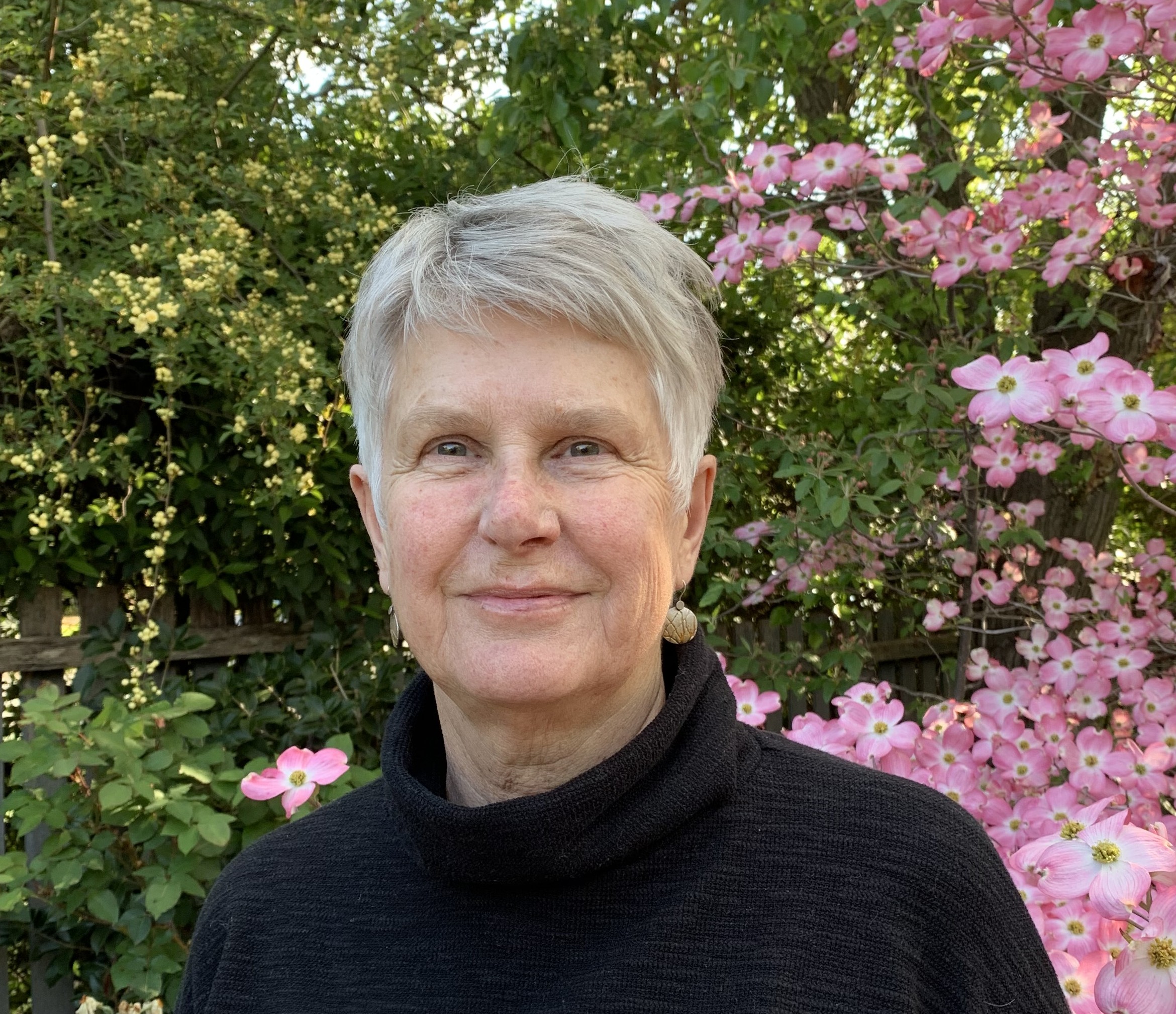
Professor Emerita Helen Ennis is a photo-historian and writer who explores the complex relationships between art and life. She was formerly Curator of Photography at the National Gallery of Australia and has curated numerous exhibitions for the NGA, the National Portrait Gallery and the National Library of Australia. Her many books include Photography and Australia and Reveries: Photography and Mortality. In recent years she has published three acclaimed biographies: Margaret Michaelis: Love, loss and photography, Olive Cotton: A life in photography, and Max Dupain: A Portrait. Helen was Director of the Centre for Art History and Art Theory at ANU School of Art & Design from 2014-18 and is now Professor Emerita.

 Assistance animals welcome

 Hearing induction loop

 Wheelchair accessible
Visit us
Find our opening times, get directions, join a tour, or dine and shop with us.