

Book launch - Double Act: Eirene Mort and Nora Kate Weston
Dr Sylvia Martin launched her new book about prominent Australian artists Eirene Mort and Nora Kate Weston, and their incredible 60-year creative partnership.
Eirene Mort studied art in London, returning to Sydney in 1903. Three years later, she met Nora Kate Weston, whose skills complemented her own. These dynamic ‘New Women’ shared their lives as artist and artisan for sixty years. To their families, they were known simply as ‘The Aunts’.
In their twenties, Nora and Eirene opened a professional studio in the city, where they worked and mentored students, held exhibitions and sold their artefacts. Eirene was better known, as a designer and etcher whose work is held in Australia’s leading collecting institutions, but she regarded their work as a collaboration, with Nora a skilled carpenter, woodcarver and metalworker.
In this illustrated joint biography from NLA Publishing, Margarey-Medal-award-winning biographer Dr Sylvia Martin combines elements of memoir and meta-biography to paint a rich portrait of the shared lives of Eirene Mort and Nora Kate Weston.
Entry to this event was free but bookings were essential as Sylvia was signing books in the Library foyer following the discussion.
Book launch - Double Act: Eirene Mort and Nora Kate Weston
Lauren Smith:
Good evening everyone and a very warm welcome to the National Library of Australia. Thank you for joining us in person and online to celebrate a remarkable new book and two extraordinary Australian artists. My name is Lauren Smith. I am the Assistant Director of publishing here at the Library and I had the absolute pleasure of working with Sylvia on this book. We're thrilled to be launching it here tonight, officially out yesterday, but this is the real spiritual start, I suppose, of the book in the public world. I would like to begin by acknowledging the traditional custodians of the land on which we gather, the NNgunnawal and Ngambri peoples. I pay my respects to the Elders past and present, and I extend that respect to all First Nations people joining us. Here at the library, a place dedicated to collecting, preserving, and sharing stories it feels especially important to honour the world's oldest continuous storytellers.
For more than 65,000 years, Aboriginal and Torres Strait Islander peoples have cared for country, passed on knowledge, and sustained rich cultural traditions through language, art, and narrative. As we celebrate the stories held within this building, we recognise that they sit alongside the deep histories and living cultures of First Nations communities. May we continue to listen to, learn from, and walk respectfully with the traditional custodians of this land. We are, of course, here tonight to celebrate the launch of this beautifully crafted biography by Dr. Sylvia Martin. Sylvia is an award-winning biographer whose work shines a light on the private lives of talented women, often women whose contributions have been overlooked or under-recognized, including Ida Leason and Mary Fullerton. Her thoughtful, meticulous approach brings Eirene and Nora's world to life with warmth, nuance, and deep respect. Eirene Mort and Nora Weston's creative partnership spanned six decades, an artistic, intimate, and deeply collaborative life lived together.
Their story is one of talent, innovation, companionship, and a quiet but powerful influence on Australian art and design. Together, they built a life that defied convention. They opened a professional studio in their 20s, mentored students, exhibited widely, and produced work that blended artistry and craftsmanship in ways that still feel fresh today. The library holds Eirene Mort's papers in our collection, a wonderfully rich assemblage of albums filled with drawings and verse along with loose letters, cuttings, photographs, exhibition catalogues, book plates, artworks, and research notes. I'm delighted to share that this remarkable trove of ephemera is currently being digitised, which means that soon Eirene's papers will be accessible online to readers, researchers, and admirers around the world. Joining Sylvia in conversation tonight is Professor Frank Bongiorno, one of Australia's most distinguished historians. Frank's work explores the social and cultural fabric of Australian life, making him the perfect person to delve into the world that's shaped and was shaped by Eirene Mort and Nora Weston.
Please join me in welcoming Sylvia and Frank. Thanks.
Frank Bongiorno:
Great. Well, thanks so much, Lauren, for a lovely introduction. Thank you. And first of all, Sylvia, congratulations on Double Act. I should also thank you, the National Library too, because it's a great read, but it's the most beautiful book. I mean, as you'll see as you flick through it, I mean, as a book, it's a wonderful production and lavishly, beautifully illustrated. Yes. But I wanted to begin by asking you what prompted your interest in Eirene Mort and Nora Kate, "Chips".
Sylvia Martin:
Chips
Frank Bongiorno:
Weston. Chips Weston. We've already had a clue, I think, in what Lauren had to say, but I wonder if you could say a little bit
Sylvia Martin:
More. Yeah. It's actually not an easy question, Frank, because you go back and you think, "Where did this start?" And I try to remember
What actually set me off. And I have, over the years, I have files on women of the early 20th century that I think, "Oh, they look really interesting." And I think that I can actually go back to the photograph of the two women that's actually on the back of the book. Well, a part of it's on the back of the book, these two amazing young women dressed in 'new woman' garb of the tie and the simple blouse and the long skirt. But it's a very intriguing photo because there's all sorts of contradictions in it. There's these beautiful plain clothes and then there's amazing elaborate coiffure on their heads of Edwardian hairdos.
Frank Bongiorno:
There it is.
Sylvia Martin:
They are incredible. And there's a lot more intriguing things in the photograph that I won't go into now, but it just caught my eye and didn't go away. And I was working on other projects at the time when I found that, and it really was quite a while before I got back to it. And in fact, four years ago today, I found out from my social media, because it reminded me, I went to Melbourne to accept a highly commended Hazel Rolley Fellowship Award, which meant that I had funding and it sort of said, "Sylvia, you've got to get on with this. " And that also at that stage, COVID had just sort of subsided a bit. This is in 2022, and I could actually come to the National Library from New South Wales where I live because I couldn't get to the library before that. And so that was where this all started.
Frank Bongiorno:
So who were they?
Sylvia Martin:
Who were
Frank Bongiorno:
These talented-
Sylvia Martin:
Yeah. Yeah.
Frank Bongiorno:
Who were
Sylvia Martin:
They? They were born within six months of each other in the end of ... Eirene was born at the end of 1879, Nora in 1880, and they come from, both of them come from quite illustrious colonial settler families. Eirene's great uncles were Thomas Sutcliffe Mort and Henry Mort, who had a big influence on pastoral, both pastoral parts and business in the case of Thomas Sutcliffe Mort. And Nora, her great-grandfather was George Johnson, who came out on the first fleet. And so her-
Frank Bongiorno:
Perpetrator of our only military coup to date. The rum rebellion. I know. Well, co-perpetrator with John Macarthur, we should perhaps say.
Sylvia Martin:
Yeah. So they were actually very proud of their forebears, and they both grew up in ... Well, Nora grew up in Parramatta, Eirene grew up in Sydney. Nora was in much more straitened circumstances than Eirene because her father died when she was six years old and left nine children. And yeah, nine children ranged from 21 down to three, I think. So she had a much more difficult life. And they met when they were in their mid- 20s, not quite sure how, as part of the Sydney art scene, Eirene was a multi-skilled ... She was a designer first and foremost, and she was also a teacher, and she was multi-skilled in tapestry, pottery. God, so many needle works. Because she believed as a designer that if you're going to design, you had to be able to do whatever you were designing for. You had to know the limits of whether it be clay or stone or thread of how you could design for these different ... Or
Frank Bongiorno:
Book plates.
Sylvia Martin:
Ah,
Frank Bongiorno:
There you go. A number of her ... Yeah.
Sylvia Martin:
That's not hers. That's not hers though, [unclear]. Very interesting one. Bookplates were a big thing of Eirene's too. They were very, very popular in the 30s. And yes, that book plate is quite an extraordinary one because it says a lot about these two women's relationship because that's a book plate for Eirene Mort done in 1934, but it's a bookplate of two women working together on this giant printing press, sort of an art deco wood engraving, and they're working in harmony, but it's a physical effort. And Nora was the complimentary craftswoman to Eirene, and she was a woodcarver and a metal worker and a brass worker, and they had some skills that overlapped. They both did leather work, but they really complimented each other in their skills.
Frank Bongiorno:
You've written a number of books that explore couples, women. And I guess we would perhaps too easily use the term lesbian couples for those women today. And it has to be ... So I didn't encounter Sylvia's work on this five minutes ago or not five years ago, but I think I was thinking of this before. I think it's about 29 years ago, actually.
Sylvia Martin:
It's a long time.
Frank Bongiorno:
I know that. The joy of ... I remember reading your doctoral thesis in the Griffith University Library, I think. Oh my goodness, did you? Yeah, I sat there reading those days, no digitization in those days, folks. You went and did it on the spot.
Sylvia Martin:
It's not online, right? Yeah,
Frank Bongiorno:
Exactly.
Sylvia Martin:
Oh, Frank, I didn't know that.
Frank Bongiorno:
So I've done all that. So that one was about Mary Fullerton and Mabel Singleton, of
Sylvia Martin:
Course.
Frank Bongiorno:
And you've published a book on them.
Sylvia Martin:
Yes.
Frank Bongiorno:
In fact, through a couple of editions too,
Sylvia Martin:
I think- It's got a second edition in 2021. It's the first Australian edition in 2021. Yeah, wonderful. Yeah. That was great.
Frank Bongiorno:
And also Ida Leeson, the-
Sylvia Martin:
Mitchell Librarian.
Frank Bongiorno:
Librarian and Florence Birch. But in an Australian context, you've been someone who has indeed resisted, I think, those two easy kinds of assumptions or even questions. I remember one that you raised all the way back then, did they do it as if that's the most important thing.
Sylvia Martin:
If somebody asked me, did they bonk, I think? Yeah,
Frank Bongiorno:
That's it. That's it. Did they bonk? That was for the British publisher wasn't using their ... But reductive questions, unproductive questions in a way when we want to explore the kind of complexities of the intimacies that we're talking about here, as well as the professional relationship. So I just wonder if you could say a little bit more about how you go about- How
Sylvia Martin:
I approach that. Yes. Yes, I certainly have been working in that direction for 30 years and building on these women that I find and think, "Oh, that sounds very intriguing." But it sort of starts from a personal dissatisfaction, I suppose, in the 1980s when I didn't quite identify with the lesbian narratives that were around a time. You had to be butch or femme, you had to be a separatist or a coalitionist and I don't quite fit anywhere there.
Frank Bongiorno:
Coalitionist. I didn't know that one.
Sylvia Martin:
Separatist and
Frank Bongiorno:
Coalitionist.
Sylvia Martin:
Coalitionist. There you go. And so I started thinking, I wonder how women of the past who lived in relationships, they lived in long-term relationships, what sort of ideas were in the air when they were alive and importantly, how did they breathe them in? How did they see themselves? And so that was how I've approached that. And
Frank Bongiorno:
I've
Sylvia Martin:
Found some quite extraordinary things, really. Mary Fullerton wrote a lot of unpublished love poetry to her, Mabel, that she lived with for many years, and she really does, through the poetry, say that she's part of the Advanced Guard. And it goes back to Ed Carpenter. She really did see herself as part of an advanced guard and evolution, which was a very positive way of understanding her sexuality. So I've always tried to look for the kind of spaces that these women might have been able to inhabit positively, because they all led very productive lives. They weren't radicals. They didn't come out and announce that they were different and they managed to fit in. And I think it was easier for women to do that because there were spaces for them where they could live as friends, they could live as companions in a way that it wasn't possible for men to do.
But there were also social areas that they could find a social community where they never had to announce. And they didn't have to announce their identity in those times, as we do today.
You didn't go around saying, "Well, I'm heterosexual or I'm lesbian." Didn't do that. And so in this book, it's been a fascinating journey because I've discovered a whole ... I'm not an art historian, so I've learned a great deal. And I've discovered that in Sydney, the Sydney art scene in the 1900s, the early 1900s, women, artists and craftswomen, they shared studios all around the CBD in Sydney. Nora and Eirene shared a studio in Vickeries Chambers in Pitt Street for years and with various other people, women working in there too. And so there was this whole sort of, call it a homosocial society that they were able to move in perfectly comfortably and often in couples, sometimes not, sometimes they were married, they had husbands. And also in the teaching circles, because Eirene taught in several private schools, Kambala and Abbotsley or Kambala later, Abbotsley, the Shirley School, and most of these schools were also run by women couples who just talk about them miss so- and-so and miss so- and-so.
And they went about their lives and they were often English and they'd come out here and they'd do their teaching careers and then they'd hop back to England and stay together for the rest of their lives. So
It was an eye-opener for me that there was this space. I mean, I know that these women were, they were of a certain class. They weren't poor. So they moved in sort of middle-class, upper and middle-class circles. So that was part of the situation too.
Frank Bongiorno:
It's really interesting the way you describe them as inhabiting the city in that way, which reminded me just as you spoke of the argument that the urban historian Graham Davidson put many years ago about male writers in the 1890s in Sydney of usually more humble origins, less materially affluent, I think, than the women you're dealing with. But again, evoking a kind of culture of homosociality among those men that we probably normally call just mateship. But again, it's interesting, this is another side of the creative life of Sydney, really, from what he was talking about, but one that historians until really your work here have had very little-
Sylvia Martin:
Well, there's the other historian, Juliet Pierce. She was talking about Ethel Stevens, who was another women's group who started the Society of Women Painters. And Ethel had a female partner who was a friend or not a friend, or not just ... Who knows. And they knew Eirene and Nora, well Chips, and Juliet Pierce says she thinks there might have been a queer hidden history. And she wrote that before I started work on this, and I thought that is such an interesting way of putting it. And she mentions the stable partnership of Eirene Mort and Nora Kate Weston.
Frank Bongiorno:
Yeah. Yeah, that's fascinating. So Eirene is an artist about whom there's been growing interest the last 15 or so years, and we saw Pamela Lane is here tonight. Pamela produced a major thesis, as well as partnering an exhibition. Many of you might have seen the wonderful exhibition at CMAG a decade ago, I guess, was it? Pamela would be able to ... Well, you'd be able to watch
Sylvia Martin:
2017 it was. All right. There you go. And I have to say, 2017 was before I had ever heard of Eirene Mort. So there are people who have known her for longer than I have, but Pam did some really pioneering work on Eirene, bringing her out of the shadows
And she's been very, very generous to me in my work. I've been very grateful to her. And I wanted to go into this shadowy figure of Nora Weston that people didn't know very much about. And a lot of the work that has since we now know was collaborative work. She always saw her work as a collaboration between Nora and Eirene. And it's only now sort of being recognised that Nora had a lot to do. I can see the brass tray that is there now is actually executed by Nora Weston. It's designed the beautiful gum blossom ends are designed by Eirene and it's in the National Gallery of Australia. And it's always only been attributed to Eirene Mort, who was supposed to have done it all. And in fact, she didn't ever do metal work, and that's definitely been executed by Nora. So now it has both names.
Frank Bongiorno:
It's a different sort of perspective. And I wanted to ask you about what kind of, particularly thinking about Eirene and her work as an artist, as a designer, what kind of artist she was. I mean, the book is sort of ... I hope you won't mind me saying it. It's almost haunted by, I guess, modernist possibilities, isn't it? Yeah. And unsurprisingly, you referred a number of places to Margaret Preston and make that comparison. Preston, of course, now having long, since the '70s, I guess, having now been regarded as a really pioneering modernist in Australia. And I wonder if you could tell us a little bit about where you see Eirene in particular fitting into.
Sylvia Martin:
And
Frank Bongiorno:
Perhaps a part of the story is Chips. Perhaps a part of the story is the kind of collaborations that she engages in, which are
Sylvia Martin:
Perhaps
Frank Bongiorno:
Different from what we-
Sylvia Martin:
Different. And Eirene studied in England. She went to England when she was 19 by herself, which was always very, very independent. And that was in 1899. And so she was right being taught at the height of the arts and crafts movement by her teachers there who were involved in arts and crafts. So she came back to Australia absolutely imbued by the principles of the arts and crafts movement. This is like
Frank Bongiorno:
William Morris-
Sylvia Martin:
Willa Morris, John Ruskin, Truth to Materials- Walter Crane. A movement against the machine age, really. So it was back to handcrafted, handcrafted work, moved beyond the fine arts to architecture, to tapestry, to textiles, to wallpapers. And so it was a movement that in a way was good for women in that it took women's art seriously and to textiles and tapestry. And yet in another way, the women, it was still hierarchical. It was William Morris who was really, really well known. His daughter, Mae Morris, who was now just coming into her own because she was a designer and she designed for her father, but of course she was designed for herself too and is now having exhibitions this century. But I think that partly because Eirene and Nora were moved, they didn't concentrate on one particular medium. They
Weren't painters. They spread themselves over so many different media that that was where they wanted to be. And also Irene was a teacher and a designer, and I think that she was so concerned with accuracy of design. She did do quite a bit of stylized work. She was very interested in Japanese art, and you can see the influence on some of her botanical art of the Japanese influence there. So she didn't ever move into modernism, but I think it was really intentional that she didn't. And she was very influential in the foundation of the Arts and Crafts Society of New South Wales. Here in 1907, she was a foundation member and Nora became an office bearer sort of more or less straight after that. Now, Margaret Preston was involved in the arts and crafts movement too, of the society here, but she moved in a different direction.
And so while Eirene was very well known, particularly rather than Nora, in the 1910s, 1920s, into the 1930s, she was then forgotten. She then became sort of disappeared out of sight.
Frank Bongiorno:
So in terms of that hierarchy, Sylvia, I mean, is a part of the issue here that there's a stress here on the usefulness of what's being created, the uses to which it's put in, and does that sort of fly in the face of a more romantic notion, and frankly, a more masculinous notion of art?
Sylvia Martin:
Oh,
Frank Bongiorno:
Definitely.
Sylvia Martin:
Definitely.
And Eirene moved in areas that were pretty different in that she wrote newspaper articles. She wrote a series of newspaper articles in 1907 for the Sydney Mail that came out every fortnight, and it was on every room in the house that she did in great detail. And so she was, in a way, a forerunner of a lot of the interior design in Australia, although she's not really known for it. And she also emphasised the Australian situation. Instead of importing heavy velvet drapes, she said, "We've got to use light materials." And she wanted materials that women could aspire to make themselves in their own houses and put beautiful stencils on them of Australian flora and fauna. And so she adapted the arts and crafts influence of nature using flowers and animals to being an Australian. She was very adamant from the word, from as soon as she came back to Australia, to shifting it to an Australian flora, Australian fauna, which had a lot of influence.
Frank Bongiorno:
And a real sense of an Australian idiom in a way, isn't there? And I want to ask you about that. I mean, as you say, at 19, she goes off to London and studies there, studies out there, comes under the influence of the arts and crafts movement, William Morrison Co, but comes back and she does, as you say, adapt it, but it's not imitative. It's a very imaginative adaptation of those concepts to an Australian environment with lots of emphasis on Australian flora and fauna and landscape in some of the work. So it stands, I think, doesn't it, in a kind of interesting relationship to, I guess, what we might call colonialism, because there is a sense that Britain is providing some of the standards. And yet when she looks at what's being created in Britain, she actually thinks it's inferior to what she says, particularly on her second trip when she goes later.
They both go, in fact, they go together. And there's a sense that, in fact, the colonial product here is not inferior. And so- Oh, absolutely. There's a real sense of, I guess you might call it Federation era confidence in their sense of being Australian, and yet at the same time, of course, within a kind of a general sense of Britishness, a vague sense that we're fundamentally British people, which also comes with her class, I guess, that she comes from the upper middle classes and so on. So I'm just wondering how you see that sense of identity and how it works in
Sylvia Martin:
All
Frank Bongiorno:
This. So it's really complicated to me. It is complicated. It's not really the cringe, is it? It's not what your old AA Phillips called the Cringe.
Sylvia Martin:
No way. Is there any Cringe? And of course, AA Phillips was writing later in 1950 and sort of saying it's still this cultural cringe. Whereas Eirene was and Nora were working right at the height of Federation fervour at the beginning of this new century and this so- called new country. So that while I did look to English models, they didn't ever, either of them think of England as home. They never thought they were going home. They were very proudly Australian. And so when Eirene was studying in London in 1902, she started designing an Australian children's alphabet, which was ... There had been a few done before that in Australia, but hers were quite different and they were taken up in England that thought was pretty extraordinary. And she was in the art worker's art quarterly in a magazine called The Artists. So she was actually kind of a bit of a name for herself for being different then when she was still stunning.
Frank Bongiorno:
Yeah. I mean, Phillips ends that 1950 essay on the cultural cringe by saying that what we want is a relaxed directness of carriage. Yes. And I reckon she has a relaxed directness of carriage. Oh, absolutely.
Sylvia Martin:
Absolutely.
Frank Bongiorno:
Yeah. I mean, you do bring in Dorothea McKeller at one point and there's a sense in which she belongs to that kind of world, like that kind of outlook in a way-
Sylvia Martin:
Well, she belonged to the Arts and Craft Society and she was a wood carver.
Frank Bongiorno:
This is the my country. I
Sylvia Martin:
Love my sunburned country. Yeah, Dorothy McKeller. And I think part of the reason why she didn't have a very happy life, it depended to- This is
Frank Bongiorno:
McKellar.
Sylvia Martin:
McKellar parents and her parents were adamant that she marry and find a suitable husband. I think she was the only daughter, whereas I don't think Eirene's parents ever ... There's never a sense that they were pushing her into getting a husband, and Nora was the only daughter left at home, her sisters and brothers were all married, and she sort of fell into the position of staying with her mother in Parramatta. So she was never being pressured into marrying, but for Dorothy McKellar, the situation was different, and I think it often was different for women too. Yeah.
Frank Bongiorno:
And I guess you show some of the possibilities, don't you, for the new woman in Australia, in Sydney, in this period, the kinds of opportunities that were opening up. I mean, was that a surprise to you when ... I mean, you evoke its richness. Well, you were talking about this before, all these studios and so on.
Sylvia Martin:
Yes, it was a surprise. And I mean, it was still hard, very hard work because the art scene was still dominated by men, and it was hard to get space in exhibitions. It was hard to ... Certainly didn't get the prices of the male artists. And so it wasn't an easy road, but it Ethel Stevens, who started the Society of Women Painters, and then Eirene actually took that over in 1920 and ran that. So it wasn't an easy road, but they did persevere. And Eirene became an etcher when it was one of the things that she was best known for. She learned etching on the second trip to England with Nora and learned from Luke Taylor in England about in the 1912, 1913. And so when she came back, she was one of the very few women etchers in Australia. It wasn't considered suitable for women because it involved heavy machinery.
It involved chemicals. It wasn't something that was considered really a woman's artistic form. But when the Painter Etcher Society started in 1920 with the Lindsey Brothers and Sydney Long, Sydney was Smith, Irene was the only woman on selection committee for quite some time. And there was Jesse Trail in Victoria who was really making a name for herself. So there were a few women etchers, but it wasn't an easy for it. But there was a space there
Frank Bongiorno:
That
Sylvia Martin:
They were forging.
Frank Bongiorno:
Your description makes it sound a little bit like the way women were also kept out of the printing trade, expensive equipment, heavy machinery, all the rest of it. It's very, very interesting. Speaking of surprises, you used the term archival jolt. I can't remember who it's attributed
Sylvia Martin:
To. It was this Canadian academic called Ted Bishop. And he wrote this marvellous book in the '90s, I think, called Writing with Rilke. And he was a Virginia Woolf scholar. And I just loved that book. It's been very, very influential on me.
Frank Bongiorno:
So what was your biggest archival jolt?
Sylvia Martin:
I just mentioned his big archival jolt, which was when he was sitting in the British library. And it's when you're sitting in the library and you're going through all these folders and sometimes it does get a bit tedious and you don't find anything you want. And he was sitting there and it was see, he was a bit sleepy, and he opened up and he realised he was holding a fragile piece of paper that he was holding Virginia Woolf's actual suicide note. And he knew. He knew every word in it, but he was actually holding in his hands this actual suicide note. And it talks about it as embodied knowledge that sort of the touch of the reel, which gives you this archival jolt.
Frank Bongiorno:
Magic of the object that museums
Sylvia Martin:
Rely
Frank Bongiorno:
On.
Sylvia Martin:
Yes. Yeah. Yeah.
Frank Bongiorno:
So what was yours?
Sylvia Martin:
Mine was a sketch in one of Eirene's sketch books. And at this stage, we didn't know actually where Eirene and Nora met because there was a family story that they'd met together in London at Alexandra House where Eirene stayed when they were students and then came back to Australia together. But they didn't. I'm afraid some hard archival data shows that they weren't. The shipping lists, the Alexandra House records, the census of 1901. Nora wasn't there. Nora was in, and of course Trove has helped me here by finding what Nora was doing.
Frank Bongiorno:
God bless. God
Sylvia Martin:
Bless
Frank Bongiorno:
Trove.
Sylvia Martin:
In Parramatta. Going to her sister's wedding, going to her brother's wedding in 1902 when she was supposed to be in London. And it's one of those ... It's an interesting thing because nobody ever really asked the aunts where they met.
And it's interesting to reflect on why that question was never asked. Would that have opened up to personal inquiry about their lives? I don't know. I'm not making any decisions about that. But I came upon this sketchbook of Eirene's and she didn't use dates and she mixed up in sketchbooks. She could never say this is all done at this particular period, on this particular day. But this particular sketchbook did have quite a few references to Dubbo in it. And I found out that they were in Dubbo, Nora had relatives in Dubbo. They were both there in September 1906. Six. Thank you.
Frank Bongiorno:
I read the book.
Sylvia Martin:
I wrote it, but I can't remember dates.
Frank Bongiorno:
I read it more recently than you wrote it.
Sylvia Martin:
1906. And I came upon this sketch, pencil sketch, full page one. Beautiful. And it was a tree, but it was a tree roots, these senuous sensuous sort of Art Nouveau tree roots. And I showed it to my partner, Leslie, and she looked at it. She said, "It's the laureli tree." And we had a tree on our property that I took many, many photos of. We built a Mudbrick house in Warramonga Ranges. And that does ... I'll just say that when ... I remember when you wrote a review of another of my books, you said Martin is not prone to wandering into the story as a compliment. As an individual.
Frank Bongiorno:
As an individual,
Sylvia Martin:
Yes. Yes, as an author. As
Frank Bongiorno:
An author.
Sylvia Martin:
I hope I don't wander into this story, but only appropriately. There is more of me in there than in any other biography that I've written. And partly it was a link between Eirene and Nora designing their own house in 1925, actually doing all the design themselves, their own bespoke house, bespoke a lovely word, and studio. And Leslie and I designing our own house for two women to live in rather than the usual, the man designs the house and the woman creates the home. So how do we look at two women doing this? So that was where that tree root was my big archival jolt of the book. And it led me in a direction that you'll have to read the book you want to find
Frank Bongiorno:
Out. So page 75. But to be clear, it's not a tree that look, this is the same tree, right?
Sylvia Martin:
Well, it seems to be. I can't be absolutely perfectly sure, but I've done a lot of work on that. So this
Frank Bongiorno:
Is near your property.
Sylvia Martin:
Yeah, on the property.
Frank Bongiorno:
It's on the property and-
Sylvia Martin:
And angophora tree, beautiful angophora.
Frank Bongiorno:
And they visited it in 1960, extraordinary.
Sylvia Martin:
They certainly visited that area at that particular time.
Frank Bongiorno:
So
Sylvia Martin:
Sylvia's
Frank Bongiorno:
Picture from 1996 is in the book. So make up your mind. This is, as everyone will have gathered by now, it's a book that rests heavily on objects and images more than on words. I think it'd be fair to say, or at least perhaps more than on words compared to other work that you've done. Certainly other than other work. And which I guess we'd imagine to be conventional in biography. And I just wonder if you could tell us a bit about the challenges as well as the pleasures of researching and writing such a history. You're wearing one of the pleasures at
Sylvia Martin:
The moment. I am. I am. I'm wearing a broach that Nora Weston made more than a century ago. And this is courtesy of Nora's great, great niece whom I think is here tonight, who found things of Nora's that she wasn't even sure that she had. This one she didn't know she had, because Nora's artefacts were often made to sell. She made jewellery, she made a beautiful little silver napkin ring with a gum blossom, probably a gum blossom design by Eirene. And so these lovely artefacts. So I'm so excited to be actually wearing one of her pieces. But yes, it was a challenge, my golly, because they lived together, they worked together, they travelled together, they didn't write any letters to each other or if they did they certainly haven't been kept. They didn't write diaries. So there's none of that sort of intimate
Writing like I had with Mary Fullerton's unpublished love poems to Mabel dated and they are to Mabel. And that was such a find and really created a love story that was certainly new. So here I had to find a lot about even where they were when through the wonderful sketchbooks that are in the library, there's dozens of them. There's so many and joy to go through. So I had to piece together their lives often through images. And there are a lot of black and white photographs. There are only Eirene Mort papers. There are no Nora Weston papers, but Nora is present right through the Eirene Mort papers and lots of little black and white photographs that have both of them in it and where they were, where they were travelling and also letters by Eirene to other people. And usually they're signed from chips and love from chips and me.
So it was a story that has gradually revealed itself, hopefully.
Frank Bongiorno:
And what about through ... I mean, do you get a sense again of those intimacies through the objects themselves? Very often through the objects. Yeah. Yeah. I mean, you showed obviously the book plate produced by someone else that votes of partnership. Yes. Yes. Are there other particular examples that you think that really for you sort of spoke to that?
Sylvia Martin:
Yeah. When they were in England in 1912, 13, Eirene created a book, created several book plates for Nora, and she created one that is only ... It's a pencilled in a sketchbook, and it has a beautiful quote, biblical quote, I think it is. No, quote from a hymn about, "I'll always be there, I'll be your rock." And it's a beautiful few lines, and it speaks very intimately
To Nora. And she then, when that book plate became something different when they came back to Australia, and there's a bookplate for 1914, which is a very beautiful book plate that has elements of the book plate in that pencil design, but the verse has gone. And I just wonder whether ... It was the first time they'd actually shared a flat when they went to London on their own. They'd worked together for years, but they'd still lived at home. And so they had an independence they didn't have before. And then when they came back to Australia, they then moved in together a little while after that. But I just sort of think that that space says something about their relationship. That's one example. Yeah.
Frank Bongiorno:
Yeah. So we'll go to questions in a moment, but I want to ask your favourite Eirene Mort creation and also your favourite collaboration between them. Maybe you've already told us, I don't know, but yeah.
Sylvia Martin:
Well, I think the brass tray is one of my favourite of their joint collaboration, except that Nora did execute Eirene's design, but one they actually created together and it has come through- It has come up. ... as a firescreen that beautiful, beautiful lyrebird tapestry firescreen that Nora designed and did the tapestry, of course. And no, Eirene designed and did the tapestry. And Nora Chips did the frame, beautiful frame that it sits in. So that really is a joint work. As far as Eirene goes, "Oh my God, that's a terribly difficult
Audience member 7:
Question."
Sylvia Martin:
But there's one that I go back to, and it's the beautiful watercolour poster that has come through of the protected wildflowers of New South Wales, which is just the most exquisite design and the colours in it of these different flowers, which I'll just come back to it. It's just such a beautiful piece. So probably that's one that really, really speaks to me. Wonderful.
Frank Bongiorno:
Thank you so much. Why don't we go to questions and yes, I'm always very bad at this. We met on. Oh, so we've got a microphone here. There we go. Thank you. Yeah.
Audience member 1:
Congratulations, Sylvia. David Mort. We met on our...thank you so much. Message from Simon Pockley that he's got your book, but he can't get it from Melbourne. I would love to meet any Weston descendants, not descendants, kind of descendants, but carry the surname Weston or related, and I carry the name Mort, but of course I'm not a descendant of Eirene's, but congratulations and I can't wait to buy it. But also too, she did a wonderful sketchbook on Canberra before
Sylvia Martin:
... Yes.
Audience member 1:
She used to stay with her cousins at Crace at Gungahlin, and she did a wonderful sketchbook before all the buildings vanished underwater. Thank you, and congratulations.
Sylvia Martin:
She spent seven years working on sketches in the early 1920s to be presented to the committee at opening of Parliament in 1927 in Canberra. She wanted the record of buildings that were going or going to go, and the committee rejected it straight away and said they wanted to look ahead, not to the crumbling past. And so, and Eirene was an established artist at that stage. So she immediately, being Eirene, organised the Painter and Etcher societies in Sydney. Sir John Solman arranged an exhibition in Sydney at the gallery, at the Painter and Etcher Society Gallery, and it ran concurrently with the opening of Parliament in Canberra.
Frank Bongiorno:
She showed them. That might be an opportunity. We'll go to another question. The connections with Canberra are quite significant, aren't they? Can you say a little bit more about those?
Sylvia Martin:
Yes. Yes. As a child, she used to come to Gangalin. It was called Gangali. Yeah. Property that was her cousins had, and she visited there often as a child. And I think it's now a CSIRO building, I think. Okay. Yeah. So she did a lot of drawing and sketching there and travelling from there and travelling around the area and then travelling a bit later with Nora when they bought a rover. They spent many years travelling around in the Rover.
Frank Bongiorno:
Indeed. There was a question. Yep. Up there, go for it.
Audience member 2:
Hi. Thanks for talking about your book. My question was more around the archival research side of things of doing books like this. Have you ever had someone or people that you've wanted to write about, but there just simply hasn't been enough, archivally, to actually research to make that happen? And what has your experience been like with reaching out to families in terms of accessing the material that they hold privately?
Sylvia Martin:
Oh, yes. I have reached out to family and it's been some very good discoveries for this book. Yes. Yes. Yeah. It's always a tricky road, especially if you're writing about women who may have been queer. Sometimes it's difficult with family and sometimes it's fine. And so yes, it's been ... But yes, I have found women that I haven't found enough material on, but I have been able to write an article on, but certainly not a biography.
Audience member 3:
Congratulations, Sylvia, on another wonderful piece of research. Thank you. I can't see that. Can you tell us a little bit, please, about this very, very interesting thing of designing a house for themselves and whether it's still there in Sydney, please? It is.
Sylvia Martin:
It is still there. It's at 29 Wentworth Road Vaucluse, their house that they designed for themselves. It looks very different now. I'm afraid it's had quite a lot of alterations and doesn't have quite the line that it had originally, but it had an upstairs area that had a curved roof and the entire upper floor was their studio, their workspace and teaching space, and looked out onto the harbour. The ground floor was they designed for themselves as their own private residence. The house had one bedroom in 1925, so one large bedroom, a living room, dining room. So all that was necessary for a beautiful house for two women to live in and work in.
Frank Bongiorno:
Great. Hi, Sylvia. Oh no, could you just wait for the mic so everyone can hear? Yeah. Thank you. Sorry. Yeah. Thank you.
Audience member 4:
Hi, Sylvia. It's Katie Humphreys. Hello. Friena Crace's daughter.
Sylvia Martin:
Yes.
Audience member 4:
Just thought you'd like to know. I've been in discussion with the Canberra Museum today about starting up a Crace Archive, sort of legacy collection. Oh, great. And there's a Dry Point Etching by Eirene that they've got now and also a pencil drawing. I don't think they've ever been seen. I think that mum either bought them or was given them by Eirene. So yes, they'll be hopefully in the Canberra Museum as part of a new collection.
Sylvia Martin:
Oh, that's marvellous, Katie. Thank you so much for coming. If there are Eirene etchings and drawings that are coming out of the woodwork that have never been seen.
Frank Bongiorno:
Monique, I think. Yeah.
Audience member 6:
Hello, and congratulations. I was just intrigued by the photograph of the two women with the wounded men.
Sylvia Martin:
Oh, yes.
Audience member 6:
And wondered if you could tell
Sylvia Martin:
Me. I didn't have a chance to talk about that at all, but there's quite a lot in the book about the war years when the Arts and Craft Society Women worked with Wounded Returned Soldiers, and they worked one-on-one with them at the Randwick Repatriation Hospital when the soldiers were there. So there's quite a lot about that in a chapter on the war years.
Frank Bongiorno:
So teaching them to create,
Sylvia Martin:
Basically, yes. Irene designed this beautiful breadboard. There's a picture of it in the book, Octagonal Shape Breadboard with a sort Kurrajong design on it that could be done fairly simply by the soldiers in quite fairly simple woodcarving, but beautiful, beautiful work.
Speaker 10:
Thank you both for an interesting discussion. You both talked earlier about the lack of authorial intrusion into this book and into your books generally. And I think it's something that in any biography is a very fine line that authors walk. Can you tell us a little bit about how difficult or easy it was to keep points of view or ideas or colour out of this book or other books that you've written?
Sylvia Martin:
When you say points of view, you mean my point of view? Yeah. I've always worked in anything I've written from a feminist point of view that says we all come from somewhere. I don't write biographies that are sort of written by some mysterious omnipresent author that just somehow comes onto the page because when we go into research, we all take our own lives in there. We all take our points of view in there. We all take the lenses that we see the world. We look through a particular prism or series of them. And so I do, in anything I write, make sure that that is known, but I do try not to be self-indulgent and I do try not to wander into the story unless I really am making a point that I think needs to be said. So look, there are people who can't stand authors being involved in their biographies, and one of them's David Marr.
But then he writes about really well-known people like his biography of Patrick White. I mean, you wouldn't probably wander into a biography of Patrick White, but I write about women who are not well known, who you need to lure them in to say, "Why should I read about these women? I don't know who they are. " And so it's a very different way of writing. Yeah.
Frank Bongiorno:
I mean, there is more of you explicitly, I think, here than probably in your previous writing and with good reason. I mean, we've referred to one incident where there is a direct intersection, but also, I mean, you're dealing with two women who are inhabiting, who are designing domestic space that is meant to be an expression of their lives as professionals, as artists, as craftswomen and their lives together. And it kind of made sense for you. I mean, it would have almost been dishonest in a way or evasive, not dishonest, evasive for you not to have entered in
Sylvia Martin:
Terms
Frank Bongiorno:
Of your own experience of that very process.
Sylvia Martin:
I just had to do it. It did come from a more personal perspective than anything else I've written. And so I tried to work out a structure where that would be clear, but not invasive. And I also do try not to be judgmental. I do try not to tell readers what to think about women's sexuality, about ... I do try not to hop in there with my judgments.
Frank Bongiorno:
And I think that object related, the fact that it is driven by objects also kind of necessarily pushes you in the direction of, well, where did I get them? Where did I find them? It's kind of different from the process usually of going into a library or an archive and here are some letters. Here are
Sylvia Martin:
The letters. Here are
Frank Bongiorno:
Letters.
Sylvia Martin:
Use the diary. Oh, diaries.
Frank Bongiorno:
It's different, isn't it? Because they're everywhere. They're all over the ... The objects are everywhere. They're all over the place.
Sylvia Martin:
So
Frank Bongiorno:
It is more of an adventure in that kind
Sylvia Martin:
Of sense. It was. It was a real journey. It was a real journey.
Frank Bongiorno:
Yeah. Absolutely. Yes, please.
Audience member 7:
Thank you for a lovely and interesting talk. I noticed that Eirene lived till 1977. Was she influenced by modernism, by modern feminists? How did she sort of change over the years and how did Nora?
Sylvia Martin:
I think they ... Oh, I find that one hard to answer because I think they really did set on their own path and they stayed with it.
Frank Bongiorno:
She's very old by the time women's liberation comes along.
Sylvia Martin:
Yes. Yeah, she was. Yeah. I mean, the new women that I would call them new women rather than feminists even, because they were really at the turn of the 20th century was so different from the end of the 20th century. Oh God, what a span. They were agitating for their own independence to be able to work, to be able to not be reliant on being supported by a husband and being perhaps subsumed under what the husband wanted them to do or let them do. And so it was a movement that was ... But they weren't necessarily aligned with the suffragists. It was a complicated scene as all these scenes are.
Frank Bongiorno:
And I mean, several of your books also kind of challenge that rather crude now outdated chronology and sexual history, which sort of says, oh, these sorts of relationships, they're often called Boston marriages, weren't they? In the 19th century, and then sexology comes along and you couldn't really have them anymore because that basically drew attention to the erotic nature of these relationships. And there's a kind of crude ... Whereas what you show is, in fact, that chronology just doesn't work for these women. These women, they maintain these relations, relationships and sensibilities for all their lives through to the 60s and 70s.
Sylvia Martin:
Yeah. I think when Marie Stopes came along in the 1930s, the sex reformer and doctor, and she was very into heterosexual women in marriages having sex drive, but she was also very against what she called uranium, were called uraniums at the time, as being frigid. So lesbians didn't get a good rap there. But most of the women I've written about by that stage were middle-aged women. They'd been together for donkey's years and nobody sort of questioned them. They were still able to lead their lives, whereas I think maybe some women just were a bit later might have had more difficulty, but it's very difficult to put these periods into crude-
Frank Bongiorno:
Crude chronologies. Yeah. Yeah. I will come back to you just think ... I'll go here first, I think, yes. I hope I missed someone. Sorry, my apologies. There's someone back here first. Yeah.
Audience member 8:
Thank you. Thank you very much. And you mentioned earlier that you were going to talk a little bit more about that photograph. I think I might be saying that I noticed there was an axe and a plane in that photograph. And it's so fascinating because-
Sylvia Martin:
It's a performative photograph.
Audience member 8:
Those
Sylvia Martin:
Women are so beautiful as well
Audience member 8:
As being-
Sylvia Martin:
I don't want to talk too much about it here because I'm hoping you'll read the book because I go into it in great detail in the book that it's a mysterious photograph because it looks as though it's like a photo shoot, a modern day photo shoot. And yet the materials that they're working with this axe, I mean, it's not a fine woodworking tool. The plane and the bit of wood, they're a bit rustic. And Eirene's sitting at what looks like a easel, but it's a theodolite stand or something like that. And she's painting with something that's not a paintbrush and she's got this umbrella sort of artistically arranged behind her. And it's a very playful photograph, which led me down quite a path of trying to find out where it was, where it was taken, and when it was taken. What
Frank Bongiorno:
Are they up to and what are they up to? I think there was one ... Yes. We'll need the microphone. Thank you.
Speaker 12:
Thanks. I hope you don't mind. It's not a question about the book, but I'm a Weston descendant, as is my cousin Bronwyn and my cousin Jenny.
Frank Bongiorno:
Weston
Speaker 12:
Descendants. Yeah. Could we have a show of hands of the Weston descendants?
Frank Bongiorno:
Hands up Weston descendants. All right. So we've got some Weston descendants here. Okay. What about more descendants? Do we have more? Oh, there we go. Wow. Wow. And relations. Yeah. Yeah. Relations and descendants. Yeah.
Sylvia Martin:
Fantastic. Wonderful. Well,
Frank Bongiorno:
Thank you. And perhaps one last question then we will need to wind up. So over here. Yeah, sorry. Microphone
Audience member 1:
Right behind you? Yeah. Sylvia if I may not give a really good plug for the new bookplate society, which I belong to. They're the old book plate society goes. So they're the new ones, but they have all Eirene Mort's book plates on digitised. It's fascinating. I mean- It's a whole section on both places. It's very simple, but if you design someone's book plate, it's all their things in their life, their activities. The other thing is too, for anybody lives in the Highlands, there's a little Morts lane off Oxley Drive, not named after other Morts, named after Eirene And it's still there. It's one way. It's where they live for many, many years because she taught out at Frenchham with Winnipeg West and they were good friends, but she lived for many years. But the other interesting thing is to answer your question is that she designed, when they put out the quest for designs of decimal currency in 66 or there before she designed, I don't think they were accepted, but I might be wrong.
Sylvia Martin:
Sorry,
Audience member 1:
David. The design for the decimal currency notes.
Sylvia Martin:
No, it wasn't for the main ...
Audience member 1:
No.
Sylvia Martin:
It was an alternative
Audience member 1:
Designer. Been in the 90s then or 80s.
Sylvia Martin:
Yeah, she was in the 90s. And she was one of the finalists in that. Yes. And that's written up in the book too. And a whole section on book plates. You'll find so much about bookplates. I'm
Frank Bongiorno:
Obsessed with bookplates. I was reminded I have one word from.
Audience member 1:
I've been from obsessed as well.
Frank Bongiorno:
Yeah, no. And absolutely. Well, you learn a lot about the different genres in which they work and that's one of them. It's fascinating. And thank you for letting us know about the Australian Bookplate Society and the digitization work together.
Audience member 1:
The new Bookplant
Frank Bongiorno:
Society. Yeah. Thank you. The new Bookplate Society. I
Sylvia Martin:
Belong
Audience member 1:
To
Sylvia Martin:
It.
Frank Bongiorno:
Silvia, thank you. We should thank everyone for coming out on a wet night and particularly a warm welcome obviously to family and descendants. I mean, it's wonderful that you're here and I know that the research effort has depended in all sorts of ways on their cooperation. Absolutely. So we'll head back to Lauren. Thank you.
Audience member 4:
Thanks so much. Fantastic.
Lauren Smith:
Thank you, Sylvia and Frank. That was insightful and engaging. It was great. Thank you so much. One of the things that you said, Sylvia, when talking about the instigating question of your research was, I wonder why, which was a question about how women had lived, queer women had lived in order that you might understand your present, I suppose. And Frank you to that in your work as a historian as well to interrogate the past. And I just want to thank you both for that work. The library exists because we have questions of the past, crumbling or not. And those are important questions because it shapes our present, it helps us shape the future. And I think you have done that beautifully in this book, which we love and we are so proud to have published with you. That is the end of our conversation this evening.
Sylvia will be upstairs signing copies of the book if you would like to pick up a copy from the bookshop. Thank you very much for joining us. Travel safely. Thank you.
About the speakers
Dr Sylvia Martin
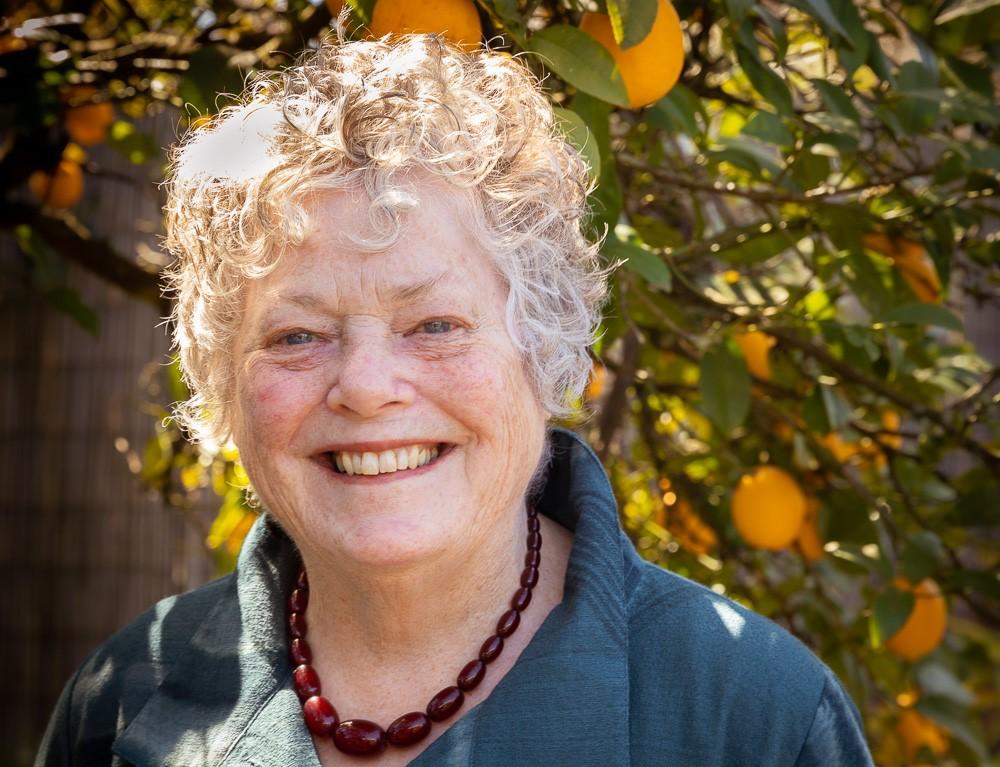
Dr Sylvia Martin is a former actor and author of three biographies of Australian women and a book of memoir essays. She holds a PhD in Women’s studies from Griffith University’s School of Historical and Cultural Studies. Her works have been shortlisted for the ISAA Book Prize, the NSW Premier’s Literature Award and the Kibble Award. She was the recipient of the Magarey Medal for Biography in 2008. Dr Martin writes about the private lives of often under-recognised, immensely talented women, who may by modern standards be considered queer.
Frank Bongiorno AM
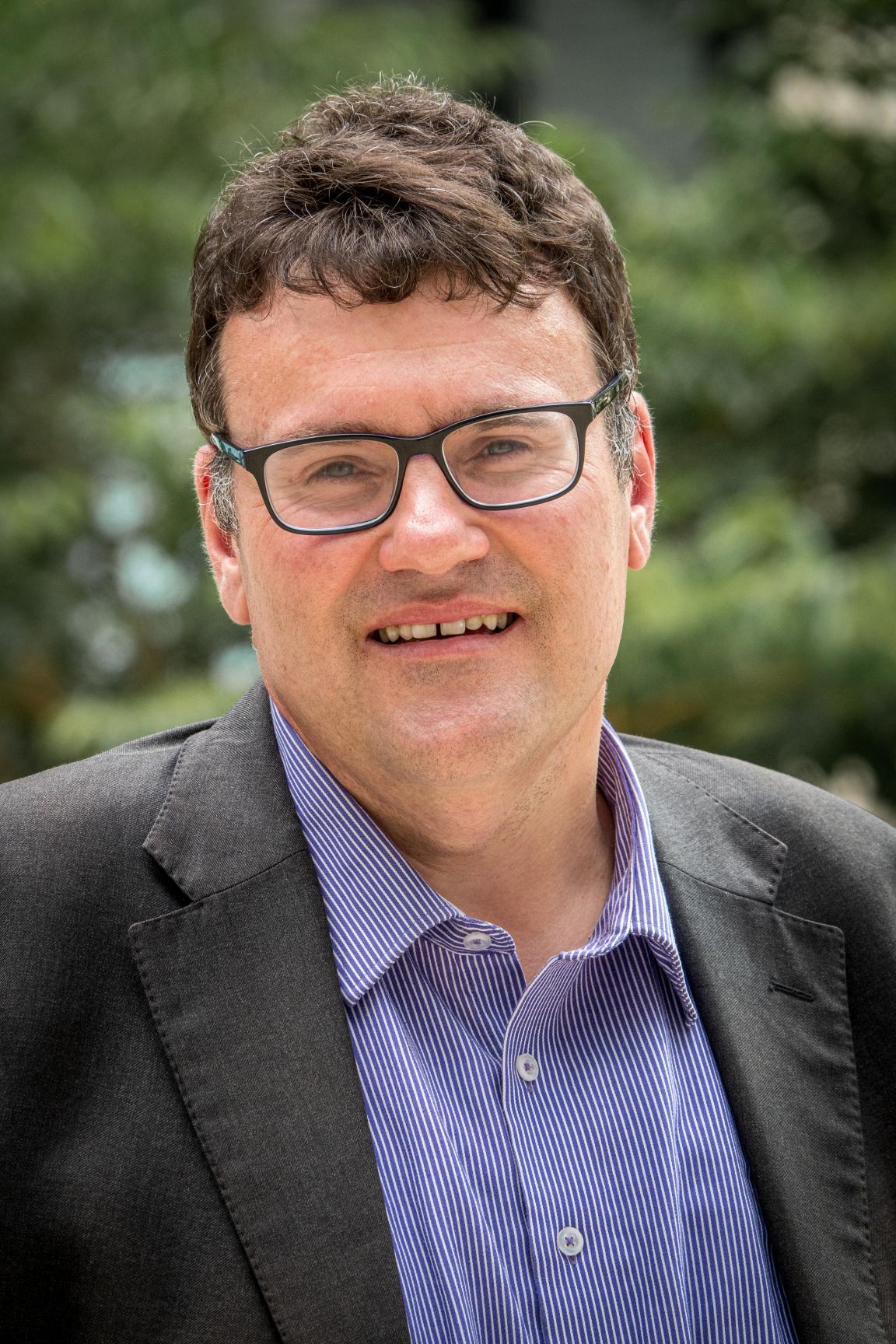
Frank Bongiorno AM is the author of three acclaimed histories: Dreamers and Schemers, The Eighties and The Sex Lives of Australians. He is Donald Horne Professor of History and Public Ideas, and Director of the Vice-Chancellor’s Centre of Public Ideas at the University of Canberra. He is also President of the Council for the Humanities Arts and Social Sciences and Immediate Past President of the Australian Historical Association.

 Assistance animals welcome

 Hearing induction loop

 Wheelchair accessible
Visit us
Find our opening times, get directions, join a tour, or dine and shop with us.