

Book launch: The Shortest History of Australia
In The Shortest History of Australia, Mark McKenna offers a compelling new version of our national story. This is a modern Australia permeated by First Nations history; a multicultural society with an island mindset; a continent of epic beauty and extreme natural events; a country obsessed by war abroad but blind to its founding war at home; and a thriving nation-state still to realise its political independence.
McKenna’s wise and humane history reveals the surprising in the familiar, and reframes the past so we can see the present more clearly.
Event video
Book launch: The Shortest History of Australia
Luke Hickey: Evening everybody. My name is Luke Hickey. I'm the Assistant Director General of the Engagement Branch here at the National Library. It's my great pleasure to welcome you here this evening for our talk. To begin, I'd like to acknowledge the traditional owners and the custodians of the land on which we're meeting tonight, the Ngunnawal people. I'd like to acknowledge their ongoing connection to this land and pay my respects to their elders, past and present and through them to all First Nations people here tonight, all listening online. As a meeting place, Canberra has been the cradle of numerous stories and a country of creativity. The Ngunnawal people and indeed First Nations people all across Australia have been keepers and sharers of stories and histories for millennia. And this is a legacy that the Library is proud to continue to follow here today. Tonight we're really pleased to host one of Australia's leading historians, Mark McKenna, as he discusses his new work, 'The Shortest History of Australia'.
Mark is the author of several prize-winning books, including 'From The Edge: Australia's Lost Histories', 'Return to Uluru', and 'An Eye for Eternity: The Life of Manning Clark', which won the Prime Minister's Literary Award for nonfiction and the Victorian, New South Wales, Queensland, and South Australian Premier's Awards as well. He's joined tonight by fellow historian, Frank Bongiorno, author of three acclaimed histories himself - 'Dreamers and Schemers: A Political History of Australia', 'The Eighties: The Decade that Transformed Australia' and 'The Sex Lives of Australians'. A diverse range of topics there, Frank! Frank is a Professor of History at the ANU here in Canberra and the president of the Council for the Humanities, Arts and Social Sciences. Together, they will discuss Mark's compelling new version of our national story, which provides a greater sense of what Australian history is and encourages us to explore the truths, the half truths, and the other surprises of previous literature. Frank will open the mic for audience questions towards the end of the evening so you'll have an opportunity to add to the discussion yourselves as well. But without further ado, please join me in welcoming Mark and Frank.
Frank Bongiorno: Well, great. Thanks so much Luke. And I'd like to associate myself with your acknowledgements of the traditional owners. Mark.
Mark McKenna: Frank.
Frank Bongiorno:
Congratulations on 'The Shortest History of Australia'.
Mark McKenna: Thank you.
Frank Bongiorno: I'd venture to say that when you set out on this journey to research and write this book, you probably didn't imagine that you'd be competing in the bookshops with Tony Abbott, also the author of a one-volume history of Australia or 'schist' as Keith Sinclair used to call it - Keith Sinclair, very famous New Zealand historian, a short history - 'a schist', he called it, rather mischievously. I did notice though, Mark, there is a preemptive strike at Tony Abbott on page 238 - being a historian of course...
Mark McKenna: Starting to get concerned now, frankly...
Frank Bongiorno:
'On Australia Day in 2015, Abbott stunned his colleagues in the nation by knighting Prince Philip, an old man already forced to walk under the life-threatening weight of a wardrobe full of medals'. So thank you, Mark. But I did, yes, I did want to ask you though, I mean I wouldn't describe this as entering a crowded field, but it is a field where there's a lot of kind of public history-making going on, and quite apart from Tony Abbott's book, there's a documentary, a Sky documentary that goes with it. There's also Julianne Schultz's 'The Idea of Australia', which is also-
Mark McKenna: An SBS doco.
Frank Bongiorno: SBS multi-part documentary as well. So I wanted to ask you about where you see 'The Shortest History' sitting
Mark McKenna: Yeah, good question.
Frank Bongiorno: In that landscape.
Mark McKenna: It's a really interesting time to publish a short history of Australia, for all of those reasons that Frank just went through. Tony Abbott's book is there, some weeks before mine, and I guess I would like to say that it's not a surprise to me that Tony Abbott would write a history of Australia. He's written, of course, he's a published author. He has written books before, he's had a longstanding interest in Australian history. So in that sense, it's not a surprise. The timing, of course, it was my fate to be in conversation. And we shall see how that progresses over the coming months and so on. But the sense I get about that particular book - just before we get to mine - is that from what I've read of the way it's packaged is that it seems to be in many ways - to my mind - a kind of rescue mission in the sense that, 'Oh, the historians, they wouldn't write a book like this'.
'I'll write it and I'll sort of - all of those historians who've presented that kind of black armband, negative view of Australian history - I'm now going to present a more heroic and positive and proud version of the Australian story'. And I guess that's understandable in a way, given who Tony Abbott is - former prime minister and conservative politician. But if your starting point for a short history is the nation state, okay, if you think that your job as a historian is to write the history of the formation of the nation state as I think it's broadly conceived in that book, then I think, or I felt writing this book that you can get trapped into walking through the same familiar landmarks. And conscious of all of the other histories of Australia, as you alluded to, that have been written in the previous sort of decade and a half, two decades, I really felt that we didn't need another one of those.
So I thought, I really felt I had to come up with something different. We can get to that, but to the point of your question about the context now, I think it's really interesting to be, we are witnessing the interest in Australian history is alive and well, and we can see that from the television documentaries. We can see that from so many ways in which history is discussed in the public domain. But we're also living in a moment where we know that history within schools, for example, a number of history teachers, like all teachers, is struggling to keep their foothold. History within the academy and the universities. The number of full-time historians in university departments has dropped a third over the last 40 or 50 years. The number of student enrolments were subject to the Morrison Government's recent legislation, which increased the prices of degrees in the humanities and history especially. So in some ways, history is under threat in those traditional formats, and in another way, the interest in it in the public sense is very much alive. So I guess that's where I'm kind of pitching this book into that public interest in Australian history, but also trying to ask, well, how can we reconfigure this in a way that doesn't walk necessarily through those familiar landmarks and tries to do it differently, I guess.
Frank Bongiorno: Great. And I'd like to talk more about the very innovative structure that you chose, Mark, in a moment, but you're an acclaimed biographer, as Luke just mentioned, of Manning Clark - one of the first things I noticed when I walked down the stairs is that you weren't wearing an Akubra hat.
Mark McKenna: I've got one at home.
Frank Bongiorno: Or a fob watch, or chain or anything - boots... And we were offered the option of a grand entrance and the two of us decided, no, let's just creep in behind Luke when he's up here. Whereas we know what Manning would've done, there would've been a grand entrance, surely. So I wanted to ask you about the kind of image, self image but perhaps public image of the historian, the public life of history as our colleague Dipesh Chakrabarty called it. The authority that history or history exercises in the public sphere, historians exercise in the public sphere. Very different I think from the world of Manning.
Mark McKenna: Oh, extremely. I mean the point - that image of Manning Clark in that three piece suit with the large Akubra hat and the goatee beard and this kind of very, very serious delivery and the authority that he carried - I mean the position he occupied in Australian culture, it's phenomenal to just compare that now to Manning's position if you like, to now. I think a figure like that today would be laughed out of court. And that's of course, because in a sense he's a creature of his time. The bicentenary was of course the big moment there for Manning. That was where he was at the peak of his fame. And I guess in many ways we've seen the decline of the authority of that professional historian in some ways. And I think that's good and bad. I mean, I think that it's great that we have more voices now. We don't want guru-like figures who - I mean at one point (I think I often bring this example up) about a year before Manning died, he was going to become an envoy for Australia to solve the coming Iraq war. So that seems incredible now.
So it's a good thing that we have a far more diverse range of people talking about history. We are not as prone to the guru type 'one voice' effect. On the other hand, I think that history as a discipline is evidence-based - that's kind of stating the obvious. But I think that like the sciences, in a post-truth domain, that a lot of evidence-based disciplines are struggling for traction in the public culture increasingly because we're living at a time where many people are willing to believe or turn away from evidence-based and be deeply suspicious about those things. So for me as a historian, I think that's one of the challenges still right at the moment, is to, okay, how can we write in a way that is going to play into that environment where a lot of people think sceptically? Or even think that, well, it's just one version of history against another version.
Frank Bongiorno: Do you think that's been a part of the problem that we've all as professional historians, most of us I think, have embraced this idea that there isn't a single narrative - that history is diverse, it's pluralistic? Most of us wouldn't say that one interpretation is as good as any other, but there has been a broadly, I think more relativistic understanding of history in the last couple of generations. I mean, has that been a part of the issue here as distinct from the prophetic, not pathetic,
Mark McKenna: Prophetic version
Frank Bongiorno: Manning Clark type?
Mark McKenna: I mean, I don't see it as a problem. I see that as a really positive development. I mean, for me personally as a historian, if I ask myself, well, where is the point of electricity? Where is the point of the most exciting possibilities in Australian history now? It's trying to grapple with the extraordinary revolution that's taken place since late sixties, seventies, and the way in which Indigenous histories, cultures, knowledge has slowly come to occupy a much more dominant part of our public culture.
But trying to grapple with that and understand it and bring it into a short history, for example, that's an exciting point of interest and challenge. And to do it in a way that, which to me is really important, which is not ornamental, not to sort of start with a chapter on Indigenous Australia, and then you've got 220 plus years of European settlement and so on. So how do you carry it through? How do you bring that Indigenous presence and history all the way through? And really, I guess in some ways it's probably the centre, one of the, it's the central point of the book.
Frank Bongiorno: I mean, you get to Mungo Man, Lady Mungo, right at the very end of the book, which is I think striking in that sense. Now, this is a bit hackneyed, I suppose, comparing Australia to the US sometimes, but I'm going to ask you to do it anyway
Mark McKenna: Please.
Frank Bongiorno: You've just come back from the United States. I wanted to ask you, do we worry, I mean, I'm sort of reminded of - in the 19th century, they'd say, 'what will they think in England?' And I'm wondering if we worry too much about the United States, and I'm also interested in sort of, I mean you were in Washington, how Australian identity is projected.
Mark McKenna: No, thanks. That's a really good question. Let's start with America now and always looking to England in the past and now. Yeah, I think definitely you can look at the recent kerfuffle over whether Albanese would manage to get a phone call with Trump and how our national media was transfixed by this question for months, which is why he wore the Joy Division t-shirt, I guess, when he came down the plane. But it's astonishing now. I think if you even compare Australia's world news to maybe even a decade ago or 15 years ago, US media, US politics dominates Australia's media in a way, I think that it has never done before. Now of course there's good reasons for that, and that is the man who is president and because of his ability to constantly flood that zone with all sorts of attractive bait, basically
Frank Bongiorno: That's not usually the phrase used about flooding.
Mark McKenna: No, no, no.
Frank Bongiorno: I believe we're being recorded by the ABC, so I suppose we should be a bit careful.
Mark McKenna: Flooding the zone with shit, Frank. Yes, that's right.
Frank Bongiorno: Your Catholic school must have been less strict than mine, Mark, I think if they let you say that.
Mark McKenna: It was, it was. No, no, we were less strict, I think. But so there is a sense that there is this, where's British news? Where's other world news? The US world politics just dominates to that extent. And also our talk about our foreign policy. I mean, it's interesting to me that Anthony Albanese went to Indonesia. His first foreign visit after winning the election was to Indonesia. Which was of course a statement about the importance of that relationship. But that's now been lost. It's been swamped by all of this discussion about Aukus and about meeting with Trump and whether there'll be a slapdown in the Oval Office or it'll be embarrassing, etc. And I do get the sense that we're still very, very deeply anxious about whether we'll be okay with the Americans. I really get that sense from the media coverage. As to your question about my time there, I mean, basically our daughter is working in Washington for two to three years.
And so we went there to visit her, and I'd never been before, lived seven years of my life in Europe, but had never been to the US. And so the first thing you realise - you notice is - if your point of contact for any society is reading the media, then you arrive and you think, oh, okay, life is going on. People are living, they're going through the daily things. And you didn't have the sense that things were about to implode. In a way, it seems a tragedy to me that a society like the US, which is so rich, so much vitality, so much diversity is tearing itself apart, is at war with itself.
So on the point of Australia in Washington, I went to look at Australia's embassy, which was opened by Anthony Albanese in 2023, and I walked in there. Grand building, Australia's second largest embassy, I think after Indonesia. Very impressive building. You walk in, go through security, there's an Aboriginal flag, an Australian flag, Aboriginal and Torres Strait Islander flag. In the corner, there's some Yolngu burial poles, several of them from Arnhem Land. On the wall is a framed, really beautifully written version of Kevin Rudd's apology to Indigenous Australians in 2008. Around the corner, there's Aboriginal art on the walls, and it's so striking. How do we project ourselves to the outside world and the extent to which we rely on Indigenous symbols, Indigenous art, Indigenous culture to say, this is who we are, this is what's unique about us. Yet somehow I think we don't really quite understand how much we lean on that, to project ourselves overseas and what a disconnect at times there can be between that external symbolism and our readiness to really sort of embrace it fully in our national, the way we think about ourselves as a nation.
Frank Bongiorno: And your book in a lot of ways is calibrated with that sort of dilemma, isn't it? Because I mean, you do write about the nation, but you want to write beyond the nation, you want to write about country. And what's happening in that, I suppose, is kind of perhaps a conflation in some ways of nation and country, or is it an appropriation, but it's clearly the projection of a very long history, a history going back tens of millennia.
Mark McKenna:
Yeah, that's right.
Frank Bongiorno: For the sake of a modern Australian identity in obviously a nation state setting, an embassy.
Mark McKenna: And it's not necessarily new either. You can remember that the history of royal tours in Australia also shows that when Australian politicians were sort of struggling, oh, the royals are coming, what are we going to do? What are we going to perform? They always relied on Indigenous Australians to do traditional dance.
For the Queen and Prince Philip and so on. So yeah, one of the things I'm trying to do in the book, I guess is to say, well, our sense of our history, we have to see ourselves as a continent. I'm trying to think of the land itself in a way as an active force that has shaped us and who we are as much as any other political forces. And to really make that a character in the book and to give it a sense of agency. And I do that in various ways and we can talk about that. But yeah, it's another part of the book I'm trying to, yeah.
Frank Bongiorno: And one of the early chapters has a title, 'The Island Dilemma'. Could you tell us what you mean by
Mark McKenna: The island dilemma? Good question.
In a way, it goes to some of the stuff we've just been talking about with the US. So I mean, Australia's island dilemma is, it'll be familiar to everyone here of course, because it's about our geography, it's about our geographical position, which is longstanding issue of course in our history. So even from the moment that Matthew Flinders' maps, Louis Freycinet's maps of Australia as a freestanding continent in the early 19th century, the moment we can see our continent standing alone in relation to the rest of the world, it's mapped there. You get this very early on, you get these contradictory kind of messages. In other words, this isolation is an advantage. Who would want to come all the way down here to bother us? You'll still hear this trotted out from time to time. And of course there's the other narrative which is, oh my God, we are vulnerable.
We could be invaded by, usually in the 19th century it was China, Japan, and even three days ago, Richard Marles said that China was both Australia's largest trading partner, a source of great opportunity, and Australia's most important security, significant security anxiety. So again, you come back to this opportunity versus threat point of anxiety. So that's a tension in our politics and history that is simply with us. We live with it and it has deep historical roots. And I really wanted to, I guess I wanted to start the book in a way where people would sit up and think, is this a history of Australia? What's going on here? And so I wanted to sort of present those larger ideas right up front. So there's the chapter on the island dilemma and the history of that, which also ends with Christmas Island, and of course that's connected to the history of refugees, etc. But the first chapter opens with the Opera House and then moves backwards if you like, to the Indigenous history of that particular site. The second chapter goes to Ubirr in Arnhem Land. I don't know, how many of you have been to Ubirr?
I think after Uluru, it's the most popular tourist site in Northern Australia. It's an extraordinary place because you step up firstly for the rock art that goes back tens of thousands of years to the time when Australia and New Guinea were won, for example, incredible rock art galleries, not only at Ubirr, but within the vicinity. And you stand and look across this incredible floodplain. And when I was standing there looking and thinking, well, New Guinea, Timor, Indonesia, they're closer than Sydney and Melbourne and Adelaide. And you think of this as the north of Australia, where of course the ancestors of Indigenous Australians first entered the country. This is the point where, or the region I should say, where archaeologists in 2017 discovered evidence of 65,000 years of Indigenous habitation on this continent.
And when you reflect on all of this and the environmental dimensions of this place, you quickly realise, okay, so Australian history does not begin in the southeast corner of the continent. I mean, this may sound obvious to some, but that's the way we've thought about it for so long. That it begins in the southeast corner and we have the predictable cast of characters that get wheeled out. But in fact, it begins in the north for all sorts of reasons. And that's where we are tied in more closely to our region. And in a way, when I hear some of the conversations about Aukus, it does seem to me that we are kind of leapfrogging over this region that we are actually in and that we are still deeply connected, wanting to hang on to those traditional historical allies that go right back to the British invasion, obviously Britain and the USA.
Frank Bongiorno: So you challenge us on geography and space, but also probably more radically here on time. I think the most sustained treatment of convict Australia in the book occurs probably four-fifths of the way in.
Mark McKenna: That's right.
Frank Bongiorno: After page 200. That's right. That's right. Really quite startling. And I want to ask you about why, I mean you've already given us some hints, but why you adopted that thematic structure for the book, the thinking behind that. There is a critique that's well developed now, I guess among post-colonial historians that I'm thinking here of 'Time's Monster' by Priya Satia, which basically says, well, history as a discipline has adopted this kind of idea of a relentless forward movement, time forward.
Mark McKenna: Knowing.
Frank Bongiorno: Creating progress,
Mark McKenna: Yep.
Frank Bongiorno: Which of course is counter opposed to primitivism, savagery, all those sorts of concepts. And so it becomes, it legitimises, colonial violence, imperialism
Mark McKenna: Yeah, that's the danger of that kind of history where you go from pre-British Australia and then you just walk through to now.
And we are thinking here, I mean, you're alluding in a way to Indigenous understandings of history where they're certainly not linear, where things are kind of all eternally present in the one moment, so to speak. So I really wanted to throw caution to the wind in a traditional sense. And that's one reason why that we don't get significant discussion until a fourth of the way through. I mean as to the way that I tried to tackle the structure. I mean, I think for everyone here who hasn't seen the book, it's important to say, well, one of the, two of the ways I did that was firstly by delving into, I guess I wanted a book that was not compressed. So many, the problem with the genre of the short history is that you end up, that you can easily end up writing a kind of summary or a kind of recapitulation of things that people kind of already know, and you place a different emphasis here and there.
So I wanted to avoid that. And so one of the ways I tried to avoid it was to try and be expansive, to try and give myself room to go into detail about things. And I did that by diving into different places around the continent and overseas before each chapter. And I did that also for partly selfish reasons, and that is, as an author of a book like this, I think that if I'm, or I said to myself, right, if I'm not learning, if I'm not discovering something when I'm researching and writing this book, then there's no point. I don't just want to be summarising what I already know. So by going to all of these different places, I had to do original primary research and all sorts of things opened up about how I could connect those places to the broader story. And it also allowed me to play around with time so I can move back and forwards more in some chapters, I suppose, than others. But yeah, that was part of the thinking.
Frank Bongiorno: I wanted to ask you about... I mean, you've written wonderfully in many different books on place, and you've got a line early in the book that basically says, 'yet in its entirety, Australian history is inherently place bound', which I think goes beyond some of the things you've written in the past. I wondered what you meant by that.
Mark McKenna: No, thanks for that question. In fact, you know how it goes with books, you write sentences like that, and then after you've written them and the book's out and it's a concrete thing, you think, oh, I could have added this. So I would add these two things probably to answer that question. Why do I say Indigenous history is, or Australian history is place bound more than many other places? Well, I guess let's start with two images. You probably all have seen the map of Indigenous Australia that AIATSIS has produced some time ago now where Australia is a mosaic, right? It's a mosaic of First Nations, hundreds in different colours. And then think of the other map that you know - Australia as six states, two territories right. And you just think of the radical difference between those two images.
And you've realised that the incredible diversity of all of the ways that those different nations have connected and related to and to their own specific countries, the different climatic zones, extraordinary diversity. And added to that, when we have, Welcome to Country or Acknowledgement of Country now, and I know all of the debate around that, but one of the things we do when we do that, I think is when we sit there and we hear someone say, well, welcome to this country or that country, is that we are actually acknowledging the importance of these different nations, these different countries - it's a mosaic that we're coming to terms with now - we're in the middle of it.
That's exciting. That's interesting. That's different. And it's unique to here. So that connection to country to place is something that is, it's not exclusively Australian of course, but it's got particular inflexions here that again, make us make history really exciting and thinking about it in different ways. And that to me means that you can think, we often use the word inclusive. How can we be more inclusive? Well one of the ways to start is by always keeping in mind those two maps and thinking about what those Welcome to Countries always mean, and then linking that through to saying, well, yeah, country, place, we've got so many histories here. And not only in the Indigenous sense, but also in the settler sense as well. If you are looking from the Pilbara or you're looking from, and Henry Reynold's book, new book, 'Looking from the North', it depends where you're looking from. And from where you're looking from, there's different points of connection to the so-called national story. And that's like exploring all those different points of perspectives. Writing about different places shifts the perspective. You get different perspectives, different angles of vision, I guess.
Frank Bongiorno: And yet you still conscientiously as the well-trained historian that you are, you grapple with the older narratives as well. So you deal with the Protestant- Catholic divide, you deal with class conflict, relations between men and women, those narratives that are now a reasonably familiar part of our history. I mean, how do you balance that sort of more challenging approach, if you like, the history of country approach that you were just talking about, history of place approach with I guess what are more traditionally social, political,
Mark McKenna: Yeah ok
Frank Bongiorno: Cultural narratives and probably more embedded in the settler experience more than the, well, not just the settler experience of course, but I guess they've been more identified with what we understand as a conventional kind of European history of Australia.
Mark McKenna: Yeah, good question. No, no. I mean, yeah, look, in the book for example, there's a chapter that deals pretty much primarily with the history of sectarianism in Australia. But the way it starts, and this is true to how it happened for me, one of the most magical places in Sydney for me has always been Waverley Cemetery. I dunno how many of you're familiar with it. Maybe a lot of people on the southeast corner who've ever been to Sydney would've gone occasionally or at least walked past it. It sits between Bronte Beach and Clovelly Beach just near Sydney. And I mean this incredible cemetery that tumbles down to the Tasman Sea. And it's like, it's one of the most dramatic spots in Australia, I think. And Manning Clark, of course, I mean, when I think about it now, the frontispiece of my biography of Clark has a photograph of Manning standing in Waverley Cemetery.
I just thought of that. I realised that. Yeah, so there's a connection there, I guess. So I would often wander, when I was working at Sydney University, I'd often go there, wander around. And one of the things that I got interested in was that those different sections, the way we segment religious beliefs in death as well, we've got the Anglican section, we've got the Catholic section, and so on and so on. And there's a memorial at Waverley to, for example, to the United Irish Rebels of 1798 that was erected 100 years later to great fanfare. At certain points, that was the, I thought, okay, I can connect the history of this place to the history of sectarianism because it's writ large there and looking at who was buried there. And of course, it's still connected to the, everything's connected to the Indigenous thing because you think of all of the strong Indigenous presence that's there on that coastline.
And you think of Lawson, the great Henry Lawson, who's buried there and people still, there are still pilgrimages. You'll find people, sometimes I'd watch people being led on tours to Lawson's grave. But Lawson's grave, in the introduction, I kind of, looking at that. And then of course, his wife, who he, Bertha, was buried next to him when she died in the fifties. But his wife, of course filed an affidavit for cruelty and was divorced because of his domestic violence. And you read the letter that she wrote, the affidavit, and it's like gut- wrenching sort of. 'He hit me with a bottle, he bashed me and blackened my eye', etc, etc. And it's another reminder that so many of Australia's traditional myths and so on are deeply connected, of course, to the history of violence against women. And this is one of the things, I guess we could talk about it, but I wanted to grapple with in the book, so often when we hear public discussion of history, the whole thing of balance,
Frank Bongiorno: The balance sheet,
Mark McKenna: The balance sheet, it's as if we're in a grocery store. I'll take a packet of this and I'll put it on the scales. I need to balance it with another packet of this and so on and so on. It's a pretty crude idea. So I mean, the truth of course is, and really this is one of the things that is strong I wanted to get across, and it's no news to you of course, but I mean, it's that we have to hold all these things in tension at once in our imagination. It's not as if you go, oh, we'll have a cheery history of democracy here, and we'll use that to balance out some of that dark stuff about dispossession, blemishes
Frank Bongiorno: Blemishes was the phrase I think John Howard used, wasn't it?
Mark McKenna: Blemish?
Frank Bongiorno: Yeah, blemish.
Mark McKenna: The word itself of course suggests. So instead of thinking of it like that, to see that these things, of course are all deeply interconnected - the history of democracy, the fair go, equality, these things were racially defined as we know. So the history of racism is connected to the history of democracy. The history of dispossession is connected to the history of democracy. It's all entangled.
Frank Bongiorno: And moving away from a more traditional chronology where - Gold Rush, self governments, Federation, World War I - reminds us that you're still getting massacres on the frontiers of Northern Australia at the time Australia's federating. At the time the Labour party's being formed, at the time, really, the Australians are going off to Gallipoli. It challenges that sense of, again, a kind of series of discreet topics. And that again, relentless forward march towards some sort of fuller nationhood, I guess.
Mark McKenna: No, that's really well put. I mean, I've got a chapter on Anzac Cove. The book starts with Anzac Cove, and at the end of that chapter, it finishes with a section on the frontier at the same time in Northern Australia, Northwestern Australia. Just consider this statistic - between 1901 when Australia federated and 1918, the end of the First World War - at least just over 500 Indigenous people were massacred in the Northern Territory and Western Australia alone. At the same time. So the newspapers that are reporting on the battles from the Western Front and Anzac are also publishing stories of this violence. So this sacrosanct history of Gallipoli that we so often imagine and talk about as being completely separate to this history of the frontier, no, these things are happening contemporaneously. So I wanted to bring that out. And it really is extraordinary when you go to Anzac Cove, there's this narrow beach, this strip of shingle, and there's this obvious contrast between this. It's got a tiny physical kind of presence, and yet we've got this enormous mythical thing that we've created around it. And you compare the history or our knowledge of, I mean, we've got histories of the last shoe to be dropped on Anzac Cove beach or the last this or the last that,
Frank Bongiorno: A rather unkind British political historian a few years ago said that the Australians are going to put up a memorial to anywhere that an Anzac had a piss during the First World War, which I thought was a bit unkind.
Mark McKenna: I think you went to the same school as me. Yeah, that's right. It's Marist and Christian, that's Marist Christian brothers and Marist brothers.
Frank Bongiorno: They allowed us to say 'piss' but
Mark McKenna: They did. And to drink furiously. That's right. No, but I mean, it is quite something to just contemplate how we have so much history about that one event and about the war generally, and compare that to our knowledge of the Frontier Wars, for example. It's like, and compare our knowledge of the history of Federation to the history of Anzac. And you'll see quite quickly, of course, why the history of Anzac has so much purchase, because it obviously taps into those traditional ideas about a nation being created from blood sacrifice rather than popular vote to a constitution, etc. And then there's the other question, which I've tried to grapple with for years, which is how did we end up being a nation that's created, its founding national myth of nationhood, 16,000 kilometres away offshore.
And why? And I really think it's deeply connected to the fact that we see those deaths, those deaths of the Anzacs as honourable, and we can latch onto that in a way that we still can't come to terms with the importance of the other deaths that happened on our own soil. And what we've done with that Anzac myth and legend is, we're so selective about it and we're so allergic to criticism at the moment. Chris Masters' book about Ben Roberts-Smith is being withdrawn from a prize at the War Memorial. He's not able to give a lecture at Tuggeranong. Yassmin Abdel-Magied in 2017 who was almost sort of hounded out of the country when she tweeted something that was using the words 'lest we forget' in a different context. We're incredibly allergic to criticism about this. And I think that that goes to a really important, if I can just say a thing about the book, is that history's always contested, it's always going to be a point of debate, but when we look at the long view, this is a country that thought initially it had no history. We have to wait for history to come because there's been whole Indigenous. And then we thought, 'Oh my God, the convicts, that's embarrassing. We can't have convicts being our founding here'.
People Generation, no, for 150 plus years we were terrified of that. And then from the 60s and 70s on, we felt the emergence of the revisionist history, and that's unsettled a lot of our traditional myths about who we are and how the nation was founded. So we've always been deeply anxious about our history and the story that we tell. When we talk about the history wars, it's not new, it's a different, it's a variation on a well-worn theme.
Frank Bongiorno: You quote Manning Clark, towards the end, actually, 1975 - 'We were colonials and they don't make their own history. For more than 100 years, we were in a position of children, we were dependent, we were backward, we were isolated, we were cringers'. Is that idea that your history's made by others, that anxiety, that, you know,
Mark McKenna: It's really interesting, isn't it? Because here's a person - Manning - who wrote six-volume history of Australia, who basically devoted his entire life to trying to spread knowledge and interest about Australian history. When he spoke in public, actually 50 years ago, almost to the day, a few months earlier, he was in Bendigo. I was looking this up the other day, and he's talking to a group of students and he says something like this. He says, we were cringers up until the 20th century. We were cringers. We didn't make our own history because we were colonials. Of course, that is just not true.
Because we thought, because we believed we were British didn't mean that we didn't create and struggle for of course our own democracy. We did make our own history even when we were colonials. So that's something that's really important as well, is that for so long we've explained the history of our democracy as a story of British largesse. It came from, it was granted, but of course that's not true. In a way, your political history of Australia shows that, right? So Manning was still very preoccupied and people of his generation with the British 'thing', and because they felt that it was crippling Australia's capacity to be itself truly independent. And I think that that idea has now shifted from Britain to the United States.
Frank Bongiorno: Now Mark, I'm going to, so we're about to go to question time, so please get ready with a question if you'd like to ask one. I'm going to, just before we do that though, ask Mark to read one passage, which I think in many ways sort of epitomises, captures, the place-based way in which you've written this book. So this is on the bushfires of late 2019- 20. So over to you, Mark. There it is, thanks. From there.
Mark McKenna: Okay, so I just preface this quickly by saying that one of the things here, this is a chapter called 'Fire and Water'. How do you bring the land and environmental history? Give it a strong presence in the history of Australia, and also to explore the psychological emotional dimensions of what it means to live in a continent where we're all threatened at times by fire and flood, but especially fire. Okay - 31 December, 2019, Mallacoota Victoria. The photograph appeared in news outlets around the world. Enveloped by an eerie smoke-filled haze and the sinister glow of approaching fires, an 11-year-old boy steered a small boat carrying his mother, brother, and family dog to safety. On shore, over 4,000 people were gathered on the beach, anxious to escape out-of-control bushfires driven by wild winds. The shoreline was littered with dead birds, charcoal and burnt leaves. People could hear gas bottles, cars and houses exploding in the near distance.
If the radiant heat became unbearable, the authorities told them to stand in the water. There's only one road into Mallacoota, and it was now completely cut off by the fires. Rescue by air was too risky. Within days, the Royal Australian Navy was evacuating residents and tourists by sea to disaster relief centres in Melbourne. For once, the sensationalist headlines seemed accurate - 'Terror Coast', 'Apocalypse Now'. The world saw this Australian beach town burn. NASA images showed gigantic plumes of smoke hovering over the southeast of the continent, then drifting slowly out into the Pacific. The photograph of the masked boy in the dinghy, his hand firmly grasping the tiller, captured the unthinkable. The beach, which for millions of Australians had long been a sight of leisure and pleasure, was no longer safe. In the case of Australia's mega fires, it was merely the last precarious strip of sand on which to stand. Thanks. Thanks. Thank you.
Frank Bongiorno: Great. Well thanks Mark. Thank you. So over to questions. So if anyone's got a question, I think there are roving microphones, so please go ahead. Don't be shy. Down here.
Audience member 1: Great, thanks so much. My name is Alan Gamlin. I'm a professor at the ANU, and my PhD is geography, but my first love was history. My first two degrees were in history, so I'm deeply jealous. My heart of hearts, I would've been a historian, and I love the place-based approach to history that you've taken as well. Question is kind of a history nerdy question. What do you make of this? The argument of the global historians that any kind of national history is methodologically nationalistic. So it assumes that the nation state is kind of the natural, inevitable unit of social analysis. And so we tell a story, a teleology that inevitably leads to the nation state. Some of the discussions sort of touched on that, the teleology of progress, but what do you make of that global history argument that you can't be methodologically nationalistic about it?
Mark McKenna: Yeah, I kind of agree in many ways with it. I mean, this book is definitely not that as you just described it. It's the reverse actually. But I think that like everything, it's not that you can't write national history, I mean national history to write any nation's history has to be porous. Yeah, it obviously is porous. So how can you show those connections, those broader connections? The mistake was to sort of, I guess there was a period in Australian history where Australian history was predominantly written from an exclusively national sort of frame or even nationalist framework, and we are way beyond that now, that historians are doing incredible work in comparative history, transnational history. So I think that in lots of ways that argument's been won and also depends how it's done, how you do it yet, but to be conscious of that, definitely.
Frank Bongiorno: Other questions, Bryan?
Audience member 2: Hi, Mark. Hi, Ryan here, former historian.
Mark McKenna: Pleased to see you.
Audience member 2: Just to follow up the previous question, but I don't mean to age you, but you've been writing about Australian history for quite a while now. You were writing about Australian history when it was intensely political or the last time it was, and I just wondered if you could offer any reflections on how that has changed and the politics of history, how that has evolved, and what it was like writing history now versus say in the late nineties and early 2000s?
Mark McKenna: Thanks, Ryan. That's a good question. Yeah, look, I think that broadly Australian history is still a political, it's a live, issue. It's a very, very hot issue politically still, right? I think the terms of, the points of ignition are different to what they were in the so-called history wars, or even back earlier than that. We've come a long way. I mean, you mentioned this Frank, in your review of Tony Abbott's book where you point out that Tony Abbott draws on the work of historians like Lyndall Ryan, not Keith Windschuttle, who was the sort of leader of the history wars in some ways, so that Abbott accepts a lot of the scholarship that we were fighting over. In other words, there was a point where we were still arguing whether the Frontier Wars, quote 'war' happened, or really if we could think of it as war. And I think we've moved past that, and we have to remember, of course, that that word war is not a contemporary thing that's been applied to the past.
War was the word that was often used at the time. So we've moved forward in some respects, but we're still stuck. We're still debating where the emphasis lies. I mean, to what extent, for example, does the reality of that nationwide history of frontier warfare that goes from 1788 to 1930s, to what extent is that the story of the foundation of this country? We're still arguing over that. Look at the debate in the War Memorial about whether to represent frontier history. So progress is slow, it's incremental. History is deeply political still, I think. But the points of ignition have just shifted, and in a way, I think Tony Abbott's book, the irony is that it does have a political mission. Of course, it's not surprising, I guess, because I think that for conservatives, there's a question that goes something like this - how can we come up with a history that we can live with? How can we come up with a history that will allow the nation to exist peacefully and be comfortable with itself? We have to find that story somehow, so let's go and find it. Right? Let's go and give the people one.
That debate still there.
Frank Bongiorno: But isn't that first question also what you are doing? I mean, aren't you also writing, attempting history we can live with?
Mark McKenna: Yes, yes. My Australia's different. I suppose.
Frank Bongiorno: It's different from theirs, right? Yeah,
Mark McKenna: Yeah, yeah, that's right. Yeah, no, true. No, that's true. Yeah, it's different from theirs. Yeah.
Frank Bongiorno: Yep. Sorry, I think there's one, no, we'll go to Ian next. Sorry.
Audience member 3: Yeah, thank you. Name's John Lamb. I've gone from being an architect to an historian more recently, and closely tied with Frank. A comment generally though - I appreciate and the very importance of the Indigenous connection and that fit to the British thing, but yet I'm surprised to find there has not been a single mention of the multicultural background and of others, of Asian nations, of the Chinese and the Japanese input. And just as a little contrast, you might comment on, you commented on the 500 Aboriginals who died in Northwestern Australia during that same early 20th century period, a similar number of Japanese died in the pearling industry, supporting the most important industry of that area in that same period.
Frank Bongiorno: Yeah, all covered in the book, John
Mark McKenna: All in the book
Frank Bongiorno: Including the pearling industry.
Audience member 3: I haven't had a chance to read it yet.
Frank Bongiorno: In fact there's a beautiful picture. There's a beautiful picture of
Mark McKenna: The, there's a picture of the pearlers, absolutely. The pearling industry. Yeah. And there's a chapter on, just so you're aware, there's a long chapter on migration as well, which brings in histories of Chinese-Australian, Japanese, Irish immigrants. It's all mixed up, but there's, there's a long chapter on that in the book. I think we've got a question over here.
Audience member 4: Hi.
Mark McKenna: We didn't cover it in the conversation, but it's there.
Audience member 4: I'm fascinated by what you said about the Anzac story and where this question's coming from is that I heard that when Charles Bean was trying to write the history of the First World War, he actually started his book with the chapter about the influence of women and the impact they'd had in their contribution to the war. But the publishers at the time didn't like the approach. They wanted the bronze Anzac legend and the women got relegated to a footnote in chapter 11. I'm just wondering whether in this history, you deal at all with the suppression of women's history in Australia, not just in that, but in other aspects.
Mark McKenna: Yeah, no, thanks for the question. No, look, I try to do that at various points throughout the book. I mean, the book is 60,000 words, and I did originally have an idea for what a lot of the chapters are called, like 'Fire and Water' or 'War and Memory', and I did have an idea for a chapter, 'Men and Women' as well, and I basically, push came to shove, I've got 60,000 words things had to go. I lost 20,000 words as it was from the original draught, but that's the nature of the beast. But it's there throughout. It's there in relation to the struggle for the vote, women getting the vote. It's also there in terms of domestic violence, which I linked through to the present day as well, and it's there in lots of different ways throughout. Yeah.
Audience member 5: Mark, I wanted to ask you, to what extent did you have to deal with the fact that we are now have a planet that is in a difficult to dangerous situation, which we've never known we've had before?
Mark McKenna: Yeah, thanks then. Yeah. Look, that's a really good question. The question of climate change and the threat that we're all under, I guess. In this chapter called 'Fire and Water', I try to show, for example, one of the threads about fire that I really am trying to bring through is that the fires we've experienced recently, you'll often hear people say, for example, 'Oh, the black summer fires, there's a long history of bushfire in Australia. It's just another repeat of what we've had before'. One of the things I'm trying to do is to show that those fires that we've experienced recently are fundamentally different from the fires of the past, that these are the result of anthropogenic climate change and that we are looking at a very, very different beast here, and it's a beast of our own creation and our impact on the planet, and that in a way, yeah. So yes, I mean, I try to be, I bring that in at various points in the first chapters and also, but especially in that chapter.
Frank Bongiorno: I think we have time for one more question. It's Craig.
Audience member 6: Thank you. Hey Mark, Craig Cormey here.
Mark McKenna: Hi Craig.
Audience member 6: Hi. Quick question. Every couple of years, we get a new condensed history of Australia. We're lucky to have two out this year. Looking from different points of view. How far off do you think we are until we get an indigenous history of Australia, short history of Australia?
Mark McKenna: Well, as a Black Ink author, I can tell you - and Frank - two authors here. We know that Larissa Behrendt is currently writing the 'Shortest Indigenous History of Australia', and that's not going to be too far away, and it's one that I'm looking forward very much to reading. So yeah, thanks for the question. It's on the way.
Frank Bongiorno: There you go, Luke. That'll be an event of the future, I hope. Mark McKenna in conversation with Larissa Behrendt. Thank you. Cheers.
Luke Hickey: The perfect segueway, I think, and also looking forward to that one, not just because Larissa is also our Chair as well, but continuing that theme and that really engaging theme of those short histories. Even if our questions did start out a little bit like a historian's confessional, it felt like at times there, I'm not a historian, but I really enjoyed the conversation. I've also really enjoyed the book, and particularly that concept, Mark, of the more voices, the more perspectives and that broader stories and how you find a pathway into those histories, I think is really interesting, particularly for us at the Library. Obviously there's ways in there and connections, and there's so many things and references that are in the book there that relate directly to things that we have in our collections here that I kept finding myself going, 'Oh, yeah, I know where that is.
I know where that is'. So please encourage everyone to do your own research, buy the book, read the book, follow up here at the Library, either online or onsite with your own research here as well. Thank you so much to our audience for coming out tonight and for those questions. A huge thank you to Mark and Frank for the discussion tonight. We are going to continue the discussion upstairs, so Mark will be available to do some book signing as well. So we'll meet you all upstairs in the Foyer after this, but please join me in thanking Mark and Frank for tonight's discussion.
About Mark McKenna
Mark McKenna is one of Australia’s leading historians, based at the University of Sydney and the Australian National University. He is the author of several prize-winning books, including From the Edge: Australia’s Lost Histories, Looking for Blackfellas’ Point, Return to Uluru and An Eye for Eternity: The Life of Manning Clark, which won the Prime Minister’s Literary Award for non-fiction and the Victorian, New South Wales, Queensland and South Australian Premiers’ awards.
About Frank Bongiorno
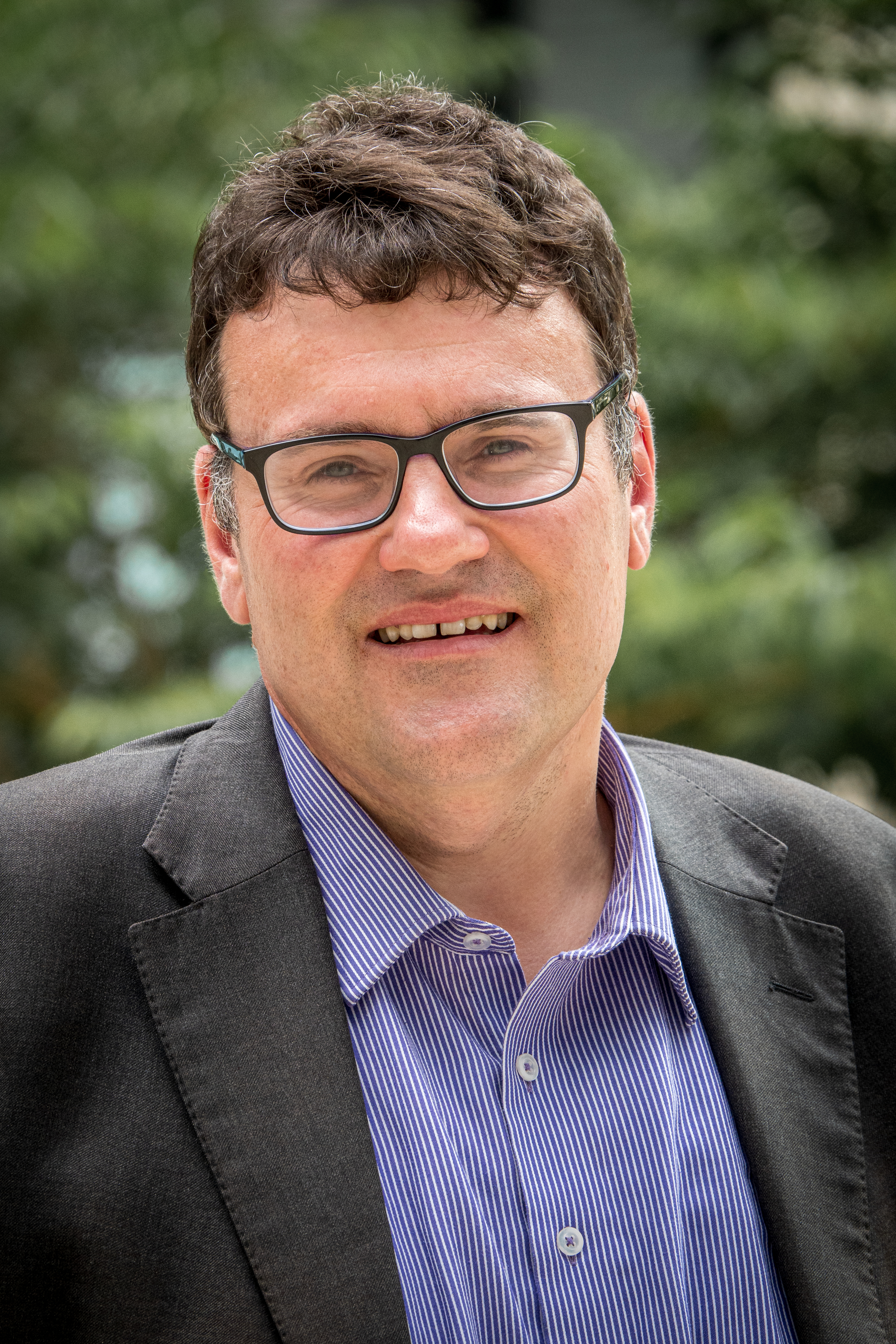
Frank Bongiorno is the author of three acclaimed histories: Dreamers and Schemers, The Eighties and The Sex Lives of Australians. He is professor of history at the Australian National University and President of the Council for the Humanities Arts and Social Sciences.

 Assistance animals welcome

 Hearing induction loop

 Wheelchair accessible
Visit us
Find our opening times, get directions, join a tour, or dine and shop with us.