

COVID-19 oral history project: Archiving pandemic voices
From 2023 to 2025, the National Library of Australia undertook a major project to document Australian experiences of COVID‑19 through 260 oral history interviews. Interviewers travelled to every state and territory, speaking with a diverse cross-section of Australians about their lives before and during the pandemic.
Who did we select to interview when literally every Australian has a COVID story? How did we approach this subject when people’s experiences can be fraught with anxiety, grief or even indignation? Why did we decide it was important to capture these stories and what legacy do we hope to achieve?
Now preserved for future generations are the voices of nurses, doctors, teachers, students, politicians, retirees, artists, medical researchers and many others, each reflecting on how they navigated an extraordinary moment in history.
COVID-19 oral history project: Archiving pandemic voices
Jo Ritale:
Good afternoon everyone. My name is Jo Ritale, Assistant Director General of Collections here at the National Library. It is my pleasure to welcome you all here today to celebrate a new acquisition to our collection. I would like to begin by acknowledging the Ngunnawal and Ngambri people, the traditional custodians of the land on which we gather today. I acknowledge their ongoing connection to the land and pay my respects to their elders past and present. I extend that respect to all First Nations people here with us today.
Oral storytelling is central to life on the Australian continent. For millennia, First Nations Australians have shared stories that convey knowledge and connection to Country through spoken words, songs, and dance. The Library's Oral History and Folklore collection is an extension of this long tradition of oral storytelling.
An oral history is a candid and conversational count of an interviewee's life story. The Library's collection includes approximately 24,000 oral history recordings. That translates to an astonishing 58,000 hours of audio recording cultural, intellectual and social life in Australia. Listening to these interviews is connecting with another story. One that may be like your own lived experience or that may challenge your understanding of the past. The global outbreak of COVID-19 resulted in a public health emergency on a scale not seen since the Spanish influenza pandemic a century ago.
The virus was first identified in December 2019 and the first Australian case was recorded on the 20th of January 2020. Across the years that followed, COVID-19 had a significant impact on the social, environmental, economic, digital, and political landscapes of Australia and around the globe. As someone who lived in Melbourne during this pandemic, the experience of extensive periods of lockdown is not something I will easily forget.
In 2023, the Library embarked on a major project to document Australian experiences of COVID-19. Interviewers travel to every state and territory speaking with a diverse cross section of Australians about their lives before and during the pandemic. The collection records the voices of nurses, doctors, teachers, students, politicians, retirees, artists, medical researchers and many others, each reflecting on how they navigated this moment in history.
The significance of the collection is enhanced by the timing of the project. The interviews were recorded between 2024 and 2025, at a time when the height of the crisis was recent enough for memories to remain clear for interviewees. But after the substantive rollout of a vaccination programme had seen a significant shift in the management of the pandemic. Over the next hour, our fabulous panel will reflect on the process of compiling this extraordinary collection and why it was important to capture these stories.
So let me now introduce them. Dr Barbara Lemon is a Director of the Curatorial and Collection Research team here at the Library with responsibility for leading the commissioned collecting programme, which includes the oral history collection. Bronwyn Ryan is the Assistant Director of the commissioned collecting programme with curatorial oversight of major oral history and photography projects. Dr Scott McKinnon now works as the Assistant Director in the Library's Rights Management team, but was the project manager of the responses to COVID-19 in Australia Oral History Project and is an experienced oral historian. Please join me in welcoming Barbara, Bronwyn and Scott.
Barbara Lemon:
A nice bit of choreography. Thanks very much, Jo. And thanks to all who are joining us here in the room or online today. For those, a little bit of extra context, I guess, for those who are less familiar with the Oral History and Folklore collection here. We collect oral history recordings in a number of ways, but the majority of the collection is commissioned by the National Library, drawing on a pool of contracted oral historians around the country.
And many of them are professional historians, but we also have former journalists, broadcasters, musicians, artists, scientists, you name it, all of whom have honed the craft of asking and listening within their particular field of expertise. We have an ongoing stream of collecting, which records the perspectives of publicly prominent individuals. So those who have made a public contribution of national significance to Australia, but we also have a long-running series of social history projects.
And these are designed to capture the experiences of, for want of a better phrase, everyday Australians whose lives have touched on themes of national significance. Climate disasters, for example, political campaigns and so on. The COVID-19 oral history project in many ways combines the two, but I think what really distinguishes it as a project is its sheer scale, literally, but also conceptually.
So in 2023, Scott, you joined the National Library and were given the task of designing, planning and executing a project that would attempt to capture an entire nation's experience of a global catastrophe. So easy. You had to recruit and train oral historians. I guess being a good public servant, you also had to take a deep dive into some paperwork and accountability measures.
Scott McKinnon:
A little bit of that.
Barbara Lemon:
Get ready for that project. And you had to find interview subjects and commission process 260 interviews in what really amounted to a little more than 18 months. So my first question is simple, how on earth did you begin to tackle that gargantuan task?
Scott McKinnon:
Yeah, that's a great question. And I'll give a quick shout out here to our former colleague, Leah Wilson, who worked really closely with me on running this project. And what we were doing at the beginning of the project, really we were confronting two big questions, I guess. The first of which is who do we interview? And when we're talking about a global pandemic, we could interview literally anyone and they would have a story that would be informative and valuable and make a great contribution to this project.
So how do we, kind of, the decision I guess we had to make was how do we reflect the diversity of experiences and who can we talk to? Who can we invite to be interviewed? Who might volunteer to be interviewed? That's going to reflect, I guess, a snapshot across a broad population. We were never going to get anything that's representative of the whole population, but capturing that broad COVID story, I guess, through a diverse range of voices.
So that meant a diversity of ages, of genders, of cultural backgrounds, of across the country, of different locations across the country. And so what we decided to do was basically develop two cohorts, which kind of reflect that category of interviewing that Barbara was just talking about. And the first cohort was people who were in leadership roles during the pandemic. So people who had significant roles in carrying leadership in politics, in policy development, in industry, business leaders, in the arts, creative leaders.
So right across the country are people who were playing those kind of leadership roles. So some examples of the kind of people that we ended up talking to, so political leaders. So what was it like to be in charge of the country when confronted with a global pandemic? So we've spoken to Scott Morrison, Prime Minister at the start of the pandemic, Professor Greg Hunt, who was the Minister for Health at the start of the pandemic. And then we interviewed State Premiers and Territory Chief Ministers. It was kind of one of my goals with the project was to try to collect the set. We came very close, but didn't quite collect the set of those.
Barbara Lemon:
The McDonald's Happy Meal approach.
Scott McKinnon:
Yeah, exactly. Yes. Yeah. Hoping to get a little toy for having done it. And then obviously health is going to be a key area if we're talking about a pandemic. So we interviewed Chief Medical Officers from each of the states and territories. So those people who were really kind of in bureaucratic, behind the scenes roles suddenly thrust into doing daily press conferences about the numbers that day becoming very public figures. And so what for them was that experience like, again, almost collected the full set, but not quite. People like Professor Eddie Holmes, the evolutionary biologist and virologist who was a really interesting interview about his experience of trying to decipher the DNA structure of the virus.
Barbara Lemon:
Genome sequence.
Scott McKinnon:
The genome sequence up there.
Barbara Lemon:
Really reads like a thriller.
Scott McKinnon:
Yes, that kind of raced to discover that and have it up online first. Jodie McVernon, who will listen to a clip of, later. And then in the arts and in business. So really people who were in kind of those big significant leadership roles. These are just some examples, not everybody, but indicators of the people kind of people we were talking to.
And then we had our second much bigger cohort of people that I sometimes referred to as the rest of us. So what was it like for everyday people like us trying to manage through these extraordinary circumstances? So making sure that we did interview in all states and territories, that we interviewed in urban, regional, rural and remote areas. So getting that sense of that diversity of experience from people like Jo who were living in Melbourne at the time and that very intense lockdown to people who were living in rural areas and maybe not having the same intensity of experience.
I remember we invited one older lady living in a small town to be interviewed and she said, 'Well, why do you want to talk to me? My experience wasn't that difficult. I didn't get to see the grandkids as much as I would've liked. But other than that, my day-to-day life.' And it was really important to us not just to capture those most difficult and traumatic of stories, although there's certainly plenty of those in the collection, but to understand how it was experienced right across the country.
People, as I say, of diverse cultural backgrounds. The people we interviewed were all over the age of 18, but because we were a few years into the pandemic, we were able to interview people who'd been doing their final years of high school during 2020. And then people with diverse views about COVID-19 and Australia's responses to it. So how were people responding to the policies and the stories that were coming up and making sure we captured a sense of some quite contentious issues, I guess, in the stories that we were collecting.
Barbara Lemon:
As representative as we could be of those thoughts across the population. And I guess in what you've described there, you've got people with a huge range of not only life experience, but experience speaking about their life. Public speaking in some cases, some people who would find it quite potentially, I imagine, confronting or just odd to be interviewed one-on-one in a formal-ish manner. So how did you guide oral historians in terms of what to ask, the framing, the shaping of the interviews?
Scott McKinnon:
Yeah. So that was the next big question. When we're sitting down with these people, what are we going to talk to them about? So what we did was we set up some workshops here at the Library to kind of brainstorm ideas, to brainstorm some kind of theories, some kind of themes that we could talk to people about. We don't, when we're doing oral history interviews, usually have a set list of questions that we're going to ask everybody. It's more conversational than that.
So we did have suggested questions that might work, but really what we were thinking about was here's a list of themes that you might want to explore with the people that you interview if it's relevant to that particular person. And so yeah, we workshop those themes with people here in the Library. I met with people talking to the Australian Historical Association and the Australian Academy of the Humanities and different kind of stakeholder groups. People who might be looking to use a collection like this and talk to them about what kind of things would you want to come out of this kind of area.
And yeah, then we put together, Leah and I put together a pack for interviewers to give them a sense of what it was that we were looking for and some prompts about here's what you might talk to people about. And we'll dig into some of those themes I think as we go along.
Barbara Lemon:
So thinking about that, the way the interviews practically worked, perhaps I can turn to you Bron. Bron's day job, as you've heard from Jo, is managing major oral history projects among other commissioned collections. But during this project, you stepped out of the desk, away from the desk a couple of times to record some interviews for us. So what was your experience of recording those interviews?
Bronwyn Ryan:
Yeah. Well, I had a really, really good experience with my two interviewees. And the work that you and Leah did to put together the oral historian pack was just so valuable. I interviewed two different women with two really different experiences, both based here in Canberra. One was a young girl who was in year 12 in 2021 called Kate Chipman. She'd moved to ANU and Kate was in year 12 in New South Wales, doing a HSC. She was school captain that year. So she was in lockdown in Sydney.
And then she moved to the ANU in the beginning of 2022. And of course COVID was still going on there and she had to experience moving into a residential college. So all that was part of the interview that I had with Kate, those experiences. And then the second woman I interviewed was Sister Noelene Quinane. And Sister Noelene also lives in Canberra and was probably in her late 70s when COVID hit.
But she trained as a Josephite nun and worked in Catholic education throughout her whole career. But at the time of COVID was working at MacKillop House, which is here in Canberra. And it's a house for women who are homeless or escaping domestic or family violence. So my interview with Sister Noelene was completely different and was about that experience.
But certainly the guide really helped me because I did, as you know, and I think you've kind of mentioned, with our interviewing, we do whole of life interviews. So we look at the life story of the interviewee and then we turn to questions relating to the themes on COVID. So for both interviews, they were both about four hours long, I think. I would start back to their childhood when they were born, talked about their parents and then went through their lives and then put a lot of focus on the COVID aspect of the interview.
But someone like Kate Chipman, who was younger, of course, I was talking about school years and COVID at the same time. And then with Sister Noelene, talked about her life and then her experience at MacKillop House. Yeah.
Barbara Lemon:
That's interesting. It makes me think, I mean, perhaps both of you, Scott also recorded interviews for the collection. Tell me anecdotally, if you ever felt there was a risk, you wouldn't get to COVID because it was the last, the most recent thing to happen. And there's a lot of life to cover before that.
Bronwyn Ryan:
Yes, definitely. I did think that. But I think the whole of life aspect's really important because it made the COVID experience...
Barbara Lemon:
contextualised or something.
Bronwyn Ryan:
It contextualised it and it made it more relevant. So I'll give you an example with Kate who I talked about. You discover through her life that she was very committed to her schooling. She worked really hard. She did a lot of extracurricular activities. So year 12 was really important to her. So you sort of had that background. And so then when you went in with your questions around year 12, you know how much it did impact her. So yeah, that's what I found. Anyway, I don't know about you, Scott.
Scott McKinnon:
Yeah. Yeah. One of my interviews is coming to mind. Someone who was working as an epidemiologist and part of her work during the pandemic was to train contact tracers. So how do you kind of locate a person and track where they've been? So we had invited her to be interviewed because of that fascinating work that was so relevant to this project.
But in the course of the interview, she reveals that she used to be a nurse. And used to be a nurse for Médecins Sans Frontières and used to work in Sudan setting up stations to feed malnourished children. So we have this extraordinary story of an extraordinary person talking about this work that she did in the most incredibly matter of fact kind of way. And so yeah, one of the great pleasures of doing this kind of interviewing is that you discover these kind of remarkable stories.
So you might think that you're interviewing on this theme. And I guess this comes up in every one of the projects that the Library does. We're interviewing on that theme, but we're also capturing these amazing Australian stories in the course of doing that.
Barbara Lemon:
15 interviews in one. It's almost like contact tracing in life story terms. Following that tangent and following the next one. Where's it going to take you? I guess I was wondering too, if there was any element of catharsis with those who you interviewed or knew of being interviewed. In the sense that, like Jo, I was in Melbourne and I did feel at the end of that sort of end, it's not really, but formalised end of the whole thing.
That there was a sense of kind of, are we going to talk about what just happened or we're just moving on now? And that kind of, can we just acknowledge that that was really hard? And I guess I wondered if some interviewees kind of welcomed the chance to debrief maybe for the first time in full with someone who was not only paid to, but interested to listen to that whole story. Or were they ready to talk? Was there a sense of a bit too close still?
Bronwyn Ryan:
Well, yeah. I found with the two women that I interviewed, they were very open to having the interview. They would say things like, 'I forgot that happened.' Or, 'Oh, it's good to talk about this again.' Tey didn't sort of say, 'Oh, this was too much.' And I think they like talking about their life as well. And we established a great rapport. So I think they were ready. They did want to tell their story and afterwards it reminded them of things that they had forgotten. That's what I found.
Scott McKinnon:
Yeah. And I guess in part of managing the project is you want to make sure that the people you are interviewing feel ready and feel happy to talk. We would never want to pressure anyone into doing an interview before they're ready to talk. And yes, thinking about, so I worked on previously a project that the Library did about the black summer bushfires, interviewing people around the Cobargo region about the black summer bushfires.
And I remember in that community, there were people who were just not ready to talk about their experience yet. But there were people who, one interview, I remember the person said to me, 'I've never really talked about this like this before.' And oral history is not therapy, but there is a kind of catharsis in it of someone who is very happy to sit with you for several hours to just listen to your story and intensely listen to your story. And it can, I think, be quite cathartic. Yeah.
Barbara Lemon:
A rare opportunity in life.
Scott McKinnon:
Yeah.
Bronwyn Ryan:
Actually, Barb, just another thing. As the oral historian for both the women I interviewed, and all our oral historians do do this, we do have a pre sort of interview catch up. And in those interviews, where you're getting to know each other and building the rapport, but you do talk about the interview and do say if there's anything you don't want to talk about, you do not have to talk about it. We can stop the interview at any time. If you decide you don't want to talk about a topic, that's fine as well.
Barbara Lemon:
If it becomes apparent you're not ready, then...
Bronwyn Ryan:
That's right.
Barbara Lemon:
That's okay too.
Bronwyn Ryan:
Yeah.
Barbara Lemon:
Really interesting to think about. I know we're going to cover a few themes and we've got some slides with a couple of excerpts to help kind of illustrate the collection. So perhaps, Scott, you can talk us about the first theme we're going to look at.
Scott McKinnon:
Sure. Yes. So obviously a theme for an oral history project about the pandemic is going to be about health and wellbeing. And so really what we wanted to do was record for researchers into the future or listeners into the future, what was that lived experience of dealing with the issues around health and wellbeing with COVID? One of those being, what does it feel like to have COVID? What does it feel like to have long COVID?
But also things about what was that experience of going to get tested for the first time? And just a sense of the kind of emotions around that, but the logistics about that, just making a record of these kind of things for people into the future. I'll mention also that the Library does commissioned photography work as well. Again, that's Barbara and Bron's team that do that. And so these slides are from some of the commissioned photography that the Library did during COVID.
And yeah, that lived experience of dealing with a confronting illness. And also things about state and federal government health policies. What were people's views on those? How did that affect day-to-day life? So what I thought I'd do is play a little clip here of an interview. And I think this interview kind of, in some ways shows an overlap with some of our themes because one of the other themes that we explored was relationships.
How did the pandemic affect your everyday relationships, your romantic relationships, your friendships, your family relationships? How did the borders that were so much a part of our lives impact that? How did these kind of issues impact on your day-to-day relationships with your family? And so this was an interview done by an interviewer and photographer and a zoo with a woman named Emma Harding. And Emma, at the beginning of 2020, was beginning her PhD in virology, which was kind of a remarkable point in time to be starting your PhD in virology.
And in this little clip that I'll play, Anna at the beginning of the clip says to Emma, 'Did you get any pushback from people about the idea of wearing masks?'
Anna Zhu:
Did you get pushback with a mask wearing from anyone you know?
Emma Harding:
Not really. I was happy to be quite firm and be like, 'I'm not coming out with you unless you put a mask on. Because that is something that I thought was pretty non-negotiable. So even if they were like, 'Oh, it'll be fine.' I'd be like, 'You do that in your own time, but with me, the mask is going on.'
So I think I did take a bit more of that expert role, I guess, and felt that I was getting information from peers and I knew enough that I could enforce stuff and be firm around those topics. And yeah, we did have a few gatherings and things where it's like, 'If everyone's not vaccinated, I don't want them here.' There was a big kerfuffle at the Christmas of 2021, I think, when the vaccines had come out, but not everyone had access to them or had gotten them. And one person wanted to come that wasn't vaccinated. And things like that were touchy subjects in the family.
Scott McKinnon:
Yeah, so a sense there I think of how things were changing over time. We didn't have a vaccine. The vaccine came in. There's questions in that. And Emma, with her kind of expertise in the area, taking in a bit of a leadership role within the family around this. And being quite firm about these are the kind of things that we need to do to keep ourselves and each other safe in this moment. Emma also, she had a blog, that's how I found her, where she was kind of writing up information in a really easily kind of understandable way for people understanding what was happening. And yeah, a sense there of how the health decisions that we all need to make might have sometimes intersected with other areas of our lives, sometimes not necessarily easily.
Barbara Lemon:
Especially those family relationships. And I guess it's interesting to think about whether listening to her voice there and there is a confidence about this is how it is. Whether having the backing of doing study in that area..
Bronwyn Ryan:
Yeah.
Barbara Lemon:
...and being so familiar with the area would have potentially made people's response to that easier in some sense of kind of you must know what you're talking about. But then I think in other parts of the community where there might have been less confidence in who was drawing those lines that could have and did, I think lead to some murky sort of family and community dynamics there and the kind of she'll be right. Oh no, she won't. Yeah. So health and wellbeing would have run through every single interview in the collection.
Scott McKinnon:
Absolutely. Yeah. And that's from people who were working at the coalface of health. So nurses and doctors. We have some fairly intense conversations with people who were in that kind of frontline health role. So obviously that was critically important for us to record and to have a sense of. We have an interview with someone whose first year of nursing was 2020. So she's literally out of university and working in a hospital into a global pandemic and the intensity of that kind of experience.
So from that kind of, and also around public health policy. So those kind of people whose everyday life was around health and wellbeing in a pandemic. But also, as you say, of course, how it was affecting every single one of us. And to get a sense, I think you mentioned earlier, Barb, a sense of we're kind of moving on now, to make sure that we have recorded that kind of memory of, this is what it actually felt like. And these were the moments that we didn't actually know. We didn't have a test yet, so we didn't know, do I just have a cold or do I have COVID?
That was a fun part of the whole experience for everyone. Where should I be using a mask? Where should I be wearing a mask? Where should we be sanitising? There was a whole thing around here. Should we be washing our groceries when we get them I'm home from the supermarket. So making sure we have a record of those kind of experiences I think is really important.
Barbara Lemon:
Remembering there was a time where that seemed a sane question to us.
Scott McKinnon:
Yeah, absolutely. It was an entirely rational question.
Barbara Lemon:
Totally rational question. And all the memes that go with it was just a whole other kind of collecting enterprise, isn't it? Which would be a conversation for another day. And I guess the beauty of a project, a collection of oral history is that you get that combined retelling. It's only by combining these stories that you get, you almost put all those puzzle pieces back together to tell the story, the sequence of what happened. I think we're also going to have a look at public spaces next. Is that right?
Bronwyn Ryan:
Yes, that's right. So the public space theme looked at things like the significance of borders, including areas that were more locked down than others, like local government areas in say Sydney and different parts of Australia. Contract tracing, policing and surveillance in public spaces. Online and virtual spaces was another area that some of the interviews, a lot of the interviews looked at. Social distancing of course came through.
And so also we looked at location specific experiences. And we will listen to Andrew in a minute, but I kind of wanted to jump in there on the two interviews that I did because I think space was big for both my interviewees. For Sister Noelene Quinane, when you listen to her interview from the beginning of the interview, she talks about how important going to church was, going to mass every Sunday. And then she trained to be a nun, so the church was very, very important to her.
So when she couldn't go to mass every Sunday, that was a really big change for her. So we talked a lot about that in her interview. So that's another, those religious spaces for some people. She couldn't receive Eucharist. And even when things did die down and she went to church that you couldn't say, 'Peace be with you,' or drink wine from the chalice. So the religious space is something big there too. But certainly online spaces for someone like young, like Kate Chipman, she went to school online. She studied online. Her friendships were online. Year 12 students, her school captainship was online. And even some of her extracurricular activities. She's a really good swimmer, really interested in swimming. And her and her swimming coach and team used to just, even though they couldn't swim, would just sort of do meditation and connect online. So I think they were important stories in the two interviews that I did.
But Andrew is another example here. Andrew Copalov was living in London in about 2020 and moved to Australia in 2021. While he was living in London, he was living with four other Aussies. Came back to Australia and he'd been studying a master's of architecture, came back and was being a food delivery driver and set up a gig worker's hub for other food delivery drivers so they could have breaks between their deliveries.
And he came back to Australia and started his PhD. And one of our great oral historians, Michael Green, interviewed Andrew and asked a question around, 'So when did you know this COVID thing was a real thing?' And this was his reply.
Andrew Copalov:
When you're like, 'Oh, okay, this is a real thing.' Well, again, it's difficult for me to place these things in time, but let's say an instance or an incident that was reflective of maybe the gravity of the situation. I remember that when you would go to the park in London, the police would reprimand you if you were sitting down more or less. So it was this thing about you go outside or you go to the park to exercise. You go to walk around. You don't go there to chit chat and hang out. And yeah, so I guess the policing was a reminder maybe that something's different here. Yeah.
Barbara Lemon:
Yeah, certainly brings back to mind those kind of news items of headline group in the park sitting and talking and had they'd been moved on. Different benchmark for kind of top of the newsreel.
Scott McKinnon:
And also I've just kind of noticed in Andrew's little clip there was the, 'It's difficult to pinpoint things in time'. I think that's quite a common thing as well. Our kind of sense of time and progression of time and when things happened. It was quite complicated and quite difficult. I think that's a quite common experience.
Barbara Lemon:
Very fluid, wasn't it? That last year, no wait the year before. Yeah.
Bronwyn Ryan:
Was it 20 or 2021? It's a lot of that. I can't remember if it was 20 or 21. Yeah. And when did it happen? Yes. But it does remind you. I forgot about, and when I listened to that recently, I forgot about, I remember going for the walk in the park and seeing people together talking. You forget about those little incidences and how we were living like that.
Barbara Lemon:
And a bit of public surveillance that comes in a kind of uncomfortable way. I mean, again, Victorian reference, but it does remind me of years past in severe drought where there would be a kind of, 'Oh, your garden looks...
Bronwyn Ryan:
...green.
Barbara Lemon:
Looks quite green. It's going on there. There's a kind of community watchfulness that it's got its good sides, but it's very uncomfortable sides as well and divisive sides, I suppose. You also pick up on that online space thing, which is such a critical change that came about through this whole process, didn't it? With a legacy that continues in terms of how we use online platforms and so on, not just to communicate, but to do all sorts of things, to make music together to.
Scott McKinnon:
Yeah. And we interviewed, sorry, I'm forgetting the name of the person that we interviewed, but someone living with a disability who talked about how she was able to access theatre in a way that she often isn't because it was online, she could watch it from home. And that because so many theatres were filming performances or putting things online. And some of that has cut back. And so there's an interesting accessibility issue there that actually the opening up of doing things online for a lot of people, even outside of COVID, opened up their access to events.
Barbara Lemon:
It's true. And it's really interesting to see that kind of snapback in not all cases, but many cases as if that kind of never happened. That was just a thing we dreamt at the time. And I know that part of the recording that took place in this project was about empty spaces, wasn't it? I'm thinking of those, perhaps some of Nikki Henningham's recordings in Melbourne, just recording silence essentially. How did that work?
Scott McKinnon:
Do you want to talk about the...so this was one of our oral historians during lockdowns in Melbourne went to Melbourne's usually busiest places and with her recorder and recorded the sound of that place during lockdown. And so you hear this kind of lonely tram going by in the background in a place where you would usually be swamped with cars and people and buskers and also sorts of things. So it's a kind of eerie sense of how Melbourne was experiencing that moment.
Bronwyn Ryan:
But what a great way to capture that...
Scott McKinnon:
Yeah.
Bronwyn Ryan:
...that soundscape. I think that's just great to have that.
Barbara Lemon:
You noticed, in things you notice that you might be hearing birds in a way that you didn't.
Bronwyn Ryan:
Yeah, when it's busy.
Barbara Lemon:
Yeah. So I think that was a very inspired thing to do. We've got a third theme on home.
Scott McKinnon:
Yeah. So kind of intersecting, I guess, with the public was home and housing and how we make home and how our work lives may have merged somewhat with our home lives through the course of the pandemic. So those kind of changing meanings of home and work and public space and how they were all kind of intersecting in different ways. And we wanted to capture when we're talking about the diversity of experiences, the diversity of how people make home or make their home.
Where do people live? So we wanted to capture the idea of where you're living within a share house. One interview I remember a young person who was living in a share house and they had to travel for work and there was a COVID kind of breakout in the place that they were travelling to. And so they got back to their share house and all of their flatmates made them sleep on the balcony for at least a few nights until they knew it was okay.
So what's the experience of living in a share house? Managing the kind of whose boyfriend or girlfriend gets to visit and who doesn't and those kind of issues. Living in aged care, living in boarding houses, living in multi-generational homes. If you are all suddenly at home together all day, every day, how are you managing that experience together? So getting a sense of that was very much very important to us.
Changes in renting and the housing market, experiencing experiences of moving house. And how did you move to a new home or moving across borders, moving interstate, returning from overseas, those kind of challenges. How did you create some privacy and some personal space for yourself in those moments? Particularly for those of us who are classic introverts, what was that experience like where you maybe didn't get the personal space that you would normally enjoy? Gardens and green spaces and getting out into nature and how you were able to do that.
I mean, we all have a sense, I think, of the experience of being among trees and among nature as a kind of healing experience. But if you're locked off, if that's important to you and you're locked off from doing that, then that's going to be a big deal or was a big deal. And we also wanted to get a sense, and this is the clip I'll play now of how people were managing working at home. And we have an interview with Professor Jodie McVernon. And Professor McVernon was doing a lot of work advising on government policy around public health and epidemiology.
And so working incredibly hard, working incredibly long hours, developing policy, having data come in and needing to respond to data as it comes in the latest data, the latest information. How does this change what we were thinking about yesterday? And this is another interview by Michael Green talking to Jodie. And Michael asked some wonderful questions about what was that experience actually like for you? And I think this is one of the nice things about oral history is we can track down the policies that Professor McVernon was working on. We can find those records in other collections.
But what oral history gives us is a sense of what was it actually like in that moment to be working on that and how did that affect you and your family? So at the start of this clip, Michael has asked, 'Tell me a little bit about the kind of hours that you were working,' and we'll hear from Jodie.
Jodie McVernon:
Yeah, particularly through some periods. It's the second half of 2021, we're writing reports on five sequential work streams to national cabinet. There was a lot of time working in my pyjamas in bed in the room next door and just not a lot of sleep. So the days were long and tiring and you just had to do what you had to do, pull it out.
Michael Green:
Can you give me a sense of that? Is it like up at 5 and 9?
Jodie McVernon:
Yeah. I mean, because the meetings were so intense through the day, if I actually had to write or generate intellectual content and you were trying to sort of synthesise and help people think through and process experiments, because models are experiments and people are bringing up their content. You're trying to make sense of it and direct what's the next thing. So yeah, I'm someone who gets up and works better in the morning.
I can think more clearly. So yeah, 4 or 5, depending on how much work there was to do. Then usually a pretty full day of meetings, then try to actually be available for my kids, cook a proper dinner and sit down and have some sofa time together. Because they're older, that was the natural end of the day. And from pretty early in 2020, they were here doing homeschooling in their bedrooms. And that was our time to kind of regroup.
And sometimes I still had to go back and do some more work. And weekends were pretty hard to avoid work, but there was nothing else to do anyway. So yeah, it was a lot.
Michael Green:
Can you describe...
Barbara Lemon:
It was a lot. That's such a loaded...
Michael Green:
...what did it look like? So now it's a lovely sitting room.
Barbara Lemon:
A little bit more from Michael there.
Scott McKinnon:
That's okay.
Barbara Lemon:
I was going to ask where the homeschooling came up a lot in the collection and certainly that almost like a semi-traumatic experience there for many parents.
Scott McKinnon:
Yes. Yeah. The experience of parenting and parenting kids of various ages. And what that experience was like does come up a lot. And that kind of, again, we're interviewing someone because of the work they did in COVID, but in talking to them about that work, you also get a sense of being a parent at the same time.
There's another part of that interview where Jodie talks about would occasionally be in a Zoom meeting and switching the camera off and sweeping the floor while still being part of that Zoom meeting because she says, 'If I didn't do it, no one else was going to do it.' And so kind of balancing that kind of very high pressure, very high intensity work with...
Barbara Lemon:
...domestic responsibilities.
Scott McKinnon:
...domestic responsibilities and trying to keep on top of your home that is also your workspace at the time.
Barbara Lemon:
And you're constantly lived in home. I guess that's it, isn't it? There is no break. That's the relentlessness of the work and domestics crossing over.
Bronwyn Ryan:
Actually, Kate Chipman, the young girl from Sydney was in a three bedroom apartment with two younger siblings who were being homeschooled. Kate was doing year 12 and her parents were there. So much going on in that house. But she did sort of say her bedroom with her desk was her space when we're talking about spaces and housing.
Barbara Lemon:
That's the sanctuary.
Bronwyn Ryan:
That was her sanctuary. But it's interesting.
Barbara Lemon:
Comes down to these tiny pockets that you can escape to and kind of draw a line around that's your bit to sit on. I guess before we open up to the audience for some questions, I just wanted to give you both a chance to kind of add anything about the project from your point of view or kind of observations or things you think we might've missed.
I'm interested, for example, in differences in experiences across geographical boundaries, different states, different towns where you were shaping how it was for you. But also I guess broader questions, maybe particularly for you, Scott, having that kind of overview of the whole collection. Not that obviously you've been able to listen to every hour of every interview of the 260, but what's your impression of humankind coming out of this? And how did we fare? Were we decent to each other? Do we think we can handle something like this again in a different way?
Scott McKinnon:
Yes. It was something that brought out the best and worst, I guess. And you get these really beautiful stories of friendships and family and support that people were giving each other. Which is a really lovely thing that comes out of...and you're talking about a global pandemic. It was the same with the bushfire project that I worked on.
You get these lovely stories that come out of it. You get very funny stories that come out of it. And the way people find to laugh about things is really kind of powerful, I think, and kind of fun. I guess coming out of it and reflecting on it, and even listening to some of these again and listening to you Bron, talk about the interviews you did, something that I'm thinking about a lot lately, I guess, is this idea that we've kind of just moved on and we've kind of been encouraged to move on.
And we've all just been through something that was really intense and really difficult. And so I think there's a value in continuing to be kind to ourselves and others in our interactions. And I'm not sure if there have been consequences on our politics and on our interactions with each other that I'm not sure yet. That I don't think we've kind of recognised possibly a consequence of living through a global pandemic of an order that we hadn't seen for a century. And so yeah, continuing to be generous to ourselves and each other, I think.
Barbara Lemon:
A good takeaway. The amnesia is fascinating, isn't it? And just how quickly that seems to get a collective amnesia. And I guess I'm wondering, Bron, you might be noticing too whether this subject, this period, but also the kind of vivid recollection, the willingness to go back and revisit and analyse will be there in future interviews. I know we used to joke about every interview from here on is a COVID-19 interview because it will be there in everyone's story from here on, but it will be interesting to see how it's reflected upon how it features or doesn't.
Bronwyn Ryan:
As the years go on, I think it will be. But it's really interesting. And I was thinking about it with the interviews. You always think you're never going to forget a time. You know when you're in it, I'll never forget that I had to do this and I never forget. But that's why I think this archive is so important because we have captured those times.
Even when I was interviewing, I though, I forgot we lined up to get for seven hours to get a PCR test. You know what I mean? So I think it's great that the Library has done this, captured this for future generations because they really are primary sources for people in the future to look back on. And yeah, I think the Library should be really proud of it. And I'm certainly feel really privileged to have been part of that collection.
Barbara Lemon:
I agree, Bron. And I think it's only the beginning, isn't it, of the research potential.
Bronwyn Ryan:
Absolutely.
Barbara Lemon:
With what's there, it's an absolute gold line.
Bronwyn Ryan:
It's such a deep and rich archive. Who knows who will use it and for what purposes? But it's got so many stories.
Scott McKinnon:
Yeah. And for people who do want to listen, there's already well over a hundred of these interviews are online. You can listen to them online. We give people a choice about how accessible they want the interview to be. So some people can choose to close an interview for a period of time or to set certain access conditions on interview. But there are a bunch of them up online now that we are very much hoping that people will listen and write about and do research into. Yeah.
Barbara Lemon:
Yeah. Perfect place to pause, I think. And we'll throw open to questions. I know we have a roving microphone, which we just ask you to use for the sake of the people online so they can hear your voice. We've got a question down the front. Nicole, thank you. Blake.
Audience member 1:
Thank you for that. And that was really great insight into the whole project. I'm interested, you spoke at the beginning about trying to capture the diversity of views. And a lot of the people who were probably the most conspiracy-minded individuals around this, who were COVID denialist, also have a deep seated suspicion of government and government institutions. So I'm wondering how you went about approaching those individuals who already probably had their hackles up about being approached to speak about this topic.
Scott McKinnon:
Yeah, that's a great question, Blake. And it was what we found, I guess, was yes, there is that suspicion about the government, but there's also a real willingness to ensure that your version of events is included in something like this. So we didn't, from memory, struggle to find people to talk to with those particular views.
And yeah, it's a challenge for the Library for this kind of project. You don't want to be participating in disseminating information that might not fit with the medical evidence. But it was such an important part of the history of this event that it was really important to include those views. So no, we didn't struggle to find people to talk to.
Barbara Lemon:
Yes.
Audience member 2:
Thanks very much folks for your talk. I'm very interested in what you had to say. I'm also interested in what happened because COVID went over really three years, 2021 and 22, whichever. How did the people who were dying? There are a lot of people who died. A lot of families were affected by that. And I just wondered if some of that was captured in the people over those themes that you talked about.
And just for example, with the border closures, people couldn't travel to funerals. And when in the early days of funerals, the funeral directors were only able to take videos of them. In my experience of funerals, people were separated, they were only allowed to have a certain number of people. But as time progressed, they got into livestreaming. By the end of COVID, that was very much the offering that was made.
And now that's become part, very much part of funeral services as an offering. And I'm wondering in your discussions with people when you talk about businesses, just the changes in their own practises over that period because it was such an interesting period. And if you are able to capture some of that, thank you.
Scott McKinnon:
Yeah. Thank you. That's a great question. Do you want me to answer that?
Bronwyn Ryan:
Yeah, you can answer that. I haven't got examples with mine...
Scott McKinnon:
Yeah, definitely. The people dying, not necessarily of COVID, but grandparents, parents across a border is definitely something that's captured in the collection. I'm trying to think of an example and can't off the top of my head, but very much around that theme of borders that we were used to crossing every single day without even thinking that there was a border there between the suburb you live in and the next suburb, and suddenly there is a firm border there.
And what that would mean if your elderly grandparent is dying or dying across that border. And part of that was the logistics of the forms that you had to fill in and the evidence that you had to show. And part of it was that I didn't get to go to this event this critically. Also, people being born. I didn't get to see my new grandchild for a year because they couldn't get back to Australia, those kind of stories.
So very much part of it. And also I'm thinking of people who were nursing and nursing people who were dying either of COVID or of something else. And trying to find ways that family members could be with or communicate with that person who might be closed off. So yeah, there's some really difficult, very, very sad stories there. But also as you say, the way that we adapted our practises to work around that so that you could livestream.
And again, yeah, that fits in with what Barb was saying earlier about some of our practises that now are permanently changed for the good as a result of this, that you can livestream a funeral. Yeah. So very much a part of the story. And yeah, sorry, just to go back to what you were saying about that changing period of time, the Library chose not to interview online during lockdowns. We only do in-person interviews.
And what that meant was that we couldn't do any interviewing while lockdowns were actually happening. And we needed to make sure that people were safe, the interviewers were safe and interviewees were safe. And so making sure that we followed kind of best practises for keeping people safe as the kind of risk ebbed and flowed, I guess, over time. Yeah. So that kind of sense of changing time was very much part of it as well. Yeah.
Barbara Lemon:
Yeah, out the back.
Audience member 3:
Thank you so much for an interesting discussion. I have two questions and I'll try to be quick. So the first question is content related. I was wondering if you had managed to interview anybody who had been in Western Sydney who were directly involved in supply chains because I know there were disruptions to supermarkets being able to get things and people who were working in those areas.
What their experiences was and the second question is maybe more of a curatorial question. There have been a number of different institutions collecting around the pandemic. And I wonder if you had talked to those other institutions about what they were doing and how you thought about what the Library was doing differently and maybe reflect on, I guess, the process now and what each of those collections has done differently and has contributed to, I guess, a broader story.
Barbara Lemon:
I can have a go at the second bit and pass the first bit to you, although I do remember the struggles of trying to recruit truck drivers and so on in the supply chain to be interviewed. But yes, curatorially, we do have strong relationships with other collecting institutions and particularly the state libraries have made concerted efforts to collect pandemic material. You're quite right. And some of them use those online platforms in a new way to do so.
So putting out almost a crowdsourced call for ephemera and for material, emails that we received from companies that we never would have in another context. So we very much do stay in touch with our colleagues around that. And I guess we just abide by what are loosely our kind of collecting boundaries in the sense of jurisdictionally or in our case, what's in the act, going back to kind of our responsibility to collect everything that's published in Australia.
So that does give us a very broad remit where I think some of our fellow cultural institutions would've had a more specific channel in their collecting to really represent the experience of that location in a way in which they could preserve that material as well. Oral history is definitely a strength of the National Library. We're certainly not the only one collecting oral history. And particularly the State Library of New South Wales has a strong collection in this area, but this is certainly the only project of its kind that has occurred to date. I'll pass to Scott to pick up.
Scott McKinnon:
Yes. I'm sort of trying to I'm desperately search through my memory of who we interviewed because I know that we were trying to interview truck drivers and I don't think that we did. And I'm trying to think of stories where people talked about the difficulty. I mean, everybody talked about toilet paper and toilet paper selling out. And yes.
Barbara Lemon:
Interrupted retail supply chains. It's almost incidental, isn't it? There were things I think that came up through interviews like the experiences of funerals and death and dying that you might not have even known was going to come up in that one until it did.
Scott McKinnon:
Yeah. I'm trying to think if it came up in interviews with small business owners, for example, who were struggling to get supplies or who were finding that things were more expensive and so then costs go up for clients as well. So yes, it's in there somewhere and I can't remember where.
Barbara Lemon:
This is where we need our transcripts. A lot of keyword searching for all those research projects that are coming up. I think we've hit our time, so I'm just going to ask Jo to pop up and give you a last couple of messages before we wrap up.
Jo Ritale:
So really my most important message is actually to thank Barbara, Bronwyn and Scott for such an interesting conversation and also to thank our audience for those really thoughtful questions. And I also want to acknowledge that in the audience, I can see quite a few of the team that were associated with this project. We have a big team here.
We have people who worked in the curatorial element, but we've also got some of our technical team who processed all those oral histories and have made them accessible. So a big shout out and thank you to you as well. If today's discussion has inspired you, the Library has a range of activities this August relating to oral history. So you can take a how-to workshop with oral historians, Claudia Craig and Gerard Callinan, where you will learn the necessary tips and tricks to record successful oral histories.
We will also have an oral history pod in the foyer, a quiet space for you and a friend or family member to interview and record each other, complete with sample questions to get you started. And finally, you can join Dr Barbara Lemon, Dr Shirleene Robinson, MC Trey, and Dr Barry York as they celebrate the launch of the library's new podcast, 'The Memory Tapes' and its accompanying book.
And discuss lessons on humanity, memory and the art of listening. And all the details for these events are available on the Library's website. So the stories that we've shared today, they reflect only a fraction of the interviews associated with this project. And as Scott said, there are many of these interviews that are available online, so please feel free to explore them after today. But everyone have a wonderful rest of the day and please join me again in thanking our panel.
About the speakers
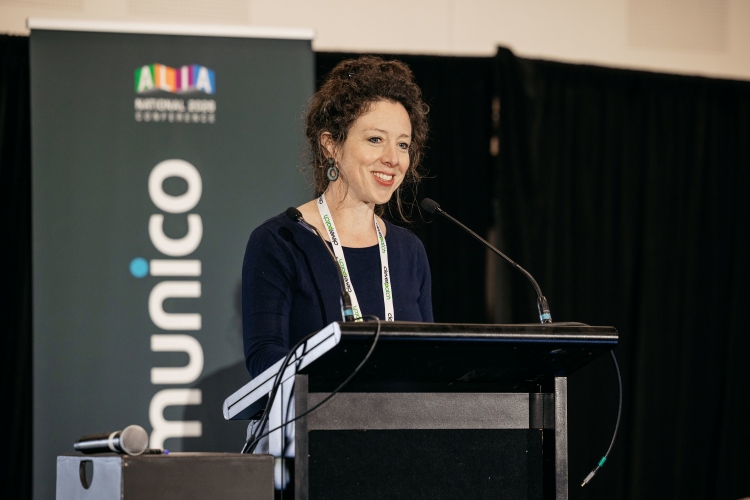
Dr Barbara Lemon
About Dr Barbara Lemon
Dr Barbara Lemon is the co-Director of Curatorial and Collection Research at the National Library of Australia and is responsible for managing the oral history collection. She has held senior roles in the National and State Libraries Australasia, New Zealand, and the United Kingdom.
Dr Lemon completed a doctoral thesis in Australian history in 2008 and her work as a professional historian has been published in a wide range of journals, online exhibitions and radio documentaries.
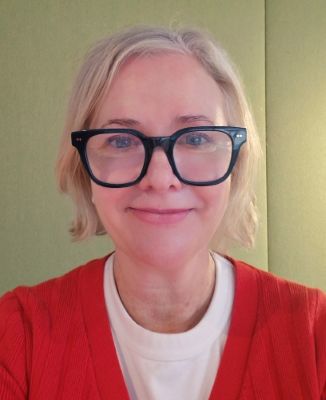
Bronwyn Ryan
About Bronwyn Ryan
Bronwyn Ryan is the Assistant Director within Curatorial and Collection Research at the National Library of Australia. In this role, she manages a team responsible for commissioned oral history and photography projects, and curatorial oversight of the Australian Web Archive.
Bronwyn holds an Honours degree in Australian History and a Graduate Diploma of Arts (Museums and Collections). She has experience working with archival collections at the ABC Archives and the National Archives of Australia. She has spent most of her career at the National Library of Australia, where she began as a Library graduate in 2003. She has also coordinated several major oral history projects, including Women in the Space Industry, Women in Football and She Gives: Australian Women Philanthropists for Social Change.
About Dr Scott McKinnon
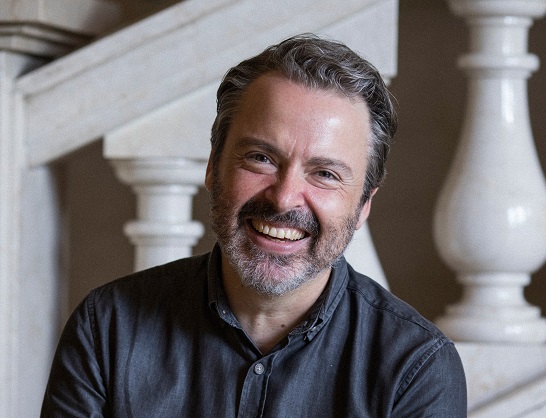
Dr Scott McKinnon is the Assistant Director of Rights Management at the National Library of Australia. As an award-winning oral historian, he has led oral history projects for universities, libraries and community groups, including the Library's Responses to COVID-19 in Australia oral history project.
Dr McKinnon has published books in a wide range of areas of Australian history, including Gay Men at the Movies: Cinema and Memory and the History of a Gay Male Community (Intellect, 2016). He was also co-author of Australian Queer Screens: Diversity and Social Change in Film and TV (Bloomsbury, 2026). He is the Vice President of Oral History New South Wales.

 Assistance animals welcome

 Hearing induction loop

 Wheelchair accessible
Visit us
Find our opening times, get directions, join a tour, or dine and shop with us.