

Living Collection: The music of Luke Styles
Luke Styles was joined by musical collaborator Tobias Cole to discuss Luke's work, his career and the role the Library plays in creating a living collection of prominent Australian artists' works.
Performances from the collection included Luke's vocal music and two of his chamber works for strings. Performing on the evening was violinist Brad Tham, pianist Kimberley Steele, members of the Canberra Symphony Orchestra chorus, Canberra Children’s Choir (Music for Canberra), Vocal Fry (ANU Community Music Centre), pianist Linus Lee and conductor Tobias Cole.
This was the first in a new event series showcasing the National Library's 'Living Collections' of works by prominent Australian artists.
Living Collection: The music of Luke Styles
Marie-Louise Ayres: - millennia. And of course it continues to be so today, and it's this legacy that we continue to build on here at the Library with tonight's event.
So good evening and thank you to everybody for joining us for the inaugural session of our Living Collection series, The Music of Luke Styles. Tonight's not just a concert, it's a celebration of how creative work becomes part of our nation's story and our cultural heritage. How preserving the works of prominent Australian artists, be it music, poetry, art, writing more, allows future generations to explore, reimagine, and engage with the art in a myriad of ways. We are really honoured to have renowned composer Luke Styles with us this evening alongside a steamed choral director Tobias Cole, and an ensemble of skilled performance. He'll bring Luke's work alive for us this evening.
Luke has achieved international acclaim during his career as a composer. He's composed 8 operas for key houses and festivals. He's had numerous prestige residencies and wide ranging performances of his very, very large [unclear]. By entrusting his personal papers to the National Library, Luke has ensured that this body of creative works are preserved, can be studied, and provide endless inspiration for generations to come. And as a composer placing his papers with us, Luke joins a long list of very distinguished Australian composers who have chosen to entrust all of their works to this library.
Luke's collection is comprised of manuscripts, scores, concert programmes, photographs and article. And the collection not only celebrates his musical expertise, but also highlights the created process, the artistic decisions, the thousands, tens of thousands, hundreds of thousands of decisions that have to be made by an artist. And the inspired thinking that frames his final works.
This aligns perfectly with the concept of our new series Living Collection, exploring the collection as a living archive where works can continue to evolve, invite new interpretations, and maintain their presence within our cultural landscape. A moment to honour the art of Australia's greats, to see and experience their work with fresh perspectives and to connect more deeply with the material.
So without further ado, it's my pleasure to hand the baton to Luke and Tobias to conduct this special event. Please join me in welcoming Luke and Tobias.
Tobias Cole: Thank you. So I'm Tobias, and this is Luke. And it has been a great honour to be involved in this project where we will explain how it all got started a little later. But what I'm here to do is to try to tease out a Luke some of those secrets that singers and performers of a composer's work sort of want to know why, why did they make us work so hard or what's behind that moment, that brilliant moment, and that that's hopefully what we'll get today. But what I'd ask you to do is to think of maybe a question, maybe not all of you, but at the end we'll have some questions. I'll invite.
Staff member: See if Yes, it's on now I think. There we go.
Tobias Cole: Oh my goodness.
Luke Styles: Oh, there you are.
Tobias Cole: Wow. Well, I don't have to project.
Luke Styles: Thank you for that introduction, Tobias, and it's lovely to be here this evening with you all. Thank you for coming, and thank you for the wonderful performance of Ferrari Mountain that kicked off tonight's proceedings. I'll talk a little bit about writing for young people in a moment.
Tobias Cole: So Luke, I'm fascinated by a composer's background. Every good musician should be writing music from when they start learning their instruments, their first instruments, or when they start singing, but those who continue to write after those early stages, it's a discipline getting up in the morning and writing. But what's your background? Where did you start? What school did you go to? Was it a private school?
Luke Styles: No, it wasn't. I'll give you a bit of my background then. So I was born in Brisbane and moved to Sydney within a couple of weeks of being born and was raised in Sydney. I went to Newtown High School of Performing Arts, and oh, there's some Newtown alumni here. It was a real formative, as you can imagine, experience, secondary school anyway, but particularly Newtown. I was there as a flute player. That was my first instrument, but I was also very much involved in the drama department, and that really feeds into why I write operas and theatrical works.
So the slide, I'm going to show a few slides along the way. I was in a film called 'Dark City', which was filmed at Fox Studios and had William Hurt and Kiefer Sutherland in it. So I was doing a lot of acting when I was a kid. I was also in a lot of plays at school. So this is me with Virginia Gay who is in 'Calamity Jane' at the Opera House at the moment, and Douglas Hansel, who's also quite prominent as an actor here in Australia. So there was a really high standard of students basically, in the drama department, in the music department. And I really learned just as much from those other students and friends as I did from the teachers who were also brilliant.
And then after school I went straight to the UK to study at the Royal Academy of Music and did my undergraduate there. Then went to Vienna and did 2 years in Vienna as a postgrad and then Germany and did 2 years as a postgrad in Germany and then back to the UK for another postgrad.
So lots of study. It was mainly to spend time with specific teachers. So [unclear] was my teacher in Vienna, and he was a student of Ligety and [unclear] in Germany, it was Wolfgang Rem and then back in the UK, George Benjamin. And George was also a student of [unclear] at the same time as Dele. So there was this crossover. And then really what's punctuated my career after studying has been a series of residencies. So starting at Borough, doing a operating residency in 2010, 11. Then I was Gly Born's first young composer in residence. That was very formative founding museum writing Young works for young people there. And yeah, that's been the early career. We will have questions at the end, so I'm rattling through it a little bit quickly, but we will have plenty of chances for questions.
Tobias Cole: Lovely, Luke. Well, we're here at the Library because there was a point in your career, where was it someone suggested that you make a collaboration or you speak to the Library about story, your work.
Luke Styles: That's right. Yeah. So I was in touch with a man called Shane Simpson, and I'm pretty sure he was on the board or is on the board, still on the board here. And he was a entertainment or music lawyer and also a philanthropist. And he was saying that the Library is starting to acquire the collections of composers and why don't you have a chat to them? And so we had a chat and I sent my work to the acquisitions teams and they were interested in acquiring it. And it's really a safe place to house manuscripts. I was having to transport them to different places where I was living, and there was the chance they could get damaged. So having a safe place for them to be housed was one reason to bring them here. Another was so that they would be open for research and for events like this that they could come to life in performance and conversation.
There's a real prestige with having the works here as well. I mean, I'm very proud when I tell people that there's a collection here. So it's a real honour to have the works here. The slides here are of some of the works we're about to hear. So it's mainly my handwritten manuscripts that the Library has. And personally, when I study composer's work, seeing actually their marks on the page can be really informative, the gesture in which they're composing or the energy that they might be bringing to writing. There's also, as you can see here, a lot of the text that I've used in my works and how I've underlined it and what bits I'm drawing out. So those bits and pieces are there, notations on bits of text. This is the first piece we heard up in the foyer.
Toby, a question for you, because this is an in conversation. Why don't you tell people how we started working together? This has been quite a collaborative journey to make this event together.
Tobias Cole: Well, I was aware of Luke's music for a while. I have been aware of your music for a while, but we'd never made the contact. And then Sydney Chamber Opera presented a work of Luke's a few years ago in 2022, I think. And I was collaborating with Sydney Chamber Opera at the time on another project, and I had a chance to go and see Luke's work there. And it really resonated with me because it was a piece that was partnered with Benjamin Britten's 'Canticles'. And Benjamin Britten is a composer that I am especially fond of.
And we didn't meet each other then. But then through Jack Simmons, who is the director of Sydney Chamber Opera, I think Jack gave Luke my number. And we met in Smith's alternative and talked about all of the connections that really we have. So Luke, how Luke obviously has worked with Benjamin Britten's, the Britten Pears Foundation, but also written for counter tenor and I think is writing an opera, has an opera in development with the counter tenor in it, and then all this children's music and hearing the background to the children's music.
So this was a commission by the Britten Pears Foundation looking at Britten's works for children, which he wrote when his brother was a headmaster at a prep school and said, Ben, we need music on a Friday afternoon. Give us something. And he did. He wrote, I think about 11 pieces. Some people in the room would be very familiar with some of them, 'Cuckoo', 'Old Abram Brown is dead and gone, you'll never see him more'. And they're great pieces that people of all ages can get into. And then the Britten Pears Foundation commissioned many composers to write a sort of more contemporary set for children of today. And Luke I think wrote about 10 or.
Luke Styles: Yeah, that's right. So the project that the Opera Festival had was called Friday Afternoons, as Toby said, after the set of songs that Britten wrote for his brother's school. And they commissioned Jonathan Dove to write a set. Then they commissioned Nico Muley to write a set and then me to write a set and then [unclear] Wallen to write a set. And then they've just been commissioning individual composers to write singular songs. So I was lucky enough to write a set of, I think it's 10 songs. I do have the score here. Some of these things haven't ended up in the archive. I've hung on to a few things. They can have it in the next lot. I think I wrote 10 or so.
And then we did workshops around the UK getting young people to write their own songs, so to work with the librettist to write the words. So the same librettist that wrote the words for my songs. And I worked with the young people and the librettists to kind of generate music together. I think this might even be one of those sheets that was from the workshops with the kids where they come up with words and then we were kind of clapping rhythms to those words and then starting to put some pitch to it.
And then I went away and took the little fragments that they had composed together with me into a more formalised song. They're probably the weirdest songs in the set, the songs that they kind of helped me with, or the co-wrote 'Survival Party in Sector 0 0 0 0 0 0 17', which is a space song. And also 'The Surprising, Scary Horror of the Cafe, the Castle and the Jungle'. So that was the other one. But I think the kind of silliness, the absurdity, the playfulness, underpins all of my work with young people.
I think it's quite important not to make assumptions as an older person about what would interest someone who's 8, 9, or 13 or 18. So those workshops that [unclear] facilitated with the young people really helped us not to make those assumptions, not to write too many pieces about doing homework, although there is a homework one in there.
They're also seasonal, the Friday afternoon songs. So we have a Valentine song, there's an Easter, there's a Halloween song. So the librettist, Alan McKendrick and I were thinking, oh, that's great. If we write an Easter one, all the schools can do this song at Easter. It hasn't quite worked out like that, but they have been performed a few times, which is good.
We're pretty much ready for the next bit of music, I think. Before the choir comes down, just a little bit about the format. We will do a bit of chat in between each musical performance. So next we've got the choir performing 3 of the Friday afternoon songs. Then we'll talk a little bit more and we'll have a performance of some chamber music for violin and viola. Then a bit more chat, then 'Vanity', which is a big work for female choir, tenor, bass, and violin. And then we'll have chat at the end with time for questions.
Tobias Cole: Lovely. Great
Luke Styles: So there we are.
Tobias Cole: Shall we have the children's choir come and join us. Thank you.
In the flavour of Friday Afternoons, one of the choirs you'll see on the slide is called Vocal Fry. Now vocal fry is an extended vocal technique where we do this as certain prime minister as an expert at that, and we fry the vocal chords. Well, I promise you parents, that's not what I do. But we had to come up with a name for a group that meets on Friday, Friday afternoons.
Canberra Children's Choir and Vocal Fry [singing]:
Santa Clause lives at the North Pole. With all his elves. Sure.
But where does the Easter Bunny live?
Where? Where? Where? Where?
Dracula dwells of course in Transylvania.
Guy Fawkes and bonfires.
Cupid a fluffy cloud.
But, ask your postman for the Easter Bunny's address.
And they will tell you he's not allowed to tell anyone.
Where does the Easter Bunny live?
Where? Where? Where? Where?
Oh she doesn't want the credit and she doesn't want the hassle.
And that's why where she lives is such super great big puzzle.
Oh, she doesn't want the credit and she doesn't want the hassle.
And that's why she lives is the such a super great big puzzle.
It's a giant very mysterious mystery.
Where does the Easter Bunny live?
You can play kick ball on the beach .
With a King Kong-sized peach.
And the loudest of speech.
But please don't disturb me in my tent.
You can arrange every animal in order of most tall to most small.
And have them all howl at once. In one squadron. A decidedly odd one.
But please don't disturb me in my tent.
You can freeze all the rivers. Chisel them down into tiny slivers.
Then launch sky-high every piece of this ice.
With a giant catapult wice.
Followed by 10 days of fireworks.
Enough to make your mind lurch.
And upset the whole universe.
But please don't disturb me in my tent.
You can bwack whack thwack, you can bwack whack thwack, you can bwack whack thwack , you can bwack whack thwack every drum every drum every drum.
Triple fire every gun.
Set fire to this entire garden in a fit of terrible arson.
And push every person in town past point of nervous breakdown.
With your noise noise noise noise, noise noise noise noise, noise noise noise noise, noise noise noise noise.
Infernal incessant, -cessant, -cessant, -cessant, -cessant, -cessant, -cessant, -cessant noise.
That's fine. I don't mind it. It's nice.
But please don't disturb me in my tent.
I've got some things to do in here you see.
I've got some things to do.
A tattoo, a tattoo of Spiderman.
Not a real one. No, not til you're 18.
Of a dolphin.
Not a real one. No, not til you're 18.
Of a dinosaur. Of a dinosaur.
Not a real one. No, not til you're 18.
Of a unicorn.
Not a real one. No, not til you're 18.
Of a motorbike. Of a motorbike. Of a motorbike, motorbike, motorbike, motorbike, motorbike, motorbike.
Not a real one. No, not til you're 18.
Of a spaceship.
Not a real one. No, not til you're 18.
Of a flaming star. Of a flaming star. Of a flaming star.
Not a real one. No, not til you're 18.
Say mum and dad.
Oh go on a real one sure.
Why not, why not.
Luke Styles: Well, thank you to the Canberra Children's Choir and to Vocal Fry and to Toby. You are wonderful. Thank you very much.
Tobias Cole: Thank you.
Luke Styles: Toby, I wanted to start by asking you a question for this section about conversation. Tell us about the work that you do with young people. We've just seen you conduct two youth choirs. Tell us about how you go about working with them.
Tobias Cole: Well, I think I communicate well with young people, although I've got a lot of very young choristers in the space here who are probably thinking, well, 6 years ago, 5 years ago, whatever. I particularly enjoy that collaboration with young people because there is often, there aren't those, what is it, the boundaries that they think they can't do it. They, oh no, 7/8, what's that? You have this opportunity to teach some complicated but interesting things without resistance. And also it is so wonderful to share the joy, the love of music with young people and to try and ignite that joy in them and that curiosity to want more. So I think it's those things which are the main things that inspire me. And I had wonderful teachers when I was young and hark back to those experiences.
Luke Styles: Was it part of your training, working with young choirs?
Tobias Cole: Not so much my training, although, official training, but I was encouraged to take choir rehearsals when I was in high school, and that was something I very much enjoyed and was drawn to.
Luke Styles: How did you go about teaching young people these songs?
Tobias Cole: Well, I think the words were a great key to it. And it's, it's interesting when a new genre comes to me and I kind of go, oh yes, of course this is an opportunity to teach from this angle. And I think with your music, Luke, we'll get onto this, but as into why, but the words are rhetorical and you want to sort of shout them at times. And giving the children permission to just almost shout, I mean, to sing 'Noise, noise, noise' upstairs in a rehearsal at the Library was fantastic. Stamping their feet. And it's great to give the children that opportunity. So just earlier this year, the children's choir sang in an opera with Opera Australia and they had that opportunity of singing with big voices and they really had to belt it out. Opera is this interesting thing.
Luke Styles: I think that thing about enabling young people to be kids and to be wild is really part of what I've enjoyed about writing for young people, especially in institutions like the [unclear] Festival, Britten Fears Foundation that does have a level of prestige and stuffiness to it and a perceived way of singing to break that and enable kids to shout and clap and stamp and to sing about silly things.
I mean, one of the songs we performed in a London school and there was a wildness and a rawness to it, which was far more interesting than the choir. I mean, they were great who did the premier who were a private school and incredibly polished and beautiful and very crisp. The kind of wildness and the connection with the words was much more immediate with this other school who had helped write the song. So I guess that was there, but didn't have all of that backlog of perceived ways of singing.
And that's what I try and do when I write with young people is to tap into what makes it exciting to be a young person.
Tobias Cole: Yes, I think that that's really the key thing for these children to see what's possible with singing is what is music? We define it. They're teachers, they're music teachers, so they can take a phrase and really let it go. And I remember reading about how Benjamin Britten would secretly prefer the Danish, the Copenhagen Boys choir singing his ceremony of carols than the English choirs. And I think it was just, yeah, there was something a bit more raw in their sound or something that was appealing. So yes, the choir tradition certainly in England is fantastic. And having kids sing.
Luke Styles: You do have that in Britten's work. So I've written 2 youth operas and the second one is a sci-fi youth opera. And it came about because I was looking at the Britten Archive and saw that Britten or the Librettist for Gloriana, I've forgotten his name. Anyway, it'll come to me later. They started work on an opera called 'Taiko the Vegan'. And this was to be a sci-fi youth opera. And I thought if Britten was going to write a sci-fi youth opera about Taiko the vegan, then maybe I should check it out. And there's about a 10 page prologue that exists in the archives there. And that project was interrupted by the Gloriana Commission. It was William [unclear] for that. So they abandoned it. Taiko the vegan later became 'Curlew River'. So it had all of this stuff about Japanese, no theatre in there, and it was very stylized and ritualised, even this little prologue.
And that kind of all filtered into my youth opera, which is about the moon being a recording device of every word ever spoken on earth, but only children can mine the moon rocks and listen to these conversations. And they're sent to the moon by kind of an evil, I dunno, she's a kind of fascist woman who sends them to the moon to mine it, looking for the first word ever spoken. And these, again, these ideas came from the young people, a kind of fear of observance technology. I wrote it in 2013. And so even back then, the young people were very worried about this. And this is all in the archive as well. So I've got the bits and pieces of the Britten and [unclear] prologue and then the research that I did around that, the sketches of Taiko's Dream and the video of it as well as in the archives. So that's all there to look up.
Tobias Cole: Wonderful, Luke. We've been talking a lot about your vocal music, of course, but you weren't a singer at school, were you? You were an instrumentalist originally.
Luke Styles: Yeah, so I went to Newtown as a flute player and then took up the electric bass and then the double bass. So a bit of a change for a few different reasons.
Tobias Cole: And then your interest in instrumental writing, we're going to hear soon some pieces for violin and viola, and how did these come about?
Luke Styles: Well, I think writing instrumental music, and particularly instrumental chamber music, is a way of focusing your attention as a composer to the really core musical elements. So when I'm writing chamber music, it's thinking about harmony and rhythm and sustaining a duration essentially in a way that is very different from when you have a text which supplies a structure or where you need to serve a meaning or follow some kind of a narrative in some way. Instrumental music needs to propel itself without those things by and large. So that's really what's coming out in each of my pieces of instrumental chamber music. And I'd say writing chamber music for strings is the most prolific part of that catalogue.
Tobias Cole: And we are about to hear 2 pieces. Where do they come in your?
Luke Styles: Sure. So the one up here is a sketch for 'Slogan 1'. So there are four pieces called Slogan that I have. This was the first one, and each of them take the same structure. So they have a fast part, an A section, and a slower part, a B section. This one in particular is about exploring harmony in both its kind of vertical form, so chords essentially that are heard as a vertical. And then spreading that to a horizontal expression of harmony. So be it chords, be it, sorry, not chords, be it scales or little repeated motives and how they line up in different ways.
I was, in 2009 is when I wrote this and I was looking a lot at set class theory, which some of you'll know is a way of ordering intervals and creating small cells that build and give a structure to your harmony. And that is born out in 'Slogan 1'.
The other work is 'Bound', and that's here. That was a commission for the 200th anniversary of the Royal Academy of Music. And it's probably one of the most recent works in the cast. It's from 2019 and it's a violin solo.
Tobias Cole: Lovely. Well, I think there are some string players back stage. I think we'll move to the next performance part.
Thank you Brad and Pippa. That was great.
Luke Styles:Yes. I forgot to ask you, Toby, tell me what you play. Because playing an instrument makes an impact in your work as a conductor and a singer, doesn't it? My
Tobias Cole: Main instrument was viola, and so it was lovely to just see Pippa mastering the instrument and who would pick up the viola, but [unlcear], but it's you. Yeah, that was my main instrument, and I'm sure that had an impact on my singing and decision to be a countertenor. But the other instrument, of course was piano, which we had to learn and recorder was our.
Luke Styles: And you were telling me that recorder plays a part in some of the rehearsing you do.
Tobias Cole: Yes, yes. So all the kids have a recorder, and.
Luke Styles: Why do you do that?
Tobias Cole: Well, I must say in the last 3 weeks we haven't been pulling it out because we've been learning this hard music by Luke Styles. But it's why learn the recorder? Well, the lovely thing about the recorder, of course, is it's the lightest instrument, most easily transportable instrument. The cheapest. If you get the Yamaha plastic ones and the [unclear] recorder, though it sounds an octave higher, it reads the notes, which are basically the range of a treble voice. So you can say, okay, well now play the phrase that you just sang or sing the phrase that we just played on the recorder, and they can do that. So it's a great, great instrument and just have it in your bag and pull it out and play away.
Luke Styles: Yeah, yeah.
Tobias Cole: So I was going to say that vocal music coming back to that, why is it so important in your career?
Luke Styles: Yeah, I would say vocal music makes up the largest portion of the collection. And the pieces that you're going to see behind us are the handwritten manuscript or sketches of 'Vanity', which we'll hear in a minute.
And I guess vocal music is for 2 reasons I guess. I read text and I hear vocal music. So that's one reason I think if you're hearing it, then that compels you as a composer to write it down. The other thing is I just love the sound of the human voice. It is our bodies made musical and just a beautiful melody. I'm always drawn to, whether it's in the ui, nanos music or Verdi or Britten, just a phrase that is incredibly exquisite and expressive just brings me back to it all the time.
And then I guess the other aspect of vocal music is opera. And I mean even non-operatic works that are inherently theatrical. I mean, I think all acts of playing music are theatrical. What we just saw was a theatrical act, even though there was no explicit kind of narrative or anything like that. It's standing up and playing an instrument is a physical action, sorry, a theatrical action as well as a physical action. But when you put text in there, you start to get narrative and you start to get character. And then the complexity of then adding music to that and staging is just an exciting thing. It's, it's what kind of, as artists, I think we want to sometimes go bigger and bigger and bigger and try and put everything into our expression. So hence vocal works.
Tobias Cole: And of course the words are very important, the selection of narrative and ultimately the librettist you use. But do you want to talk about themes, Australian themes that you are drawn to?
Luke Styles: Certainly. So there's some large vocal works in the collection. One of them is, well, I've written a series of larger scale vocal works song cycles, oratorios, symphonic song cycle. The first was probably 'On Bunyah' with a text by Les Murray, I'm just going to cough, sorry. A text by Les Murray, the book of poetry by the same name 'On Bunyah'. And that really explored the idea of a poet farmer, a farmer in the Australian kind of outback and expressing the kind of beauty of the landscape and also the work. And I think Les Murray does that throughout his output as a poet, but particularly in 'On Bunyah', which is where he lived in the New South Wales countryside.
And it was paired with some Vaughn Williams on [unclear]. So it's the same instrumentation as that string quartet, piano and tenor. And I wrote it for a very English tenor, Mark Padmore and the Britten Symphonia. So Mark sung it with a very English accent, a very kind of British presentation of it, but it has been done here in Australia as well by an Australian tenor at the [unclear] Festival in Adelaide. And it was Michael Smallwood, and he really embraced all of the Australian language in it.
And this is something that we've talked about a little bit, working my Australian accent into the setting of the text for a singer. And I actually came up against a lot of, well, this initiated a lot of conflict at [unclear] with the chorus Master being told that you couldn't set certain words a certain way. And if you tell that to a composer, it can be like a red rag to a bull.
An example, it was basically the [unclear]. If you say sail, the way we might say it with our accent is 2 syllables 'sa-il', but in kind of PR English you would say 'sail'.
Tobias Cole: Sail
Luke Styles: Sail, sail. So one syllable or fire would be fire instead of 'fi-re'
Tobias Cole: Three. Fire.
Luke Styles: Fire, yeah. So I had all of these 2 syllable settings of one syllable words, and we clashed quite a bit over that. He also conducted the premier of 'Vanity' anyway, but he's great, he's really good. But Michael Iron brought all of that Australian-ness out. The other big Australian work that's in the collection is 'No friend but the mountains'. And that was premiered at the Sydney Mayan Music Bowl in 2021 and sets texts by [unclear] from the book of the same name. And it really looks at Australian identity through the lens of Australia being a place of refuge for refugees but throughout history, it's part of our story of coming to a place of sanctuary.
But also Australia as a prison, both a kind of literal prison and being incarcerated, but an isolated prison where beauty emerges from that isolation. So the beauty of our native flora and fauna and our sky and our landscape being very different from that in the northern hemisphere, I feel that [unclear] captures all of those aspects when he's talking about the journey across the waves and when he arrives on Christmas Island and as well as him being literally incarcerated on Manus.
So that's a big vocal work. It was done in London at the Barbon with the LSO earlier this year. So it's had another outing, which has been great.
Tobias Cole: I was going to ask Luke about that. The English, wanting to hear Australian stories, do you find they are wanting to hear them more or have you had to write to set Shakespeare or?
Luke Styles: It's a good question. I think for me, well, I'm now English and Australian, so I became English in 2012 as well as being Australian. And there is a duality to my identity. And I'd say that the works on Bannu was commissioned in the UK, and it was originally, the original pitch was to set Clive James poetry, but Clive.
Tobias Cole: Another famous expat.
Luke Styles: Well, yeah, a famous, much more famous in the UK than Les Murray is, and he wouldn't allow his poetry to be set to music, so that put an end to that. But we'd already gone down the path. So I think I got Les Murray in there by accident, really 'No friend but the mountains' was programmed at the Baram because they wanted to put that piece on, and they didn't talk about the Australian aspect so much, it was more about the international resonance of the refugee stories. There are lots of those stories around the world at the moment. So bar's story resonated. So it was that aspect of it that they really focused on.
A lot of my works have been commissioned outside of Australia, even if they have an Australian theme, and that speaks to a wider cultural trend, I would say.
Tobias Cole: Lovely. Yeah, yeah, very encouraging. So coming to 'Vanity', how did that come about? How did you come to writing a work for such an interesting orchestration, a women's chorus and a tenor and bass soloist and violin?
Luke Styles: Yeah, it's a good question. So I wrote it in 2012 while I was the composer in residence for [unclear]. And at the time, the men were doing 'Billy Budd'. So 'Billy Budd' is an opera by Benjamin Britten that has an all male cast and a big chorus. So the chorus, all the men were busy and the women didn't really have anything to do. So the administration asked if I'd write something for the ladies of the chorus, which I did, and that's why 'Vanity' has a female choir in it.
But they also wanted me to give an opportunity to their young artists. And on their young artist programme was a really good bass and a tenor. So there is a tenor and a bass soloist in this piece as well. And they suggested standard piano accompaniment. But I was at that stage quite nervous about writing for piano. I'm not a piano player really. I mean I can play it, but not properly. Well, not very well. So I didn't want to write for piano.
And I was getting quite interested in baroque music, so I was more interested in a kind of continuo section and other accompaniment instruments like the oboes and loots and viola de gambas. So I chose none of those. I chose a violin because it could be quite soloistic as well, but it was played by the leader of the orchestra of the Age of Enlightenment, so it was played on a period instrument. So it does have that slight baroque resonance, although I think probably can't hear that so much, but maybe in the relationship of support and then solo playing. Yeah, there's a little bit of that there.
Tobias Cole: And what about the choice of Shakespeare sonnets?
Luke Styles: Yeah, well, I knew I was going to write an opera of 'Macbeth' as the next thing I did for r[unclear] so I wanted to test out writing or setting Shakespeare. So that was one reason. There was also an article in 'The Guardian' that had celebrities choosing their favourite Shakespeare sonnet. So Judy Dench had chosen hers and Steven Fry and things like that. So I went to that list and basically used that as a short list and chose the ones that spoke to me and chose one of the most famous ones, 'Shall I compare thee to a summers day?' And just really connected to the language. I guess it was a bit brave to do as a 20 something year old to take on those sonnets, but I'm glad I did. I quite enjoyed it. Yeah, those were the thoughts behind it.
Tobias Cole: The title 'Vanity', there is mention of vain in the last sonnet that we do, but yeah, do you want to elaborate on why?
Luke Styles: Sure. So part of it is the setup 2 men and a choir of women. So there's a kind of imbalance there. And the men are the soloists, so they're the primadonnas of the situation, whereas you have a wiser group of society, let's say. In 2012 when I wrote it, it felt like male vanity was everywhere. There were a lot of men's grooming products that were on TV a bit. It was a period of, as I remember it, a lot of reality TV shows, the kind of Love Island type ones where there was a lot male grooming and pruning and preening and peacocking around. And also being at [unclear] a lot with a lot of very highly strung men with lots of big egos. So there was a lot of male vanity around, I'd say. And so that's how I was reading these poems.
Tobias Cole: Lovely. Yeah. And how did the singers respond to that subject matter?
Luke Styles: Yeah,
Tobias Cole: Did the women enjoy this?
Luke Styles: Yeah, I don't think I said so much to the men. I think I spoke to the ladies of the chorus and to the Chorus Master about it, but not so much to the guys. Yeah, I didn't have as many conversations.
I think that it was a real challenge for the ladies of the chorus. And I think as you'll hear, it's not an easy piece to sing. And with 13 years distance from having written it, it's quite an unusual experience going back to a piece.
But it was certainly one of the largest vocal works I'd written. Well, the largest vocal work I'd written at the time. So it started me down a specific path.
And Toby, tell me a bit about how you approach working with singers with texts like Shakespeare's that is somewhat archaic.
Tobias Cole: I often use the [unclear] as a tool to make music move. So, shall I - compare - thee to - a sum-mer's day? And it's that energy of always going from an upbeat to a down, and that's sort of what gets us kind of across the bar line, if you like.
So, but then breaking it down to, okay, well that journey has vowels and consonants in the way, and often I find choristers, oh, consonants, let's just quieten them and just forget they exist and sort of maybe have this justification that consonants are, oh, they're not music, they're percussion instruments. Whereas a beautifully sustained N or ng or a good clear consonant is delightful for colour. So I try and tease that out of singers.
Luke Styles: And how about accent?
Tobias Cole: Well, accent, I suppose I have a pretty generic accent, although I do love exploring the [unclear] and I love, for instance, the journey of the or, the vowel. It's the [unclear], really. Oh, so oh no. Oh, love. And the default for a choristers is to sing 'or', just 'or, love'. But there is so much to explore when you do have a [unclear] because of course, as soon as you change a vow, all the harmonics are doing amazing things above and it's tickling everyone's ears. It really is. It's wonderful.
Luke Styles: And do you ever put an Australian accent into Australian works?
Tobias Cole: I tend not to. I find the process of trying to get the voice lifted can then all be kind of ah, if it drops. And then working on whether it's a kind of really far an extreme character of Australian sound, it's great. I use it actually as a tool in rehearsals to just take a bit of text and really give it an Australian twang and see what it does, because it does really, people love it, singers love it.
Luke Styles: The only time I've really been able to embrace it is I wrote an opera about Ned Kelly and the librettist was Peter Goldsworthy. And I had a chat with Peter yesterday because it was the anniversary of the dismissal, and we've been talking about a dismissal opera. But I can't convince him. But anyway, I was telling him about this today and he said that he's donated his papers to the Library as well, and that there is all of the correspondence we had about Ned Kelly. So there is this cross-reference between my archive and Peter's, which I think is quite interesting.
And Peter wrote quite a lot of Australian accent into the libretto of Ned Kelly. We had a community chorus as the chorus, and they had a lot of rhyme that was particularly Australian and Ned, Ned not so much, but there were some characters that had an Australian accent for sure, which was quite nice to bring that out. But it was a very Australian context. It was an Australian commission and Australian librettist composer cast. So it resonated very much here.
Tobias Cole: It's not really a significant part, I think of an opera singer's training that, a training in accent in English, of course there's very good training on other languages, but the variation in English.
And in fact it was interesting when we were doing 'A Midsummer Nights Dream' with Australian opera, or Opera Australia, that there was a push to have a language coach for the English, which was new at the time. And having someone there to really work and tease out more of the pronunciation and really have the singers aware of what they're doing and what they instinctively do and being able to market in this school.
Luke Styles: Yeah. Okay. I think we will move on to 'Vanity' now. So just say before we hear it, it is in 4 movements. And you can see that behind me there's 4 sonnets. I will click between the text of the sonnets as we go as well, so you can have the words to enjoy.
Tobias Cole: Lovely thank you.
The Canberra Singers [singing]: When 40 winters shall besiege they brow.
And dig deep trenches in thy beauty's field.
Thy you'ths proud livery so gazed on now.
Will be a totter'd weed of small worth held.
Then being asked, where all thy beauty lies.
Where all the treasure of thy lusty days.
To say, within thine own deep sunken eyes.
Were an all-eating shame.
And thriftless praise.
How much more praise deserved thy beauty's use.
If thou couldst answer, if thou couldst answer.
'This fair child of mine shall sum my count, and make my old excuse.'
Proving his beauty by succession thine! This were to be new made when thou art old.
And see thy blod warm when though feel'st it cold.
Shall I compare thee to a summer's day?
Thou art more lovely and more temperate.
Rough winds do shake the darling buds of May.
And summer's lease hath all too short a date.
Sometime too hot the eye of heaven shines.
And often is his gold complexion dimmed.
And every fair from fair sometime declines.
By chance, or nature's changing course untrimmed.
But thy eternal summer shall not fade.
Nor lose possession of that fair thou ow'st.
Nor shall death brag thou sander'st in his shade.
When in eternal lines to time though grow'st.
So long as men can breathe, or eyes can see.
So long lives this, and this gives life to thee.
Thou blind fool. Love. What dost thou to mine eyes.
Thou blind fool.
That they behold and see not what they see?
They, they, know what beauty is, see where it lies.
Yet what the best is take the worst to be, to be, to be, to be.
If eyes, corrupt by over-partial looks.
Be anchored in the bay where all men ride. [repeat]
Whereto the judgement of my heart is tied? My heart is tied.
Why, why, why should my heart think that a several plot, several plot which my heart, my heart, knows the wide world's common, cmmon, common place?
Or mine eyes, seeing this, say this is not.
To put fair truth upon so foul a face?
In things right true my heart and eyes have erred.
And to this false plague are they now transferred.
When my love swears that she is made of truth. I do believe her though I know she lies. [repeat]
That she might think me some untutored youth. Unlearned in thy world's false subtleties.
Thus vainly thinking she thinks me young.
Although she knows my days are past the best.
Simply I credit her false-speaking tongue.
On both sides thus is simple truth suppressed.
But wherefore says she not she is unjust?
And wherefore say not that I am old?
Of love's best habit is in seeming trust.
And age in love, loves not to have years told.
Therefore I lie with her, and she with me. [repeat]
And in our faults by lies we flattered be.
Luke Styles: Well, another big thank you to Toby and to the choir and the soloists and Brad as well. Thank you so much for that.
I also wanted to just say a quick thank you to everyone at the National Library of Australia to Sharon and Kelly in particular, and Adam on the technical side, thank you for putting this on. It's a great privilege and an honour. So thank you very much. And to Toby for all the rehearsing, Tobias, sorry for all the rehearsing and bringing all the musicians together, it's really wonderful.
In this last section, we wanted to leave time for questions if people have them. So I don't think there's a great, did you want to ask anything, Toby, before we go onto that.
Tobias Cole: I just want to share just something on the experience of learning that piece. As a musician, you get to play all sorts of works and you can obviously lean towards one genre over another. And I have always been fascinated by contemporary music and where is it going and what directions is it going in?
And so to get this opportunity to work on this particular piece 'Vanity', it was sort of part of my professional development I found, and last year the equivalent was working on Brett Dean's 'Hamlet' opera where it takes quite a long time to tackle the phrases and the rhythms and the melodies. But once you get over that point, and when you do it with other people, it is so rewarding and the whole group is taken to another realm.
I'm hoping that the listeners, whilst the meaning, the meaning, the essential meaning of each of those sonnets may not have been manifest all the time,
I hope sensations and phrases of Shakespeare's beautiful language came across in new and interesting ways that you will remember, or at least remember that feeling you had. Certainly the choir will be singing this music, I think and phrases, for a while because it's been so much part of their lives for the last few weeks.
Luke Styles: Thank you. I think we can open it up for questions if anyone has any. There are some roaming microphones which will come round to you.
Audience member 1: Well, first of all, I thank you for putting on such a wonderful show. I've never sort of come to anything quite like this. I thought the best that we could expect would be a few dodgy cassettes, but this is really wonderful.
So I want to ask a slightly technical question. Luke, you showed us quite a lot of manuscripts and which you have consigned to the Library and they're all written in pencil on regular manuscript paper. And would you say that you were unusual in doing that? I mean, are all the pieces that you have consigned to the Library like that, are they all sort of written handwritten on old fashioned music paper? Because I know that a lot of composers do it all on school writing programmes, bit like WordPresses for music like Sibelius or whatever they use now. So are you unusual in that respect?
Luke Styles: I think, well, my process is I write by hand to begin with and then either myself or my publisher will type set the music and then they'll be printed. So what the musicians will get will be something like this. They'll get a regular printed part or score.
But I do think it is unusual for composers now to write by hand. It's what my teachers did and for me as well, it is that kind of tactile engagement with the music itself, the kind of act of putting it with your hand onto the paper and physically making the marks that is part of the compositional process that if taken away, there's an important part of the whole journey from head to sound that will be lost. So sometimes by necessity, I have to go straight into Sibelius, which is the programme I use. But there'll always be a short score or sketches that I will have first if not time, to write the whole thing out by hand first.
Audience member 1: Because they looked like fair copies. They weren't sketches.
Luke Styles: The ones that I showed you were fair copies. Yeah, some of the material was sketches, but most of what I had up there were kind of the full thing. Yes.
Audience member 1: That's very interesting.
Luke Styles: Yeah. Some other questions.
Audience member 2: Thanks very much for that. Could you speak a little bit more about your experience writing in and for the Foundling Museum? I mean, it's such a special and melancholy place. How did you approach the very specific history of that place?
Luke Styles: Yeah, absolutely. So it was the Foundling Hospital to begin with, and 2 of its patrons were Handel and Hogarth. So there are lots of Hogarth pictures around in the museum and there's a big Handel archive. So there's this relationship with music that's been there throughout the organisation's history. And Handel actually left his copies of the 'Messiah' to the founding hospital. And it was through then licencing those copies of the 'Messiah' that they funded the Foundling Hospital.
But it is quite a sad story, I guess, that it housed children whose mothers couldn't look after them. And sometimes those kids were there for a short period and sometimes the mothers would come back when they could take them again, or sometimes they were there indefinitely until they grew up.
Handel wrote a Foundling Hospital anthem. My main project while I was there was to write a Founding Museum anthem, which I wrote for a local primary school and an early music ensemble. But I spent time in the Handel archive doing research and researching into the kind of stories and the tokens. So the children had a token that the mother would leave to recognise the child by when she came back. So they're quite moving documents there. Yeah.
Choir member: A question from the choir, if that's okay by the audience. I've noticed that in Canberra over the last few weeks there's been a plethora of Shakespeare related performances. I don't know if anybody else has been to any of those concerts, but I don't think you could have fitted them all in if you'd tried for one person. So I'm wondering whether you can explain what's going on in Canberra and or have you observed a similar phenomenon in other parts of the world? Is Shakespeare just the hot thing at the moment amongst concert?
Luke Styles: It's not something I've observed Kelly, but I do think that Shakespeare is recurrent in artists' work. I mean, like Tobias mentioned, there's Brett Dean's 'Hamlet', there are a couple of Shakespeare operas. Verde wrote one. I think there's plenty of settings of Shakespeare's text and there's for me, just inherent music in the text. So I can see why composers are drawn to setting Shakespeare. But no, whether it's a particular trend now, I can't really speak to that, sorry.
Audience member 3: My question is just related to young, specifically Australian composers. Is there something that has really served you a great purpose and that has really helped you start a successful career that you have now? Are there tips and tricks, really, some advice?
Luke Styles: I think the thing that's most helpful is kind of the Australian character in being a young Australian composer. I mean, I'm not a young Australian composer anymore, but when I went abroad to study, the lack of deference to authority figures or tradition really helped me kind of carve away. I saw a lot of my British colleagues feeling they had to compose in a certain style to make sure that they would then get the commissions after they studied. Whereas I just wasn't aware of it and wasn't really interested in it. And I think other Australians a somewhat similar. That was very different in Germany and in Austria, but in Britten, I think the sense of tradition and the right way to compose is still quite pervasive. Yeah.
Marie-Louise Ayres: Okay. Well, thank you very much. Thanks very much for those questions and thank you to both of you for the conversation. And I was actually thinking about what you were saying, Luke, around Peter Goldsworthy, these papers being here too. And it made me think that our collection isn't just living, it's all conversation. It's all of the interactions that go on between artists, not just the artist individually. And that is so rich in this collection. So it's lovely to know that one is here. You're very generous and personal insights into your work.
I just wanted to also talk about tattoo negotiation because 22 years ago I failed to negotiate my then 16-year-old out of her first tattoo. And the point is, she was a cellist. The tattoo is a beautiful little bass cleff on a arm. And she said to me, mum, when is music ever not going to be important in my life? And at that point, I'd lost the negotiation.
So for all of those, and particularly our youngsters, our young choristers, thanks very much for coming along to the Library and delighting us with your song. Older choristers you've delighted us as well.
And thank you to both of our instrumentalists and to those who keep making music. And may it be that music is always important to us. Thank you. And a round of applause for our performers.
Styles embroiders the verse like an illuminated tapestry in sound as crunching harmonies diverge to an apparently impossible degree and then reconvene for a coda of hushed unity.
About Luke Styles
Luke Styles is a British Australian composer performed regularly throughout the world. Luke was the first Glyndebourne Young Composer in Residence, the first composer in residence at the Foundling Museum since Handel and the 2022 British Council Musician in Residence to Brazil. In 2022 Luke became the artistic director of the Deal Festival.
Luke has composed 8 operas for opera houses, festivals and orchestras around the world including the Royal Opera House Covent Garden, Glyndebourne and the Perth Festival. Luke is published by G. Schirmer and Belle Symphonie.
About Tobias Cole
Tobias Cole is a Green Room Award winning singer (Xerxes, Victorian Opera) and highly sought-after choral director based in Canberra. From Julius Caesar to Akhnaten, Tobias has performed most of the principal countertenor roles with major companies in Australia and overseas.
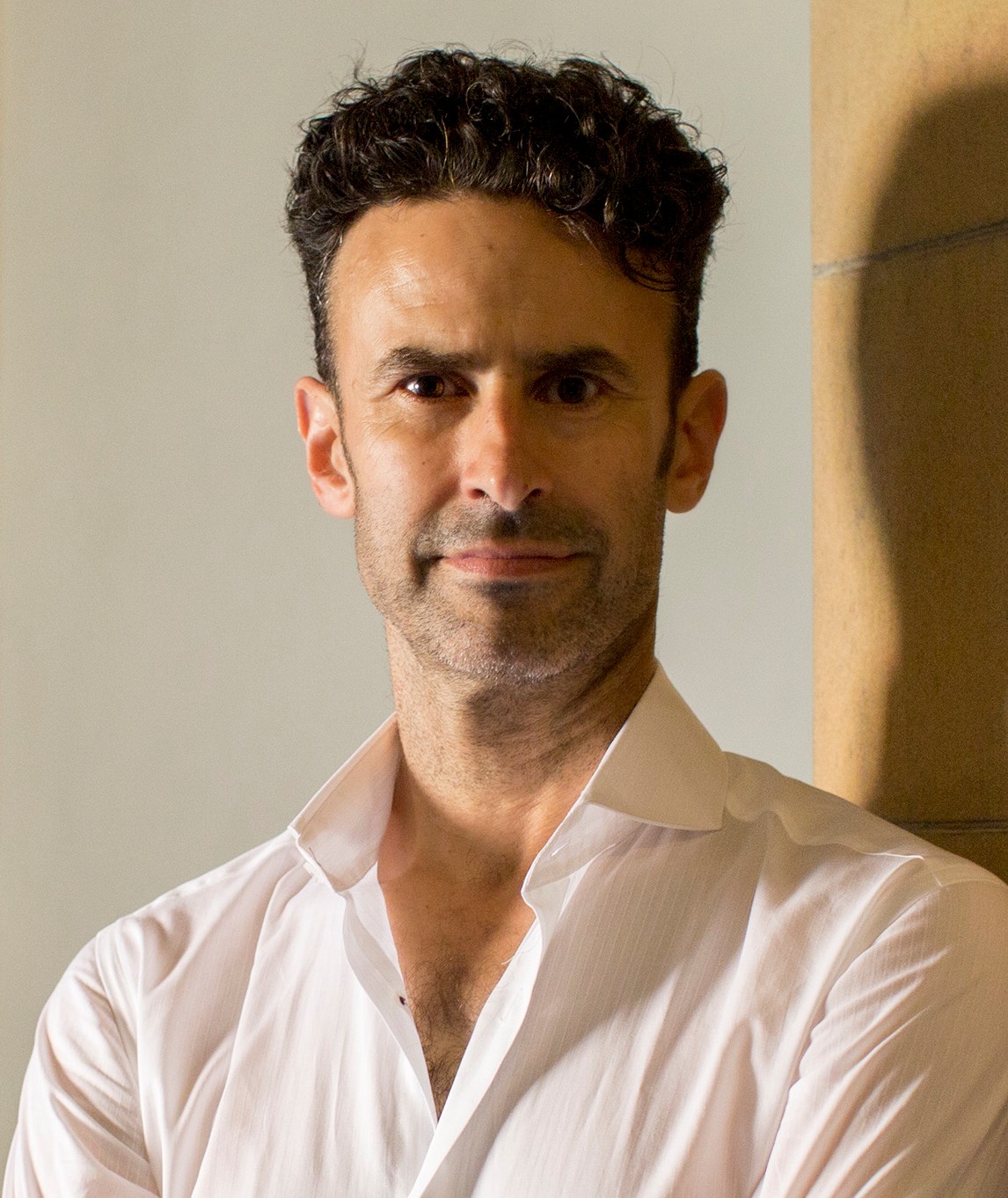
Tobias is dedicated to youth music development, directing many choirs and vocal ensembles including Canberra Children’s Choir (Music for Canberra), Vocal Fry and Sing with Toby (ANU Community Music Centre), ANU Chamber Choir (Sublime Voices) and ANU Chamber Singers. Since 2022 he has been choirmaster of the CSO Chorus and has presented seven Opera Salon programs at Smiths Alternative.

 Assistance animals welcome

 Hearing induction loop

 Wheelchair accessible
Visit us
Find our opening times, get directions, join a tour, or dine and shop with us.