

The memory collectors: Conversations with oral historians
Discover the power of memory and storytelling as the panel reflects on oral history interviews that have surprised, moved and helped define culture. Together, they'll revisit the moments that stayed with them, the people who shared these stories and why these voices matter now more than ever.
The memory collectors: Conversations with oral historians
Daniel Gleeson:
Good evening everyone. My name is Daniel Gleeson and I'm the Director of Community Engagement here at the National Library, which is just such a fabulous job, especially on nights like this.
To begin, I would like to acknowledge the traditional owners and custodians of this land, the Ngunnawal people. I acknowledge their ongoing connection to the land and pay my respects to their Elders past and present and through them to all First Nations people here tonight or listening online. And we do have quite a large online audience tonight as well.
I'm very excited about this event, which is one of an entire series that we planned to highlight the Library's amazing oral history collection. We started the month with the launch of our publication, 'The Memory Tapes', and you can see a copy of that book down there. This is the definitive guide to the collection. It's available upstairs in our bookshop, of course, and also online.
But before we hear from our panel tonight, I'm hoping you will indulge me with a short activity. If you don't mind, please take out your mobile phones. Now, I'm not going to have a go at anyone for not having a phone on silent. It's something completely different. So pull out your mobile phone. Now, as fans of the spoken word, I'm sure that most of you will have a podcast app on your phone. If you've got an Apple phone, it's purple and it's called the imaginative name Podcasts. Now, if you use Spotify, open that up. If you've got an Android phone, I assume you know what you're doing and I can't help you. Please open your podcast app and then go to the search function and just type in 'The Memory Tapes'. Hopefully you'll find some beautiful yellow artwork there. And if you click on that programme, depending on the app you're using, you'll be able to select the podcast by either checking a bookmark or clicking on follow or clicking on subscribe or whatever else your particular app will require. And now you have realised that I've just delivered an absolutely shameless plug for our new podcast, The Memory Tapes, which we are so proud of. And we want as many people as possible to have a listen to that. It's been described as a love letter to the National Library's oral history collection. There are 10 episodes there which feature material drawn from our oral history collection. And I encourage you all to have a listen.
Now onto tonight. As many of you know, the National Library is home to Australia's largest oral history and folklore collection, which was started in 1957 by the visionary Hazel de Berg, and it now contains more than 58,000 hours of recorded interviews.
Building this collection requires the effort of a large team of oral historians. These are the people tasked with capturing the life stories and experiences of Australians from all walks of life. Each year, that team adds about a thousand hours of new material to the collection. Now we have 3 wonderful oral historians here tonight in conversation with my amazing colleague, Dr Barbara Lemon.
Dr Lemon is the co-director of Curatorial and Collection Research here at the National Library and is responsible for managing the oral history collection. She has held senior roles in the national and state libraries, Australasia, New Zealand, and the United Kingdom. Dr Lemon completed a doctoral thesis in Australian history in 2008, and her work as a professional historian has been published in a wide range of journals, online exhibitions, and radio documentaries.
Barry York migrated to Australia with his parents in 1954 and spent the next 30 years growing up in Brunswick, an ethnically diverse working class suburb. During the Vietnam protest era, he served 6 weeks in Pentridge Prison for contempt of court in 1972. He later completed an MA and a PhD and in 2005 was awarded the Medal of the Order of Australia for Services to the Recording of Immigration History. He worked for 10 years as a historian at the Museum of Australian Democracy. And Barry began oral history interviewing in 1984 and has recorded more than 500 interviews, many now held here in the National Library's collection, particularly with migrants from Malta and Poland.
Thelma Thomas, also known as MC Trey, so cool, is a Fijian-Samoan Australian storyteller, writer, artist, creative producer, social worker, community and cultural development arts worker. She was born in Fiji and raised on the Darug lands of Western Sydney. Thelma is passionate about indigenous storytelling practises and stories, cultural knowledge, cultural heritage, and climate advocacy. She's an advocate for young people, First Nations, Pacific, culturally diverse and creative communities. She's hosted national television, hip hop, soul music shows, performed hip hop theatre, produced creative festivals, events, and youth programmes in Australia and Fiji. Her qualifications include a bachelor of social work, mental health, youth work, music and business accreditations. Her music nominations include an Aria with her group, Foreign Heights and Urban Music, 3D and Jack Music Awards for her solo work. She has released several albums and has performed locally and internationally. Trey has proudly contributed to the National Library's collection since 2001 via Fijian and Pacific Australian oral history projects.
Dr Shirleene Robinson is an experienced oral historian who is interviewed in every Australian state and territory. She's also a curator and an honorary associate professor and visiting fellow in the School of Communication at the University of Technology Sydney. Dr Robinson has published extensively across the areas of oral history, colonisation, indigenous and non-indigenous contact histories, LGBTIQ history, and the history of childhood. She has written the research book, 'Something Like Slavery: Queensland's Aboriginal Child Workers 1842 to 1945', and has been a co-author for 'In the Eye of the Storm, Volunteers and Australia's Response to the HIV/AIDS Crisis', and also 'Pride in Defence: The Australian Military and LGBTI Service since 1945'. Dr Robinson has won both the Oral History Australia Media Award and the Oral History Australia Book Award. She's currently the Oceana representative on the International Oral History Association Council and is a past president of Oral History New South Wales. Between 2018 and 2013, Dr Robinson was Senior Curator of Oral History and then Director of Curatorial and Collection Research at the National Library of Australia. In 2022, she was appointed a member of the Order of Australia for a significant service to the LGBTIQ community, marriage equality, and history. She's also the writer and narrator of our wonderful Memory Tapes podcast.
Ladies and gentlemen, please join with me in welcoming our panellists, Dr Barbara Lemon, Dr Shirleene Robinson AM, MC Trey, and Dr Barry York.
Dr Barbara Lemon:
Thanks, Dan. Got in that Dr Barry. Good evening. And thanks to all who have made the trip out here to the National Library to join us tonight and also all of those joining us online. We really do appreciate you taking the time out of your evening. And what a treat to be turning the microphone around on 3 oral historians who I think between them would be possibly nudging a thousand interviews. I mean, that's partly because of overachieving Barry recording more than 500 oral history interviews to date, almost obscene level of patient listening.
But before we get into those other people's memories and your memories of their memories, I'd love to take a look at your own for a minute. And just while we're going to have a few images scrolling behind us to give you a bit of a sense of the breadth of the National Library's collection. So hopefully you can just enjoy those as we're talking and as I interrogate you about the work of memory collecting, the work of listening. I guess, to borrow a Barry phrase, the pursuit of the subjective experience. The pursuit of the subjective experience, so often not what we're encouraged to pursue as scholars.
So Shirleene, I'm going to start with you. You've lived and breathed oral history for many years. You were, as Dan mentioned, curator here for 5 years. You've just produced a book and a podcast, another overachiever, based on the National Libraries Collection, which you know as well as anybody alive. So I guess for you, where did the fascination with oral history as a kind of social and political record begin for you?
Dr Shirleene Robinson:
That's a wonderful question. And I guess if I could just quickly acknowledge that every person who comes in and has a great joy of working with the oral history and folklore collection is lucky to draw on the work done by people before them. So I was very lucky. I can see that there's 2 very significant people here in the audience tonight. So just to acknowledge Shelly Grant and Kevin Bradley, who both played an enormous role in the oral history collection itself, and also many members of the team and yourself Barb as well.
But in terms of my own fascination, I think that I do love people's stories. And I think that when people share those with us, it really is a gift. I have a background where my mother is from Fiji and storytelling is something that is a very big part of Fijian culture. So I think I grew up with that exposure to how much we could learn when we listen. And really I began to collect oral histories myself in Queensland really because I was interested in a time period when people who were marginalised or feared being arrested, because there was a very difficult political climate, would not write down material because of that fear. So the only way to recover those stories of that history really was to speak directly to people. And that really started, I think a love affair, as you said, that has never really, really ended. So that's my story.
Dr Barbara Lemon:
Well mate, continue.
Trey, you have Samoan heritage born in Fiji, both cultures with strong oral traditions. You've had, I was going to say, you're having an amazing career as a hip hop artist as well. Master of storytelling in that musical form. And I guess there's interest in stories that move or that demand to be told. And where did that kick off for you?
MC Trey:
I think just the interest of people's stories you know and that curiosity to find out you know where people have come from. How did they you know achieve what they've achieved or what they've become? Just fascinating. And initially I'd started interviewing people for a music, a TV show. So short musical interviews. And then during COVID, we used you know social media to interview people, but also to share information, health information, but also to keep people company while they're at home. So from there, you know I was doing 2, 3 interviews a week online going you know viral and interviewing people all around the world in Pacific communities. So I think from there I just kept building on it.
Dr Barbara Lemon:
Was that something that sort of came in before in any way in the family or as a listener, I suppose? As having that inclination to inquire and hear more and learn more about how someone ticks?
MC Trey:
I'd say definitely from my dad who, you know, he was quite a mover in shaker in Fijian sports and in the media. So I picked up a lot from him you know. As a kid, I recall him writing about sports and giving you know pieces of paper to me to run up to the newspaper offices in Suva. And so you know I was in primary school at that time. So I think that's where the seeds were planted, that interest you know. Then he'd tell me what he was writing about and then I'd see it in print you know, the next few days. I think that's where it sparked for me.
Dr Barbara Lemon:
Yeah. Brilliant. Oh, that's a terrific sort of origin story there isn't it?
And Barry, you've written a bit about growing up in Brunswick, Victoria, an only child in a migrant family, a self-described latchkey kid. And I hope, I think I'm right in saying you had a fascinating side hobby of collecting signed portraits of celebrities.
Dr Barry York:
Yes.
Dr Barbara Lemon:
Yeah. Good. Okay. That could have been awkward if that wasn't you. Was storytelling sort of part of the connection you were seeking as a kid or where did this sort of implant for you?
Dr Barry York:
Well, like Shirleene and Trey, I'm a migrant background. My dad, despite my surname, my father was Maltese and mother English. She was born within the sound of [unclear], which means she was Cockney. And I never knew my grandparents on either side. Yet at home in Brunswick on the mantle piece, we had framed pictures of them. And they always fascinated me. I wanted to know more about them. I really did. I cannot explain it. I had a great drive, a desire to learn as much as I could about these people who I wished were still alive you know and I could have grown up with. And at bedtime, Mum, I would be in bed, she'd get out a book and offer to read a story to me. And often I'd say to her, "No, mom, don't read a story. Tell me more about your mum and your dad. And what did you do when you were a little girl?" You know and I was lucky that both my parents were quite good speakers and had good memories.
Dr Barbara Lemon:
was going to say it would depend on the quality of the -.
Dr Barry York:
Yeah. It's strange, but when I look back, I had the big picture. My Maltese grandfather was a merchant semen and sort of the big picture. At bedtime, I'd be probing much similar to what I did decades later with oral history. I'd want the minute that can be so indicative. Did he have tattoos? What were the tattoos? Where did he get them? And as a kid, I was like that you know. I just wanted to know as much as I could about my grandparents. And I had my Uncle Joe, who you'll see on the screen. He'd come out from Malta in 1924, 100 years ago. I interviewed him, of course, in the '80s. And we used to visit Uncle Joe. He had a fish pond. He had a grapefruit tree, lemon tree, an aviary, which Maltese man are into the aviaries. He'd sit me down by the pond and tell me stories. So I was really lucky that I had that childhood that put me in stead for eventually recording oral history interviews.
Dr Barbara Lemon:
It's a terrific childhood imagination to recognise that there's as good of a story available to you in the truth of the family history as there is perhaps in a picture book. And what would you say was your first formal interview, Barry? So you've been asking lots of questions, but what's the first time you hit record?
Dr Barry York:
It was 1977 when I believe one of my distinguished colleagues was born. I was doing a course at La Trobe University with David Potts. It was called Victoria in the Depression. And part of the assignment was to interview 2 people who had lived through the Depression. This is 1977. There were lots around then. And in Brunswick, there were lots of the Battler type people. And 2 of our neighbours, Mrs Dunbar and Mrs Nicole, my dad helped cajole them into helping me. And it was a disaster. But you asked what was the first time and that was it. David Potts ended up with a collection of over a thousand depression interviews through this course that he taught. And yeah, Mrs Dunbar and Mrs Nicole were very nervous. I had no idea really what I was doing. I've got the transcript.
But really I began when I was doing a PhD in 1984 on the history of the Maltese in Australia. I assumed I would just do the conventional immigration department records, archival research. And then a friend, the late Mark Carawana, a Maltese social worker, he had been interviewing elderly Maltese as part of the kind of social work therapy thing for them. And he introduced me to the idea that, well, you've got all the data, the statistics, what's the human story? The subjective experience underlying that, complimenting that. And really, once I started recording people, I realised what a, how a historian who's working on periods within living memory, it's just foolish not to pursue that alongside the print-based material.
Dr Barbara Lemon:
Can compliment, can challenge it. And I guess this is something you've also spoken a lot about, Shirleene, about the capacity of oral history to rebalance the record in effect, to perhaps give voice to parts of the population that wouldn't otherwise be heard. And I wonder across your extensive already career and thinking about projects particularly you worked with here at the National Library, Australian Responses to AIDS, Badja Forest Road Fires, Marriage Equality project. Are there some sort of striking examples for you, moments where you thought 'it's so good that we've got this collection, these voices would be buried otherwise they would never have their day'?
Dr Shirleene Robinson:
Well, it was before my time, but I have to absolutely say that the social importance of the Bringing Them Mome oral history collection and then After The Apology, transformative projects that I really believe are the most important oral history projects that have been conducted in this country and have really helped people to understand and think differently about a really important and traumatic matter.
But as you say, giving voice back to people whose lives are often documented by people who are in positions of authority, who bring value judgments into those records. So this is a really amazing way of allowing people to speak, to be heard and to provide that really important testimony, just like the Australian Response to AIDS project. And I was able to work on a project which looked at people who volunteered during their response to HIV and AIDS much later as a historian. And similarly, people don't realise the extent of the volunteer contribution to that epidemic, often from the most marginalised people in society.
So I think that oral history has this very important role. And you could say the same for the Forgotten Australians as well. And again, this is full credit to people who came before me, the curators before me, but they really do provide that fuller picture, that more comprehensive picture, and have had that really important social role. But yes, for me, I think certainly I do see that potential for voices that may not be captured in manuscripts to be given priority, primacy, and for people to speak in their own terms in that format.
Dr Barbara Lemon:
I mean, under your direction also, the number of First Nations interviewers working with the National Library increased. And I know that's an aspect of the collection close to your heart. I suppose I'm thinking about one of the episodes in the Memory Tapes podcast has very much a First Nations focus. I wondered if you could touch just briefly on what that episode entailed, how you went about trying to represent such an array of experience.
Dr Shirleene Robinson:
Look, that was a really moving and wonderful episode to work on. And I was really, really fortunate that I was able to work on it with a really good friend of mine, Theresa Adler, who is an Elder, cultural educator and extremely generous about sharing her knowledge and experiences. And given that it was a First Nations topic, I thought that it would be appropriate to have Teresa be involved. And so I asked her, and because she's lovely, she agreed to do it. And then I happened to say to her, "So National Library, this is what we're doing." And then Theresa said, "Yes, my grandmother's actually in that collection." And I though, "Is that really possible? What are the chances?" And she said, "Yes." She was interviewed in 1987 for the New South Wales actually sort of project done in the lead up to the bicentenary of European colonisation. And lo and behold, it's certainly true that Gladys Adler was interviewed.
And Gladys Adler has a very remarkable story that she tells, which is actually about how the landing of Cook and Banks at Kamay or Botany Bay occurred, how it was seen from the perspective of Gweagal people, which is Theresa's background. And that we see a lot of images and a lot of pictures of that moment of contact. But Theresa, through her grandmother's voice, which we play in the episode, through Theresa's response to that, through Theresa's journey through the entire episode, it was just an incredibly moving privilege to do that one. And we went on an emotional rollercoaster, but it was just so important, I think, to do that one with her.
Dr Barbara Lemon:
It's quite powerful to have that response almost happening in real time as you are listening to the historical excerpts in that episode as well.
I'm thinking to, Trey, your work with younger people, social work, mental health, music. Perhaps if you could reflect a little bit on the impact of the telling of one's story, especially working with those sorts of communities, whether that telling is in musical form or in a more formal oral history setting, or what does it do for people?
MC Trey:
Well you know, speaking from when I started out you know writing and through hip hop, I started writing because I didn't hear my voice or see myself represented anywhere. So that pushed me to write you know when I was in primary school and then high school and to release music. And then I started sharing that with other young people you know, showing them how to tell their story, share their story. And I think you know I look back now, because that was probably 20, 30 years ago. And I look back now and how it's evolved you know from an 8 bar verse or you know a 30 second piece of story that's now expanded to hours of work. And it comes from that same place of you know platforming someone's voice you know, who doesn't always get the opportunity to share their story or to be seen, to be heard, but to hear their voice and sometimes their cadence. I mean, Barry mentioned something previously about the pattern of someone's voice when they're being interviewed, which is similar to when they're rapping.
So you know coming back to having that oral history piece you know, you get to hear their tones and their rhythms and their voice and their stories. So yeah, being able to share that with young people and through hip hop and music, you know I'm doing that now as well. And it's also quite lethargic, not lethargic, but it's a healing process for them you know. And for myself as well, it has been.
So having that social work kind of background has helped as well because I mean as we will notice, a lot of times we've got to have tissue boxes close by because we're you know asking people questions that they've probably not answered before or they're sharing stories that they've not shared with many people you know. So I can bring that in and support them that way you know as well. So yeah, I hope that answers the question. There's a lot of answers there.
Dr Barbara Lemon:
It's terrific to have that training actually, because there is a really fine line sometimes between oral historian and counsellor. Not that we want to present ourselves that way, but it can sometimes sort of come about. And what about for you, straddling that line between you know there's a total formats which you're doing TV interviews, quick, short, sharp, filmed excerpts with people, and then you're sitting down with others and trying to spin it out for a few hours. Is that kind of a bit of a mental shift for you as well?
MC Trey:
Find it quite easy to do because I prefer to have that time and to sit with them and to you know start from the beginning. Yeah, I found that it was quite an easy shift for me you know. And it happened at a period of time where I wasn't doing much in life, you know, coming out of the pandemic. So kind of worked out well.
Dr Barbara Lemon:
Yeah. You led a project for the library called Pasifika Creatives and Game-Changers. And I was wondering if there were any kind of standout interviews in that project for you. I'm putting you on the spot a bit, but in terms of moments that kind of stuck with you, someone who perhaps didn't think they'd get the chance to tell this story or gave you a really unexpectedly warm and personal window into their world or some of those stories that you collected through that project.
MC Trey:
Yeah. I mean, every story I walk away and I think, wow. You know, I wish more people would hear about their stories or what they've done you know and the challenges that they've overcome. But so many. I mean, most recently I interviewed Professor Katarina Tewa from ANU. She's a creative, a dancer, but then as we know, contributes to the academic space here in the country and also in the Pacific. And talking about her ancestors you know back home and then the migration to Fiji as well. And it just blew my mind to hear about you know the stories that she'd had that she'd heard from her father and to hear her share them and how it connects back to Australia as well you know . And we're blessed that we have people like this with all this information in this history walking around us sitting. And I mean here in this space as well, but you know it's like I'm blessed to be able to be a part of capturing this you know. Yeah. So that one.
And then another individual, Sala George Carter, he's also based here in Canberra. There's a lot of amazing people here. But talking about his work in climate change and the sea marine space, but then now looking at the sky and air space and how the work that he's done previously is influencing you know where we're heading in future you know. So looking at that and just so many stories you know. So those two were quite fascinating for me.
But each one, when I walk away, I just think, wow, I wish more people got to hear what they have to offer and what they have to say.
Dr Barbara Lemon:
Guess it is like coming out of a kind of bubble that you've had together for a while there while you're recording you know. It's really quite intimate and special and it's sort of pop out and it's like waking Up from a dream or something sometimes.
There's a concept, and I guess I might put this to you, Barry, that we've talked about recently of emotional truth. The truth you hear in a voice, the truth you hear in those you know those pauses, those hesitancies, those little cracks in the voice, perhaps a little sound in the background even that's not the voice, but that gives you a bit of intel into where the person is, but also a feeling of the very realness of them in your ear. I guess I wondered if that was a concept that kind of resonated through all the work you've done with many migrant communities, particularly, where that emotional truth might challenge or enrich the truth that we sort of have documented about their stories.
Dr Barry York:
I think the beauty of having the recorded voice as against reading a transcript or an edited version in a book is that you know it's a way of experiencing history that is intimate. Because the voice is quite unique, they even talk about voice print, you know like a fingerprint. And yes, hearing the emotion, the pauses, the inflexions, the accents, it's a rich way of experiencing the story, the history.
I'd like to use this opportunity to take up what Trey mentioned about the patterns and rhythms. In the 1990s, I wrote an article for the old NLA News magazine. I think it's online. It was based on my interview with a guy called Ted Bull. He was born in 1914 in the slums of Fitzroy, as they called them. And he ended up leading the Waterside Workers Federation in Melbourne, carried his swag during the Depression. We did many sessions. It's over 20 hours. And thanks to Ted, it's an excellent interview, for anyone studying the Depression especially.
But Ted spoke in the old Australian idiom that I don't think you hear it at all now. And I picked up that at times there was something poetic or very rhythmic. One example, I remember he was talking about working in the hold of a ship, unloading. And I think it was banana boats would have rats. And he just in passing mentioned, "And the rats were as big as cats." And I picked that leapt out at me. And anyway, I wrote this article breaking down a segment of that interview with Ted. He was a family friend too. We had great bond.
And at the time, Mark Cranfield was the Head of Oral History. I owe Mark a great debt because he gave me my first contract in 1988 to record interviews. And Mark and I were talking about this and wondering, can you take any sort of interview and play around with it so that it ends up with a rhythm? And can we create, as my article was called, 'Something between poetry and prose, breaking down this speech.'
And so I attempted that. I thought it worked okay, but it's something that others could do better than me, I think.
Dr Barbara Lemon:
What happened to that? Did you publish that?
Dr Barry York:
That was in the National Library News magazine.
Dr Barbara Lemon:
Oh, it was in your article. Okay.
Dr Barry York:
And I think it's online.
Dr Barbara Lemon:
I was thinking the rats are as big as cats. It's just going around. It's very Dr Seuss in my head.
Dr Barry York:
Yeah. Well, Ted had that old way of speaking and he was involved in the free speech movement in 1933 when in Sydney Road, Brunswick, the coppers opened fire and a guy called Shorty Patello was shot and hospitalised. He wasn't killed. But just that alone, sort of, you talk about the relevancy importance of learning from history. Well, today there are similar issues regarding free speech. And yeah, back then they were fighting that fight like some of us still do.
Dr Barbara Lemon:
And I guess having that story recorded at a safe distance from the events gives the freedom to sort of finally, finally tell that truth.
Dr Barry York:
Yeah. We just missed a photo. I don't know if everyone saw it. Everyone know Mario Milano? That was one of my favourite interviews because I used to idolise him as a young fellow in Brunswick. He was world heavyweight wrestling champion. He defeated Killer Kowalski in 1967. And to sit down with Mario, but again, because I'm essentially a historian of immigration, I approached my interviews in that way. And this was a story of an Italian migrant who went to Venezuela, failed as a boxer, became a wrestler, then did a spint here in 1967 and ended up marrying and settling here.
Dr Barbara Lemon:
What did you do with the starstruck feeling then in that interview?
Dr Barry York:
There's an old saying, it's best not to meet your heroes. And, Mario passed away years ago. And to be honest, he was an ordinary person. And I kind of wish that I still would see him up on the pedestal.
Dr Barbara Lemon:
Came back to the human realm. I mean, it's reminding me of a question I was thinking about for you, Shirleene, because due to Shirleene's fearlessness, basically an extensive experience across all sorts of facets of Australian history and contemporary life, we often serve Shirleene our more intimidating interview subjects for the collection. And people with very high public profiles who may not intend to be intimidating, but I think for some former prime ministers recently enough, there was Julia Gillard, author Kathy Lette, lawyer Jennifer Robinson.
I guess I'm wondering if you had any reflections on the response of people, I guess, as opposed to what we've been talking about, people with a very high public profile who then have the opportunity to do this slower, this non-journalistic form of recounting their story. And how do they take it? Does it take a while for them to realise there's no got you moment? It's just all in good time.
Dr Shirleene Robinson:
I think that you've really touched on something that is so important, which is in a way how the collection, I like to think of it as kind of almost talking to each other. So we might have Julia Gillard's autobiography, but there'd be many reasons why you wouldn't be able to release something right now that might go into various details of her time as prime minister. Yet in an oral history interview, there's that capacity to speak openly and freely, knowing that it won't be released until she gives permission for it to be released. So I think that has that sort of dimension to it. So that's obviously one element to it.
You mentioned the interview with Jennifer Robinson. That was a pleasure to do. And I think the Library did something really interesting with that one, which was actually, so Jennifer Robinson, human rights lawyer who was very involved with Julian Assange's case. But the Library actually initially became aware, and this was not during my time here, so I can take no credit for this, but became aware of her grandmother who was an extraordinary woman who was very involved in the setting up of domestic violence refuges at a time when, the one that she volunteered at was the second one that was set up in Australia. So a remarkable contribution and a chance to really understand the emotional impact of doing that kind of work.
And so from there, the Library made a decision that it would be very interesting to perhaps have a look then at the thread of Jennifer Robinson's life and see those connections because a lot of Jennifer Robinson's work has been around also similarly drawing attention to the ways that women can be affected by domestic violence and some of the contemporary pressures too. So the 2 sit together I think in a really lovely way. And I think that was just a really interesting approach the library took, which I can take no credit for.
Dr Barbara Lemon:
And did you find, I guess that gives you a good opportunity to compare, I guess, within the family, somebody with a much higher public profile versus somebody whose life is fascinating and nationally interesting, but perhaps didn't expect to have an interest in their story?
Dr Shirleene Robinson:
Look, I think actually they both were fascinating in really different ways. So I think of Jennifer Robinson's grandmother Philippa Cracknall, and she was somebody who can tell us about what it was like during the, she was young during the Second World War. She remembers having barbed wire up around Bondi Beach. She really takes us back to what that fear was like, how her mother was feeling raising a young girl during this particular, very tumultuous era. And of course, what was it like to be a woman at a time when you couldn't have control of your own bank account? You couldn't go anywhere if you were experiencing domestic violence. You really were on your own in many ways. So that's a particular moment in time. And I think that that is a really important story. And I'm very grateful that she shared that and in a remarkable life.
I think that she ended up volunteering for something like 18 years at Bonnie Refuge, which is just an extraordinary contribution because often when people do that kind of very intensive work, it really can take so much out of you, yet she just really stuck it out. So to me, that story is really important.
And I actually know that probably Jennifer would say, we're pushing that one forward rather than her own story. Saying there's so much value in these stories because we don't often hear them. Whereas sometimes we hear a lot about big names, but there's so much value in the ordinary life or the non-known life as well. And I really love the way that the Library blends that together and thinks very carefully about curating a collection that includes both names that we know and names that we don't know.
And in terms of people that have a very high profile oral historians often talk about something called a rehearsed narrative. And that can be a challenge which people may have experienced. Which is trying to, if somebody's told this story a lot, just trying to get them to sort of break down and as you said, have that comfort and that trust to move beyond the recorded interview and give you something that is different and full of trust. Very special.
Dr Barbara Lemon:
I'd be interested to hear, I guess, slightly tangentially building from that about experiences perhaps, Trey or Barry, of interviews where something, either the format's been surprising or something about it's been a little unexpected. Barry, I remember you talking about the interview you did featuring a dog a little bit more than you would've liked it to.
Dr Barry York:
The former parliamentarian in Melbourne had a lovely townhouse in Port Melbourne. And I thought, oh, this will be comfortable and set up the equipment. And we're doing the recording. And I noticed a whole lot of cushions in the corner of the lounge room where we were recording. And suddenly this huge dog comes walking in and sits down in this massive cushions. And it was clear that the dog was like a child to this person you know. And while we were interviewing, the dog fell asleep and it snored like a human being. And I remember asking Eddie, I think it was like, "Oh, who are you closer to, your mother or your father?" And he's answering and you hear [snoring noise]. And it's like, I hope in the future nobody thinks that I fell asleep like I was disinterested. But those ambient noises or sounds can be really, can add depth to the recording.
Because I started recording in 1984 seriously and consistently. My interviews have a great collection of clock chimes, the old-fashioned clocks that would chime every hour.
Dr Barbara Lemon:
It's a project just in that, just tracing the evolution of clock chimes in your interviews.
Dr Barry York:
Because I started in the 80s, I have about 30 interviews with migrants who came here more than a hundred years ago as young teenagers or young adults. And I think when people query the value of oral history, I think there must be value in that. We hear the voices of people who were here over a century ago speaking about the experience of why they left their homeland. What was the voyage like? And what was it like settling here back then?
Dr Barbara Lemon:
And I guess that, as you say, the ambient noise tells us a whole lot about the date and place of the interview, if not the age of the interviewee and all sorts of surprising context you can get from background noise.
Is there anything, Trey, where you've had to go, oh, we'll need to move from here or we'll just need to incorporate this into the general vibe of the thing?
MC Trey:
No dogs. No story dogs. But for me, it always seems to be construction sounds like everything will be quiet. We'll be ready to go. And you hit record and someone's doing some work in the block or down the street. Yeah. I don't know what that is, but yeah. So I'll collect the construction noises of Sydney and we'll see how it goes.
Dr Barbara Lemon:
Yeah. We'll see how that goes.
Barry, I did want to return to you briefly. Dan mentioned you've just published a memoir, Pintridge memoir, which recalls time spent in prison in 1972, duty of student activism at Latrobe University during a period of intense political unrest. And while we are definitely here to talk about one book, 'The Memory Tapes', I repeat 'The Memory Tapes'. Barry's book is also available at the shop. But I read something you'd written about this book, and I hope I have this right. You were talking about that it was hard for you to dig into your subjective experience to go beyond the factual narrative, if you like, for yourself to do that. And that struck me as interesting since that's something you're helping others to do all the time.
Dr Barry York:
I'm a historian. That's how I describe myself. And I do oral history interviews. I don't actually call myself an oral historian. I'm not quite sure what it means.
Dr Barbara Lemon:
Yeah, it's up for debate.
Dr Barry York:
And so my natural or my traditional way of writing history is that impersonal style. To strive for objectivity. But I was lucky that in 1992, 20 years after my 2 comrades and I were released from Pentridge, again, Mark Cranfield allowed me to interview those 2, just focusing on the Pentridge experience. See, contempt of court, you don't have a sentence. You don't know when you're getting out. And there's no trial as such. You picked up under writ of attachment. So 6 weeks wasn't that long, really, but not knowing when you're getting out made it difficult. And Mark said to me, "Well, you can interview your two comrades, but also why don't you do a monologue?" And I ended up doing 2 and a half hours just talking about my memories of Pentridge. That was extremely useful for writing this memoir because I was much fresher then in my memory.
Dr Barbara Lemon:
20 years later.
Dr Barry York:
And now that I'm 75 and I'm more into the subjective type of writing because frankly, I'm history. In a good way, I hope. But you realise that you are a historical subject and Pentridge shut down 30 years ago.
Dr Barbara Lemon:
Luxury apartments, isn't it?
Dr Barry York:
[Unlcear] Crims, by that Chopper Reed and people like that. I think mine is the first one by a political prisoner. And those interviews in the Library may be unique, I think, in terms of detailed recollection of what it was like in the most notorious high security prison in Australia.
Dr Barbara Lemon:
And I suppose, I mean, it sounds like this far removed from the very real experience of those events, also perhaps quite a useful exercise in approaching others for an oral history and reminding ourselves what it can be quite a piece of work to tell your life. And depending on the personality of the interviewee, I think some people do a lot of preparation. They like a lot of time to actually go back through their papers, whereas others will just kind of riff.
Got my eye on the clock, so we've got some opportunity for audience questions, but I guess perhaps a predictable but an interesting one for me, and I can give you a moment to just think, would be just to really hear from each of you about 1 or 2, those interviews that stick, that were formative for you in some way, that struck you in some way, that moved you or you know where you sort of came out of it with that revelatory feeling or felt like you'd just born witness to something that mattered.
Wonder if perhaps Shirleene, you might kick us off.
Dr Shirleene Robinson:
I'm going to cheat a little bit and draw on the words of Hazel de Berg or paraphrase her. Obviously the first person recording for the National Library of Australia from 1957, as we heard beforehand, and with that wonderful recording of Dame Mary Gilmore. And I think you know me being asked favourite recording and it was always the next one.
And I think that that's a really good way to approach it because every person really does have a story. I have managed to avoid ever giving an oral history to date, but it's always been an enormous joy. I have enjoyed every oral history that I've done. I have spoken to people that have lived through things such as you know the troubles in Ireland and have provided a really profoundly moving perspective that I had not heard about that. I learn something from every interview.
I interviewed Dr John Gerard, who was at the time the Chief Health Officer in Queensland. And he talked about actually how he ended up helping, working for Ebola over in Africa. And you know at the time it was both the most contagious and deadliest disease known to man. Yet he still you know went over there and he did the work. And I remember him being so determined to give credit to the nurses and the doctors over there and say it was you know not any flaw on their fault that it was spreading. It was just that people were exhausted and overwhelmed and we had the opportunity to support them and we did so. And so that one's certainly one that stayed with me.
But really I think every interview that you've done, you know you have this profound bond because you do spend perhaps, you know it could be 5 hours, it could be more than that, speaking to someone where they trust you and they share you know the most personal details of their life, perhaps things that they've never told anyone beforehand. So you really honour that and it does stay with you and that you know you remember that. And I think you have a very special connection in a way, even if you never see that person again, because you have shared something very special.
Dr Barbara Lemon:
Trey?
MC Trey:
I agree. Each one has its special moments. When I was working in the Fijian Australians Project, 2 of the first interviews were with Fijian women. One of them is a business woman who contributes to you know businesses in Western Sydney. But she shared about being a rough sleeper growing up in Suva you know as a young person, a teenager, being asked to leave home. You know and sleeping under a bridge in Suva, which I see every year. And I'd known this woman, you know her business was doing well, but did not know that she'd gone through this experience. And again, probably one of the first times that she shared it you know. And I walked out feeling very privileged that she trusted me and us to record this you know. And I'm like, "Everyone's going to hear this eventually." She's like, "That's okay." You know, so walking out of that interview, I thought, "Okay, I'm supposed to be doing this because never in my wildest you know dream did I think that I would be doing this kind of work or be sitting here in this library." So you know that was one of those aha moments for me, you know. And there were many, but that was one of the early ones which then told me, "Okay, stay on this track." And I'm very blessed to be here. A few years later, hanging with the doctors.
Dr Barbara Lemon:
Barry, do you have a standout? I mean, I know you still receive about 250 Christmas cards a year from people you've interviewed.
Dr Barry York:
Well, not anymore. At the peak of my work with the Maltese community, yeah. I kept in touch with people because, well, I like them. They're great people. But what I'd like to mention is that even though I've done 510 interviews, who's counting, proper oral history interviews, I always get anxious before an interview. And I think it's because I carry the weight of responsibility that for the type of people I usually interview, this is their one off opportunity to have a proper, thoughtful oral history interview that will be preserved for posterity. And it really delights me when occasionally I'll receive an email out of the blue from a grandchild. It's usually a grandchild who says, "Oh, grandma died. We're going through her things. And there was a CD there from the National Library, an interview with her." Or they say, "We hear that you once interviewed..." And then of course I get the audio from the Library and give to them.
But yes, the personal relationship is very important and it's a huge responsibility. When I went into semi-retirement 10 years ago, I approached my good friends in Canberra and Melbourne and Sydney. And I thought, "What can I do as an appreciation of their many years of friendship?" And I said to them, "Look, if you'd like me to record an oral history with you, I'm happy to do that as a token of appreciation of friendship." And I ended up recording a few of my friends. And yes, I thought that is a really good gift.
Dr Barbara Lemon:
A pretty unique gift.
Dr Barry York:
Yeah.
Dr Barbara Lemon:
And no doubt there would've been things you heard in those interviews or the way of expressing those stories that surprised even you who knew them so well. Yeah. Beautiful. Can't ask for more than that.
I think I'll wrap it up with a shout out to the former curators in the room and to the late great Hazel de Berg, as mentioned by Shirleene, without whom we wouldn't have the collection that we do. And to her daughter Diana Ritch, who continues to support the programme. But so many, so many oral historians, interviewers, participants, interviewees over the years to make up this tremendous 24,000 interview strong collection.
I'm going to pause for audience questions. We do have 5 minutes. Possibly can stretch it to 7. If you wouldn't mind just waiting for the microphone for the benefit of those online so they can hear your question. But please stick up your hand. Yeah.
Audience Member 1:
Thank you. That was fascinating. I really enjoyed it. One of the questions I have is how you manage to hold what I think of as the thread during an interview. If somebody says something really interesting and then you're like, "I should get back to that, but let them finish their thought." How do you manage holding the thread? Anyone?
MC Trey:
I usually have a notebook and a pen, and then I'll put a big box around it or a circle. Make sure you come back to this topic and let them keep going with their story.
Dr Barry York:
I think it's part of the skill that you develop over time and it is a bit tiring. After a 2 hour session, you can be tired because I find my mind is working the whole time. And if it's an interesting tangent that I wasn't expecting, I have to let them finish and then make sure I go back to it. And I'm okay at that, I think, after years of experience.
Dr Barbara Lemon:
But yeah, Shirleene, do you have a?
Dr Shirleene Robinson:
Yes. I guess somebody like an oral history and theorists like Alessandro Portelli would sort of say that we treat oral histories as a text, really as a narrative. And so where somebody says something is actually really interesting. So we don't want to interrupt them. We want them to pursue that thought and see where it goes. And you may uncover some remarkable material that no one really expected to hear.
But I do what Trey and Barry do and I would maybe just circle it to come back to it, let them finish that. But if they've skipped from say, because no one tells their story in a purely chronological way, if that ever happened, I would be quite amazed. But you know it's our responsibility as Barry says we listen carefully and hopefully when the time is right, we can then go back and revisit that and make sure that we do that. But yeah, it's very, very careful listening, but it's a pleasure to do that. So yeah.
Dr Barbara Lemon:
Yeah.
Audience member 2:
Thank you. Barry, you just mentioned fatigue after a couple of hours of interviewing. And I can imagine myself trying to do an interview with my grandmother and try and understand her life story. How do you know when an interview is actually over?
Dr Barbara Lemon:
Good question.
Dr Barry York:
Is actually what?
Dr Barbara Lemon:
Over.
Dr Barry York:
Over. Well, we have to prepare for each interview. And what I do is give them an outline of what I think is important, like a structure to the interview. And I always make it clear that's open for discussion you know. If they don't want to talk about particular things, we can consider that. Or there may be omissions on my part where they want something added to the, I call it a question guide, though it's not made of concrete you know. It's flexible.
And so with me, say with migrants, I always finish with the same question to round it off, which is you know how do you regard yourself today? Polish, Australian, Australian-Polish, just Polish or Maltese, whatever. And then I'll ask them if they want to say a few words in their native, in their mother tongue. And so yes, I round it off and finish it that way. But it's always possible to go back and develop some elements of the interview.
That one with Ted Bull that I mentioned, when I listened to the 23 hours of it, things come to mind. Oh, I wish I had asked him to elaborate on certain aspects.
Dr Barbara Lemon:
It's probably worth noting that interviews in the collection range from 30 minutes to 30 hours. The average might be somewhere around 3 and a half-ish at the moment. Any other question? Yeah, down here at the front. Thanks.
Audience member 3:
Thank you. I loved all three of your talks tonight. I was wondering if you could pick up on something that Barry mentioned in passing, just answering that last question. And that's about language because all 3 of you would've interviewed people in different languages. And I wondered how you, I guess, incorporate languages other than English into your interviews? Because people think and feel in different languages. And how does that come through in your oral histories?
Dr Shirleene Robinson:
Happy to say a few words, but Barry, I feel, did you want to have the first answer?
Dr Barry York:
Well, sometimes someone will say, "Oh, I'm trying to express it. I don't know how to put it in English." And I'll actually say to them, "say it in Maltese" or whatever the language they speak is. I prepare them for the idea that at the end, I'll ask you to say a few closing words in your language if you want to. Usually they want to. And I don't know, I just think it's good to have some record of the person speaking their first language.
I worked on the Indian Diaspora Project and when I made that offer to one of the interviewees, he recited a poem that he said was 6,000 years old. And I thought, well, gee, this is, English speakers won't understand it, but there's some value in having that, I think. And he did tell me roughly what it was about.
Other people just will thank the Library and thank me and someone to give a message to the future generations and can become a bit emotional when they're doing that in their first language.
Dr Shirleene Robinson:
And Christopher and Kiko, I guess just acknowledging your own role in terms of providing voice to people, particularly I'm thinking of the Australians with Chinese Heritage Project and how important it was, how much we would've lost had there not been people able to speak in Cantonese or Mandarin. We had one interviewer that was able to interview in 4 different languages. And to me, that was so important because it really did open up and expand people who could come forward and share stories, very unique and different stories. And that's a really important part of the Library's collection. But as Barb knows well and has talked about the cultural context of [unclear], had people that were doing interviews in a variety of different languages, Vietnamese and so on. So there is a longer tradition of library doing that.
And in fact, Hazel de Berg also had a recording in the 1950s from somebody who we believe is from the La Peruce community, Shirley Fish, who speaks in language and actually sings in language. And it's very, very beautiful. And over time, perhaps when cultural sensitivities and ICIP and community connections are worked through, it may be something that is shared more widely if appropriate.
But I think that is a really great example of the power of people being able to speak in their own language because as has been said, there are many words and concepts that simply do not exist. Fijian, for example, has many, many different terms for types of rain, things like that, which really say something about how much it rains in Fiji, which is why it's very green. But things like that, that tell you a little bit about a country.
So I think yes, it's really important that the Library and its collection of oral histories resembles what Australia looks like as well. And I know that the work that is being done by people now is only driving that forward in a much more expansive and wonderful way. So thank you Bob for your work there.
Dr Barbara Lemon:
Oh, it's interesting. I mean, there's a case we are looking at right now actually with an interviewee who was interviewed in the '90s, an artist, a prominent Chinese artist, Chinese Australian artist, who was interviewed in English and recently been working through his papers. And he expressed a desire to be interviewed again in Mandarin. And I guess it's that he just knew there were things that he couldn't say properly at the time. He felt frustrated by not having been able to express that. So that's something we will pursue. Trey, did you have one to add to the mix?
MC Trey:
Most of the interviews are in English, so interviewing Fijian and Pacific communities. But I do encourage them to you knoe speak in language if you feel the need. And you knoe also pronouncing your name the way it should be pronounced you know. And then at the end, they'll say a few words as well or message to future communities as well. So yeah.
Dr Barbara Lemon:
A beautiful way to end an interview. Sadly, I think that's all the time we have for questions. I'm getting the eye from Dan. So we'll have to wrap up.
Daniel Gleeson:
Thank you so much for that discussion. Thank you to our panellists. You really are all amazing advocates for our oral history collection, and thank you so much for your work. Of course, if you'd like to access the oral history collection, you know you can do that here at the Library. In the reading room, we'll deliver the material to you or we can deliver it to you up in the Special Collection Reading Room. All heaps of it is of course digitised and available through Trove so you can take your time to really look. And if you're looking for the definitive guide to the collection that you can refer to if you want to know where to start, grab a copy upstairs of The Memory Tapes book.
But look, if you're looking for Barry's book as well, that's what you're looking for up in the Bookshop. It's right out the front. Of course, that's his story of his activism as an imprisonment in the notorious Pentridge prison. And I'm sure if you ask him, he'll sign a copy for you as well.
Now, if you were inspired by the discussion to, and I know I think about this quite often, is capturing my own family history through the oral medium. If you're inspired to do that, we held a workshop just last weekend. We thought we'd try something a little bit different for the Library because we're not collecting it ourselves. We wanted to equip people with the skills to capture their own family stories. We thought we'll give it a go. We put on 2 workshops and they sold out immediately. And lucky for everyone here, if you'd like to do that, we're creating a digital resource and it will be on our website in about a month's time. You just have to go to the National Library website and click on the Learn tab and we'll have some information there.
But for now, that's it for tonight. Please join with me one final time to thank our panellists, Dr Barbara Lemon, Dr Shirleene Robinson, MC Trey, and Dr Barry York.
Attend in person
Entry to this event is free but bookings were essential.
Watch online
The presentation will also be available online. Please make a booking and we will send you a direct link to the livestream event via email. Or you can join anytime through the Library's YouTube channel.
About The Memory Tapes: Voices from the Oral History Collection of the National Library of Australia
The Memory Tapes brings together a selection of compelling voices and reveals how Australians have spoken about their lives, work, struggles and hopes across centuries. The National Library of Australia's Oral History and Folklore collection is the largest in the country, containing more than 58,000 recorded hours of interviews. Interviewees describe major moments of social change, cultural creativity, political struggle and everyday experience that will both enhance and challenge your understanding of Australian history.
This book, edited by Dr Shirleene Robinson AM, contains hundreds of interview excerpts, organised into chapters on broad themes, from domestic life to politics. The excerpts capture lived experiences in all their complexities, emotion and contradictions. Through the voices of Elders, prime ministers, migrants, scientists, athletes, centenarians, artists and more, this is our national memory.
This new NLA Publishing title is now available for pre-order.
About the speakers
About Dr Shirleene Robinson AM
Dr Shirleene Robinson AM is an experienced oral historian who has interviewed in every Australian state and territory. She is also a curator and an Honorary Associate Professor and Visiting Fellow in the School of Communication at the University of Technology Sydney.
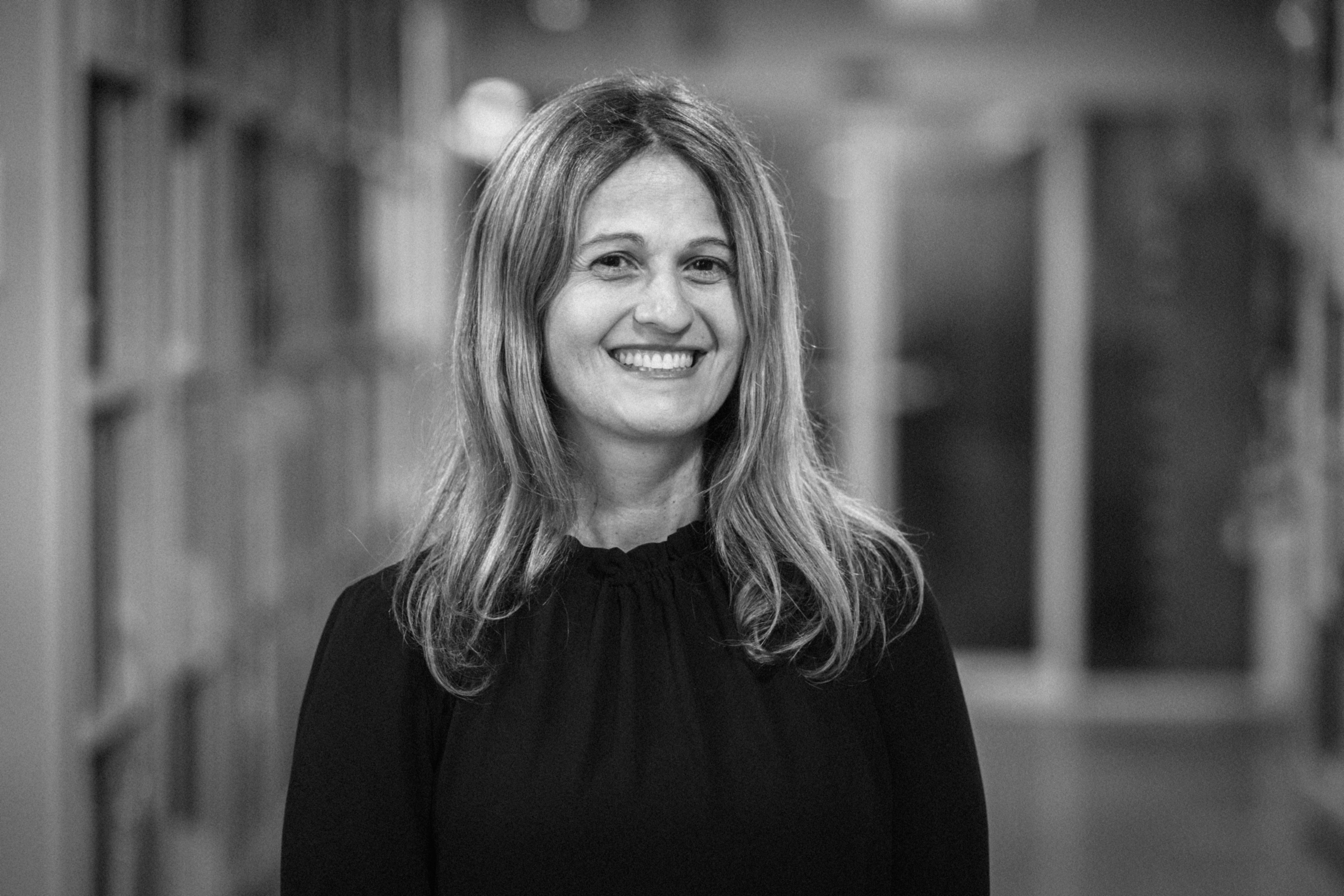
Shirleene Robinson AM, image courtesy of Joy M Lai.
Dr Robinson has published extensively across the areas of oral history, colonisation, Indigenous and non-Indigenous contact histories, LGBTIQ history and the history of childhood. She has written the research book Something like Slavery? Queensland's Aboriginal child workers,1842-1945 (2008) and has been a co-author for In the Eye of the Storm: Volunteers and Australia’s Response to the HIV/AIDS Crisis (2021) and Pride in Defence: The Australian Military and LGBTI Service Since 1945 (2020).
Dr Robinson has won both the Oral History Australia Media Award (2019, with Anisa Puri) and the Oral History Australia Book Award (2021). She is currently the Oceania representative on the International Oral History Association Council and is a past President of Oral History New South Wales. Between 2018 and early 2023, Dr Robinson was Senior Curator of Oral History and then Director of Curatorial and Collection Research at the National Library of Australia. In 2022, she was appointed a Member of the Order of Australia for significant service to the LGBTIQ community, marriage equality and history.
About MC Trey
Thelma Thomas, also known as MC Trey is a Fijian-Samoan Australian storyteller, writer, artist, creative producer, social worker, community and cultural development arts worker. She was born in Fiji and raised on the Darug lands of Western Sydney. With over 30 years’ experience across various sectors, she is passionate about Indigenous storytelling practices and stories, cultural knowledge, cultural heritage and climate advocacy.
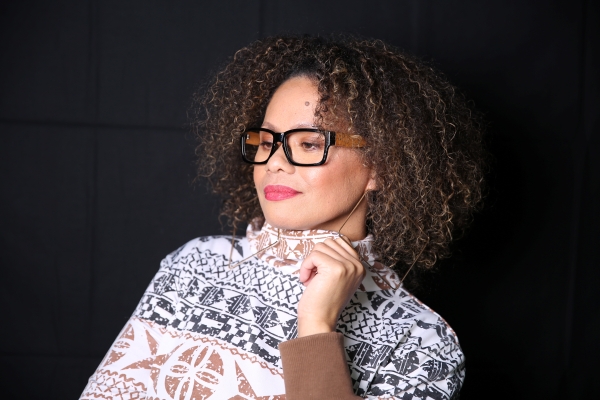
MC Trey
She is an advocate for young people, women, First Nations, Pacific, culturally diverse and creative communities. She has hosted National TV Hip Hop, soul music shows, performed Hip Hop theatre, produced creative festivals, events and well-being youth programs in Australia and Fiji. Her qualifications include a Bachelor of Social Work, Mental Health, Youth Work, Music and Business accreditations. Music nominations include an ARIA with her group Foreign Heights, and Urban Music, 3D and Jack Music Awards for her solo work. She has released several albums and, has performed locally and internationally.
Her business, Tapastry activates at the intersections of Pacific cultures, music, arts, Hip Hop culture, wellbeing, technology and the humanities. Pacific methodologies and knowledge underpin her practice. Trey has proudly contributed to the National Library Archives since 2021, via Fijian and Pacific Australian oral history projects.
About Dr Barry York
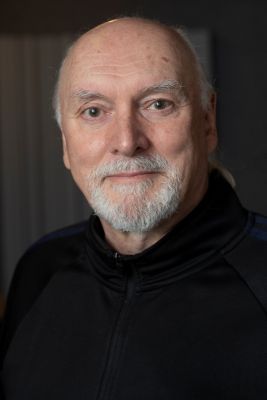
Barry York
Dr Barry York was born in London. In 1954, his parents migrated to Melbourne, where he grew up in Brunswick, an ethnically diverse, working-class suburb. He never knew his grandparents as they existed only as framed photographs on the family mantelpiece. From an early age, he questioned his parents about them, who they were and what their lives had been like. Dr York developed the probing, personal lines of inquiry that later shaped his work as an oral history interviewer.
A graduate of La Trobe University, he helped create Great Disorder Under Heaven during the Vietnam protest era and served six weeks in Pentridge Prison for contempt of court in 1972. Dr York later completed an MA and PhD and in 2005 was awarded the Medal of the Order of Australia for services to the recording of immigration history. He worked for ten years as a historian at the Museum of Australian Democracy at Old Parliament House.
Dr York began oral history interviewing in 1984 and has recorded more than 500 interviews. Many are held in the National Library’s collection, particularly about migrants from Malta and Poland. He has been an interviewer for the Library since 1988.
About Dr Barbara Lemon
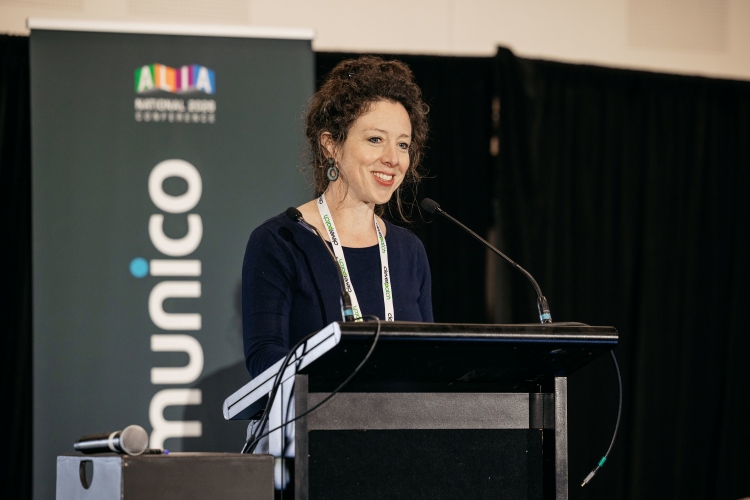
Dr Barbara Lemon
Dr Barbara Lemon is the co-Director of Curatorial and Collection Research at the National Library of Australia and is responsible for managing the oral history collection. She has held senior roles in the National and State Libraries Australasia, New Zealand, and the United Kingdom.
Dr Lemon completed a doctoral thesis in Australian history in 2008 and her work as a professional historian has been published in a wide range of journals, online exhibitions and radio documentaries.

 Assistance animals welcome

 Hearing induction loop

 Wheelchair accessible
Visit us
Find our opening times, get directions, join a tour, or dine and shop with us.