
The archive of desires: Tracing sexual knowledge in Indonesia
As a PhD candidate in Literary and Cultural Studies at Monash University, I spend much of my time tracing how intimacy, morality and the body were imagined in postcolonial Indonesia. My research focuses on the formation of sexual knowledge, how it was taught, regulated, and emotionally negotiated through everyday texts like sex education manuals, marriage guides and erotic literature. Earlier this year, I had the privilege of exploring these materials firsthand at the National Library of Australia.
Why I decided to research at the National Library
I knew the Library held one of the most comprehensive Indonesian collections in Australia. My main goal during the program was to complete my collection of the Seks Problem column from the Matra magazine. This was a long-running advice column that offers insight into how sexual concerns were publicly discussed through the expertise of Indonesian renowned sexologist, Naek L. Tobing. From the collection, I am able to compile 738 entries from 1987 to 2007 ranging from enquires about sexual performance and psychological distress over different gender identities.
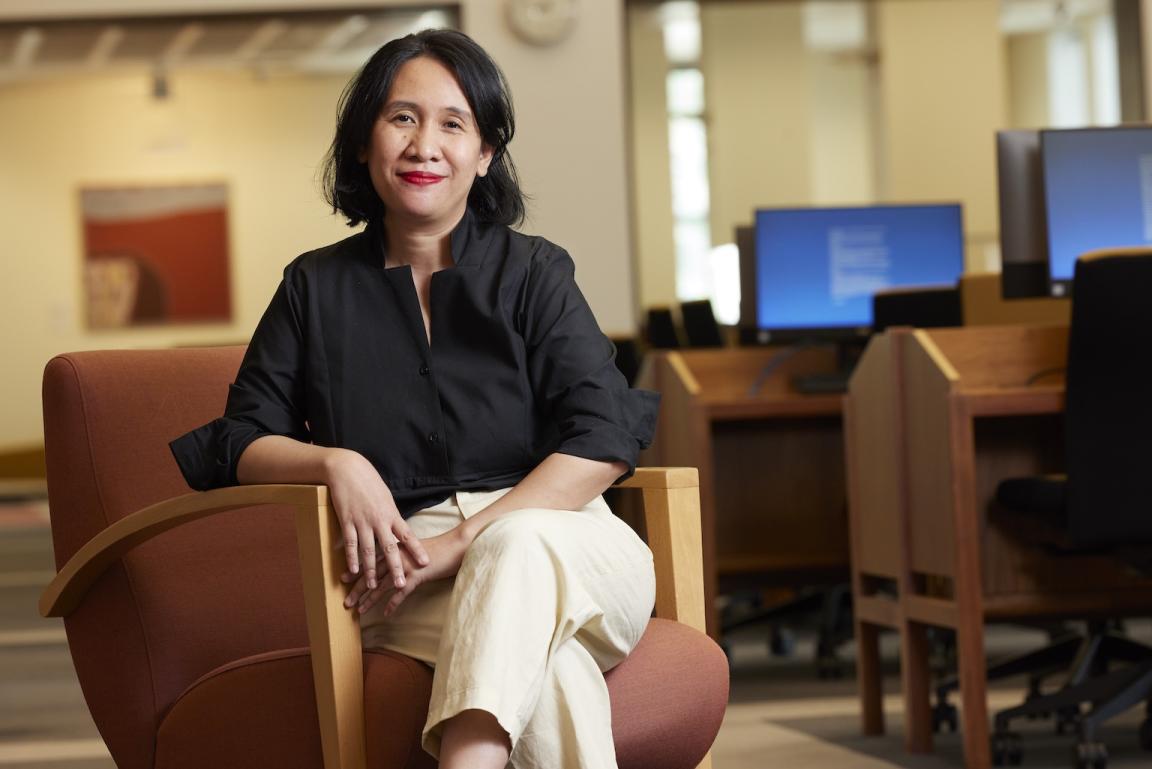
Rima Febriani, 2025 National Library of Australia Asia Study Grant Scholar
Rima Febriani, 2025 National Library of Australia Asia Study Grant Scholar
Advice columns and women’s health
Along the way, I discovered other related columns such as Ginekologi & Seks from the Femina magazine, which offered medical and psychological perspectives on women’s health and intimacy. These columns are invaluable for understanding how sexual discourse was shaped by both expert authority and popular demand, and how pleasure, desire and reproductive health were framed within broader moral and cultural expectations.
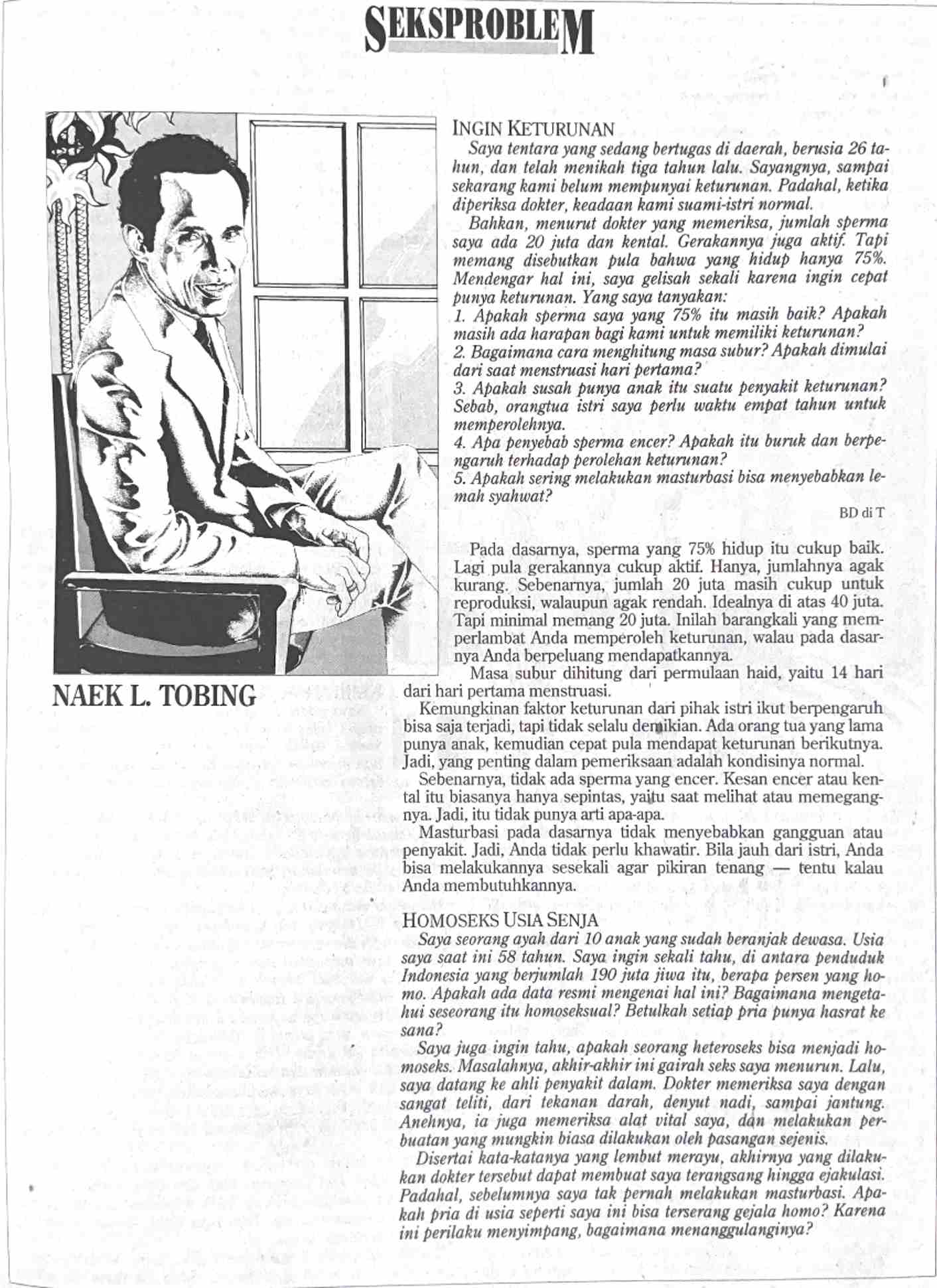
Seks Problem column, Matra, National Library of Australia, nla.cat-vn3024123
Entertainment magazines and popular culture
Beyond these columns, the Library’s holdings revealed a vibrant ecosystem of entertainment magazines from the 1950s and 1960s, including Gembira, Tjermin, Liberty, and Keluarga. These publications blended family advice, serialised fiction, and visual culture, often reflecting norms around gender, domesticity, and modernity.
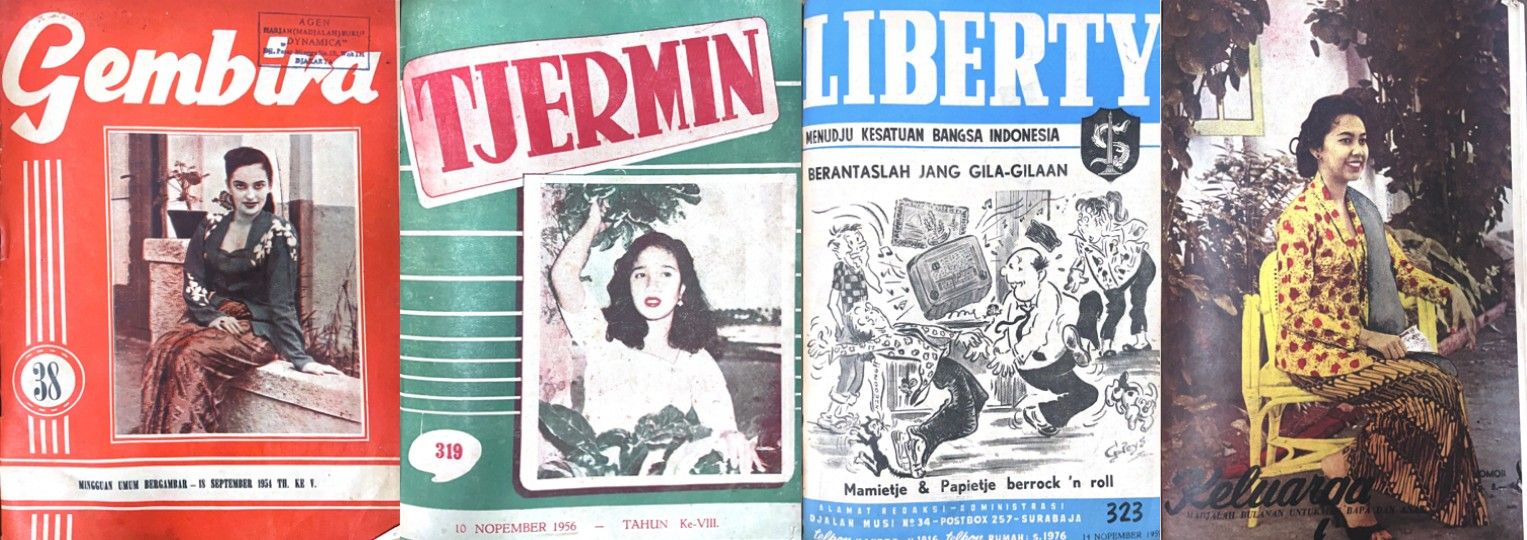
Magazines from the 1950s – 1960s: Gembira (Joy); Tjermin (Mirror); Liberty and Keluarga (Family), National Library of Australia
One particularly striking find was Detektip & Romantika (Detective & Romance), a magazine that combined crime reporting and romantic fiction published in the late 1960s and 1970s. It featured sensational covers mimicking Western pulp fiction, reenactments of morally transgressive stories with actors photographed dramatising the events, and even a dedicated page of witch-hunting of the Indonesian Communist Party-affiliated individuals. As history shows, the 1965 attempted coup in Indonesia was followed by a series of systematic physical and ideological eradication of leftist politics, including the demonisation of leftist and progressive women as morally corrupt. It is fascinating that this magazine was later rebranded as a 'serious' magazine titled D&R.
I also uncovered rare sociological texts by Amen Budiman, who wrote extensively on gay and transgender life in Indonesia during the 1970s and 1980s. These works are difficult to access elsewhere and offer a peek into how non-normative sexualities were framed in a period of rapid social change. Budiman’s writing is especially valuable for understanding how gender variance was discussed in relation to urbanisation, psychological theory, and religious morality.
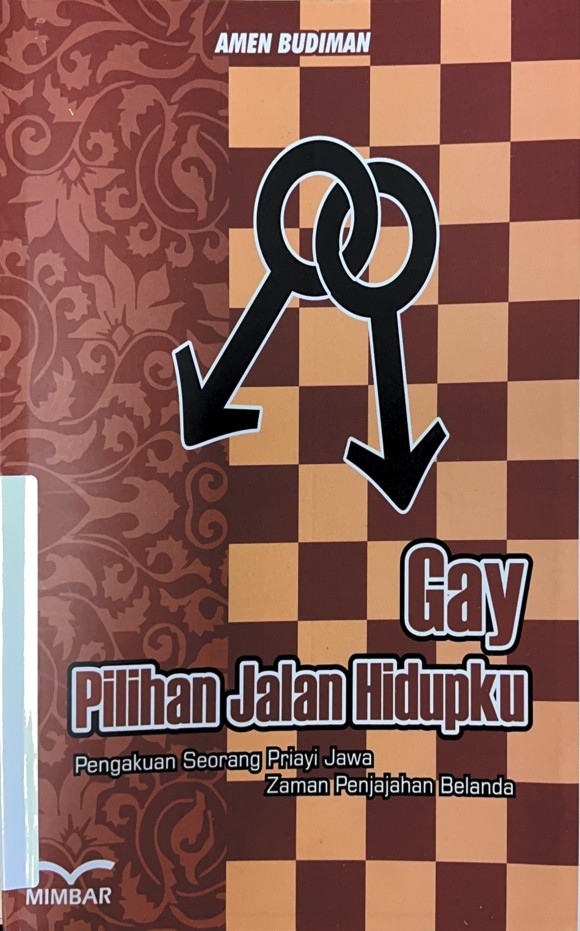
Gay: My Choice, Amen Budiman, 1989, nla.cat-vn1102728
Other materials included Bina Sejahtera, a state-sponsored magazine promoting the famous family planning program, alongside manuals authored by Indonesian doctors and Christian-affiliated publications that offered moral and medical guidance on sexuality and marriage.
In the Library’s Petherick Reading Room, I reserved some of the most visually arresting Indonesian film posters and flyers from the 1970s to 1990s. They are neatly organised by date in their actual conditions with pen marks, stamps , and small tears on the papers. Many of these posters featured titillating imagery and provocative taglines, where they could be found displayed in open spaces. To me, they serve as memorabilia of Indonesian cinema and visual culture.
These posters and flyers show how desire was marketed to the public and how visual culture shaped the emotional landscape of Indonesian audiences. They often mirrored the themes found in the magazines: moral transgression, erotic spectacle, and the tension between tradition and modernity. They also serve as a reminder that sexual knowledge was not confined to text, but it was also visual, performative, and deeply affective. Even though they are not part of my thesis, I am thinking of pursuing a different project in the future.
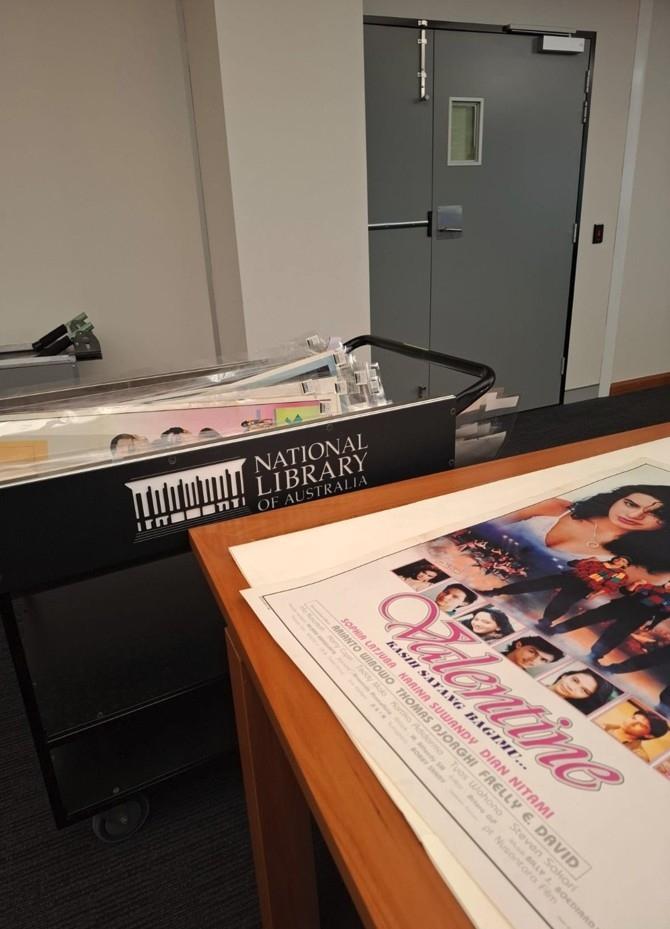
Indonesian film posters in the Special Collections Reading Room
Indonesian film posters in the Special Collections Reading Room
Next projects
These discoveries have become central to my thesis. They have helped me build a more nuanced archive and given me the confidence to pursue publication and future collaborations. I am currently working on chapters that trace the emotional politics of sex education through these manuals and advice columns and I hope to share this work with both academic and public audiences.
What I hope readers take from my project is that sexual knowledge in Indonesia was more than about biology or morality. It was also about navigating modernity, negotiating cultural values, and imagining new forms of intimacy. These texts and materials show how intimacy was taught as both a private practice and a public concern. They remind us that sexual knowledge is never neutral.
Whether you're a historian, artist, or cultural researcher, the Library offers a space to think deeply, discover widely, and connect your work to broader conversations. For me, the opportunity was more than just access. It was an invitation to read between the lines, to trace forgotten intimacies, and to bring overlooked voices into the scholarly conversation.
It was also a reminder that archives are not just repositories of the past, but they are also living spaces where new questions emerge. Where the stories we tell about intimacy, identity and culture continue to evolve.
Rima Febriani is a 2025 National Library of Australia Asia Study Grant Scholar, supported by the Harold S. Williams Trust.