

Painting a picture of 19th and 20th century Thai law
Suprawee (Earn) Asanasak was one of our 2024 Asia Study Grant recipients, and spent her time with us delving deep into the Thai collection.
At the end of her time at the Library, we asked her to answer a few questions about her research and her discoveries in the collection.
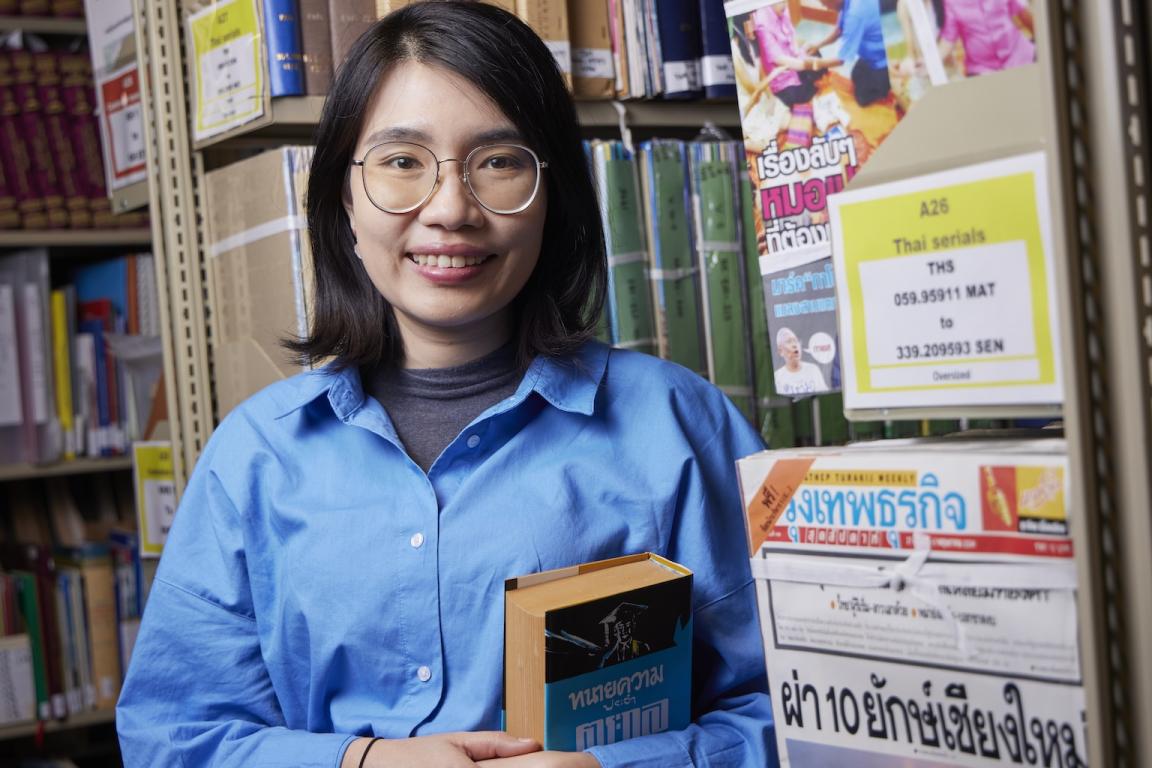
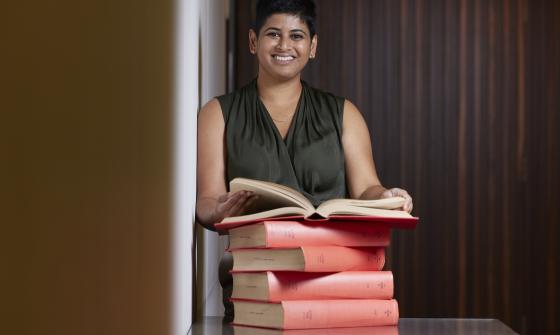
2024 Asia Study Grant recipient Miss Suprawee (Earn) Asanasak
2024 Asia Study Grant recipient Miss Suprawee (Earn) Asanasak
What are you researching and how did you first become interested in this topic?
I am working on my PhD thesis to redescribe Thai Legal Tradition from the late 19th century to the present. With the help of archives, I aim to paint a picture of what it was like to practice, think, and live with law in Thailand from the end of the 19th century, when the entire society was undergoing significant and rapid changes.
My thesis begins with the story of how the printing press and codex book-binding were introduced to Thailand in the mid-19th century. I trace how printing technology changed the way Thai jurists practiced and understood law. Following that, I examine how Thai jurists developed their writing style and technique as the society experienced the democratic revolution, nationalism, wars, economic miracle, and finally, a financial crisis. In a way, I attempt to understand and interpret Thai legal tradition in a manner that reflects the specific history of the society.
I taught law at a university in Bangkok throughout the Covid pandemic, and I had always been curious about a very simple question: what is Thai law? Strangely, the more time I spent teaching Thai law, the more curious I became. For me, the answer would not be as simple as combining the words 'Thai' and 'law' together, and I believe my thesis could perhaps provide some answers to that question.
Why did you want to research at the National Library?
When I came across an advertisement for Library Fellowship and Scholarships offerings, I was in the process of planning my archival research in Bangkok, so I figured I might as well visit the National Library. I knew that at some point I would have to visit the Library and use their Thai collection. The time at the Library has been incredibly beneficial for my research!
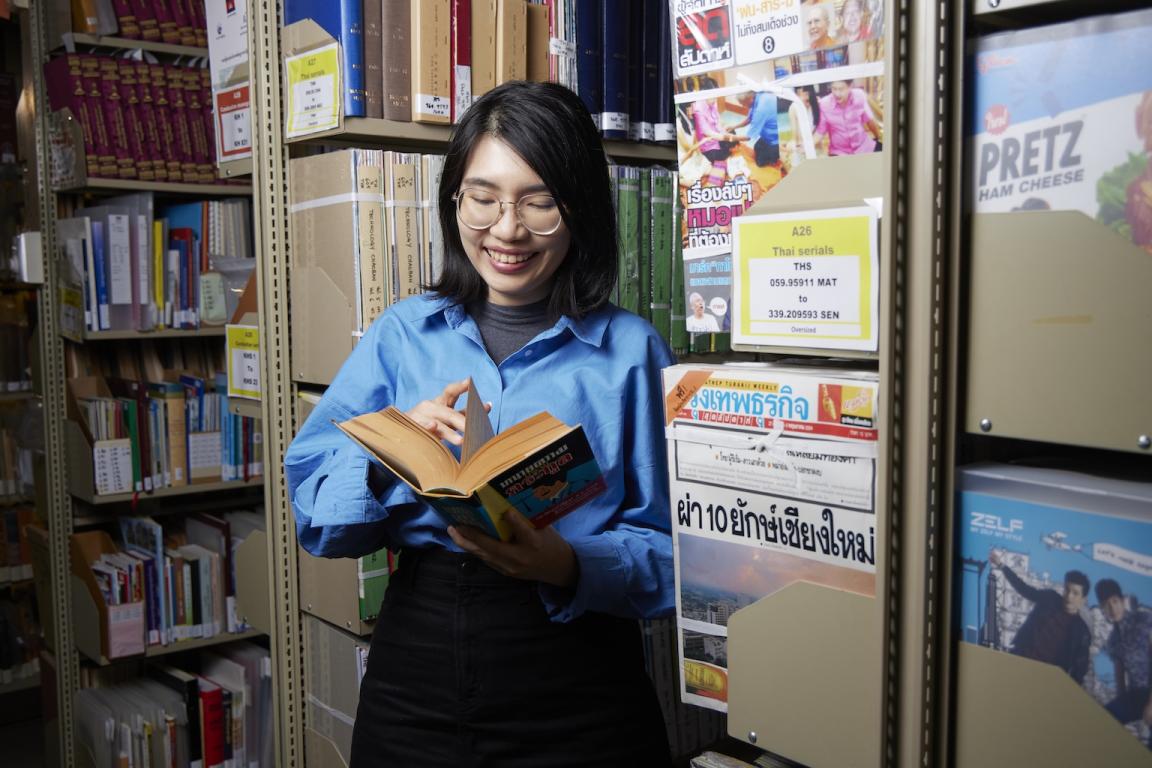
2024 Asia Study Grant recipient Miss Suprawee (Earn) Asanasak
2024 Asia Study Grant recipient Miss Suprawee (Earn) Asanasak
What did you find most surprising about the collection material you were working with?
Initially, I had planned to use pre-WWII materials such as old historical records and Thai legal manuscripts. However, the extensive collection of Thai language books printed after WWII caught my attention. I was also intrigued by the writings on economic development in Thailand in the 1980s. Surprisingly, the Library holds various reports and booklets produced by the Thai government during that period.
Fascinate us with a story about something you discovered...
There is a popular textbook on legal philosophy in Thailand that was written in the 80s, titled Niti pratyā. I think all Thai law schools still use that textbook for their legal philosophy class. It is a classic textbook that it is now in its 15th edition. I found that the Library holds the first edition of the book. Because the book is a classic, I am very familiar with its content and never thought about going back to read its first edition.
I was surprised to find that the first edition was almost a completely different book. Its content was somewhat scattered and fragmented. It was also a lot shorter than the 15th edition. Just by comparing the first edition and the 15th edition, I think I can almost trace how legal scholarship in Thailand gradually evolved through these editions.
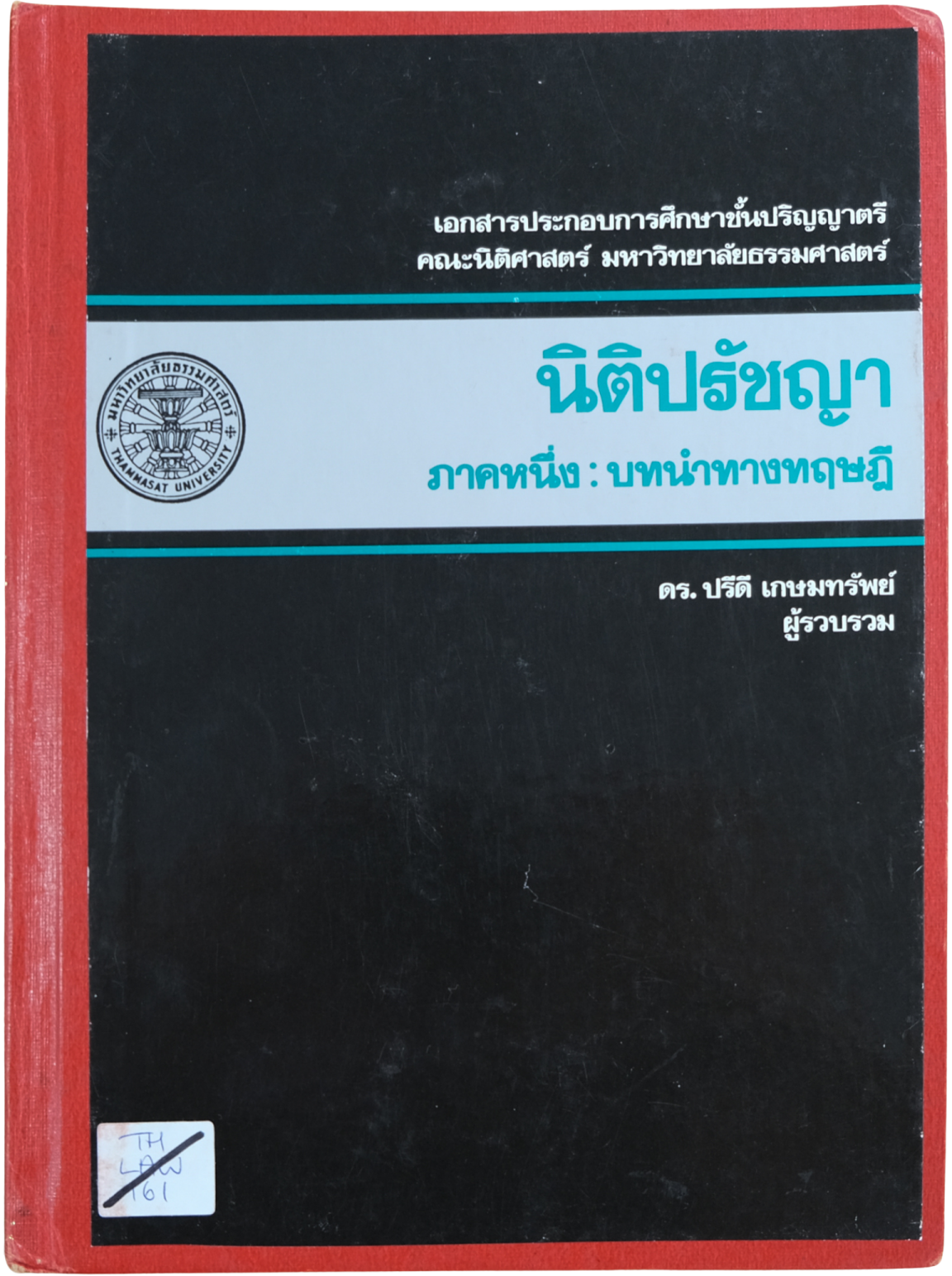
Prīdī Kasēmsap, Kittisak Prokkati, Mahāwitthayālai Thammasāt and Khana Nitisāt, Niti pratyā, 1983, nla.gov.au/nla.cat-vn8150390
Prīdī Kasēmsap, Kittisak Prokkati, Mahāwitthayālai Thammasāt and Khana Nitisāt, Niti pratyā, 1983, nla.gov.au/nla.cat-vn8150390
How are you planning to use what you’ve discovered through our collections?
My immediate plan is, of course, to finish my PhD! I will have to go into a self-imposed lockdown and start writing chapters of my thesis.
One potential area of research that I may want to explore further is the study of legal connections within Asia. At the Library, I came across reports and publications from the Toyota Foundation in the 1980s. During this time, Toyota began investing in Southeast Asian countries and sponsoring cultural projects, such as transliteration of old legal manuscripts and translation of Southeast Asian literatures.
These exchanges of capital and cultures wouldn't have been possible without legal mechanisms. I'm curious whether the intertwined movements of capital and culture from Japan to Southeast Asia and vice versa could provide insight into Asia and lives lived with law in Asia.
Why would you recommend the Library's Fellowships and Scholarships program to others?
I would highly recommend the program to any scholars working on topics related to Asia, especially post-WWII to contemporary Thailand. The Thai collection at the Library is very impressive, and I think there are still many surprises waiting to be discovered.
Suprawee (Earn) Asanasak is a 2024 National Library of Australia Asia Study Grant recipient, supported by the Opalgate Foundation.
More to explore
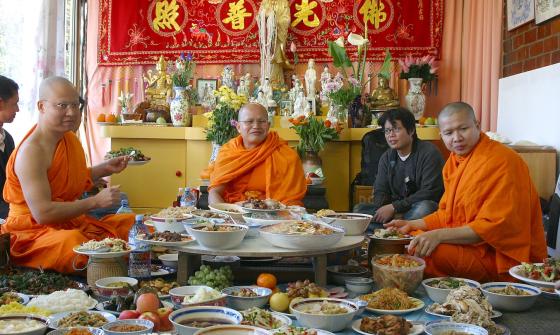
June Orford, Buddhist Monks feasting during celebrations for the beginning of the Rains Retreat at the Thai Buddhist Temple in Box Hill, Victoria, 1 August 2004, nla.gov.au/nla.obj-137018135
2024 National Library of Australia Scholar Dr Jorien van Beukering