

Unlocking our oral history collections for family history research
Many oral histories begin as treasured family stories, passed down from one generation to the next.
An oral history is a recorded interview that captures a person's memories, experiences and reflections in their own words. When those stories are recorded and made accessible, they can bring family history research to life and provide a depth and voice that written records cannot capture.
As part of our Oral History and Folklore Collection, we hold thousands of interviews documenting Australian lives and experiences. Even if you don't find an interview with a family member, hearing from people who lived through similar events, places or communities can add valuable context to your research.
Members of our Special Collections Research & Support team have highlighted collections that can enrich your family history research. Whether you are on the hunt for a particular interview, hoping to hear firsthand accounts from people who lived through similar times or events, looking for inspiration to start your own oral history project, or simply following your curiosity about the past, we hope these collections inspire your next discovery.
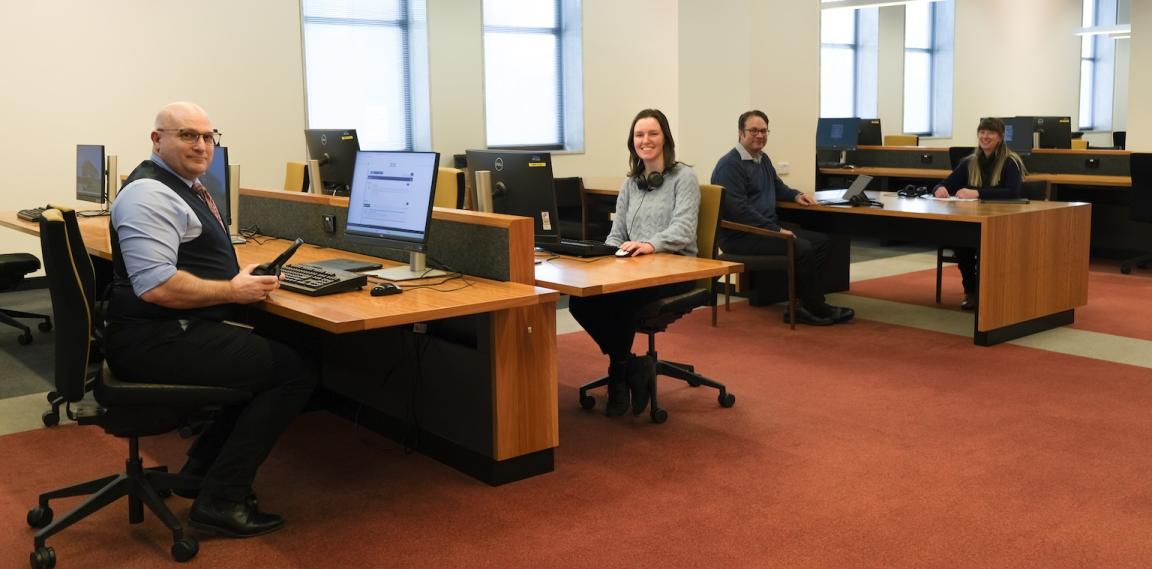
Members of the Special Collections Research & Support team in the Main Reading Room
Members of the Special Collections Research & Support team in the Main Reading Room
Leisa recommends the Bringing Them Home oral history project
The Bringing Them Home oral history project is one of our most significant oral history collections. Through 340 interviews conducted across Australia between 1998 and 2002, it documents the experiences and perspectives of Stolen Generations, their families and others directly affected by past child removal policies. The collection includes deeply personal accounts from First Nations people who experienced removal from their families, alongside perspectives from non-Indigenous Australians who worked in roles such as government administrators, teachers, foster parents, police officers, politicians, doctors, nurses, anthropologists, missionaries and welfare workers.
Each interview held has its own access conditions, reflecting the wishes of participants and the sensitive nature of the collection. If you find an interview that requires permission to access, contact Ask a Librarian.
The Bringing Them Home oral history project contains accounts of the forced removal of Aboriginal and Torres Strait Islander children and may include references to trauma, abuse, grief, and loss. This content may be distressing to some readers. Please engage with this material with care.
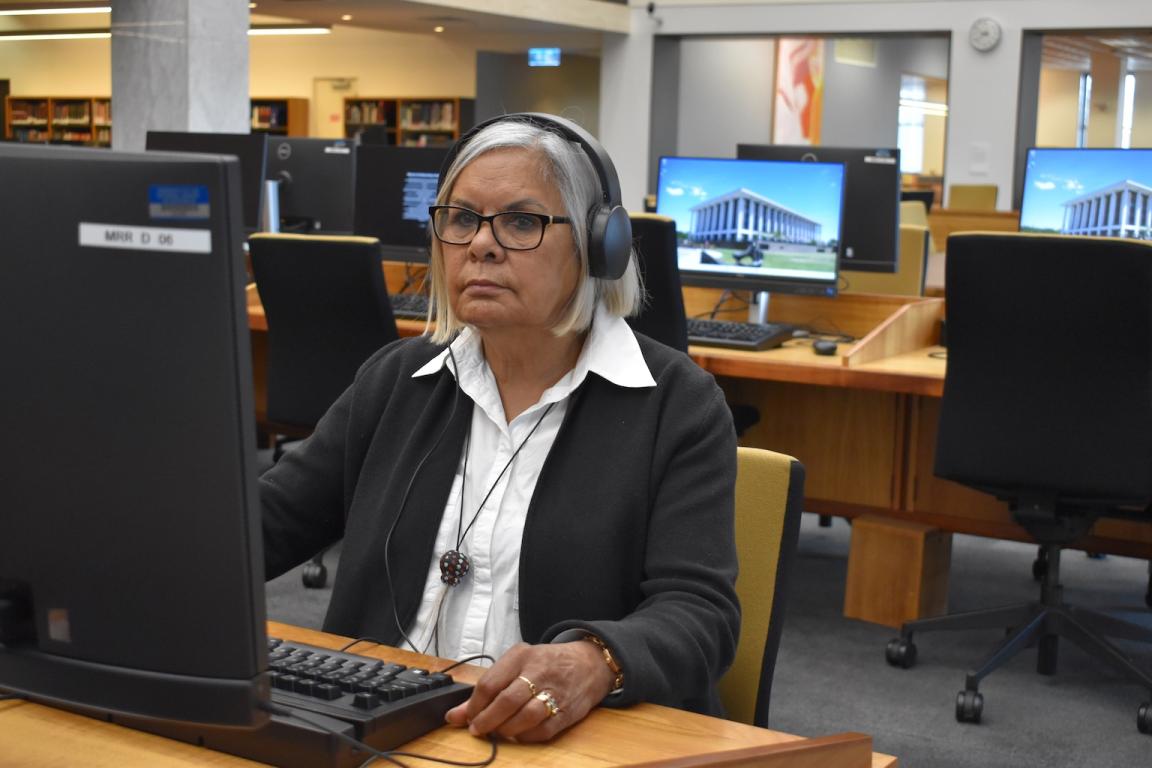
Wirangu Elder Sandra Miller listening to an oral history
Wirangu Elder Sandra Miller listening to an oral history
Qin Qin explores Chinese Australian lives and memories
What was everyday life like for Chinese Australians across generations?
Australia’s vast social change from the 1930s onwards – from post-war migration to the emergence of multiculturalism – are described through the voices, lived experiences and perspectives of Chinese Australians in the Australians with Chinese heritage oral history project.
Part of a broader collecting project over 2021-22, the interviews document the lives of both prominent figures and Chinese Australian whose stories might otherwise be overlooked in the historical record.
The collection contains 99 multilingual interviews with people born in every decade from the 1930s onwards. Recordings include English, Mandarin and Cantonese.
Until I went to school, I thought everybody's family was like mine. Other people didn't eat the kind of food we ate. We used chopsticks. I don't think anybody else knew what chopsticks were…We may have looked like other families from the outside, but I knew the values, language and culture weren't necessarily showing up.
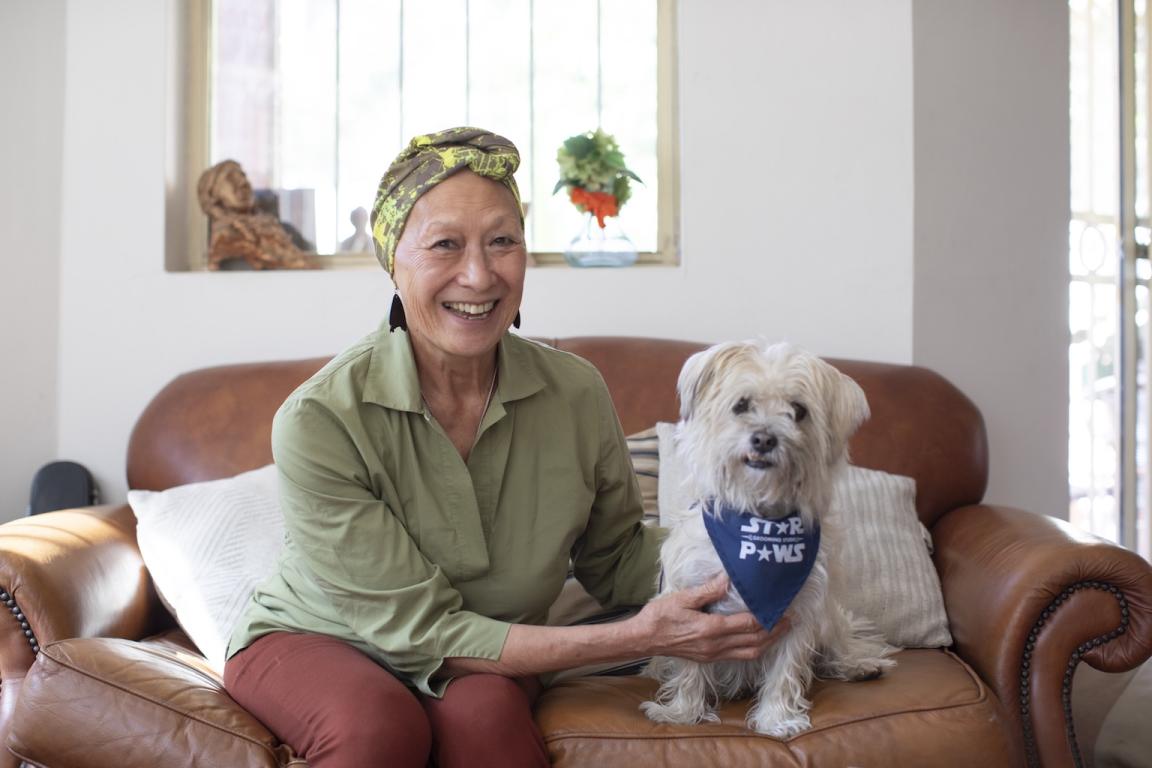
Anna Zhu, Saulan Beverly Yin-Lo sitting on a couch with her dog, Sydney, New South Wales, May 2023, nla.gov.au/nla.obj-3226964329
Anna Zhu, Saulan Beverly Yin-Lo sitting on a couch with her dog, Sydney, New South Wales, May 2023, nla.gov.au/nla.obj-3226964329
Sarah highlights migration and diaspora stories
Our oral history collections document a wide range of migration experiences and explores how cultural traditions, languages and identities have been maintained, adapted and reimagined across generations. This includes previous projects such as:
- Bhutan Migration
- Scots in Australia
- Ukrainians in Australia
- Indian Diaspora in Australia
- Second Generation Vietnamese in Australia
- Maltese Australian Folklife and Social History
- Polish Australians
- Lebanese immigrants in Australia
- Irish National Association centenary
- American migration to Australia
- Statelessness in Australia oral history project.
Together, these interviews provide a rich record of migration, settlement, family and community life in Australia. They also illustrate how identity and belonging are formed through everyday experiences.
View a selection of migrant stories in the collection
In this excerpt from the Indian Diaspora in Australia oral history project, Ashwin Khurana, interviewed by Navin Sam Regi, describes his childhood in Whyalla where family, sport and community were central to his early life.
So by the time I was born [in Whyalla] in 1980, I loved it. I know I remember thinking it was a hot place. And it was the 80s, right? And I think the 80s has made a comeback on TV, right, people talk about that sort of retro feel. I just remember going to Blockbuster, it was called Focus Video to begin with. I remember playing sport constantly. I loved cricket. We were a cricket family, we really enjoyed that. I remember the TV being on and watching that. I remember tennis, and to this day that’s something that I still play. I remember going to the beach sometimes, we didn’t live too far from the beach. I remember a lot of frequent dinner parties with other Indian families. It was really joyful, I’ll be honest with you.
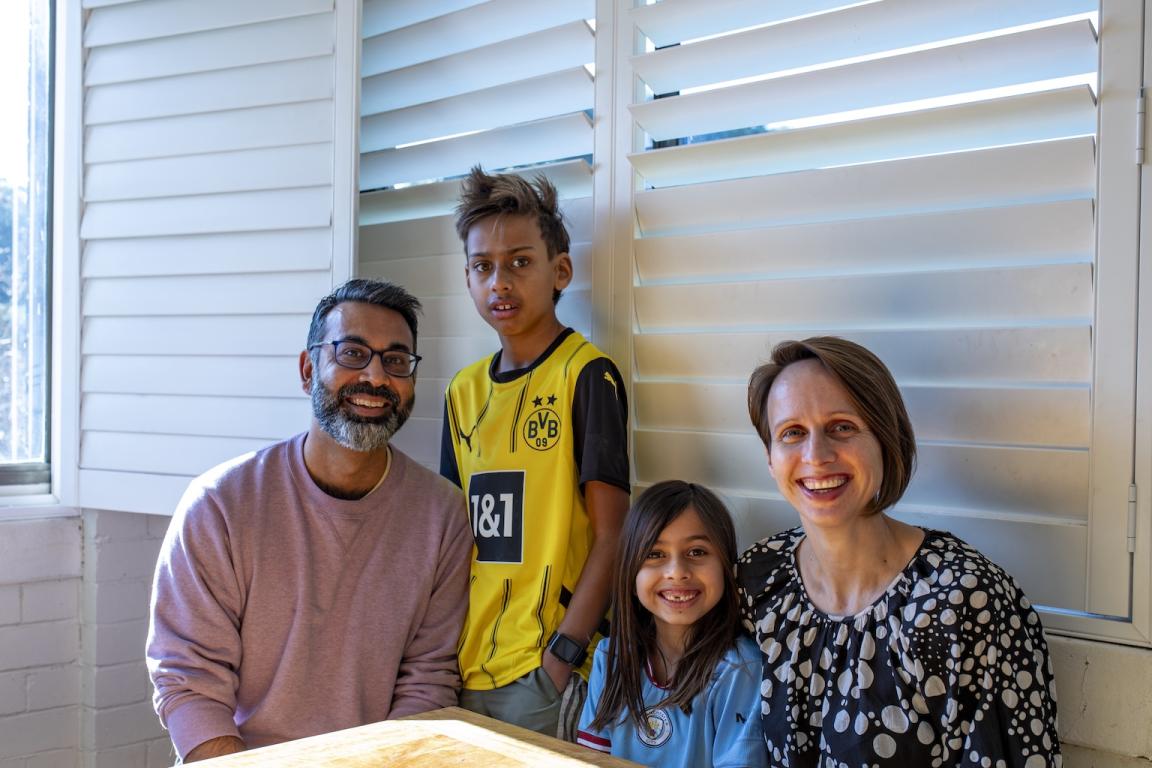
Navin Sam Regi, Portrait of Ashwin Khurana with his family during an oral history interview for the Indian diaspora in Australia collecting project : pictures, Surry Hills, New South Wales, 29 June 2024, nla.gov.au/nla.obj-3416138010
Navin Sam Regi, Portrait of Ashwin Khurana with his family during an oral history interview for the Indian diaspora in Australia collecting project : pictures, Surry Hills, New South Wales, 29 June 2024, nla.gov.au/nla.obj-3416138010
Lisa highlights Ten Pound Poms
Following the Second World War, the Australian Minister for Immigration, Arthur Calwell, devised the ‘Populate or Perish’ immigration policy to assist the Chifley government’s post-war reconstruction endeavours. Under the Assisted Passage Migration Scheme, British families could start a new life in Australia for £10 per adult, children under 19 travelling free.
The Ten Pound Poms oral history collection contains 135 interviews with migrants who came to Australia under the scheme and built new lives here. Recorded between 1998 and 2001, the interviews capture personal memories of leaving Britain, the long sea voyage to Australia, life in migrant hostels, finding work, raising families, and negotiating a sense of belonging in a new country
Collectively, these voices reveal the hopes, uncertainties and everyday realities that lay behind the optimistic promises of migration publicity. In the interview with Alfred and Dorothy Flyod, they reflect on their preparations to embark, setting sail and the voyage.
We had our name down for 2 years. And because there was trouble out here at that time, we were coming out to work on Victoria Railways… Eventually we got a sailing date, which we received in December, just before Christmas, in 1951, telling us we were on SS Ormonde in January and get rid of all our belongings and pack up everything else and get ready to come here.
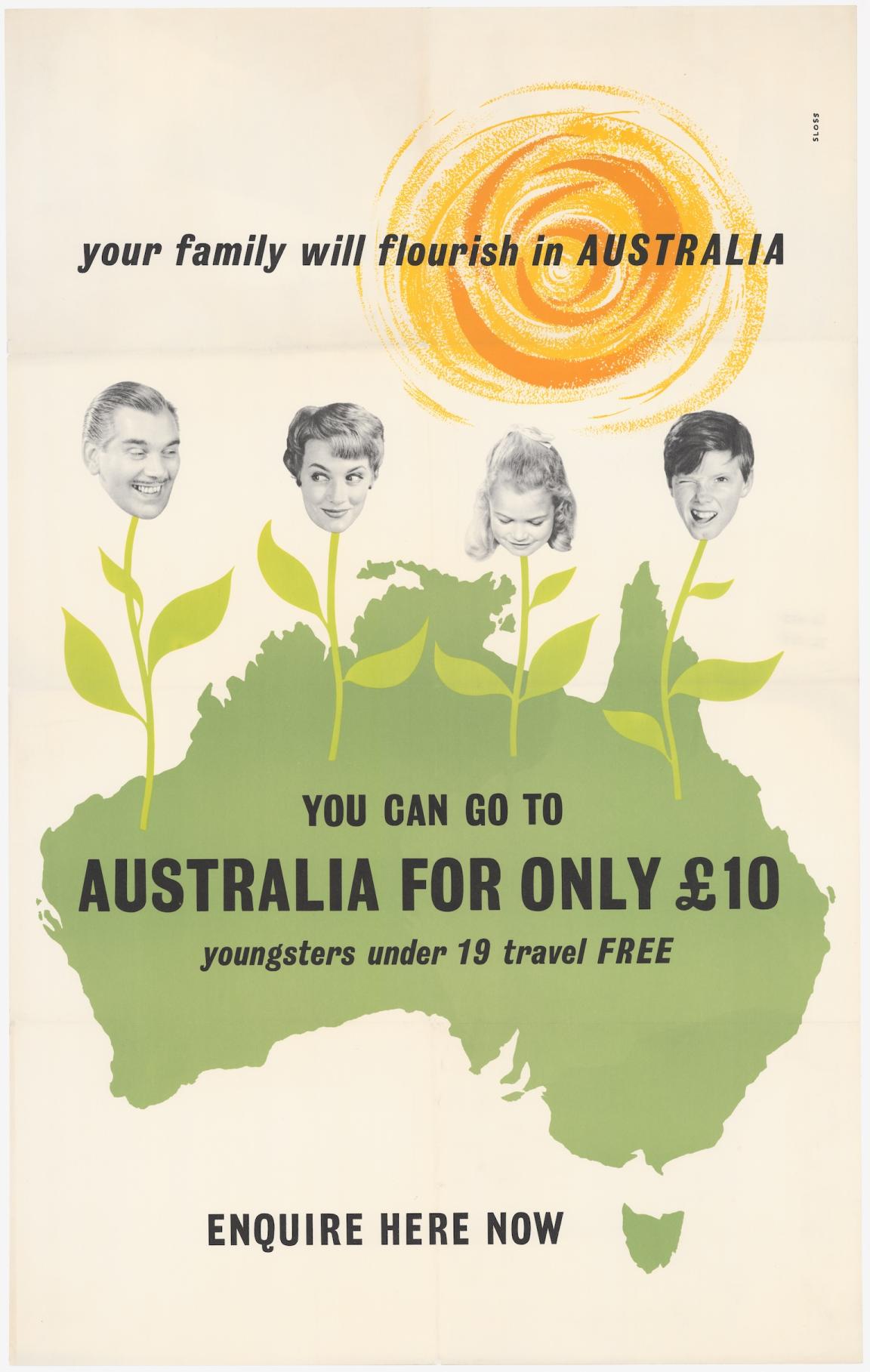
Your family will flourish in Australia : you can go to Australia for only £10, 1952, nla.gov.au/nla.obj-113356872
Your family will flourish in Australia : you can go to Australia for only £10, 1952, nla.gov.au/nla.obj-113356872
Nat recommends Australian Generations
The Australian Generations oral history project is one of Australia's largest oral history initiatives, capturing the life stories of people from diverse backgrounds across the country.
As the first major national project to examine how Australians from different generations have experienced social, technological and environmental change, it offers a unique record of life in Australia across the 20th and 21st centuries.
Interviews explore family, work, migration, belief, ageing and identity through personal stories and reflections. Together, they reveal not only how Australia has changed, but how those changes were experienced by ordinary Australians.
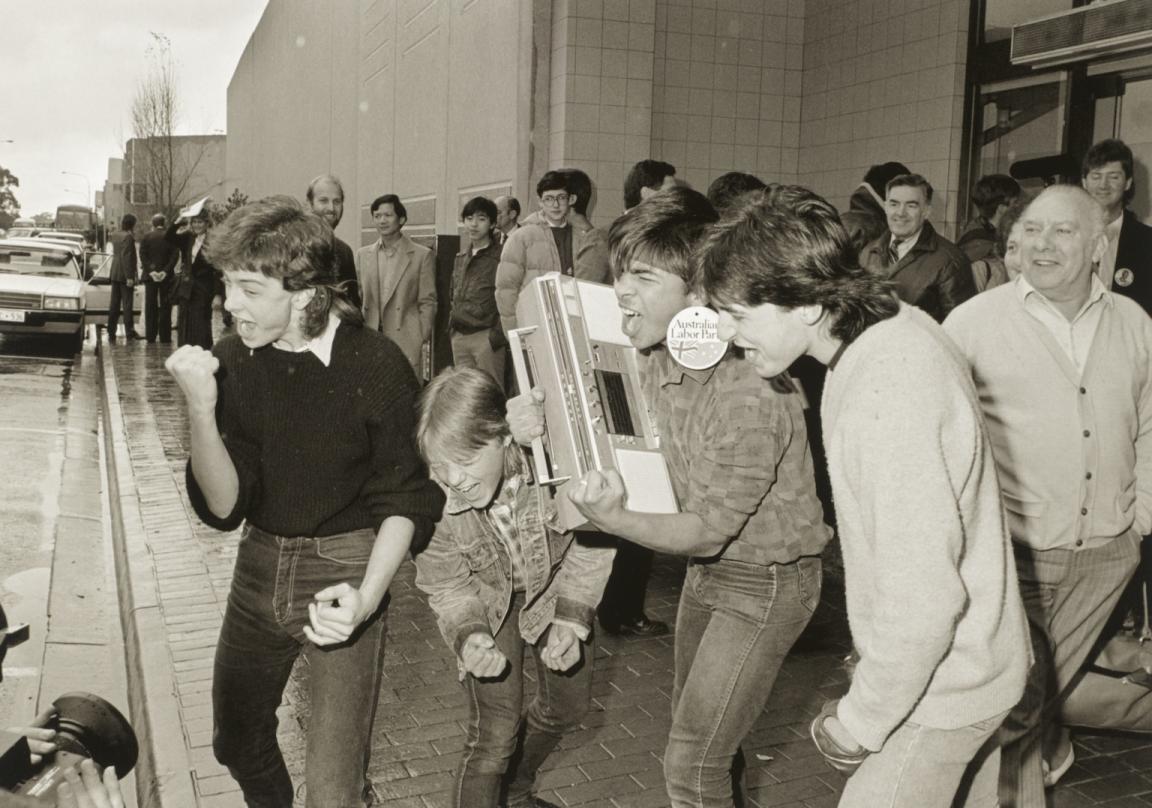
Andrew Chapman, Teenagers get in the act at a Bob Hawke election rally at Box Hill central shopping centre, Victoria, June 1987, nla.gov.au/nla.obj-147506797
Andrew Chapman, Teenagers get in the act at a Bob Hawke election rally at Box Hill central shopping centre, Victoria, June 1987, nla.gov.au/nla.obj-147506797
Fijian Australian stories
Lisa also recommends the Fijian Australians oral history collection
The Fijian Australians oral history collection is part of our project to document, highlight and make accessible the stories of Fijian Australians. The oral history project began in October 2021 and includes 66 interviews with Fijian Aussies who have settled across the country, 48 of which are digitised and freely accessible to listen via Trove (link in the individual catalogue records). Discover the unique contributions these 66 Fijian Australians have made to Australia's political, academic, cultural and social life.
In this recording by Andrea Kirwen in the Fiji Australians oral history collection, she talks about Fijian family naming traditions.
'Viti' means Fiji, which is my middle name. Usually, middle names have like a real significance, especially in the Lau group like of islands where my mum is from. The middle name is, has to be have some kind of meaning like that relates to when you were born. So I always think that Mum was missing Fiji when I was born because I came a bit early. And her parents weren't quite there yet, because they were going to come for the birth. And so I feel like when she was missing Fiji, she felt like, well, I'll just put Fiji into her name.
We also have a – currently small but growing – collection of recordings under the Pacific Peoples of Australia oral history project This is part of the Pacific Peoples of Australia Project which will document contemporary stories and voices as well as the important contributions of Australia’s many Pacific diaspora communities.
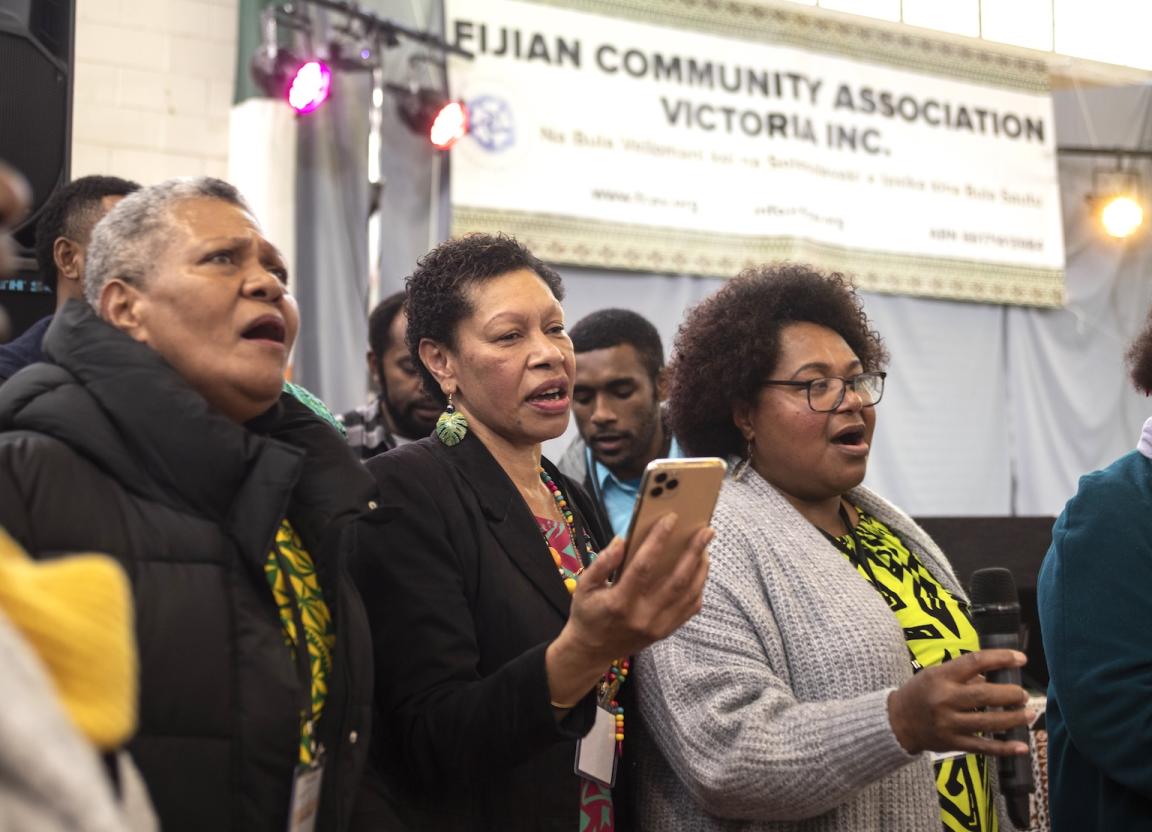
Leigh Heningham, FIJI TAUVU FESTIVAL 2022 A choir singing on stage with their phones, nla.gov.au/nla.obj-3075759879
Leigh Heningham, FIJI TAUVU FESTIVAL 2022 A choir singing on stage with their phones, nla.gov.au/nla.obj-3075759879
Rob explores life on the stock routes
A drover is a person who moves livestock over long distances, traditionally on horseback. These experienced stockmen and stockwomen were trusted to manage herds and flocks of varying sizes for journeys covering many days and weeks. They required a range of skills, not just in handling animals, but also in the day-to-day living and self-reliance.
With 122 interviews, the Drovers Oral History Collection allows listeners to hear directly from people who undertook this demanding work. Drover Noel Willetts's interview, for example, discusses his career working on different stations, the evolution of the intrustry and the difficulties with cattle “rushes” or stampedes across the deserts and black soil plains.
The collection includes not only drovers, but also stockmen, shearers, teamsters and horse breakers, who speak about their lives, families and working experiences in rural Australia.
Cattle and sheep played an important role in Australia’s pastoral industries from the colonial period onwards, and many aspects of Australia's folklore and identity are connected to these industries.
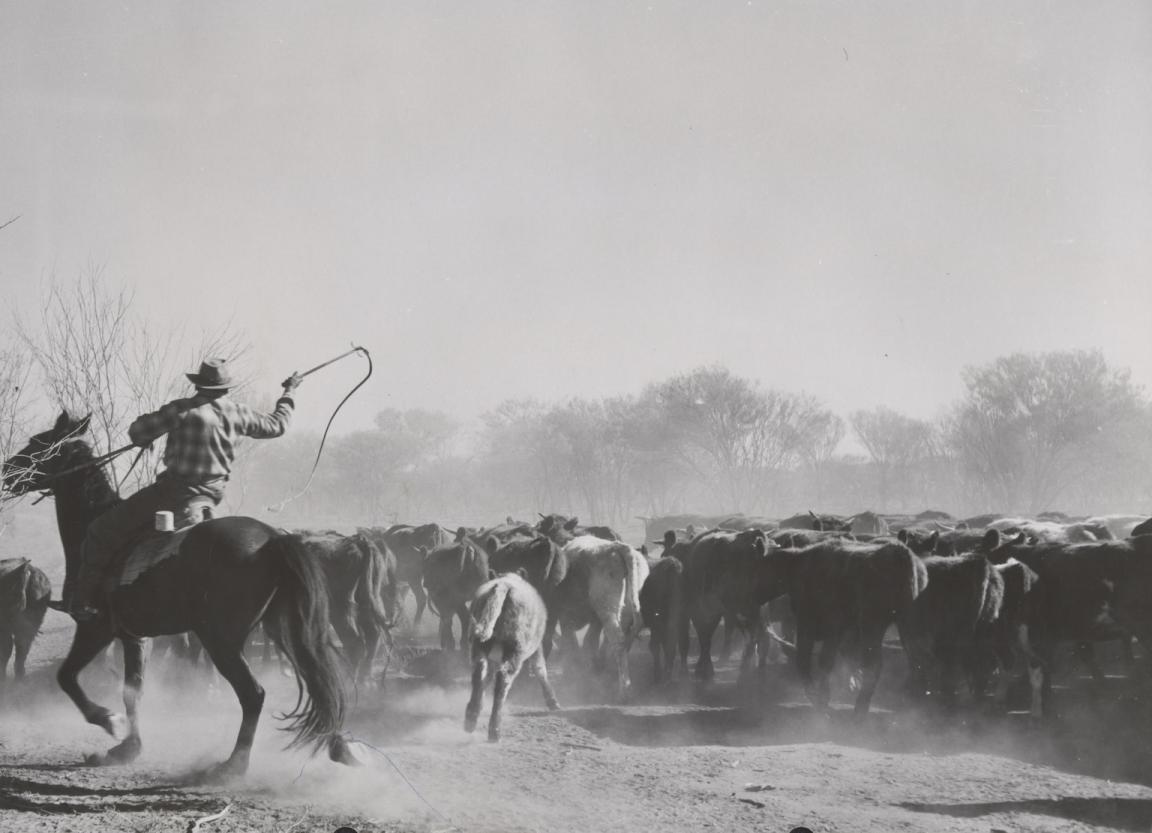
Neil Murrary, A drover chases back into the mob a young steer that has broken away on the main north-south stock route leading to the railhead at Alice Springs in the Northern Territory 1954, nla.gov.au/nla.obj-137745734
Neil Murrary, A drover chases back into the mob a young steer that has broken away on the main north-south stock route leading to the railhead at Alice Springs in the Northern Territory 1954, nla.gov.au/nla.obj-137745734
Jane highlights stories of Forgotten Australians and Former Child Migrants
On 16 November 2009, Prime Minister Kevin Rudd delivered a formal apology to the Forgotten Australians and Former Child Migrants.
Forgotten Australians are people who experienced institutional and out-of-home “care” while growing up. Former Child Migrants were sent to Australia from the United Kingdom and Malta, often without their consent or that of their parents.
As part of the Apology, the Prime Minister announced a National Library project to record the experiences of the Forgotten Australians and Former Child Migrants through oral history, ensuring that these stories and voices are documented and remembered.
Recording for the Forgotten Australians and Former Child Migrants oral history project commenced in October 2009 and was completed in November 2012, with more than 200 individual recordings making up the collection.
Many recordings share common themes of resilience, survival and recovery. At the same time, the interviews contain personal anecdotes and moments of humour that bring individual experiences to life in ways that official reports and inquiries cannot. For example, Charlie Walker tells a story about getting away with a “crime”.
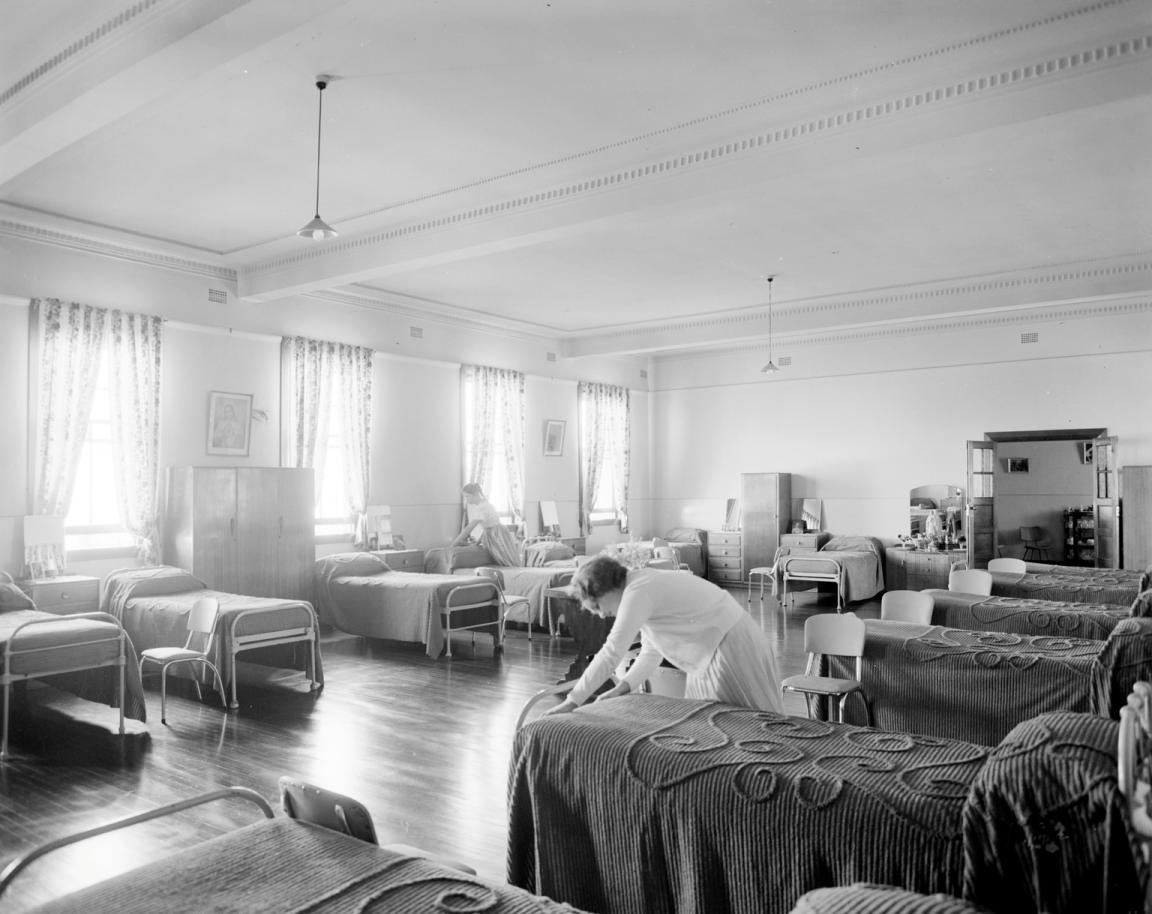
John Mulligan, A girl making a bed in a dormitory at the Home of the Good Shepherd girls home, Ashfield, 8 October, 1963, nla.gov.au/nla.obj-145099645
John Mulligan, A girl making a bed in a dormitory at the Home of the Good Shepherd girls home, Ashfield, 8 October, 1963, nla.gov.au/nla.obj-145099645
Discover more stories
We hope this blog has inspired you to start unlocking our oral history collections or to begin exploring your own family stories.
If you want to learn more, explore our family history resources and oral history collections. Our Special Collections Research & Support team are also always here to help through our Ask a Librarian service.
Getting started with oral histories
Not sure where to begin? Our guide to using the oral history collection explains how to:
- search for interviews in the catalogue and Trove
- identify recordings available to listen online
- understand access conditions
- request recordings and transcripts
- order copies and publish oral history material.
More to explore
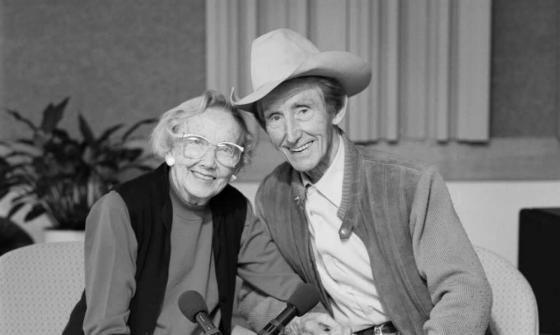
Damian McDonald, Portrait of Smoky and Dot Dawson at the National Library, 2000, nla.gov.au/nla.obj-136550848
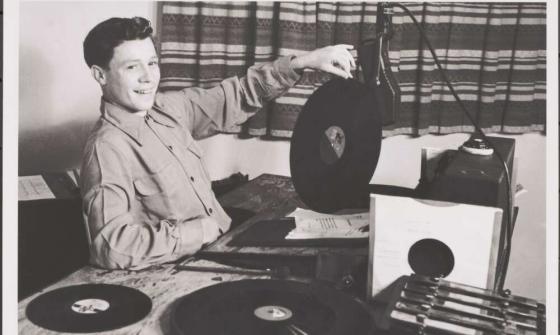
Douglas Thompson, Radio announcer Ted Reeves of 2CA radio station holding a record, Canberra, 1951, nla.gov.au/nla.obj-138073414
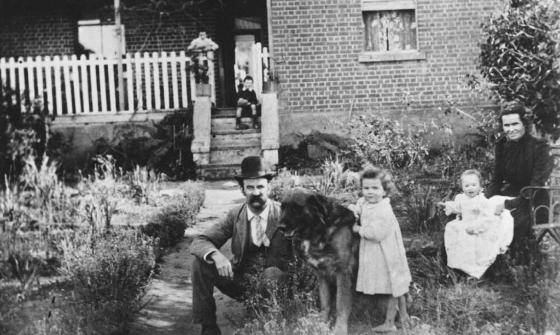
Portrait of Oliver Barberie and family, 1900, nla.gov.au/nla.obj-136621963