

Maritime mayhem in early Botany Bay
From Sydney Cove, early whalers, privateers and adventurers launched daring voyages against Spain’s colonies in Mexico, Peru and Chile. During the turmoil of the French Revolution and the Napoleonic wars, Britain authorised private ships to strike at its enemies under the longstanding process of marque and reprisals.
Chris Maxworthy explored the colony’s earliest years and shows how voyages in search of whales and precious metals proved the strategic value of a British base in the Southwest Pacific. In just ten years, Sydney Cove grew into a bold and influential outpost.
Chris also recounted the first naval battle involving former residents of the colony who fought against Spanish warships on the Pacific coast of South America. One highlight is the remarkable 1801 capture of the Spanish warship Limeño near modern day Ecuador—achieved by thirty former convicts and a motley crew of English whalemen.
Maritime mayhem in early Botany Bay
Daniel Gleeson:
Good evening everyone. My name is Daniel Gleeson. I'm the Director of Community Engagement here at the National Library. I'd like to begin by acknowledging the Ngunnawal people who are the traditional custodians of the land on which we gather tonight. I pay my respects to their elders past and present, and I extend that respect to all First Nations people here with us tonight.
A quick reminder, if you've got a phone with you, make sure it's on silent. I don't want to force anyone to walk the gangplank tonight. That also applies to any alarms or reminders you may have set yourself to watch a programme or something tonight.That happens occasionally. Look, it's wonderful to be welcoming Chris Maxworthy back to the Library. Chris is a true friend of the National Library. I'm sure that many of you will remember Chris's lecture last year where he introduced us to the fascinating world of early privateeering, Spanish ships, laden with gold, and the scramble for control of the Pacific Ocean.
With stories like that, when Chris suggested another lecture here at the Library, we jumped at it. Chris returns to expand on his research, taking us deeper into the transformation of the convict settlement at Port Jackson into a serious port which provided the British with access to the Pacific. It's a story of daring voyages, whalers and adventurers, privateers and opportunists set against the backdrop of the French Revolution, the Napoleonic Wars and the shifting balance of power across the Pacific.
Chris Maxworthy is a maritime historian who has conducted extensive research work investigating Spanish archives where he discovered Spain's 1796 plan to retake control of the Pacific. Chris is a Winston Churchill Fellow who originally qualified as an electrical engineer. He is a graduate of University of New South Wales and Macquarie University and is a retired officer of the Royal Australian Navy. Previously, he has served as a Councillor of the Royal Australian Historical Society and as Vice President of the Australian Association of Maritime History.
When he's not exploring overseas archives, we're fortunate to find Chris here at the National Library where he is a Petherick Reader. We're even more fortunate to have him here with us tonight. Please join me in welcoming Chris Maxworthy.
Chris Maxworthy:
Right. Good evening and thank you very much for coming. And Dan, thank you very much for that generous interpretation of what I'm involved in. Okay, and I've just got to master this. Right. Okay. So for this evening's lecture, I propose to speak for about 35 to 40 minutes. And at the conclusion of that, there'll be the opportunity for maybe 15, 20 minutes of questions. So prep yourself with thoughts about, 'I didn't know that, but what about this?' And we'll get through it.
So this lecture, Botany Bay, 'Mayhem in Botany Bay', was suggested by the Marketing team at the National Library and it's quite catchy because as many of you will know, originally Sydney was not part of the game or Port Jackson was not part of the game for the settlement of convicts in 1788. It was to be Botany Bay, largely through the emphasis of Joseph Banks who'd spent time at Botany Bay with Cook.
And in that regard, Cook had never actually entered Port Jackson. He sailed past it. He could see that there was a port, but he didn't appreciate just how grand it was. And it was only when Arthur Phillip arrived in January of 1788 with our first fleet that they recognised the Botany Bay was not suited as a long-term settlement for want of water, wood, sandy, great beach location, but not really suited to a long-term colony.
So therefore they went in search of somewhere else and that's when they entered Port Jackson and discovered the, as Arthur Phillips said, a harbour that could take a thousand ship of the line. All right, what we're going to be doing this evening, I'm going to do a quick [unclear] here in Port Jackson and ship visits. The importance of whaling and sealing as the first staple in the colony, well before sheep, which came later after the opening after about the 1820s.
Port Jackson as the first British port in the Pacific Ocean, but not the first convict colony. That goes to Chile, my friends from Chile over here and the islands of one...Well, the Archipelago of Juan Fernandez, but we'll discuss that shortly. We'll also explore what was a privateer and get away from the confusion that often happens between privateering and piracy. I have a few examples to demonstrate that.
Also, well, how did Sydney establish itself so quickly in the Pacific Ocean as a location of British settlement and expansion? That's an important part and the early Spanish prizes that were presented at the Vice Court of Admiralty of New South Wales, which was located in Sydney. Okay. One of the things I want to emphasise, I constantly do this whenever I'm presenting, is that our Australian history, particularly our colonial history, is far more than just what the British did.
When I went through school, there was really nothing ... Well, there was nothing on Aboriginal history when I went to school, which was more than 50 years ago. And similarly, it was the British and the superiority of British colonisation compared to others. And so hopefully this evening, I'll dispel part of that during the discussion.
Also, colonial New South Wales and colonial Spanish America formed opposing elements of great power competition. When people think of the European powers, we typically think of the antagonist to the British being France and that certainly was the case in Europe. But here in our locality of the Australian mainland or Australian continent, the real protagonist was on the other side of the Pacific and that was Spanish America. Which stretched all the way from Cape Horn in the south, all the way up to the northwest regions as far as modern Alaska and also most of the hinterland, all of South America, all of Central America and only a small portion, which was the 13 colonies of the earlier Republic.
And an important point in all this and one that's not often appreciated when we look at Australian history is the aspect of war. For 22 years, Britain was at war with France and for a slightly shorter period with Spain and that had a significant...wars always have dramatic impacts on cultures and communities and certainly that was the case as we'll see during the presentation here.
All right, a few acknowledgements first. Okay. I wish to thank, I always thank and acknowledge the Winston Churchill Memorial Trust who basically financed me to go overseas into Spanish language archives, both in Spain and Latin America. And I had a wonderful time for about eight weeks. I'd been to the locations before doing other research, but this was the opportunity to really go and say, 'Where are the records that deal with Australia from the Spanish perspective?' And I found a lot of records and part of that was the plan to attack Sydney that was developed in 1796.
I also wish to acknowledge and thank greatly my former history teachers, so Cheryl Kernot of political fame was the leader of the Democrats. She was a history teacher at the school I attended from 1975 to about 1977. And she was an inspiring history teacher and we could always tell that she was destined for bigger things because of her political motivation and the passion that she possessed for history and for seeing change.
Similarly, Tom Nash was my final history teacher for the last two years of high school and he was an extraordinary individual. So Cheryl and Tom, if you're watching this, I have a great debt of gratitude to you for everything that's occurred. Okay. I also want to acknowledge my university professor. I started out doing engineering, but I failed a one year subject for my four year degree. So I had to do extra time at the University of New South Wales.
So I picked up history as originally it was just meant to be a fill-in for my obligation to do a humanity subject. But I did so well and I enjoyed it so much and I was encouraged to think about doing a double degree and so I did an Arts and Engineering degree and I said to the professor at the time, David Walker, I said, 'So how many other people have done this?' And he said, 'Well, you'll be the first...' And the program's been around for 30 years. So thank you, David Walker.
I also wish to acknowledge the Australian Association Maritime History. There'll be a plug for it further on in the presentation, but for anyone that has an interest in maritime history, it's a great organisation, a excellent set of publications and newsletters and a lovely community of people to work with. Also, my esteemed colleague, Rhys Richards, who lives in New Zealand and is a prolific writer over the last several decades in producing material that is relevant to the early history of Australia and a great source of material for those that are doing family history or trying to get an angle to what went on. From Chile, Senor Carlos Tromben, he's the semi-retired senior historian of the Chilean Navy and a good friend and a great source of bouncing ideas off in terms of, well, this is the way we saw it on our side.
How did you guys see it in Chile and the last two, the pool of researchers that I've worked with over the years been fantastic and everyone shared in their time and I enjoy putting back in. And to my parents and particularly my late mother Anne Maxworthy, who was always the one that encouraged even moments of doubt and reflection. Okay, thank you.
Alright, we saw earlier the diagram, which was from 1804. What this, sorry, not diagram, painting. Okay, so this painting reflects the Spanish treasure fleet that had sailed from Peru on its way back to Spain during a short period of time when Britain and the European powers were at peace and what you see there is Nuestra Senora de Mercedes, which it received a shot to the magazine and so of the 240 crew, only 40 people survived the explosion.
The other ships in that group were the 'Medusa', 'The Farmer', and 'The Madea' and at the time Britain and Spain were at peace. But the British were aware of a secret treaty that had been concluded between Napoleon and the Spanish where the Spanish had to pay large amounts of, what would you call tribute to France if they hadn't entered the war on the side of France.
So the British knew that, had this fleet arrived then shortly thereafter the Spanish would be on the side of France against Britain. So with that knowledge, they intercepted the fleet just off Kaibo Santa Maria, which is not that far from where Cadhiz is nowadays. So think of Trafalga, it's the southwestern side of the Peninsula, the Iberian Peninsula and they took possession.
They initially approached them and said, 'Surrender, you've got four ships, we're going to take you back to England.' They said the commander of the fleet was Jose Bustamante. Now Admiral Bustamante had been in Sydney and this is the sort of tie in with Botany Bay. He had visited Sydney for a month in 1793. So what you've got here is that effectively nine years later, he's in command of a fleet that is peacefully making their way back to the homeland and confronted by an aggressive British squadron.
He doesn't surrender and they fight it out, but basically after The Mercedes exploded, the game was over and they all submitted. So the total cargo was worth, it was in the region of six million pesos, 150 gold ingots, various other valuables and in today's terminology it would be worth about a hundred million dollars. And yeah, that was the British government took it as a joit of the crown because there was no war and we'll get onto this a lile bit later in terms of privateeering.
You need to have a war if you're going to be privateer, otherwise it is piracy. So technically for my friends from Spain, this has always been regarded as a great moment of tragedy where the British were not honourable in that they conducted an act of piracy and seizing the Spanish ships, but about 20 years later following a commission assessment of the values the British paid reparations to Spain.
Okay.This is just another view of mainly the squadron, not the actual hostile action at sea. All right now 'Botany Bay Mayhem'. So this is not Botany Bay. This is Sydney Cove viewed from The Rocks in 1803. The artist, John William Lancashire and it's as with most early artworks, the State Library has it in its collection. I particularly like this for you because it's not seen that often and it's quite colourful, done as I think a watercolou.
And yeah it's part of the beauty of Sydney from an historical perspective, particularly if you're a maritime historian. All right, bit of an advertisement here. Are you inspired by maritime history? Would you like to know more than my friends, have I got a deal for you? I would encourage you to look at the Australian Association for Maritime History. The link is there and I also have a few cards to hand out at the end if you want to see more resources.
It's a excellent group of motivated individuals with two refereed publications a year, a number of newsletters and number of events. It's thoroughly worth the not significant amount of, I don't know, $40 a year or something. And if you're a pensioner or old guy like me, then you get a bit of a discount as long as you're not working.
Alright, Port Jackson is the first British port in the Pacific Ocean. Okay. So to the left there it's a chart that was created by the Malaspina Bustamante expedition that arrived in Sydney Cove in 1793. They spent a month in Sydney taking measurements and it was a scientific military expedition and they did a ... It was an enlightenment voyage at a time where Spain wasn't really an enlightenment player. So if we think of the enlightenment, we think of Cook and natural history and exploration or Baudin, Peron, the French, the circumnavigation of Australia.
The Spanish rule a bit different. They regarded the whole Pacific as their territory and they regarded it as like that up until about 1789 until there was a number of events where as a result the British forced the hand of the Spanish and the Spanish conceded that, well, the Pacific isn't really exclusively theirs and we'll share it. And we'll get onto that later too.
And to the right there, it's the chart of the one Fernandez Archipelago and this is where in the 1760s Chile or the Spanish Empire founded a convict colony on the islands. Those islands, the one to the right is now known as Robinson Crusoe Island and the one to the left is Alexander Selkirk. Alexander Selkirk was the individual who had been dropped on that island by the...Well, I'm trying to remember. He was picked up by Dampier, but he was dropped off by someone else.
He was a difficult character and that became the inspiration for Robinson Crusoe when Daniel Defoe wrote the work of fiction. All right, next one. The first official foreign power to visit Sydney was the Malaspina Bustamante expedition. Two Spanish warships, as I mentioned a moment ago, spent one month in Sydney. They were anchored in what is now the location of the Sydney Opera House.
They did a litle bit further, we'll see them, a lot of drawings and art and so on that revealed the nature of the colony. Some of our earliest renditions of what life was like in the colony for both the colonisers, the garrison and also the Indigenous people. And this work resides in the Museum of the Americas and it's actually the official reception occurring. And unfortunately we don't really have a lot of time to go through that because we've got to keep moving, but if anyone has any questions at the end, happy to deal with those.
Okay. What was a privateer, that's quite visible. I was a bit worried that it wouldn't show up and on this size screen. Okay, to the right, the right side is a surety or a bond lodged by merchants for a particular ship and it's basically saying, 'Look, we guarantee that we're up for 1,500 pounds in the event that we breach the conditions.
And to the left here, what we have is the actual warrant for the letter of mark. So in order to pursue the enemy or the enemy shipping, what you had to do is you had to stump up a vessel, a crew, and you had to fit it out to a level that was sufficient to survive the nature of the work. So it's not quite...
Alright, if I look here, this is for the ship hero. The ship hero visited Sydney in 1808 in July. It sailed from England in around June of 1807. And in this document you've got the owners at the top, you've got the name of the captain a third of the way down, the name of the ship, the hero, which port it's from. And then there's details as to the nature of the ship in terms of its tonnage, what it was carrying in terms of armaments.
It had to carry replacement sets of sales, I think from memory about three. It even had to name crew members that were important individuals such as the surgeon, the boats and the gunner and even the various other ships, the cook, even the cook gets named. And it's interesting to look at some of these because when you're looking at them and it's a bit like a venture capital company, you're not quite sure who you're going to have as an employee so you'll come up with a bogus name.
So you often see reference to the surgeon as John Scabs or as the cook is greasy, greasy ... Some of them are quite witty, but yeah, the concept is you're at one level putting together a ship and a crew, you're signing the crew onto articles of agreement, you're negotiating what their share of prize money will be and we'll see that a little bit further.
Actually, we'll see it in the next slide here. And all of this was regulated by the high court on the British side, the High Court of Admiralty and each of the other kingdoms, whether it be the French or the Spanish, had something similar, but the British had it down to a fine art. Every time the British established a colony somewhere, particularly if it was on the coast, most of them were.
It would have a...Arthur Phillip, for instance, had an instrument which in 1787 appointed him as a Admiral of the Vice Admiraly Court of New South Wales. And so therefore he was charged with establishing a court of admiralty for certain events. And so often you'd just get the officers, they'd be appointed as individuals in this court and that was for the process of condemning prizes or taking depositions from ships captains who had suffered some tragedy or lost somewhere.
And so the beauty of the British system was wherever they went from an incremental point of view, they always had the legal infrastructure to be able to prosper that colony.
So when I looked at this earlier, there were almost 30 different locations, the Bahamas, Trinidad, Tobago. The Caribbean was rife with High Courts of Admiralty where the, sorry, vice admiralty courts where the British had established themselves. Right. Now let's get into something that's interesting. Okay. How did privateering differ from piracy? Well, one of the first things is that it was governed by laws and there were rules and procedures.
So this extract from a court case, what this deals with is a sailor that was... Okay, now I can use the mouse here. So what we've got here is a sailor who was shortchanged. He was paid a 150th of the proceeds of a voyage in the Pacific by a whaler and alleged value was 25,000 pounds and so therefore 150th meant that he got 500 pounds. Now, 500 pounds isn't bad as a payout for privateering when the average sale of salary was say 30 pounds for a year.
So therefore he then found out later though that the actual true value of the prizes was 40,000 pounds. And so he went to the court, this is a report from the court of common pleas and he said, 'Hey, I've been shortchanged.' The judges looked at it and the Chief Justice of the Court of Common Plea said, 'Yeah, you're right. Okay, you should have got 867 pounds, so let's top you up with 367 pounds as a payout.'
And one of the reasons the prize money was so large is simply because these privateers had small crews. The crew of a privateer was less than 30, typically about 28 men for a vessel that was about 200 tonnes. And so therefore you had this situation where your share was quite generous because throughout the Pacific Spanish shipping wasn't well protected. They didn't carry armaments. Your privateer did. You would carry 16 cannons or carronades or whatever.
You'd have lances that was also part of the instrument. Remember before the instrument where you detailed your ship and what it had, you had to carry a musket for every man, you had to carry a sabre for every man. And so when you looked at it from a capital expenditure point of view, 28 was the ideal number because you could set off on a two to three year voyage and you would replenish whilst you're over there.
But it made for a manageable situation. Whereas a major warship, ship of the line that might have 600 Royal Navy sailors, that would be impossible simply because you need to have locations from which you can fiddle and do your patrols and really there was no value in the Pacific for the Royal Navy apart from one or two exceptions later on. All right. I'll just check timing wise. Here we go.
Okay. Early Spanish prizes presented to the Court of Vice Admiralty in New South Wales. This all happened in 1799. So for my colleagues, my friends from the Latin American community, we have near modern day Ecuador, we have the Nuestra Senora de Belen. Okay, Belen is Spanish for Bethlehem. Nuestra Senora is Our Lady. So most ships had a name that their official name commenced with Our Lady, Nuestra Senora, but then they also had an operating name.
So the next one is La Paloma. Paloma is a dove in Spanish and that was near the Tres Islas, the three islands of the Marias. So that's just off San Blas in what was then Nueva Espana, New Spain, and which we now know as modern day Mexico. And then there's Santa Eufemia, which was up in Northern Peru, what is now modern day Columbia on the coast there because back in the colonial era, the centre of governance for the whole of the Southern Pacific resided with Peru at the port of Callao and the city of Lima where the viceroy lived and then conversely for Northern Pacific, it was in Mexico and Mexico City was the centre of action.
Okay. And just what I've said here that all three prizes were condemned as being good and lawful prizes. It's the first instance we have of actually Latin Americans in Port Jackson because when you take a prize, you would normally want to take one or two crew members with you because they then formed the basis of giving depositions to establish that they were born in Spain and the captain was Spanish and so on.
The rest of the ship you would put in a long, but you would sail it to somewhere near the coast, maybe half a day to a day's rowing for the people, put them in a long boat and send them on their way. And what it also meant is that you typically needed about six to seven personnel who would form your prize crew. They would sail it to the location and in the case of these three ships, they were accompanied by one of the whalers into Port Jackson. And that was the first instance of Sydney or the Vice Admiralty Court participating in the great European power rivalries.
And this brings me to the point of there is more to our colonial history than just a British presence in the Pacific. And I'll summarise this pretty quickly. Traditionally we viewed Britain as being the dominant power and we don't really pay any heed or don't really understand what went on in Latin America. There may have been a pervasive thought that these Latin American locations, they're all revolutions and corrupt leaders and so on, but that's not really the case.
They are a product of their legacy as we are of ours. So our legacy in Australia has been one where government was the founder of the colony and we've always looked government to solve our problems. In Latin America, when the emancipation came around the 1820s in South America and Central America, the nature of their culture was that the militia, if you're in the militia, then you are exempted from certain things.
And so those people that were in the militia and the Freemasons and so on. They found their way towards the top because typically they were middle class and prosperous and they resented the fact that all the the spoils and riches of their nation were finding their way back to Spain. But Spain had provided them with a stable form of government. It's just that the Spanish monarchy over the years had not been ideal in how they had conduct themselves or had seen the necessity to reform.
And this brings me to the point about the British. With the loss of the American colonies 250 years ago in Declaration of Independence 1776 and the loss of the colonies through the Treaty of Paris in 1783. So a little bit less than 250 years before they gained full independence. The loss of those 13 colonies in North America changed forever the British attitude about how to administer.That was the Colonel for the British then swinging their views to the east and there'd been a number of articles written on this in historical journals.
And that focus on the east at a time when there were improvements in administration and the ending of the Napoleonic Wars and a protracted period of peace and a monarch who was in situation from Victoria from 1837, all the way up into the 20th century. That empowered Britain to really do things and they weren't perfect, particularly in places like India or where there was or in South Africa or whatever where you had a minority white population.
But certainly there was a lot of investment and recognition of creating a reciprocal arrangement that hadn't quite existed in the North American colonies. And if you want to read more on that, there's a guy called Vincent Harlow, Professor. His book's quite old, but it's an excellent book. It's called 'The Second Founding of the British Empire.' It deals with that period after the loss of the American colonies and how things were changed in terms of conducting business from a governance point of view.
Alright. Colonial New South Wales and colonial Spanish America, they were opposite ends of the great European rivalries. One of the things to say here is that the historical narrative of Australia is that we're a British outpost. Well, that's not true. What we were was we were a bridgehead into the Pacific and the nature of our engagement was largely maritime until the opening up of the Western Plains and the crossing of the Blue Mountains.
And that early development and the time that there was, and through most of that time, through 22 years there was war, that was the opportunity for growth and prosperity from a maritime dimension. What we also need to appreciate is that the Spanish had done a lot of the heavy lifting earlier, but we never acknowledged that. There's a passing reference to Ferdinand Magellan and Sebastian Elcano as the first circumnavigation, but really there were other explorers and there were other areas opened up. And even the name Australia derives from Mendoza and the Espiritu Santo del Austrialia.
So what it was was the naming of a landmass, what we now know as the Solomons and that was the first recognition of there's something big out here and it's going to be a big South land and so on. And Cook obviously with the advance of science and so on, was able to put paid to the idea of an enormous southland. But certainly in the scheme of things, Australia is a very large piece of territory and it's surprising that it took until 1770 to locate it from a European point of view.
Okay. And also other elements such as the Dutch and then France came along, they periodically appear, but the French lacked consistency. The Spanish were pretty well committed to the Philippines and the Spanish American landmass. So the British, maybe one way of putting it is they did a Bradbury. Maybe the British basically just, because they were always around incrementalism.
The British would never bite off more than they can chew. So they just steadily kept growing and whenever war was on, that was the opportunity to cease territory. That's what they did in Cape Town twice and on the second occasion they held onto it and they didn't give it up. When you look at in the broad sweep, it's quite an interesting 'what if' type engagement.
Alright. We've had a period of war, the French Revolutionary Wars in which the Spanish were also against Britain and there was a short period of about 18 months where there was peace. So what we have here, one of the things I located in the records, this is the locating of deceased English whalers who had been held as prisoners of war in Peru and here you have their names and a bit of interpretation. So for instance, the first name, Juan Baker, that's John Baker. Okay. Then you've got Ricardo, Richard, that would be Richard White. Okay. The next one is William Brady perhaps. And the last one, Diego, well, that's James. It's interesting. The Spanish don't really pronounce the H. So what they hear of as Aris is actually Harris.
So therefore that is James Harris from each of the different ships. Okay. And hang on, I'm just checking my time here. I need to push through this. Okay. Now that was the deaths of whalemen. The other part was about, 'Okay, where are our people? In other words, we've got most of our people back because we now have peace, but we're missing a few people. So I won't go into all the detail here, but this is an example of an 11 year old. Okay. Richard Simons was 11 at the time when he was captured in 1798 and then a family sort of took a liking to him.
Okay, right. Alright. Okay. I think that's giving me a warning. Alright. So pushing on quickly. Okay. So Richard Simons became adopted by a family in Lima. He was a doctor and I don't think they had any children so he was a natural fit. They baptised him and the Spanish wrote back saying, 'Look, he wants to stay here. He's in good care. I hope that works out okay for you.' And it did.
I'd be really interested to find out whatever happened to this kid in his later life. Did he go back to England or did he become integrated into the Peruvian community? 'Ambassador, perhaps we might explore that at some point.' Al right. Okay. As I said before, 22 years of war, French Revolutionary War, then the Treaty of Amiens, which gave a brief respite from warfare and then the Napoleonic Wars. And there we have, that's a sperm whale.
Even though it's a much later period, basically the techniques were the same. A group of six men would go out in a whale boat and they would harpoon a whale and then let the whale run its course and eventually it would get tired. They meantime had...Well, for any of you that have seen 'Moby Dick', the movie or whatever, it was a very exciting way to earn your living, but it paid quite well, particularly during wartime where you could take prizes.
Alright. And then deaths of British mariners as prisoners of war. This one here's from Mexico and this was again, the commencement of peace. So by my estimation, at any one time there were almost 300 British whalemen and some from the US that got confused in the situation that were held as prisoners of war in Chile and Peru. And what led to is an appreciation by the British because they mastered some of the Spanish language.
When they got back to England, they could see the opportunities because these colonies, particularly Chile, was poorly serviced. Back then, Chile was a frontier colony. It was run by Captain General, didn't even have a viceroy. And so therefore they could see the opportunity. And so smuggling after from about 1803, 1804 onwards, it became open to British smuggling and with willing participants in most locations, or if you could get past the coast guard.
Alright, very quickly, I won't go through this in detail, but this is about Bustamante and Malaspina and the visit to Sydney. Okay, that's their roots. Okay. They arrived in Sydney. These images that you're seeing here now are from the artists that accompany that voyage and they're some of the earliest and most accurate views of the colony. Okay. Different perspectives from The Rocks. Okay. These are a member of the garrison and his lady.
These are in the Mitchell Library. These came into the hands of the Mitchell Library in the 1960s as a result of they'd been smuggled out of Spain 150 years before and sold on the market in England. Somebody had bought them probably for a song and then eventually that private collection came on the market. And so these images of our garrison and our currency lass and lasses or whatever, that all came about as a result of ill gotten gains by a Spaniard who was escaping what was one of the revolutions in the 1850s.
I won't linger on this, but to say that when the Malaspina Expedition and Bustamante, the two ships, their crews and their offices were very impressed by what they saw at Sydney. They thought this colony's only been going for five years and if they keep going on the same trajectory as what they've done now, it'll be amazing. Okay, this is a view of Parramatta and there were two views. I don't have. Okay, I'm just about out of time. Okay, more images. I'll skip that. Actually, last year I ran out of time and I've contributed to it again. I'm sorry.
Okay. We've seen that. Look, one of the reasons we're here was to talk about the privateer 'Chance'. Okay, 30 Australians, 30 residents of colonial New South Wales in 1801 participated in a battle against the 'Limeno', which was a ship of the royal Spanish Armada and they captured it. It would have been great if they sent it into Sydney because that would have then really registered it, but they sent it to the Cape of Good Hope simply because the market for a ship of that type was far stronger there than it was in colonial New South Wales.
And it's a fascinating story, but I'm a big believer in this is the first occasion where Australians participated in a European war. They were participating in the end of the French Revolutionary War. The ship had taken on in Sydney 30 men to compliment its existing crew of 50 and I'm still trying to work on the warm memorial to get it incorporated into commemorating Australians participating. Yeah, wish me luck. Thank you. Alright. And this is the letter and that's it. Okay. Thank you.
Thank you.
Daniel Gleeson:
Thank you so much, Chris. We do have time for some questions, but there's actually quite a large online audience as well. So if you do have a question for Chris, please raise your hand and wait for the microphone to reach you so that the people online can hear the question as well.
Chris Maxworthy:
Actually, if you ask the question, I'll repeat it. How's that?
Audience member 1:
At the time of the Napoleonic Wars, the New South Wales Corps was raised and was a deeply corrupt organisation. Did they ever try to influence the Admiralty Courts in their decisions?
Chris Maxworthy:
Okay. So repeat the question. Were the Vice Admiralty Court in New South Wales influenced by the New South Wales Corps, also known as the Rum Corps during the wars. So 1799, it's the end of the French Revolutionary War. Well, near to the end. Looking through the records, no, I would think not because what you've got in addition to saying having three military officers as part of the judgement panel, the cases were pretty much open and closed.
All you had to do was prove that the Spaniards was owned by someone in Spain or colonial Spain and you normally had an individual that corroborate that and then you were taking testimony. So under prize law, there's a whole lot of, they're called interrogatories. There's a whole lot of standard questions that asked of the individual or several individuals in terms of, 'Where were you born, how did you come to be on the ship?'
What do you know of the cargo? What do you know of the ship? So all that stuff was pretty easy and in a way it was probably a little bit more rigorous than what went on on the other side when they captured British ships because it was almost a fait accompli in Chile and Peru. 'Ah, they're guilty and let's just go on with the process.' Does that answer the question?
Audience member 1:
Sure.
Chris Maxworthy:
Yeah. Okay. Certainly they were corrupt, but most of them were so busy doing their...They had the exclusive licence to do importation of rum. So that was how they all made their wealth, particularly when there was no currency in the colony, not until 1817 or whatever. Yeah, okay. Next. Someone's got the microphone.
Audience member 2:
Thanks very much for the talk. Just a couple of questions about the Court. You made the reference to being a Vice Court of Admiralty. Is that because the principle court, if you like, was in London and all the ones be it Australia or in say in the Caribbean were the subsidiary courts, if you like, out in the provinces so to speak.
Chris Maxworthy:
Yeah, exactly. You've got it. You've nailed it. So the High Court of Admiralty established precedent and so much of it was case law and the Vice Admiralty Courts were compliant subordinate jurisdictions and it's interesting because when you go to the, in London or [unclear] is the British National Archives under the High Court of Admiralty, you can see all the reports. So the New South Wales court sent copies, every court was required to send copies of its judgments.
If for no other reason than to assure quality. And it was interesting because in the Caribbean case, some of those courts were for want of a better word, kangaroo courts and were just there to the issue raised over here. They were very corrupt and so therefore the High Court of Admiralty would often overturn that decision and there'd be restitution to the victims and so on.
Audience member 2:
And just as a subsidiary question, there was a reference in your slides to the Treaty of I think Paris 1856, I think it was. There's obviously a connection there, but I'm confused by it. Maybe you can clarify.
Chris Maxworthy:
Sure, sure. Okay. So the Napoleonic Wars was very extremely profitable to British merchant shipping and privateering simply because there was so much out there and you had motivated individuals profit. Profit was a strong motive. You could make a lot of money, particularly in the Pacific. And actually it's interesting, there were judgments in courts where they actually pointed to the fact that ships would request a letter of mark for no other reason than as an inducement for mariners, sailors to join for what would be a two or three year voyage.
Where they had no intention of trying to capture things, but it was a good way to get crew on board. So during the Crimean war, so the Crimean War was between Britain and Russia in the Crimea, and we all know the Crimea because of Ukraine and so on nowadays. That war, Britain worried that the United States would basically go [unclear] on supporting privateering.
So therefore what the British did is it was an international convention, all the kingdoms and whatever convened and what they did is they prescribed privateering and every nation that convened that signed the document, the Treaty of Paris except for one. Any thoughts on who might not have signed? USA. Yeah, that's right.
So the United States could still authorise its civil shipping and in some ways it does in different ways. So in times of war, there's sometimes the, what would you call it? The authorising of non-military to conduct military or security type operations simply because the costs are lower. So 1856 is really the founding of modern navies. The British had a very large standing navy, but every nation that wanted to conduct maritime warfare needed to have a navy. And so we can trace...I belong to the RAN for a long time. That navy, a spinoff from the Royal Navy and our Royal Australian Navy commencing in 1901 with Federation, well, wasn't named that at the time, but it became that.
Yeah, all of that. And what it guaranteed is if you've got a professional regulated navy, then you won't have these wayward instances where people sort of cut corners or whatever because you've got the sanction that, well, you're out of a job, that Cruise Act will, in some cases [unclear] court marshal and you could be executed for acts of treason or whatever on the high seas. So it was really the...When we look at the culture, it's a progression towards a institutionalising of the functions of state where it's important that there be rules and nations adhere to them and we not have wayward operators. Is that okay?
Audience member 3:
Was the Royal Navy allowed to press gang in Sydney and was it an issue?
Chris Maxworthy:
It's a good question. No, look, as far as I know, no. Okay. Without knowing all the specifics, I'd say no. And I'd say simply because if a ship arrived in Sydney, particularly in the early colonial period, in the period before Macquarie, so before 1809, any ship arriving, they were so infrequent that people would volunteer to go on a ship just in order to get out of the colony.
Not because the colony was terrible or anything, but often times there were people who were... got an instance...I've got so much material, it's hard to sort of condense it all down into something, but there were 19 stairways on a ship that Sinclair Halcrow sailed called 'The Fortune' and it's like the captains go, 'Oh, surprise. I was seven days out of Sydney and suddenly there were all these faces I'd never seen before.' And then what he says is, 'Oh, I put them in [unclear].' And then when we got to the coast of Chile to a remote location, the island of Santa Maria, which is off from Concepcion and Talcahuano.
So then they all mysteriously escaped and in last year's lecture, I featured this in terms of the names of the conflicts. And actually, it's quite interesting because I've done this lecture a couple of times in different locations. I have people come up to me and go, 'I always wondered that ancestor, how did he get back home?' And the way he got back home is you found yourself onto a ship, a whaler, and then once you got to the coast of Spanish Americas, the captain didn't really want you hanging around.
So you'd just basically become a prisoner of war and then eventually you'd be repatriated via Panama. So if you're in Peru or Chile, they'd sail you up the coast, drop you into Panama, you would then overland because the Isthmus of Panama is only about say, let's call it a hundred kilometres or thereabouts. So you would overland there, pop out the other side at Portobello and then you would be put on a ship and they would under, they called it a cartel.
So even during wartime, you'd have a white flag and you'd sail into Port Royal Jamaica and deliver up the British prisoners and conversely, the Spanish prisoners that were held in that port would be swapped over and it was quite a regular. It was a fascinating system because you had people that would give their parole. So parole was, you would sign a document saying, 'I understand that if I'm caught without being released from my parole by a counterperson being exchanged, I recognise that I could be hung if I'm ever encountered on a British ship by the Spanish.' So it was quite a formal process and before the days of the Red Cross and all that sort of stuff and it worked. Sorry, more questions?
Audience member 4:
This is just [unclear] question. Does the Admiralty Court record survive in the New South Wales archive?
Chris Maxworthy:
Yeah, it does. The High Court of Admiralty records are in the, I can't remember what the name is now, State Records Office or whatever they call themselves now. Trouble is you've got to travel all the way out to Kingswood. I used to use the records when they were in Sydney at The Rocks. That was great. Travelling all the way out near Emu Plains, but they're also available in the ... Actually, if you're interested, and if you're interested in those records, I've got copies, so I'm happy to share.
Okay? But it's fascinating. You're looking through documents that are, let's call it 200 years old and it's people giving their testimony, a Spanish guy saying this and that, and then the captain's making a deposition and then they've got to value what the cargo is and so on and then they sell it in the market there.
And then because there's no currency as such, they become treasury bills or bills of exchange that are then duplicate copies and then they can be cashed in by whoever back in Old Blighty. Okay. Another question.
Audience member 5:
Hi, Chris. Just a quick one. You gave the example of those three prize ships in 1799. Do you know how many ships were brought back to Port Jackson in that period?
Chris Maxworthy:
Yeah. There were a number of others and they weren't all Spanish. The richest prize ship brought into Sydney was actually a Dutch ship because it was carrying a lot of bullion. There's about another four or five Spanish ships. Yeah, it wasn't that many. 179 was really peak privateering for Sydney, but in other record, there's some other records like in the British National Archives and the Cape Town, the Vice Court of Admiralty of Cape Town where you've got really good records. Sydney was a long way to go almost in the wrong direction if you're looking to do
Oh, what have I done? Okay. Oh, that might have been my friend that's controlling audio tech. Yeah. So Sydney was an interesting place but not that deeper market for selling off priz cargoes. So therefore it was better if you could descend it into Cape Town because it was sort of almost on the way home because heading off in the roaring 40s and then getting yourself around Cape Horn in the summer, not in the winter and then heading home. So yeah, not that many. But 1799 was a good year.
Audience member 6:
Possibly on a similar note to that, one always hears about the Atlantic piracy stuff going on. Was there any piracy or was there much piracy going on in the Pacific or was there not the market for it? Was it too difficult?
Chris Maxworthy:
Thank you. Good question. That brings me to the Harrington. So we have one known instance of piracy conducted by a British vessel against two ships, two Spanish ships. One was a hydrographic ship that was doing work. And so the year for this is 1805, 1806. And the Harrington captured a ship called the [unclear] and that was one. And the other one was called the St Francis and St. Paul and those two ships, he believed at the time.
Oh, sorry, hang on. Tell a lie. So it must have been 1804 because at the time there was peace between Spain and Britain. He assumed that there'd been war. So in capturing those vessels, he was taking a punt that by the time he'd captured them, or by the time he got them back to Sydney, didn't happen. So therefore he's going, 'Oh, that's unfortunate.' So what then occurred is that he secretly sailed them into Jervis Bay.
He didn't bring them into Sydney. Held them into Jervis Bay and sent the other one south towards the Kent Group, which is between Tasmania in the Bass Strait. And then the Governor King got word. It was sort of like a bit of a open secret amongst the mariners that something had gone on.
I covered this off in last year's presentation, but he then got the, he sent out the 'Lady Nelson', which was a colonial vessel. They found the ships, they brought them into Sydney and then he had a dilemma and he didn't know how to handle it, like, what do I do? There's an act of piracy against Spain, how do we apologise for this? And so what he did is they just built a colonial cutter called HMC, Majesty's Cutter Integrity, 'His Majesty's Cutter Integrity.'
So they sent the 'Integrity' under the charge of a young lieutenant and a small crew with a letter written in Latin because nobody could write in Spanish in the colony. And they didn't want to write in French because they didn't want to offend the Spanish. So Latin was the common basis for this, look, [unclear], very sorry, please forgive us and what can we do to help?
Anyway, last time I was in the National Archives in [unclear], British National Archives. I actually found the subsequent...So in the foreign office, the foreign office has different registers for different correspondence and in the correspondence with Spain was actually the representation of, 'Look, we're very sorry for this and we can't give you the ship back because it was used in the colony and then it got shipwrecked.
So how about we pay you out?' No, I think they paid about five and a half thousand pounds to the Spanish. And conversely, you can imagine the Spanish government, they'd go, 'Well, we can't find the owner, so thanks very much.' There was quite a bit of that. The nature of international diplomacy timing wise, I think we're done.
Oh, sorry, one last thing. I have, for those of you that have an interest in following this up more, I've got a couple of cards here which have my contact details or if you're looking for a witty engaging dinner party, I'm open to all offers. I'm passionate about the subject and I hope I've made you a little bit more passionate and interested this evening.
Daniel Gleeson:
I just love your presentations, Chris. Maybe you could consider a gig on a cruise ship or something with a nautical theme.
Chris Maxworthy:
Sorry. I have thought of that, but I haven't been able to break my way into the market. So if anyone, I'm open to offers and I'll give you my card. Thanks.
Daniel Gleeson:
Just a quick reminder that we've recorded this session. So if you know of anyone you think would enjoy it, just direct them to the National Library's YouTube channel where they can watch that. But ladies and gentlemen, please join with me in thanking once again, Chris Maxworthy for that wonderful lecture.
Chris Maxworthy:
Thank you. Thank you. Alright. So I have some cards. I'm still working on the book, but a couple of publishers said you've got so much material.
About Chris Maxworthy

Chris Maxworthy is a historian who, for the past four decades, has investigated the early maritime history of Australia. During 2015-18 Chris discovered and researched Spain’s detailed plan of 1796 to restore Spanish control in the Pacific.
Recipient of the Winston Churchill Fellowship in 2011, he conducted research in Spanish language archives in Europe and Latin America, looking for historical records of colonial Australia. This research led to the discovery of the Spanish attack plan for Port Jackson, as well as many narratives by mariners in the Pacific who had been captured by Spanish colonies as prisoners of war.
Chris is a retired officer of the Royal Australian Navy; he is a graduate of UNSW and Macquarie University and has previously served as the Vice President of the Australian Association of Maritime History (AAMH) and a Councillor of the Royal Australian Historical Society (RAHS).
Chris also is a Petherick Reader at the National Library of Australia.
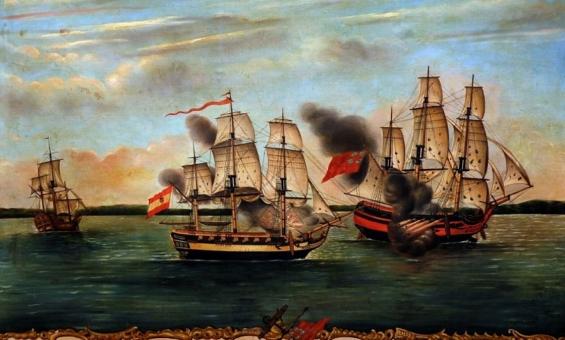
El Castor contra la fragata de Henry cerca de la isla Puna, Museo Naval, Madrid (MNM), Cuartel General de la Armada
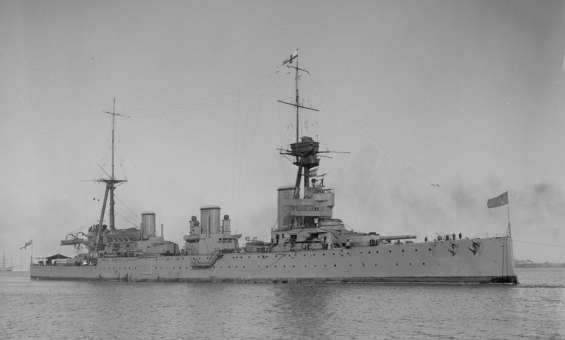
Australian battlecruiser HMAS Australia in 1914, Alan C. Green, State Library Victoria


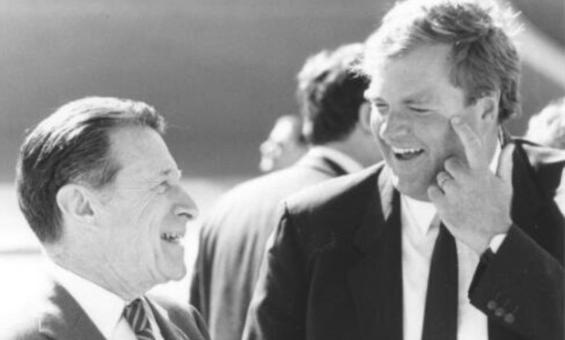
Australian Overseas Information Service, Portrait of Kim Beazley with Caspar Weinberger, U.S. Defence Secretary, 1988, nla.gov.au/nla.obj-136622610
Assistance animals welcome
Hearing induction loop
Wheelchair accessible
Visit us
Find our opening times, get directions, join a tour, or dine and shop with us.