

Australian diplomacy
Background
Diplomatic traditions in Australia long pre‑date the modern state, with First Nations peoples maintaining sophisticated systems of negotiation, exchange and inter‑community relations for thousands of years.
The Commonwealth government’s diplomatic service developed gradually in the early twentieth century. At that time Australia's overseas presence was focused on trade representation and early nation branding. Although the Commonwealth created a Department of External Affairs in 1901, Australia’s overseas representation continued to be carried out largely through British diplomatic channels for several decades.
From 1939-40, Australia began establishing its own independent overseas missions beyond the United Kingdom, marking a shift toward a distinct national foreign service. The Department of External Affairs later evolved into today’s Department of Foreign Affairs and Trade (DFAT), which currently manages Australia’s diplomatic and consular network.
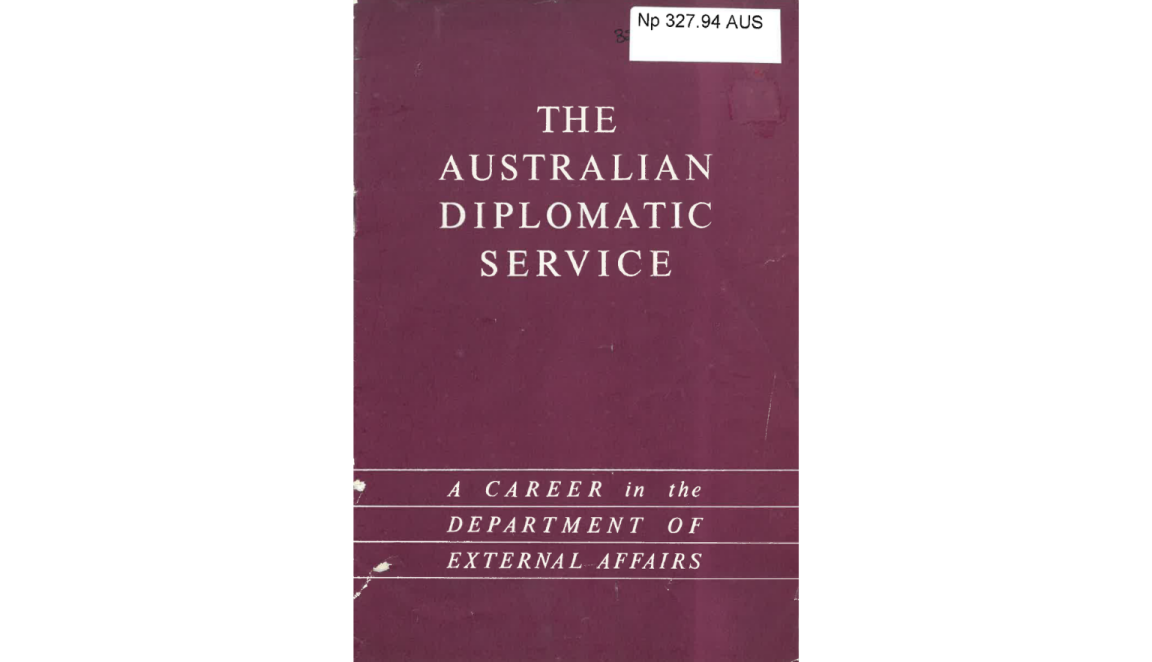
Australia. Department of External Affairs, The Australian diplomatic service: a career in the Department of External Affairs, 1957 https://nla.gov.au/nla.cat-vn877955
Australia. Department of External Affairs, The Australian diplomatic service: a career in the Department of External Affairs, 1957 https://nla.gov.au/nla.cat-vn877955
What can you find at the Library
The Library’s Australian diplomacy collections provide an insight into the nation's engagement and relationships with other countries, as represented by diplomatic officials. Prior to these diplomatic practices by Aboriginal and Torres Strait Islander people had been undertaken for thousands of years.
Our collection highlights the changing nature of diplomacy within the scope of fluctuating world events. The personal narratives recorded across many formats reflect the individual and broader challenges and successes of our diplomatic officials and their families.
Australian diplomatic history is well-represented with a high volume of published material pertaining to Australian diplomacy.
- Australian Diplomat: Memoirs of Sir Alan Watt, Sir Alan Watt, 1972
- From Collendina to Boomanoomana: An Unfinished Autobiography, David Osborne Hay, 2009
- Travelling back: The Memoirs of Sir Walter Crocker, Sir Walter Crocker, 1981
- Lodestar China: Navigating the China Relationship, 1956-1996, Jocelyn Chey, 1998
- Nine Lives: Episodes in an Australian Foreign Service Career, Richard Gate, 2019
- Butterflies of a brief summer, Patricia Ludgate, 2016
- Women with a mission : personal perspectives, Moreen Dee and Felicity Volk, 2007
The significance of these collections does not solely come from individual diplomatic postings and careers, but as a primary resource for significant world events and for contributions to other fields.
- Papers of Sir Keith Officer
- Diplomat. Frank Keith Officer was born in Melbourne in 1889, After the first World war he joined the British Colonial Service and was posted to Nigeria. In 1925, he joined the External Affairs Branch of the Prime Minister’s Department. Officer’s overseas posts included London, Washington, Tokyo, Moscow, Chungking, China, The Hague and Paris.
- Papers of Bill Morrison
- Politician and diplomat. William Lawrence (Bill) Morrison was a diplomat in the Department of Foreign Affairs between 1950 and 1969, with postings to London, Moscow, Washington, D.C., Bangkok and Kuala Lumpur.
- Papers of John Stanley Cumpston
- Geographer, diplomat, historian, and publisher. Following Second World War Cumpston resumed his career with the Commonwealth Public Service and served on diplomatic postings. He was departmental historian from 1960 until his retirement in 1969.
- Papers of William Douglass Forsyth
- Diplomat and public servant. Joined Department of External Affairs 1942, retired 1969. William Douglass Forsyth had posting to Washington D.C, New York, South Vietnam, Laos, and Lebanon
- Papers of Ruth Dobson
- Diplomat, Australian Ambassador to Denmark (1974-78) and Ireland (1978-81). Dobson was the sister of poet Rosemary Dobson.
- Papers of Alison Broinowski
- Diplomat, journalist, author, academic and speaker. Alison Broinowski had postings to New York, Phillipines, Japan, and Jordan.
The National Library holds oral history interviews with more than 212 diplomats, recorded from 1966 to the present.
- Australian diplomats 1950-2000 collection
- Australian diplomacy 1950-1990
- Australian Ambassadors to Japan
- The former and current Australian ambassadors to Japan, including DFAT officials, and locally engaged employees at the Australian Embassy, Tokyo, are interviewed to detail diplomatic relations between Japan and Australia.
- Beyond the cables: Australian Ambassadors to China
- The former and current Australian ambassadors to China are interviewed to mark the 40th anniversary (1972-2012) of diplomatic relations between China and Australia.
- Sir Neil Currie collection
- Speeches by Sir Neil Currie, Australian ambassador to Japan (1982-86).
Ambassador's lecture series collection
- Speeches delivered by Michael Dodson, Bob Gregory, Alison Broinowski and Anne Summers as part of the Ambassador's lecture Series at the Festival Australia, held in Washington DC in October 1994.
Greg Wood’s Trade negotiations
- The aim of the project is to interview people involved in Australia’s international trade negotiations.
Department of Foreign Affairs collection
This collection includes recordings made during the 1960s of Australian politicians and diplomats talking about matters of Australian foreign policy.
Chief Migration Officers' oral history project
A joint project between the Dept. of Immigration and Citizenship (DIAC) and the National Library of Australia focusing on immigration to Australia after World War II.
The Library holds a large collection of periodicals related to Australian diplomacy.
- Australia bulletin
- Australian journal of international affairs
- Annual report / Department of Foreign Affairs and Trade
- Current notes on international affairs
- The diplomat : Australia's window on the world
- Australia and world affairs : quarterly journal of the Council for the National Interest
- Australian foreign affairs
The ephemera collection reflects the diversity of Australian diplomacy from the 1900s to 2010s.
Included in the ephemera collection of Australia - Netherlands 1606-2006 is a menu from the 2006 ‘Tastes of Australia’ concert and reception held at Kasteel Duivenvoorde (Duivenvoorde Castle), an event attended by the Governor General, Major General the Honourable Michael Jeffery. The menu details, ‘Delicacies from the beach and bush’. Local Australian ingredients included macadamia nuts and eucalyptus sauce, and dessert was a ‘Sandwich of TimTam biscuits and wattleseed icecream’.
- Diplomacy : ephemera material collected by the National Library of Australia
- Foreign Affairs, Dept. of : ephemera material
- Australian High Commission - London : programs and invitations ephemera
- Wallenberg, Raoul : programs and invitations ephemera material
- Fischer, Tim AC : programs and invitations ephemera material
- Casey, Richard Gardiner : programs and invitations ephemera material
- East Timor : ephemera material collected by the National Library of Australia
- Imagine Australia, year of Australian culture in China : ephemera material
- Experience China, year of Chinese culture in Australia : ephemera material
- Ephemera relating to the 2010 visit to Australia of Barack Obama
- Chinese Democracy Wall Movement and political situation in China 1978-1981
- United States Fleet Visit to Australia 1908 : programs and invitations ephemera material
- [United States Fleet Visit to Melbourne 1925] : plan of tables, door from House of Representatives -
- Celebrations – New Delhi – inauguration as seat of government 1931 : programs and invitations...
- Dinner in honour of the members of Australian Eastern Mission given by the Japan Economic Federation
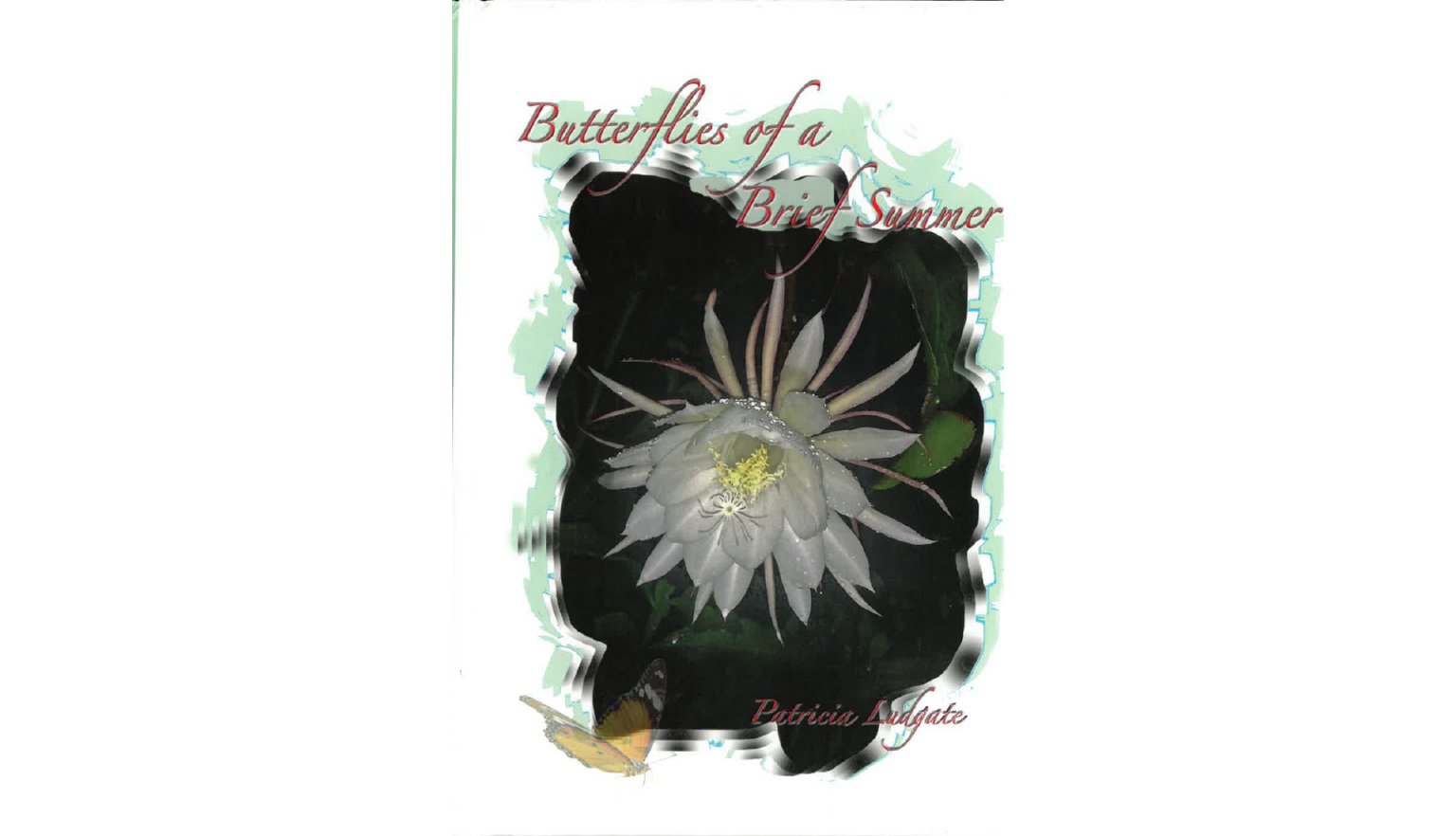
Patricia Ludgate, Butterflies of a brief summer, 2016, https://nla.gov.au/nla.cat-vn7328928
Patricia Ludgate, Butterflies of a brief summer, 2016, https://nla.gov.au/nla.cat-vn7328928
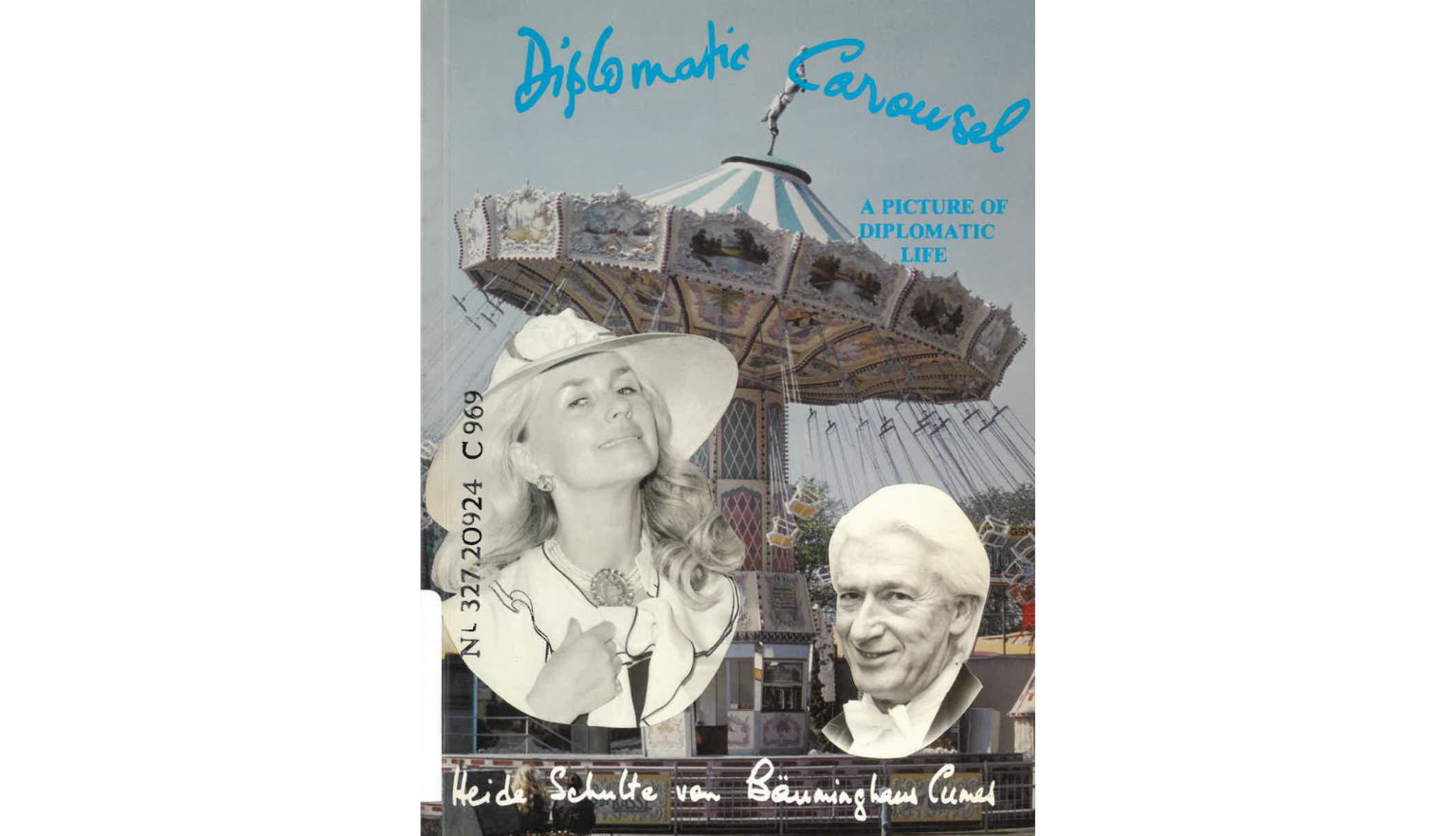
Cumes, Heide Schulte von Bauminghaus, Diplomatic carousel / by Heide Schulte von Bauminghaus Cumes,1985, https://nla.gov.au/nla.cat-vn1714253
Cumes, Heide Schulte von Bauminghaus, Diplomatic carousel / by Heide Schulte von Bauminghaus Cumes,1985, https://nla.gov.au/nla.cat-vn1714253
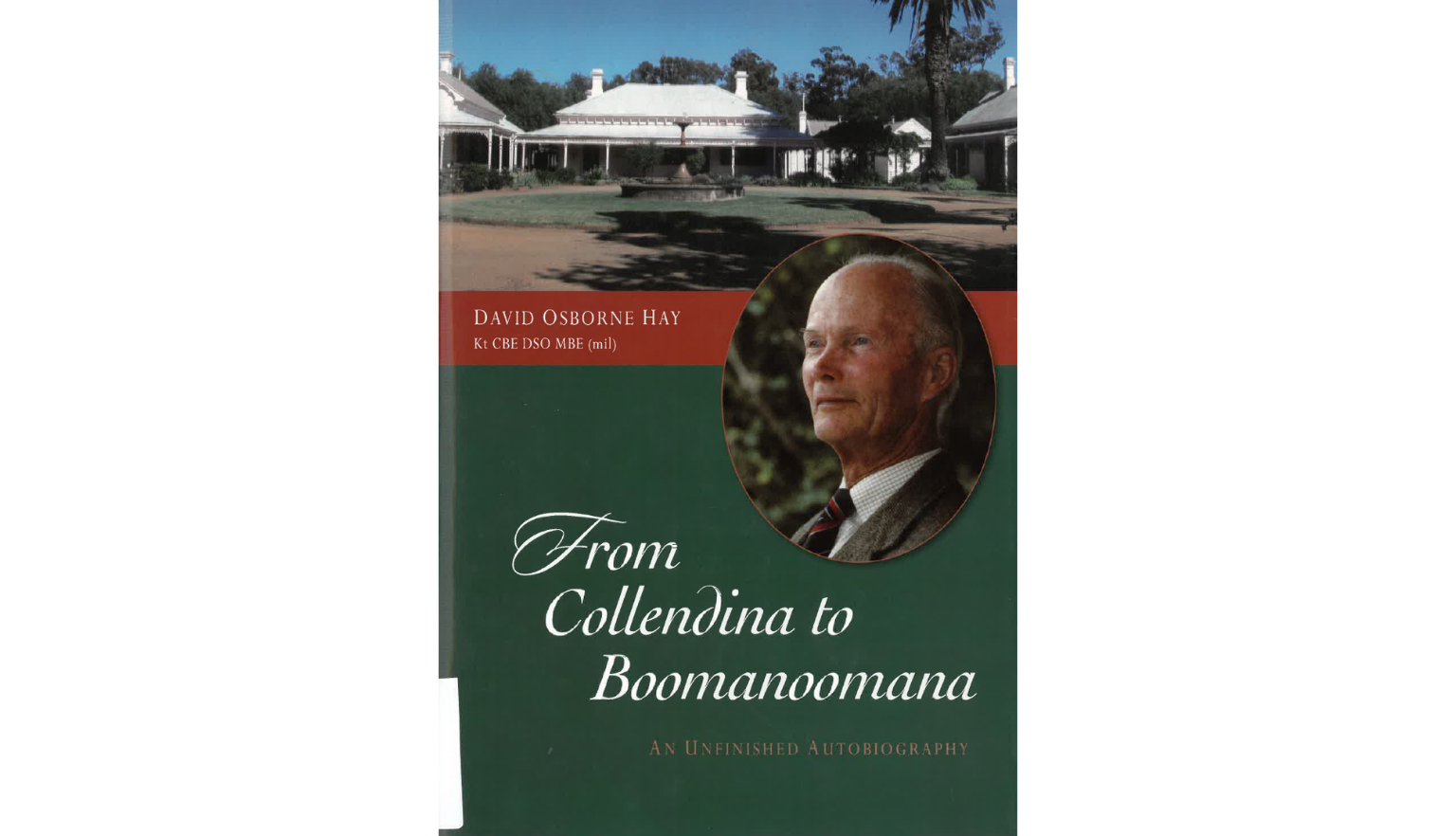
Sir David Hay, From Collendina to Boomanoomana : an unfinished autobiography, 2009 https://catalogue.nla.gov.au/catalog/4670583
Sir David Hay, From Collendina to Boomanoomana : an unfinished autobiography, 2009 https://catalogue.nla.gov.au/catalog/4670583
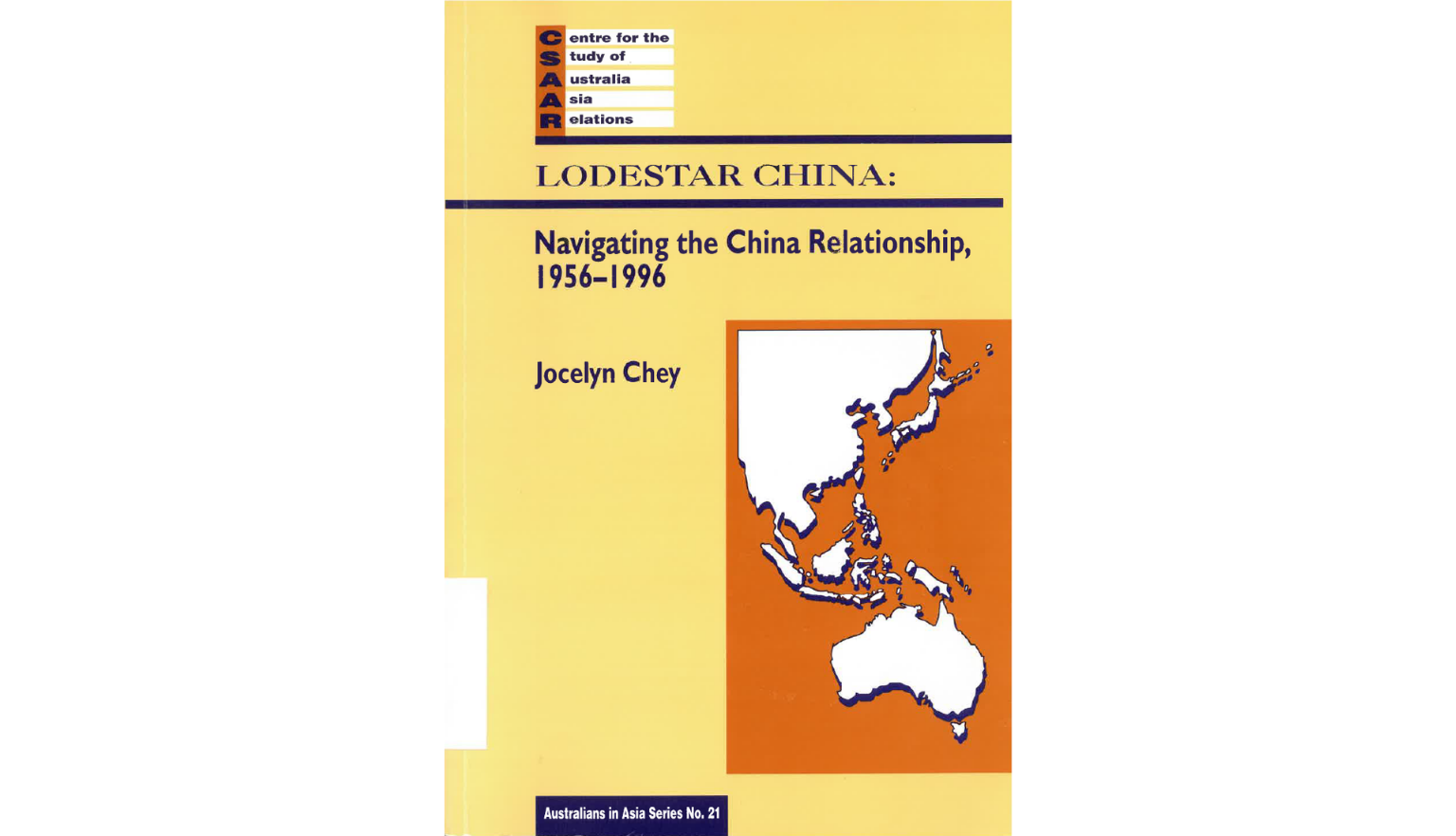
Jocelyn Chey OAM, Lodestar China: navigating the China relationship, 1956-1996, 1998, https://catalogue.nla.gov.au/catalog/2896425
Jocelyn Chey OAM, Lodestar China: navigating the China relationship, 1956-1996, 1998, https://catalogue.nla.gov.au/catalog/2896425
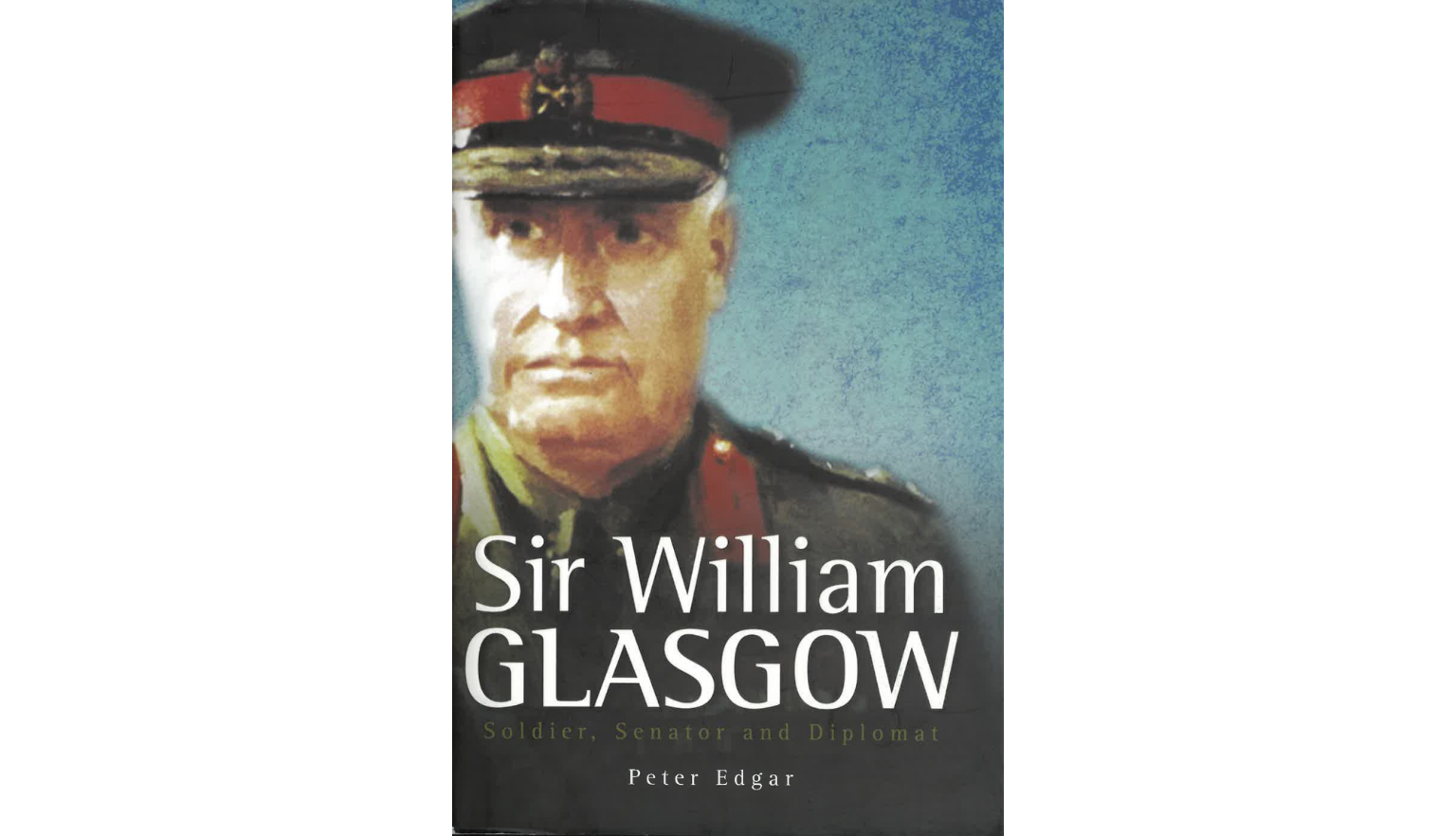
Peter Edgar, Sir William Glasgow: soldier, senator and diplomat, 2011, https://catalogue.nla.gov.au/catalog/5154212
Peter Edgar, Sir William Glasgow: soldier, senator and diplomat, 2011, https://catalogue.nla.gov.au/catalog/5154212
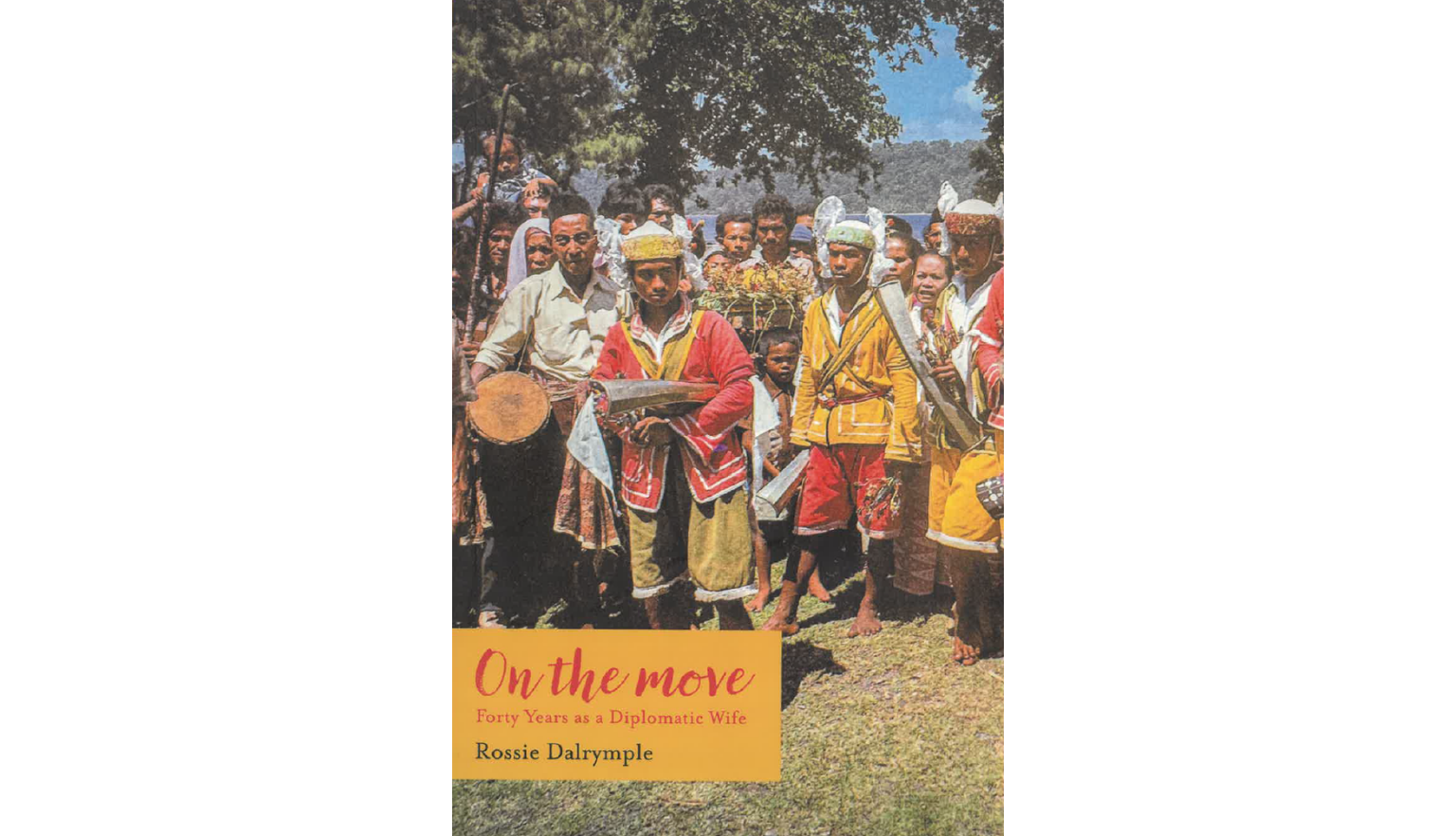
Rossie Dalrymple, Rossie, On the move: forty years as a diplomatic wife, 2024, https://nla.gov.au/nla.cat-vn10039666
Rossie Dalrymple, Rossie, On the move: forty years as a diplomatic wife, 2024, https://nla.gov.au/nla.cat-vn10039666
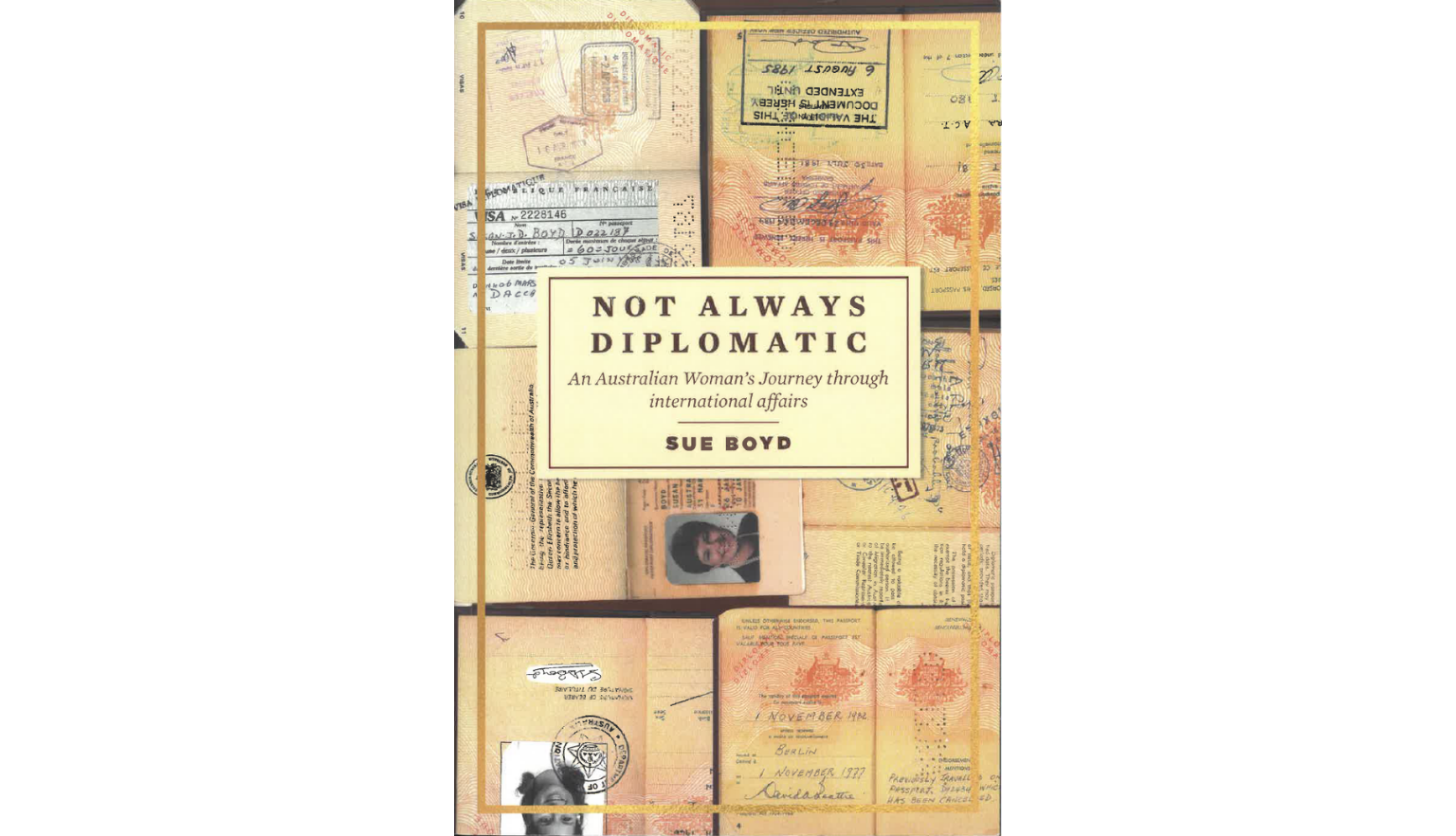
Dr Sue Boyd, Not always diplomatic: an Australian woman's journey through international affairs, 2020, https://nla.gov.au/nla.cat-vn8542309
Dr Sue Boyd, Not always diplomatic: an Australian woman's journey through international affairs, 2020, https://nla.gov.au/nla.cat-vn8542309
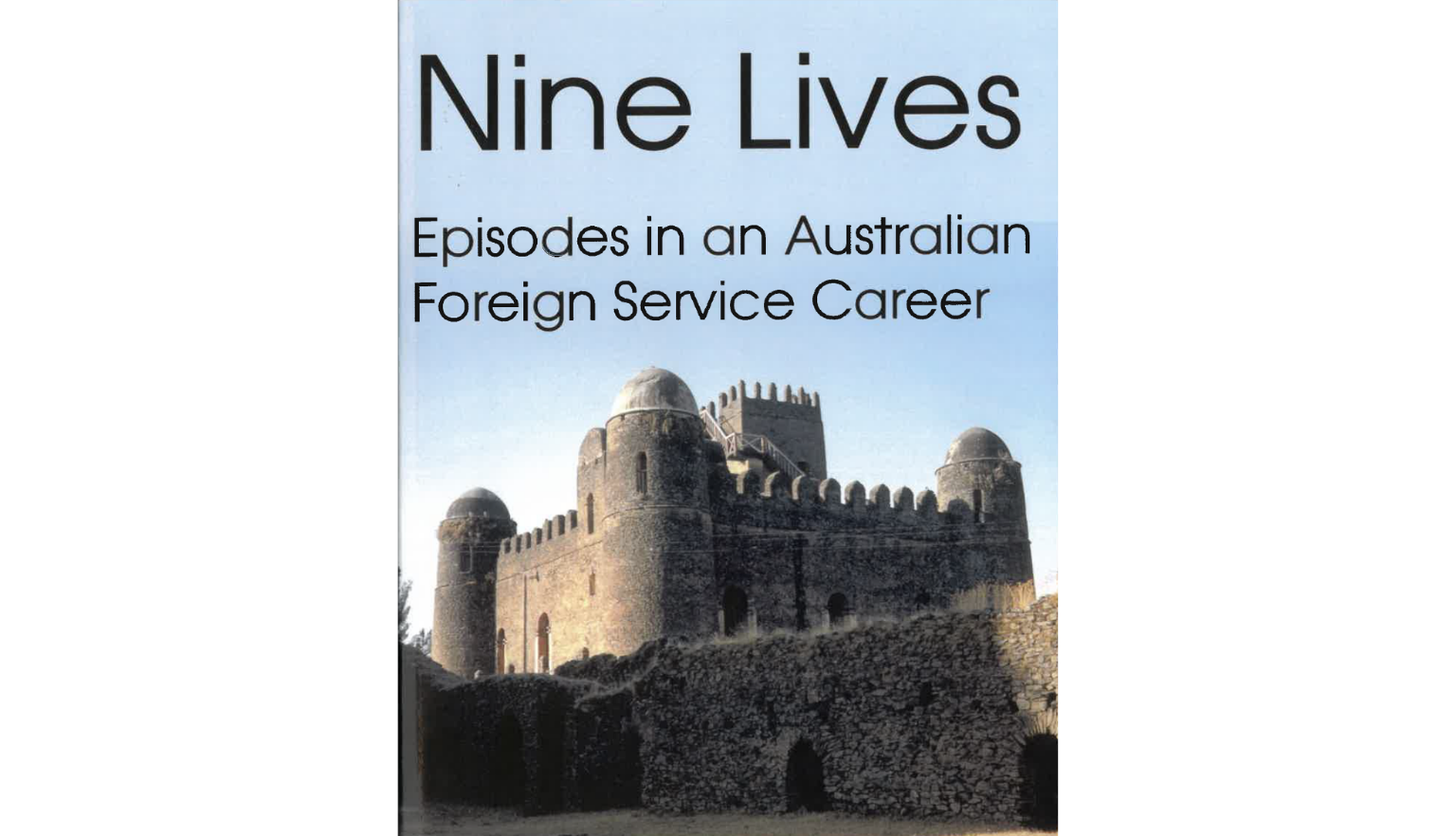
Richard Gate, Nine Lives: episodes in an Australian foreign service career, 2019, https://catalogue.nla.gov.au/catalog/8126238
Richard Gate, Nine Lives: episodes in an Australian foreign service career, 2019, https://catalogue.nla.gov.au/catalog/8126238

Jay Martin, Jay, Vodka & apple juice: travels of an undiplomatic wife in Poland, 2018, https://nla.gov.au/nla.cat-vn7577681
Jay Martin, Jay, Vodka & apple juice: travels of an undiplomatic wife in Poland, 2018, https://nla.gov.au/nla.cat-vn7577681
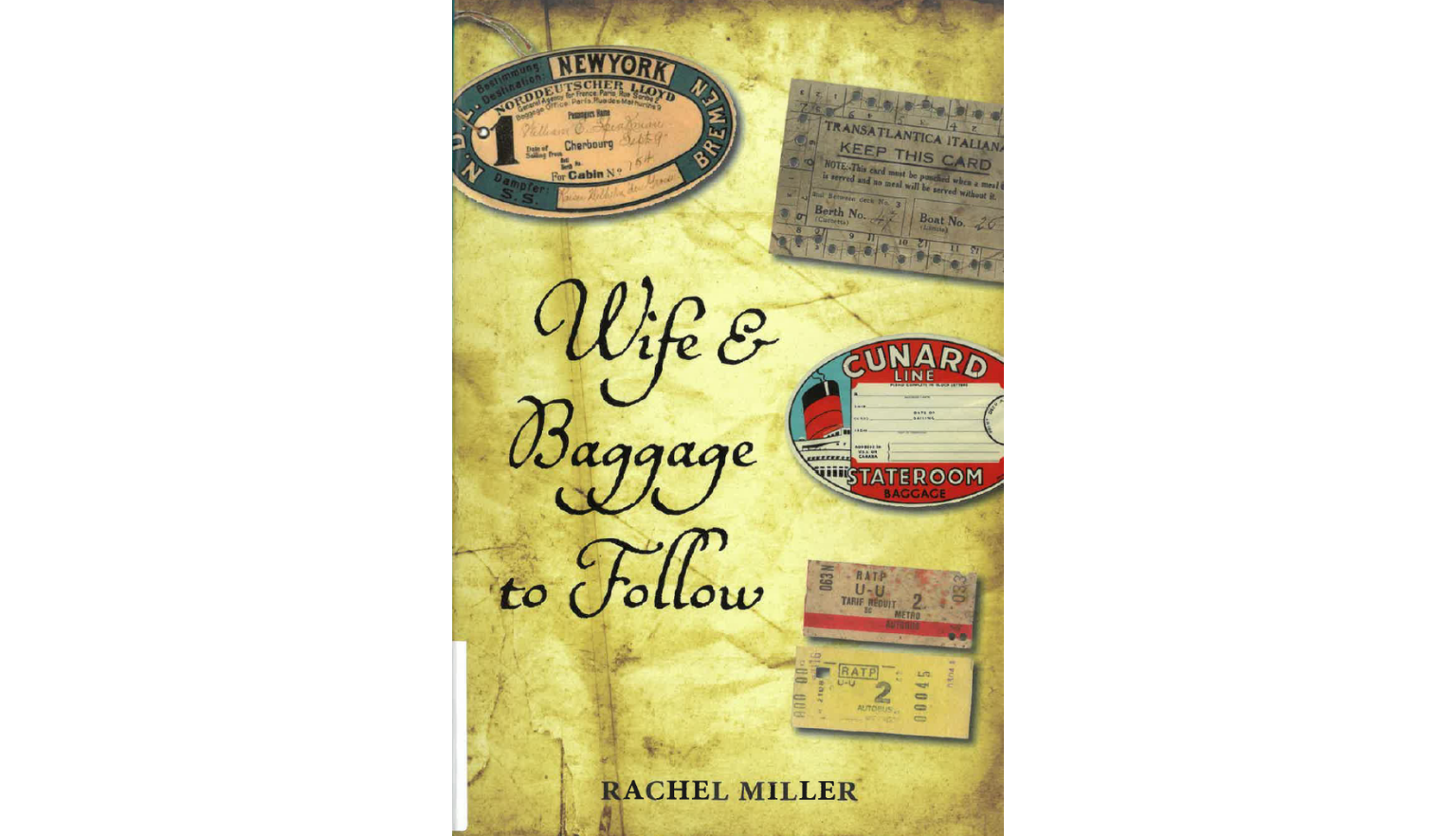
Rachel Miller, Wife and baggage to follow, 2013, https://catalogue.nla.gov.au/catalog/6292941
Rachel Miller, Wife and baggage to follow, 2013, https://catalogue.nla.gov.au/catalog/6292941
First Nations diplomatic practice, advocacy and trade
First Nations Lore, ceremony, culture and connection to Country have long shaped diplomatic practice. This included trade and negotiation within and between communities, and with overseas visitors such as Makassan traders from Indonesia. For centuries, Yolŋu and other northern communities developed diplomatic and commercial relationships with Makasar seafarers centred on trepang (sea cucumber), guided by shared protocols and agreed harvesting rights. These exchanges influenced communities far inland and demonstrate longstanding First Nations international engagement.
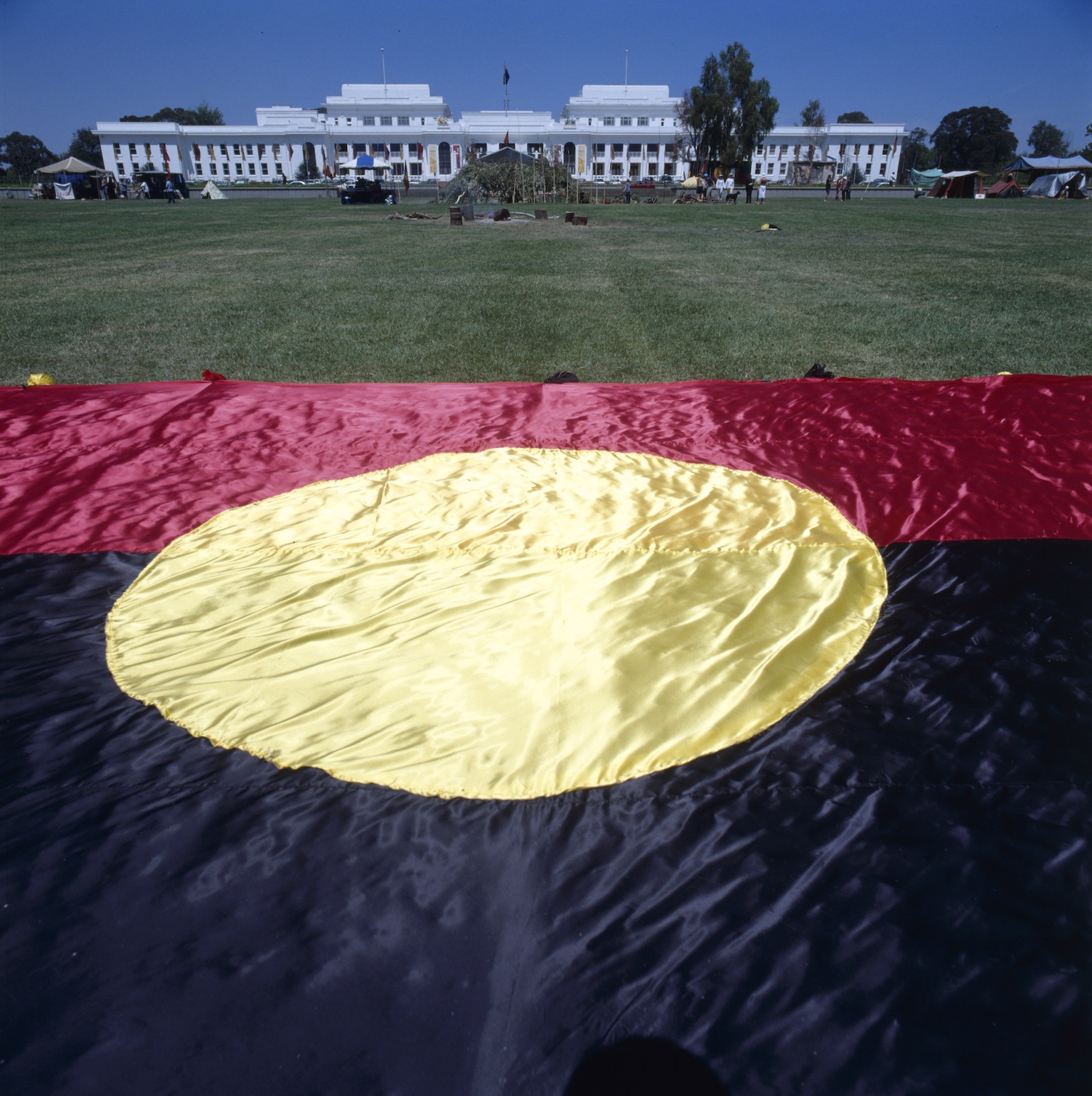
Loui Seselja, [The Aboriginal flag with Old Parliament House in background, on 30th anniversary of Aboriginal Tent Embassy, Canberra, 26 January 2002], nla.gov.au/nla.obj-149953473
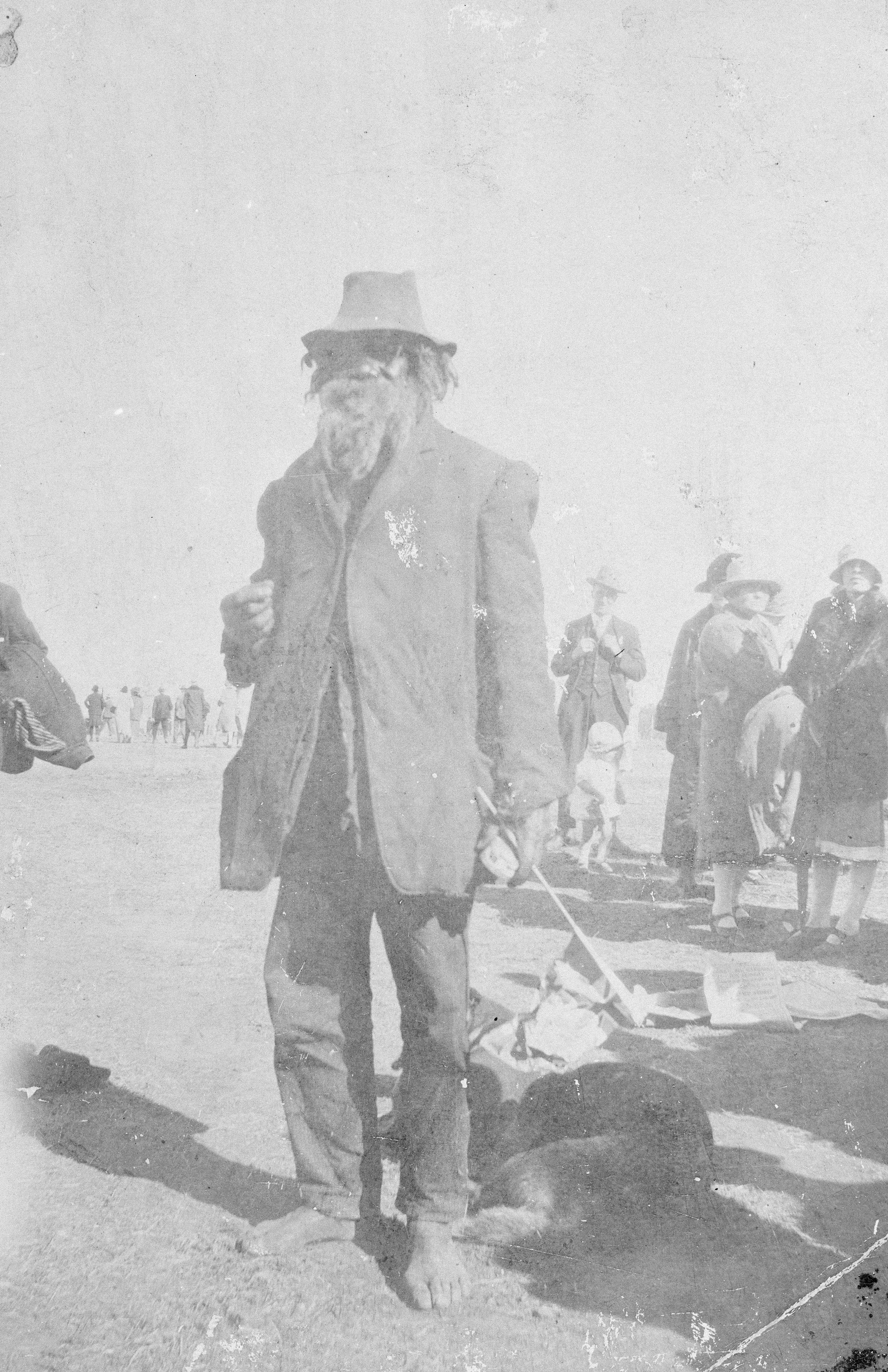
King Billy, Wiradjuri Elder, at the Opening of Parliament House, Canberra, Australian Capital Territory, May, 1927, nla.gov.au/nla.obj-137183463
First Nations advocacy continues into the present. The first recorded Aboriginal protest at Parliament occurred in 1927, when Wiradjuri elders King Billy and Marvellous walked to Canberra to raise concerns about sovereignty at the opening of Parliament House.
Nearly a century later, the Aboriginal Tent Embassy, established in 1972 as a land rights and sovereignty protest, remains the longest running Indigenous land rights protest in the world. Its origins can be traced back to 26 January 1972 when four Aboriginal men - Michael Anderson, Billy Craigie, Bert Williams and Tony Coorey - travelled to Canberra and put up a beach umbrella on the lawns of Old Parliament House, demanding land rights and compensation. This was in response to Prime Minister McMahon’s announcement the day before that denied the possibility of land rights.
Now the longest running Indigenous land rights protest in the world, it continues to serve as a platform for First Nations people to advocate for sovereignty and self-determination.
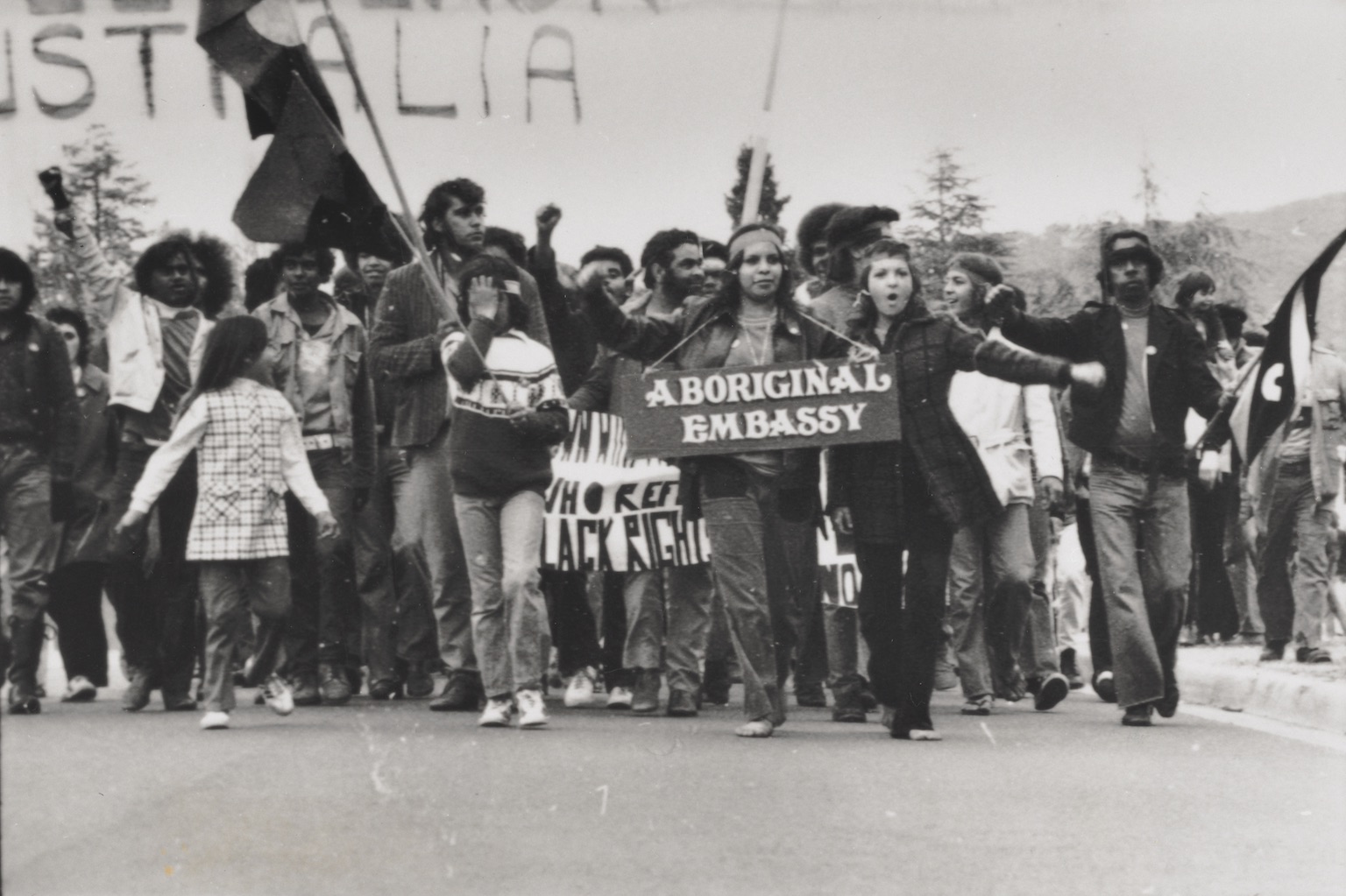
Ken Middleton, [Demonstration with 'Aboriginal Embassy' placard at land rights demonstration, Parliament House, Canberra, 30 July 1972], nla.gov.au/nla.obj-149418064
The Library holds photographs, manuscripts, oral histories and other materials documenting these diplomatic traditions and advocacy movements. In 2023, Justin Mohamed, a Gooreng Gooreng man from Bundaberg, was appointed Australia’s first Ambassador for First Nations People, a role designed to embed First Nations cultures and expertise into Australia’s international engagement.
His work, including contributions to policy documents such as the Australia–UAE CEPA First Nations Action Plan, highlights the continuity between longstanding First Nations trade networks and contemporary Indigenous‑led global enterprise. Materials like this are preserved through the Australian Web Archive, ensuring ongoing access to Australia’s evolving First Nations diplomacy.
Diplomats in the public imagination
The ‘diplomats’ occupation was depicted in the Citizenship collectible project card album for children, with two besuited men striding forth from a plane in an arid country, with locals draped in saris, and minaret buildings across the landscape. Attractive project cards could be collected at petrol stations and added to the album, such as this completed example in the Library’s collection.
A career information booklet by the Department of External Affairs (DEA) from 1957, stated that their work was ‘...stimulating and constant’. Being an External Affairs Officer in Australia’s diplomatic service, meant you could actively take part in conducting Australian foreign policy, and help Government to form that policy. Diplomatic and consular posts were maintained in 31 centres through embassies, high commissions, legations and an Australian Mission at the United Nations headquarters in New York.
While candidates were preferred to have a high standard Honours degree course, other desirable personal qualities such as judgment, reliability and devotion to duty were viewed favorably.
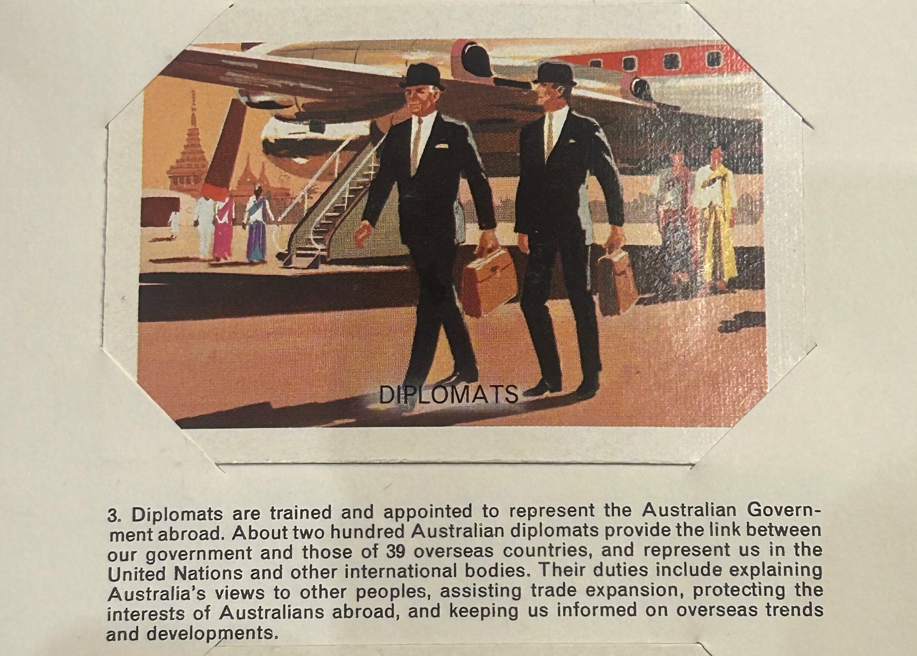
Detail of diplomat project card, Project card album : citizenship, 1964 https://nla.gov.au/nla.cat-vn6573549
Communications and diplomatic practice
Communication is one of the core businesses of DFAT. Initially, this took the form of daily bundles of telegrams from overseas, cables, intelligence reports, Committee and Cabinet papers, and other correspondence. Examples of such communication formats and technology can be seen in the Dominion Office war cables and in the manuscript collection, Papers of William Douglass Forsyth, 1875-1993.
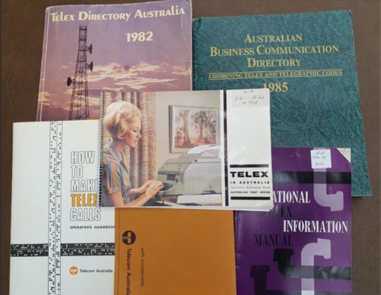
A variety of TELEX publications from the Library’s collection.
The adoption of the TELEX system in the mid-1950s dramatically changed the speed of secure communication. The TELEX system could send printed messages across vast distances through teleprinter machines which looked like typewriters. It was promoted as a typed version of a phone call, with the receiving teleprinter receiving the sender’s words in real time. The Telex overseas service operated through long-distance radio circuits.
Modernisation in air travel, personal computers, emails, mobile phones were transformative in the speed of communication within the practice of diplomacy. As part of modern international communications technology with Indo-Pacific undersea cable networks, DFAT launched the Cable Connectivity and Resilience Centre which supports international communication and connectivity.
Spousal responsibilities
The impact of a diplomat’s spouse has long been significant, even if often overlooked. Traditionally, spouses were expected to shoulder extensive informal duties: organising and attending official receptions, maintaining the social life of the mission, supporting community relations, and managing the household in ways that upheld the embassy’s reputation. These responsibilities were unpaid yet essential, and many spouses placed their own careers on hold to advance the broader aims of the diplomatic posting.
The Library holds many autobiographies written by officers and their families, offering personal insights into the experience of representing a country, whether through a single multi-year posting or a lifetime of postings. We also hold significant archival material, including Papers relating to wives and female staff of the Department of Foreign Affairs [1940-2012].
If you’d like to explore further, you can browse the catalogue using these subject headings:
Diplomats' spouses -- Australia
Diplomats' spouses -- Australia -- Biography
Diplomats' spouses -- Australia -- Social life and customs
Featured eResources
Browse these related Library research guides to find more information and resources on your subject.
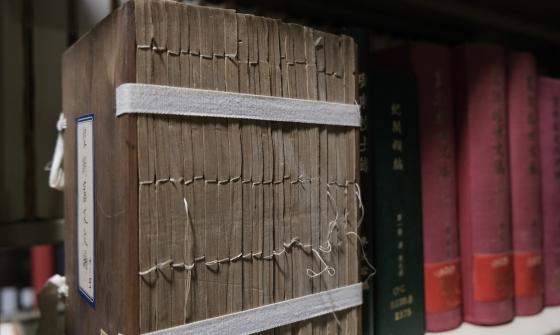
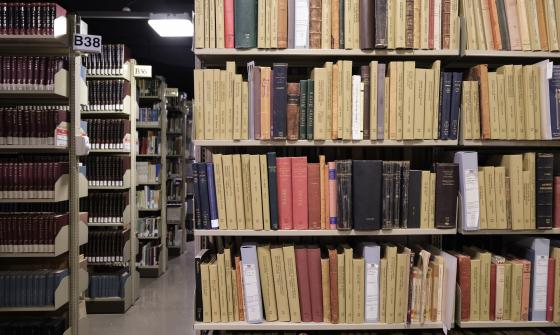
This resource features a range of primary source collections related to international relations between Asian countries and the West during the 19th century. These include government reports, diplomatic correspondence, periodicals, newspapers, treaties, trade agreements, NGO papers, and more.
How to search and find items
Use these tips to help you search for and access items in our collection.
Search the catalogue
Use our catalogue to start looking at physical and digitised resources in our collection.
Keyword search
Use a quick keyword search in the catalogue to find titles, authors or subjects.
- General searching with keywords can give many results, but you can find more targeted resources by narrowing the search fields. For example, a basic keyword search for ‘diplomats’ can be focused with the menu options in Limit your search (at the right of the search results page). By choosing the type (Format) of items, such as Manuscript, your refined results will only apply to those specific materials.
- Out of copyright items may have been digitised. To find digitised items, within Limit your search, choose National Library (digitised item) from the Access field.
Subject search
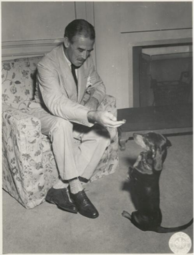
(1940). R.G. Casey seated playing with pet dog Mizr, Washington, United States ca. 1941 [picture]. http://nla.gov.au/nla.obj-147915514
Another way to group your search results is by searching with subject headings. Search the catalogue by subject directly, selecting subject in the drop-down menu of the search field. As you begin typing your subject, suggested subject headings will appear for your selection. Or, if you have already found a catalogue record for a relevant resource, you can click on its included subject headings to see related materials.
Some subject examples for diplomacy include topics or individuals:
- Ambassadors – Australia
- Ambassadors -- Australia – portraits
- Diplomatic relations
- “Dobson, Ruth, 1918-1990"
Where else to look
- Department of Foreign Affairs and Trade, History of Australian diplomacy
Regular publications on foreign and trade policy historical material (some online), including the Documents on Australian Foreign Policy series. - National Archives of Australia
The NAA hold the records of the Department of External Affairs and its successor the Department of Foreign Affairs and Trade. - Australian National University Archives
Anu Archives hold a select number of diplomatic archives. - National Museum of Australia
Australia’s diplomatic history as represented in the Australian diplomatic collection at the National Museum of Australia, partnered with Department of Foreign Affairs and Trade.
https://www.nma.gov.au/explore/blog/australian-diplomacy-world https://www.nma.gov.au/explore/collection/highlights/australian-diplomatic-collection
Get help with your research
Our specialist staff can help you with your research, to locate resources and use our microform and scanning equipment but they cannot undertake extensive or ongoing genealogical, historical or other research on your behalf.
Find out more in our Information and research services policy.
Continue your journey
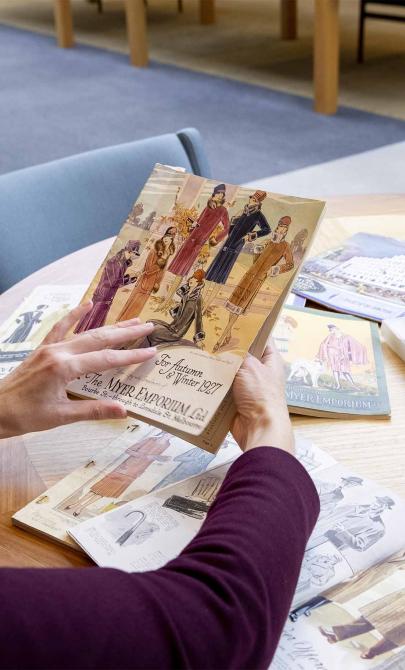
2023 National Library of Australia Fellow Dr Lorinda Cramer

More to explore
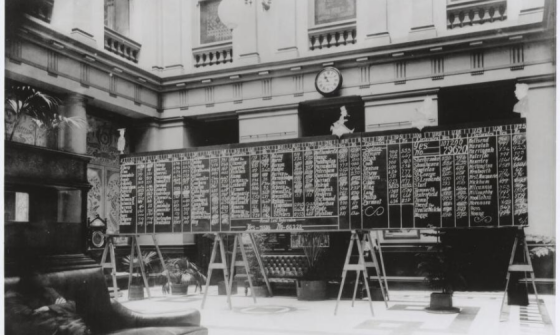
Australian Federation Referendum Results 1899, nla.gov.au/nla.obj-136434299
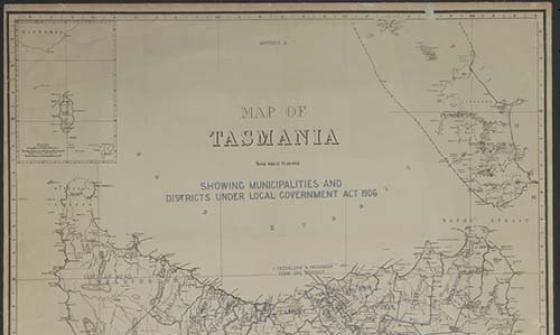
Tasmania Surveyor General's Office & John Vail, Map of Tasmania showing municipalities and districts under Local Government Act 1806, 1907, nla.gov.au/nla.obj-232097041
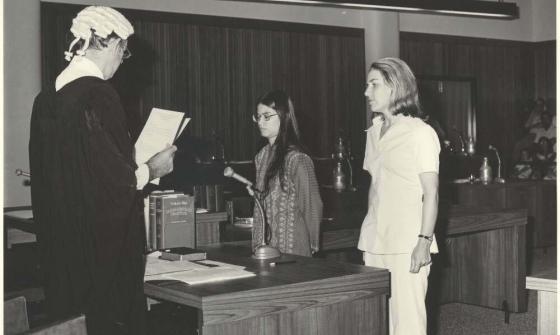
Michael Jensen, Swearing in of the first Legislative Assembly, Darwin, 20 November 1974, nla.gov.au/nla.obj-137086388
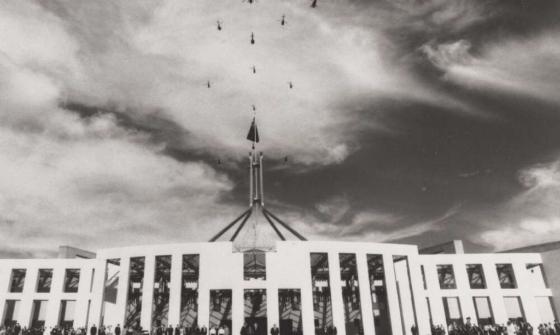
Andrew Campbell, Helicopter fly past, Queen in extreme bottom right, Canberra, 1988, nla.gov.au/nla.obj-143214725
Opening of new Parliament House, Capital Hill, Canberra, on 9 May 1988