

Experiences of polio in 1950s Australia
Poliomyelitis (polio) has largely been hidden from national historical narratives of post-war Australia. Professor Catharine Coleborne has closely examined the Library’s collections, particularly interviews from the Social history of Polio oral history project. These testimonials share details about treatment and care, family interactions with medical professionals in regional settings and evolving understandings of the illness. Focusing on the period 1950 to 1970, it reflects the most significant polio outbreaks and their aftermath.
Professor Coleborne is a 2025 National Library of Australia Fellow, supported in memory of Professor Ivor Jones.
Experiences of polio in 1950s Australia
Barbara Lemon:
Hello, good afternoon and welcome to the National Library of Australia. I'm Barbara Lemon. I'm a Director of Curatorial and Collection Research with special responsibility for the Oral History Collection. Thank you for joining us here on Ngambri and Ngunnawal Country. I acknowledge the traditional owners and custodians of this land and pay my respects to elders past and present. A little reminder that now is a great time to silence any mobile phones or devices that you might have in your handbag or on your person and we'll get started. This afternoon's presentation, Experiences of Polio in 1950s Australia is by Professor Catharine Coleborne, a 2025 National Library of Australia Fellow. Our distinguished fellowships programme supports researchers to make intensive use of the National Library's rich collections through fellowships of three months. These fellowships are made possible by very generous philanthropic support and Catharine has this year held the fellowship for research in Australian rural, regional or environmental history in memory of Professor Ivor Jones.
Professor Coleborne is an Australian Academic Historian of Health and Medicine, especially mental illness and institutions. She's currently based at the University of Newcastle, New South Wales, where she's professor in the School of Humanities, Creative Industries, and Social Sciences. In her presentation today, Catherine will discuss the experience of poliomyelitis or polio, as we know it, in regional Australia in the 20th century through the Library's collection of recorded oral testimonies from people who experienced polio. And this one is close to my heart actually because my mother suffered from polio as a child and still today in her 80s walks with a limp. Also, I think as a very green researcher out of Melbourne Uni, I remember applying to be an oral historian for this collection. It was rejected. I suppose I can move past that now. Please join me in welcoming Catharine Coleborne.
Catharine Coleborne:
Thank you so much for that lovely welcome. Thank you everybody for being here. I really appreciate people coming to hear me speak about this topic and for those watching online as well. It's enormously rewarding to be able to conduct research in a national library surrounded by significant research collections and to be able to spend this dedicated time to research among other Library users, everybody from researchers, librarians, the staff and the general public, all of whom enjoy this special place and to be immersed in ideas and reflection. I feel very lucky and very privileged to have been supported by the National Library of Australia, but also by my own institution who've made it possible for me to be here both last year and in 2026.
I actually spent time here as a Harold White Fellow many years ago when my daughter was a baby. I was just telling Barbara about my daughter and it seems fitting that I should return in the year that she moved away from home to attend university. So these two fellowships bookended by life's moments. I want to say a few words too about the named fellowship I've received. The fellowship is in memory of Ivor Jones, who was a medical doctor and his daughter, Rebecca Jones, has told us that he also contracted polio as a child in the 1940s and lived with the effects for the rest of his life until he passed away at the age of 92. He grew up in rural circumstances in the UK and migrated here in his early 30s and he also had a strong interest in the history of health. So I would like to acknowledge Rebecca Jones and her partner, Sue White, who are the donors for this fellowship and who are present today.
Thank you so much for your generosity. Fellowships enable researchers to immerse themselves for a time in their research and to focus, which is incredibly rewarding. So I will speak today about my fellowship project about what we remember together collectively as a nation about poliomyelitis or polio for short. In my fellowship proposal, I promised to take a social history approach to identifying the individual personal and shared memories of polio as an illness through the oral histories held in the collection and also to look at educational books, pamphlets, and related ephemera. This focus remained and will form the substance of my talk today, but I also intended to frame my research around my mother's experience of polio. And some of you may have read an article I published recently in The Conversation that weaves together her story with the stories of people who feature in my research here using the oral histories held in this Library.
For a long time, I have wanted to write a biography of my mother. She was born in 1943, attended university in Armadale, married and had children in the 1960s. Mum has always had a fierce sense of social justice based on her modest upbringing in the 1940s and 50s in one of the poorest streets of Orange in New South Wales. Stories about mothers and mothering reveal important aspects of the historical context for writing about women's lives and social change. In trying to write about my mother, the emotional strands of knowing about her by finding out more about her historical, social, political, and cultural context seemed to become more possible as I get older. I like to say that this has always been a project for a mature historian and I don't think I'm quite ready yet. In sketching it out some time ago, I determined that an account of my mother's life could include themes like health and welfare, regional towns like Orange and Armadale, a sense of place, and institutions like hospitals with elements of religion, family, and her own illness experience.
Yet there's a problem. Her experiences of polio at the age of seven in 1950 are blurry at best. So let me explain how I can make sense of my mother's polio in ways a historian can or might through a story of polio in places, families, and patterns in 20th century life.
In doing this research, I followed the paths of others before me. Dr. Kerry Highley's Dancing in My Dreams offers an excellent history of polio in Australia. It was published in 2015 by Monash University Press and she also included oral histories that were recorded with polio survivors in one chapter of her book. Highley notes that these moving and poignant stories of polio survivors reveal patterns in the experience. Her research also highlights what she calls an authentic coalescence of personal fragments about experiencing polio in the 20th century and this is a really important point because it relates to the value of using existing oral history collections to find out more about the shared history and memory of illness and Highley ends her book by saying that for most people, polio has been consigned to the history books and the stories of survivors and sufferers still need to be told.
And I actually met Kerry for the first time here yesterday in the cafe upstairs and we had a fantastic catch up. I really recommend her book to you if you don't know about it. So trying to piece together my mother's personal experience, and you can see a family photograph here. There's something really interesting to me about putting my family photograph in amongst the historical photographs you'll see in this presentation. In the absence of anything she recorded about her polio experience, I became very interested in the fact that libraries and archives around Australia have collected oral histories of polio from people who experience polio infection. So to understand more about my mother's polio, oral history interviews with people of her generation are helping me to uncover more about the health and illness experiences of polio in the mid 20th century. And oral history collections are a significant resource for national memory of pandemics and may provide guidance on aspects of public health in our present, especially the long-term effects of polio in the 20th century.
I currently also have a larger project funded by the Australian Research Council about Australia's experience of polio. And what I'm going to do, which is different from Kerry's wonderful work because she's published this book, is curate a polio archive mapping site, so a digital humanities project that will share stories from oral and archival collections, including images and some material objects, making these available in one place for people to use to make the memory of polio history more visible and tangible for the public. And eventually this site will allow you to go and do that research using the links to other collections. So it's a way of archiving all the existing material around Australia. And what I think it will hopefully do is contextualise specific collections of oral histories of polio and honour their original purpose for interviewees. We know for libraries, the use of oral histories is also a way to engage audiences and library users.
They provide opportunities for libraries to really engage with their publics to encourage interaction with national memory making, so significant here for the national library. And of course, oral histories are a dynamic reflection of the period we live in. Most recently, for example, the National Library has invested in a large oral history project to examine the impact of the COVID pandemic from 2020. I'm looking forward to using that too.
So my approach to this fellowship was to draw on the existing collection of 33 oral interviews of the social history of polio held at this Library and what the collection tells us about the relative silence surrounding polio as well as themes such as the impact of polio on families, children being cared for in hospital wards away from their parents, physical disability and people who cared for polio sufferers along with recollections of what daily life was like when polio struck. I wanted to find out more about the provenance of the collection when I was here last year and so I did a little bit of digging with the librarians and had a chat with some people. At the time of the collection itself, the interview process, librarians were becoming interested in the social impact of polio, especially before vaccines were introduced. So that period between the 30s and 40s to the mid 1950s.
They wanted to document memories before it became too late to include generations of people affected by polio in the 1930s particularly, but also in later decades. And from what I can see, this impulse also appears to have shaped other oral history collections around the country. And so they had some funding from Polio Australia, an organisation dedicated to support and advocacy for polio survivors and they set up a project modest funding with the National Library. And Polio Australia had also set up a polio register in 2010 around the same time, which meant that people could register their polio experience. They also publish a newsletter and collate stories and are very active in that kind of ongoing preservation of memory. In October last year, I spoke to Francis Rush, who was commissioned by the National Library to scope the oral history interviews with a range of people affected by polio.
She'd been working in the Government Department of the Attorney General on projects associated with disability and guardianship. She took leave from that role to conduct these oral histories and worked with polio survivor Mary Westbrook, who had links with polio survivors networks around Australia and also Gillian Thomas, who was then president of Polio Australia. And so they went about recruiting participants by working with the Polio Australia Organisation and networks. They explained what they were looking for. They wanted to get a cross section of the population, including people from regional areas, but also a mix of age, gender, other backgrounds, including new immigrants to Australia historically and really wanted to tap into those shared memories of polio. So the oldest interviewee was 95 and contracted polio age two in the 1930s. As I said, there was an aim for gender balance as well as people from different locations.
And Mary said in the advertising for participants that they really wanted to know about different experiences of severity and type of polio symptoms, different treatments for polio and people who had different kinds of residual effects. So it was a really interesting process. And in fact, in my examination of most of these interviews, 32 out of 33, I've been able to get access to as part of my fellowship, I've seen some very interesting patterns of experience going back to what Kerry highly argued about using interviews to understand that kind of series of experiences across a collective, but there are some different nuances and histories in there too. Around one third of the interviews actually is with men and the rest are with women. There are new migrants to Australia included, people who contracted polio as infants, young children or young adults and there are family groups who feature as well.
They come from Tasmania, Victoria, Western Australia, Queensland, New South Wales, and remote regional, as well as metropolitan areas, from wheat and sheep farms to Outback New South Wales and from North Queensland to the north of Tasmania. It's really quite, even though it's not a huge number of interviews, it's quite reflective of the population. So I do plan to weave stories about regional Australian experiences throughout the presentation, but there are also mentions of many different hospitals, convalescent homes, wards, and carers as part of this interview collection, which also forms a theme of my research. And I've been really trying to link some of the content in the Oral Histories to those other institutional stories that we can find in different kinds of archival collections. The different emotions that flow through these interviews have also shaped my responses to them and I'll say a little bit more about that process towards the end of my presentation.
These are the themes I'm going to be looking at and I'm going to touch on all of them fairly lightly and then bring it together at the end of my presentation.
So I'll start with the theme of identifying infection and symptoms. Poliomyelitis affected thousands of people in Australia in the mid 20th century, as I'm sure many of you will know because you're here with this interest. With epidemics in the 1930s, 40s and in 1950 to 51 it's been described as the vicious virus. There were late 19th century epidemics of polio in various places around Australia before it was a notifiable disease in the colonies, later states, and it affected children and young people earning the name infantile paralysis. Early symptoms, as one account notes, were similar to many childhood complaints, fever, headache, vomiting, drowsiness, and stiffness in the neck and back, often mistaken for influenza. Advice to parents in childcare manuals of the period offered warnings about symptoms for various infectious diseases, noting that infantile paralysis begins like so many other infections. So it must have been quite scary as a parent.
And sometimes that amounted to just a general sick feeling, which is one of the things that comes up in the interviews. Very generalised symptoms are reported by many of the interviewees. Talking about her life in Tasmania in the 1930s, Rebecca Round recalled that she'd been unwell for a fortnight when the doctor checked in on the family and asked her to put her head down and touch her knees, which she was not able to do. Young Molly told her mother that she didn't feel very well after attending the Bellerive Regatta in Tasmania in 1942 and the next morning she couldn't get out of bed. A doctor visited the house, asked her to try to walk and then confirmed she needed to get to hospital. Others tell stories of their legs collapsing under them like Hugh in 1945, just before Christmas, getting ready for a camping trip with his father and brothers.
An ambulance man lived down the street, Hugh recalled and said, "Get him to the hospital as quick as you can, he's got polio." And Hugh went on to say that he knew straight away from the symptoms, obviously he'd been taking them in regularly. So there's a really interesting kind of community response in many respects to these things happening to people, as I'll say more about in a moment. Those who were infants or very small children when they fell ill have different memories of polio infection that were shaped by their age and what people have told them about their experiences. And interestingly, they tend to report bewilderment at the events surrounding their illness and many comment that no adults really told them very much about what was going on. So we have evidence from the Medical Journal of Australia in the early 1950s publishing articles about poliomyelitis research, diagnosis, observing symptoms in combination, grouping symptoms, as you can see in the newspaper account on the slide there.
And infection could also be diagnosed through lumbar puncture, which was sometimes used in the Australian context to check markers in spinal fluid for inflammation and to rule out other causes of symptoms like meningitis. Memories of the lumbar puncture appear in a few of the interviews. Doctors diagnosed his polio, says Doug, when they put a needle into my lower spine into the lumbar region and extracted some fluid. People rightly believed that dirty, unwashed food could transmit the virus and through flies they were worried about dairy products like milk and ice cream and also swimming in different types of water, including swimming pools and during some of the epidemic swimming pools were closed to the public. One person even wrote to the government to suggest that licking stamps to post letters might be responsible for the spread of the disease.
Rebecca Round wondered if she and her sisters were infected because they gathered watercress that grew around the railway line while Peter Willcocks thought that he became sick after swimming in the Elwood Canal in Melbourne, quite defensible theories.
Polio can sometimes be transmitted through saliva and mucus and people may have been carriers of the virus in large numbers really without knowing. Children were largely unaware of those kind of threats. Their parents were aware. And so some of the interviews talk about their parents mentioning fears for them and not wanting to go places and be in public and that type of thing. I've just been sort of fact checking a little bit using the new website for the Australian Centre for Disease Control and looking at the current state of polio. And it's really interesting actually if you want to have a look at that. So the interviewees talk about this threat always being there because they live through it, but I think many people, and this is the point of my project, have kind of forgotten that living memory of polio.
On the 8th of March, 1951, the president of the Progressive Housewives Association of New South Wales, Miss Portia Geach, wrote to Earl Page, who was Minister for Health, asking the government to cease radio bulletins reporting the tally of polio cases on the grounds that it "may upset women with families and cannot do any good. Could you stop?" Page replied on the 22nd of March saying politely, no. So I'm going to move now to some family and community responses. This is a photograph from the 1930s and my photographs are drawn from a range of different libraries and collections because the National Library doesn't have a great many photographs associated with polio so I focus my attention here on the oral histories and the photographs are illustrative of some of the themes. Family and community responses varied and I certainly don't want to be focusing only on the negative because there were many caring communities, but sometimes the negative comments do stand out in the interviews.
"I believe the people in the house opposite almost had a fit" said Lynne E, who caught polio as young teacher trainee. Hugh recalled stories of people who had recovered from polio, but when they were out and about, found that others would move to the other side of the street when they saw them. Talking about his experience of polio in the early 1950s, one interviewee, Bernie O'Grady, remembered the same kind of reaction to his family. He recalled his mother being avoided by their neighbours and some of the others interviewed said similar things about this social ostracism.
Other stories about smaller towns reveal that polio presented particular challenges in small communities, especially for Lynne L, whose mother suffered from local small town judgement, as she recalled it, of her parenting in Albury in the 1940s. She said," The attitude in those days, what had my mother done that had caused me to catch polio? There was nothing that mum could have done. Unfortunately, mum couldn't handle that", said Lynne; "it broke up the family". This kind of reaction may also have been shaped by public health practises, which is another theme of my larger project. So people like Rebecca Round, and she was seven in Tasmania when she caught polio, remembered her family's home being marked by a quarantine sticker and that was in the 1930s. And so there was a lingering memory of these kinds of marking out where polio was that would have shaped people's appreciation for the presence of polio.
People didn't go out in public, she said. "I think they were frightened and people considered at that time it was only the poor and dirty that got polio." And of course, the fear of polio then in the 1930s in Tasmania was justified. There were over a thousand people in the hospital the summer Rebecca round was ill. But it dawned on me as I was working through these interviews taken with different people from different eras, different decades, that memories from the 1930s are really important for the 1950s, which is where my focus is. And that is that the fears that surrounded the sheer scale of the infection and the horrible outcomes in the 30s influenced how later generations of parents and communities viewed polio in the 1940s and 50s. So it was this kind of parental memory or community family memory.
So family shame, silence, and reluctance to remember are all themes that come up in the oral interviews. "You didn't talk about it", said Rebecca. Later in life, she reflected on the way it affected her relationship with her sister after she was separated and isolated in hospital with her mother only able to visit and look through the window because of the concern around infection. Polio, she said, separated you from people around you. And a number of interviewees had similar reflections about visitors to hospital having to stay away. And of course, here there are echoes of our more recent COVID pandemic experience. Margaret's family in North Queensland made strenuous efforts to see her in Cairns Base Hospital when she was 11, but "not all that often" she said, as it was a long drive from Mareeba. She remembered them looking through the half glass door when they did manage to come.
There are a lot of comments about people had to stay at the door or people had to look through the window. Quite a lot of memories like that. And there are many stories too of families unable to visit because of challenges of distance. And that's a theme that Kerry Highley also talks about in relation to patients that were sent away from rural and regional areas to larger institutions for their treatment. Others were unlucky and fell between the cracks in the public health system. German immigrant Peter Hannemann and his wife, Uta, came to Australia from Berlin in the late 1950s and they were very young couple in their early 20s with three children. Because of the timing of their arrival and for whatever reason, whatever was happening back in Berlin, they missed out on the vaccine in Australia because of a localised shortage and that was around Wollongong in New South Wales.
All three children contracted polio in 1961. Gaby had serious lifelong illness that left her immobile and depended on constant nursing care. Peter remembered many people being sick and his interview is very sombre. There is a family group approach to the Hannemann family where you see a number of family members interviewed and one of his daughters, another daughter was one of those. She said that getting polio "completely changed our family." For years, she herself endured treatments like plasters, callipers, boots, and visited her oldest sister Gaby in Prince Henry Hospital where Gaby was in an iron lung. And you can find out more about Gaby's story by looking at an online exhibition about polio at Prince Henry Hospital. It's really interesting. And she was well known throughout her lifetime. She's now passed away for being a polio survivor. So there's a lot of talk about the kind of people that these polio children and young adults encounter in hospital, including volunteers, people who turn up and bring things to help young people such as a bar of soap or a face flannel and the theme of volunteerism and the way organisations actually worked opens another window on the way our past of caring for people in our community has changed over time, or maybe there's some continuity.
I want to turn now to the theme of isolation and separation. In a recent issue of Polio Australia's publication, Polio Oz Brief, there's an article by a woman called Susan Schoenbeck, and she reminds us that children face separation from parents when they were hospitalised for poliomyelitis. This was not recognised at the time and polio survivors today may continue to work through trust issues. She goes on to comment that the kinds of experiences children with polio had in care settings could have been very disruptive and create emotional responses such as painful examinations, bright lighting, noise, and also a lack of control on what was happening to them. I think the bigger question here for me as a historian in Australia is that we've talked about an Australian history of out- of-home care, forced adoptions, the shameful histories of Aboriginal child removal. International histories of child evacuees during the Second World War and children who were refugees also remind us of the painful separations that many people endured in the 20th century.
Now, disability experiences like polio separation may constitute another large scale story of this period and invite greater scrutiny into historical practises of care. Gayle Kennedy's story is an important one in the collection. Gayle contracted polio in 1957, age two. She was taken to Sydney from outback New South Wales in Condoblin. She had no idea that she was Aboriginal, from Wongaibon people, until she was a bit older because she spent so much time away from her parents in care at the Royal Alexander Children's Hospital in Camperdown and then in rehabilitation. She remembers physiotherapy, pool exercises, being in plasters and callipers, learning to walk again, but she also remembers the shock of being reunited with her parents who she didn't recognise. Now, Gayle has written in public about her experiences. She's become a writer and a creative practitioner and her parents were also interviewed for this project.
She published a book in 2007 called Me, Ant Man and Fleabag that gives an account of this remeeting with her parents. She's given interviews for media and become an advocate for others with disabilities. There's another memoir I've come across while I've been in the Library by Wendy Craig, which is called Into the World Alone, published in 2019, which tells a similar story. There's something in this about some of the more remote experiences of children who lived in parts of Australia who were taken away for care.
Lynne L recalled that when her father came to pick her up from the Hampton Hospital in Victoria where she was being treated to take her back to Albury, it was just sheer elation. Larger wards could be busy and lack privacy with only screens to offer a sense of personal space. The sound of machinery like the iron lung was ever present. Some nursing staff and carers left more negative impressions on the children. Lynne E recalled the horrible lady in charge of the ward she was in at the Prince Henry Hospital who used to comment, "I hate polios," but other nurses were kind and sometimes rebellious, breaking rules to give patients a warm bath. As a young woman with polio, Lynne remembers nurses smuggling in beer for the older patients who were often starved of entertainment and she gave a delightful giggle in her interview when she was remembering this.
There are also accounts of friendship in the wards, a kind of camaraderie between patients and these themes show up too in some of the photographs.
So I'll talk a little bit about memories of treatments. A number of historians have written about controversies in Australia around polio treatment. For example, Sister Elizabeth Kenny. Fewer people have written about this on a large scale in terms of people's experiences of those treatments, but there are some academic pieces of writing. And what I have found very interesting is that the oral histories in this collection sometimes remember meeting people who were fervent practitioners of one or other method of treatment and care in some of the institutions. And Kerry Highley and I were talking about this yesterday and she is convinced that in Australia there was opposition to Sister Kenny's methods of treatment, which meant that some Australian children missed out on some of the best care. So there are lots of different sorts of points of view. What I've been interested in here is getting at what people remember.
So interviewees remember painful treatments like these hot plasters I've been talking about, bandages being wrapped around their legs, the manipulation of limbs, massaging of muscles. They wore limb splints. As I've said, there were these controversies and theories about immobilising patients gave way to an understanding of movement and activity being important for modes of recovery as advocated by Kenny. But they also remember some of the environments. And remember some of these memories that they have from a long time ago when they were still children, so they're filtered through that lens. Peter Willcocks could recall a cold, sterile environment with long hallways and rails, clean, metallic looking light. It wasn't the home environment. In 1953, Don was in an iron lung for nine months when he was 18 and he hated it. He prayed to get out of it because he felt like he was being controlled by the staff who made him stay in it.
And there's a great story in his interview where he prays so hard that there's actually a thunderstorm one night and the power goes off and the iron lung stops working and he does actually manage to recover and doesn't have to stay in it. So that's a great story.
Lynne E talks about the physiotherapists who stretched and pulled people to loosen their stiff limbs while Lynne L and several others give accounts of the Double Thomas Splint, which was kind of like all limbs out in a kind of frame like a T. And the diagrams for these can be found in Jean Macnamara’s publications of the 1920s. I've had a look at some of her research work and her published articles. She was advocating this type of immobilisation for a long time. And there are others, including Gayle Kennedy, whose story I mentioned who had ongoing treatments over the years and had to keep going back for surgeries and different kinds of treatments long after they had kind of made progress in their recovery.
I think I've missed one or two there. I might just go back to that one so you can read a comment there. People who had memories of positives like hydrotherapy bath being a wonderful release and a relief. Sometimes as I said, the nurses allowing them to do that on the secret and on family dynamics and mental health sometimes I think, and I haven't talked about this or written about it yet, but the camaraderie on the wards with groups of other children and people who people met across the age span as well also constituted a type of family. One of the most important thematic elements in the collection of interviews centres on this theme of family dynamics and the impact of polio on family relationships. Time and again, interviews mentioned family breakdown, tension, the loss of close relationships with siblings or parents as a result of polio.
In two interviews with people who contracted polio as children, memories of polio are bound up with the knowledge of family conflict and I'm sure there's more as well. Lynne L's mother left the family when Lynne was eight, leaving her to be raised by her father.
In Jack's account, his parents' marriage was failing as he fell ill in his early teens and his father left his mother, as he put it, just walked out when Jack got out of hospital. And I can totally appreciate these also echo through our present, those concerns about how to care for children who've had different sorts of illness and health problems. Peter Willcocks spoke about social isolation too and the feeling that his family was treated differently because of his illness. It's a very, very important interview, this interview with Peter Willcocks. To this day he says, "I can still know the feelings that people must have had towards my family." Peter's interview starts with this theme and he talks about one of the most dramatic photographs he's ever seen, a photo of parents carrying a child into hospital. He was the only one in his neighbourhood in Melbourne to contract polio and his emotional story is one of actual enormous compassion towards his parents and his family and pride in the way his family cared for him and thought about him.
Contrastingly, one woman who contracted polio at around five months old commented that "as a child I used to think this was a very negative story", because she felt that her family told her that because of me, they all had to stay inside for two weeks. She grew up feeling pressure to always be a good girl for her mother. She located her childhood medical records using a Freedom of Information request to help her understand her experience. Her life was affected by these kinds of murky bad memories of having polio. She commented that "I had a distance from my body." Now this shows that not only relationships within families, but a person's relationship with her own self and body was formed by this illness. Young men experienced feelings of loss when their polio began to affect their joy in physicality, like Doug Sutherland, who reflected that "curiously in my dreams I was still running and jumping and playing football" after his hospitalisation.
Many interviewees reflect on the way polio set them apart from others and gave them a sense of difference.
This sense of difference may have coloured the way someone with polio was able to reenter the world that had been disrupted by their illnesses sometimes for long periods of time. So taken together, the interviews tell a story about the way polio survivors were encouraged to push through and resume activities. They were not to be coddled. Evidence tells me that the financial pressure on the Commonwealth and State governments to support forms of aftercare for polio cases also drove this insistence that things and people should return to normal to prevent them from becoming dependent on invalid pensions. And interestingly, just this week I've been looking at medical reports from the Director General annual medical reports and at the same time as they were worried about polio in the 1950s, they were still trying to work out how to approach tuberculosis, tuberculosis care institutions and funding for people.
It's a huge kind of deal for the government to have these polio epidemics before the vaccines. Now we know that one of the most well-known polio survivors in Australia was writer Alan Marshall and his papers are here in the National Library. He documented his childhood experiences of polio in the early 20th century in his much love novel, I Can Jump Puddles. And it was first published in 1955, which I think is very interesting, very close to just as the vaccines being introduced in 1956 in Australia. He wrote very positively about the impact of physical handicap on children and suggested that children did not see disability. Yet some of the interviewees tell a different story about being told they were crippled. Sometimes their classmates were rough and rude, not always. Other times they were great and supportive. Adults were probably more of a problem because they would tell them things like, "You'll never walk again." But in fact, it made them only more determined to succeed and to prove otherwise.
So there are some interesting stories of the way polio affected people's ability to reintegrate physically in terms of schooling and exercise and sport and friendships. And they often did just push through and get engaged in sports. They were encouraged to do so where they could to, I guess that word normalcy to normalise who they were when they returned to school. And that's something that my aunt reports that my mother also did. People were also more used to seeing disability post-war in post-war Australia because of return servicemen coming back with obvious injuries or missing limbs and disability and more than one interviewee talks about that. One interviewee also talked about being very grateful that polio didn't cause him to have visible disabilities. So I think there was sort of some ambivalence about the visible disability versus the invisible in the lives of these people and he reflected that he'd not suffered in that respect and he'd had a lot to be grateful for.
So there are certainly these kinds of really interesting positive insights as well. I think that the story of polio aftercare deserves much greater attention and my larger research shows that there were many, many institutions all around Australia devoted to these children between the 1920s and the 1970s. Social welfare organisations like the New South Wales Society for Crippled Children, now Northcott, supported families with practical help. And a few interviewees remember some of their experiences with what became the Royal Far West Children's Health Scheme based in Manly in Sydney. It was an organisation, you may have heard of it, devoted to the care of regional and remote children that was established in the 1920s and it had a particular role to play with polio, providing callipers to children who needed them and residential camps at the Sydney Beach for children from across New South Wales. They were for all sorts of children every Christmas, some who'd never seen the sea before.
I've just looked at some film footage from the National Film and Sound Archive talking about the benefits of those experiences. And they had a long history of venturing into remote and regional parts of the state to survey populations looking for physical impairments, not just polio, but all kinds of disability or health issues that may have needed addressing. Copies of the Far West Magazine are also held here at the National Library along with annual reports. In December 1955, the magazine they published reported that since the health scheme's inception, there had been almost 7,000 admissions to the Drummond Home rather at Manly. Many of these were children with polio all from remote areas of the state. Among them, the young Gayle Kennedy from outback New South Wales and other Indigenous families, the children.
I just want to reflect on immunisation before drawing to a close. The image that was used to promote this talk of the caravan, you may remember, serves to remind us of the methods used to reach everyone when vaccines were introduced in the mid 1950s. It's a photograph of one of four caravans, especially built for the health department in one of the states. I actually don't know which state. It wasn't made clear in the record. These were fitted out with air conditioning, a built-in refrigerator to store the Salk vaccine and a gas stove for sterilising and washing syringes as one news report stated. One of the interviewees, Doug, recalled the Burwood Council, used to have a caravan they'd mount onto the curb every Friday for free injections. So there's a nice link between the interviews and the caravan. Interestingly for me, given that these interviews were collected and recorded in 2011 and 2012, most of them, there are many mentions of the importance of vaccination.
Polio survivors talk about the significance of vaccination to them, to their families once vaccines were available. They recall the differences between the Salk and Sabin vaccines in the mid 1950s and the late 1960s. They expressed a concern about the decline in the awareness of vaccines and their purpose. I want to give the last word on this topic to Bernie O'Grady, who was fervent about vaccination, but honestly, many of the interviews were. The message I would like the public to know Bernie offered "is that I hope... I wish that we would never see an outbreak of polio in Australia again."
Okay. I'm going to draw to my conclusions now by reflecting on this experience of looking at all of these interviews, reading, listening, and so on. I've deliberately ranged over a wide number of themes to build this composite picture of the polio experience. And as I said at the beginning, I set out to look at what happened in Australia, what we remember about polio and also examined not only the oral interviews, but things like newspaper clippings, medical writing, published memoir, pamphlets, a number of things held here, but also at the National Archives. Now as recently as in the 1990s, the Northcott Society, which I mentioned earlier, promoted a fundraising activity for children with physical disabilities caused by conditions such as spina bifida and cerebral palsy by reminding people about the impact of polio in earlier decades. I was really struck by this pamphlet and its use of 1950s imagery.
It has a tagline, 'The 1950s gave us the FJ Holden, the Hills Hoist, the Melbourne Olympics, and.. polio'. Polio then might be located in the public imagination in the 1950s distant enough now to be almost forgotten. 'Imagine not being able to get around, to walk, to run, to lift, go shopping, or to a football match', the leaflet states. The leaflet made me think about whether there is an 'Australian experience' of polio, one peculiar or particular to what happened here in how the virus shaped the lives of thousands of people and our responses to it. I mentioned Alan Marshall's publication in 1955, which is fascinating given that time was the recent living history of polio in Australia. And Marshall actually gives his experience in hospital wards as a young boy, a deceptively light touch, but there are many similarities between his polio narrative and the accounts in the polio interviews.
We might say that the shared public memory of polio in Australia is a memory with different inflexions. The triumph of the vaccines, the dramatic decline in infections, yet the public memory of the illness itself has faded. Some elements of this have been privatised for individuals and this private memory of polio is a memory of disability, institutions, families left to struggle and rely on forms of care that spring up around the epidemics and their aftermath. There's a silence then about polio as an experience that was ongoing for so many people and that's why oral memories can help us examine the depth of the polio experience and offer both commonalities, but also individual stories that demand attention. I don't have time to talk about the way oral historians might theorise. I have talked about this and written about this, but I won't do it here. I'm happy to do that in question time.
But is there a specific Australian 'polio remembering' that we can locate among these interviews?
Is it on a national scale? I think it is because this collection at the National Library is a national collection. It's more urgent than ever to be reminded of the way our mid 20th century confidence in medical science has given way to a forgetting about the way epidemics of earlier periods of history were devastating for so many people. As medical historian Dora Vargha puts it, between different waves of epidemics might come relief, a conscious forgetting of epidemic times and a celebration and recovery. I think we're doing it with COVID right now, but the episodes are connected by the lives of people who experience these epidemics by infrastructure established in crisis moments like those institutions and homes. She says that there's an underlying continuity and persistence that carries forward episodic moments long after they pass. This continuity can be found in the experience and memories of polio through the words and writings and persistence of polio survivors.
Thank you.
Barbara Lemon:
We'll hold onto you here, Catharine, for question time. Thank you so very much. And it's really interesting to, I guess, reflect as somebody who thinks about oral history collections all the time, that the rationale for interviewing somebody is very often what they've achieved as an adult where here it's about what they've endured as a child and that's potentially a great equaliser for an oral history project. We do have 10 or 15 minutes for questions. Because the session's being recorded and we do have people listening online, we'll need to just ask you to wait for the microphone so that your question can be picked up for those online as well. And Sharon is our sole microphone bringer today, so you might just need to bear with us, but please I'll open it up to the audience for questions now. Yep, at the front. Thank you.
Catharine Coleborne:
[Unclear]
Audience member 1:
Thanks. That was fascinating and I've got lots of questions about the subject matter, but one that I have a sort of a long-term background interest in is one that's more general about oral histories. And I noticed with my own father who was a fairly old man when I was born, relatively for that age group, that his recollection and the way he talked about things changed over time. Is that something that oral histories actually take account of or actually look at?
Catharine Coleborne:
Yeah, no, thank you so much for throwing me that lovely question. I couldn't have scripted it better because I did take out a paragraph towards the end. So yes, and in fact, most oral histories, the practise is to take a life history of somebody so to engage them in a story of their whole life. So these particular ones cover everything from early childhood right through to life beyond polio and all sorts of experiences that people have had. So they try to capture the context of a person's life and oral historians are aware that as they put it, they reflect the time of the telling. So somebody will talk about something in a particular way and that's why I find the inflexion of vaccination an interesting theme in 2011, 2012, because this is pre- COVID and yet they're really concerned a lot of these subjects to talk about vaccines before we've had the more recent vaccine hesitancy.
There's a sort of urgency to what they say. So the time of the telling means that people will reflect the time that they currently occupy when they talk about something which might be affected by what's going on in the world, as you can see. So, obviously memories can sometimes be a little bit unstable. Some people in the interviews have slightly unclear memories of the dates that things were introduced like vaccine dates when they happened and there's a litle bit of muddle in some of the older people there. But essentially there's what's interesting to me as a whole is that there's a very interesting collective picture emerging where people have very similar recollections, which tells me once I corroborate things with other evidence that it's a consistent remembering. So I hope that kind of helps. Yeah.
Audience member 2:
You mentioned in passing comments about Sister Kenny and her lack of support in Australia and I think I heard you say that it was sort of supposed lack of support or equivalent wording to that. I thought it was pretty damn obvious that she didn't get it. I'm just wondering if that's just myth or if it's actual.
Catharine Coleborne:
Yeah. I'm still trying to work at ... I mean, one of the things that I'm coming across not just in the interviews, but other sources is that there are so many experiences people have of their treatments and people were trying things in different treatment centres. They were trying things that they maybe not have been seen as the orthodox things to do and there's a bit of experimentation happening. And in fact, I came across a piece in the National Archives the other day where there was an official letter between the Health Department and one of the states talking about how people are doing this kind of treatment, but they're being very careful not to call it the Kenny method. So it's definitely happening in different places, but it's very uneven. And so what Kerry Highley and I were talking about, she's an expert on this much more than me, but she reflects that she thinks if it had been endorsed and adopted, it might've had very much more positive outcomes for a more larger group of people, whereas it's very patchy in fact.
So some people were receiving that type of care.
Audience member 3:
You mentioned earlier how a lot of the people who underwent polio treatment in hospitals experienced trust issues and mental health difficulties after the fact due to the conditions of the ward and the separation from their families. I was wondering if you have any more insights on what the long-term effects on their mental health were from those experiences.
Catharine Coleborne:
Yeah, thank you. That's something that I obviously know I'm very interested in because of my background looking at mental illness and its history. I think one of the things people were encouraged to do the evidence is there all through these interviews in other collections as well is get on with life and to put that behind them. But what happens with polio is that post-polio symptoms can emerge in midlife and later in life and often people are confused by that and they've also encountered later in life that many GPs aren't very well equipped to deal with that or they've had to search around for people who can help them. And so I think what happens then is that people's memories and sense of identity returns to that childhood experience quite often if that's the kind of timeframe that they're looking at. So it resurfaces for them, much like other forms of trauma, of course.
So that's one answer I would give. Another answer is that all through the interviews, people talk about this sense of difference, this sense of separation. I wouldn't say it's in every person's experience. Some people embrace who they are. I listened to an interview yesterday, in fact, where the interviewee embraced herself and was very happy about who she was, but that's not universal. So I think there's more work to be done. There is a project going on at the moment in Australia, a large project on the history of disability. And what I'm going to do is talk to those people about those researchers about what they're doing and see if we can connect some of the links here, because I think they would be interested in what I've been finding as well around that mental health topic.
Audience member 4:
I wonder if the Library holds any interviews or records or information about polio in remote Australia, in the missions in the Top End, because there are still people in remote Australia who are survivors of childhood polio in the missions and will that be an aspect of your work?
Catharine Coleborne:
Yeah. I'd love to know a lot more about that. In this particular collection, not really. The only one is the story I've mentioned, which isn't Northern Australia, it's Central West New South Wales, Gayle Kennedy's story. The larger project that I'm undertaking, I'm also working to collect as many memoirs as I can and that may not of course capture that experience either, but gradually where my team and I, we're trying to collate as many examples as we can. And one of the things that I'll also be doing is trying to map infection and vaccination in terms of its coverage geographically on a map, a digital map that people can look at. Yeah, I'd like to get at some of those experiences and I've got some people I can talk to about that, but at the moment it's not been part of this fellowship research. It's a really good point.
Yeah. Thank you.
Audience member 5:
I've just got a question about, I think it's two aspects broadly, do you know of anyone who's maybe going to do some research into comparing the polio experience to the COVID experience through these oral histories that we've done of both? And just to narrow down into that, for example, with the COVID experience in Australia, vaccine hesitancy was a really big part of that and what is a comparison? Was there a vaccine hesitancy with polio? Was it prominent? And you talked about people being really in 2010 and 11 being really adamant that vaccines were important. I think that might have been because working cough was making a comeback at that point because of people not having vaccines, but did any of them talk about there being vaccine hesitancy at the time when it came out? My personal experience is my mother had polio, but she didn't suffer from it because she was one of the earliest people to get a vaccine and so she had it at the same time as she had polio and she's really convinced that that was the reason that she didn't get very ill from it.
Catharine Coleborne:
Right.
Audience member 5:
Yeah.
Catharine Coleborne:
Yeah. Very interesting.
Well, to take your first point, I had a good chat with one of the staff here, Scott McKinnon, who's got a deep experience with oral history collections and I think that is a really important connection to make between the different collections through the different types of remembering around these episodes and pandemic episodes. So that's something that could potentially be done. In the interviews, none of the people remember vaccine hesitancy for themselves. They do remember people telling them they didn't need the vaccine, which is not true. So once they'd been diagnosed with polio and been infected, quite often their parents or the community around them felt that because they had it, they didn't need to be vaccinated. So there's a little hint of that, but in fact, the statistics are really impressive. So by 1964, 84% of the early childhood and adolescent population was fully vaccinated in Australia.
So with the Salk vaccine that was mobilised from 1956 to 1964, that's a huge success story. And in fact, one of the successes which Dora Vargha, who I quote at the end here, one of the kind of problems I suppose is that because it was so successful and then followed by the oral vaccine, the Sabin vaccine introduced in 1966, people forget the severity and it's sort of like now people assume it's all gone away, but to keep on the sort of discussion around the role played by immunisation is part of the thing that the interview subjects talk about.
They talk about not forgetting that, not forgetting to keep it going and not forgetting to engage with vaccines. So there is though, there were people I've come across in some of the National Archive material I've looked at, there were people who were actively campaigning against vaccines in the 50s and writing to the Prime Minister Menzies and kind of complaining about them. So there was a strand of that in Australia at the same time. Yeah.
Staff member:
Last one from Becky.
Audience member 6:
Sorry, I made the microphone go the whole way. So I just thought of you've probably already seen them, but Robin Miller's papers on the Sugar [unclear], great. And the other thing that struck me as you were talking was how much there are parallels between the themes you were talking about and the childhood cancer survivor experience.
Catharine Coleborne:
Thank you.
Audience member 6:
Into adult life as well.
Catharine Coleborne:
Sorry, what was that?
Audience member 6:
The section when you were talking about the midlife things as well, that I think there's parallels there too, which might be interesting.
Catharine Coleborne:
Oh, thank you so much. Yes, I also know personally some researchers undertaking large project on cancer history. So that's a really great connection. Thank you very, very much for that. Robin Dix is interesting. So she was known as the Sugarbird Lady because she flew planes in outback Western Australia and took vaccines to remote communities. Really wonderful stuff. I haven't delved too deeply into that yet, but I'm a little overwhelmed by how much there is actually out there. Thank you.
Barbara Lemon:
I'll get you to hang tight with us for just a moment. Sugarbird Lady is a great title for a novel. Surely someone's working on that. A couple of quick plugs, just as we draw to a close, our website is a place to find recordings of recent talks and performances from our Fellows, also the Library's YouTube channel. The next fellowship lecture, Illuminous Legacy, Dr. Isobel Bennett and the Secrets of Australia's Seashores will be delivered by 2026 National Library of Australia Fellow Dr. Joy McCann at 12:30 on Thursday, 20th of August. So surely that is enticing. Thank you so much for attending and intending to attend today. Please join me again in thanking Professor Catharine Coleborne.
Attend in person
Entry to this event is free but bookings are essential.
Watch online
The presentation will also be available online. Please make a booking and we will send you a direct link to the livestream event via email. Or you can join anytime through the Library's YouTube channel.
About Professor Catharine Coleborne
Professor Catharine Coleborne is Professor of History in the School of Humanities, Creative Industries and Social Sciences at the University of Newcastle. An Australian academic historian, she specialises in the study of illness, health and medicine, with a particular focus in mental illness and institutional settings.
Professor Coleborne’s career contributions include a focus on patients, narratives and storytelling. This includes using oral histories and the changing understandings of health and illness over time. She has published numerous books, chapters and journal articles, with her work receiving international recognition. Her most recent book is Vagrant Lives in Colonial Australasia: Regulating Mobility, 1840-1910.
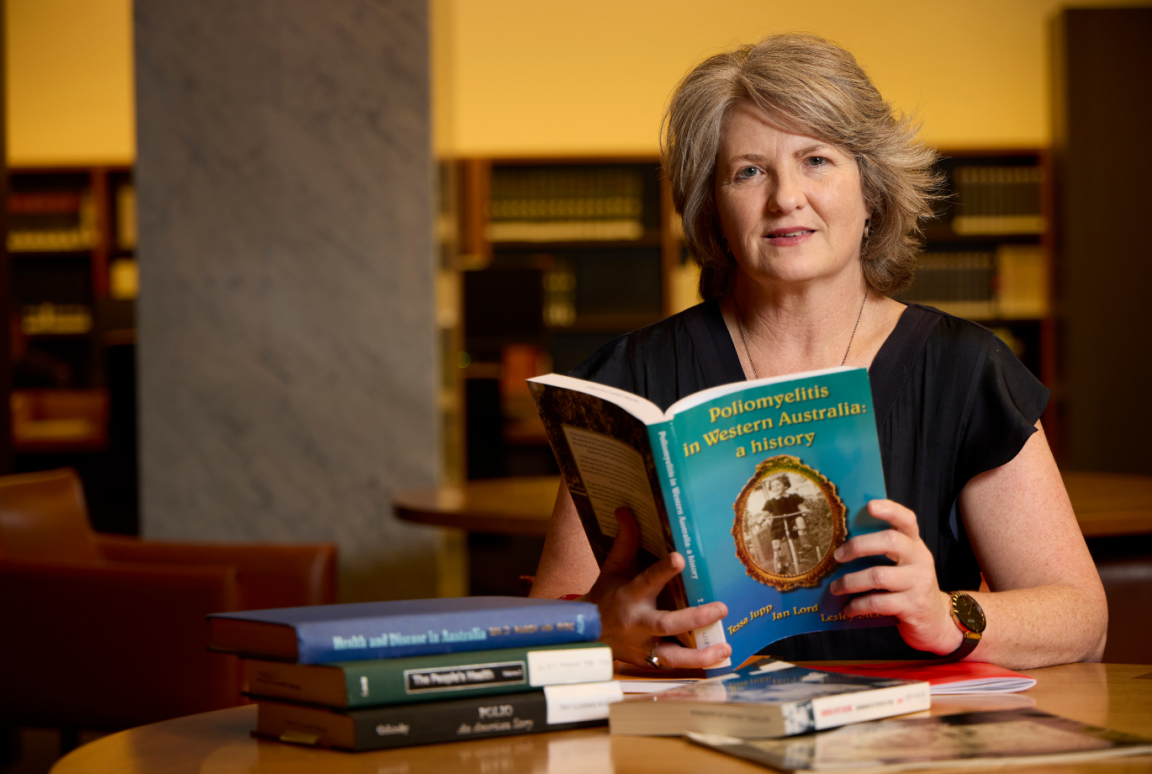
Professor Catharine Coleborne
Professor Catharine Coleborne

 Assistance animals welcome

 Hearing induction loop

 Wheelchair accessible
Visit us
Find our opening times, get directions, join a tour, or dine and shop with us.