

Indigenous Literacy Foundation: Strength in our stories
Presented in connection with the Wangka Wakaṉutja: The Story of the Papunya Literature Production Centre exhibition, this talk reflects on the role of books in connecting Aboriginal and Torres Strait Islander peoples with language, culture and stories.
Ben Bowen discussed the Indigenous Literacy Foundation’s Community-led commitment to creating and sharing books in First Languages, and the positive impact this work has for children, families and Communities.
Drawing on the idea of language cultivation in comparison to preservation, learn how living languages continue to grow when they are spoken, read, written and shared. Ben also shared the ILF programs that support Communities to create, publish and celebrate their own stories.
Indigenous Literacy Foundation: Strength in our stories
Rebecca Bateman:
Yuma veryone. Good evening. My name is Rebecca Bateman and I'm the Director of Indigenous Engagement here at the National Library. And it's my very great pleasure to welcome you all here tonight for this very special event and to welcome all the people from across Australia. I know there are quite a few of you joining in, so welcome online as well.
I'd like to begin by acknowledging the Ngunnawal people, the traditional custodians of the land that we meet on, learn and share tonight, and to the other Aboriginal peoples and families who have long and enduring connections with this country, this beautiful country.
I acknowledge that ongoing connection to the land and I pay my respects to elders past and present and through them to all Aboriginal and Torres Strait Islander people. I always like to extend that respect and acknowledgement also to the many, many nations, elders, communities whose knowledges and histories and languages and cultures reside in the four walls of the National Library of Australia that we are very privileged to be stewards of and do our very best to do, take very good, respectful, culturally informed care of those stories.
It gives me a great pleasure this evening to introduce Ben Bowen, the CEO of the Indigenous Literacy Foundation and a proud descendant of the Wiradjuri Nation with family links to the Gandangara, Dharawul and Yuin Nations. Ben's keynote this evening will explore the power of books, language, and storytelling to strengthen culture and community. He will discuss the ILF's community leading commitment to creating and sharing books in first languages and the positive impact this work has for connecting Aboriginal and Torres Strait Islander peoples with language, culture and stories.
As Aboriginal people, stories tell us who we are. Stories of our families, of our old people, and stories of our country.
They are how we strengthen and maintain and nurture our languages and keep our memories alive. Stories are how we process trauma and reflect on hard times. Yet, for Aboriginal people, stories are often very funny. You'll hear lots of laughter when black fellows are sitting around sharing yarns, even when they're sad ones, because for us, humour is resilience and stories are how we heal.
Stories and storytelling are so deeply important for everyone. Storytelling is an experience shared by human societies across time and space. And there is a reason for this. Stories expand our capacity to imagine, dream, and wonder. They hold memory, meaning, hope, and everything in between. Importantly, they expose us to ideas and experiences that enable us to understand the world we live in, our past, or a world that is yet to be. Storytelling is practised in many forms of course, but there is something uniquely special about books and seeing your own stories in your own language in written form so they can be shared and celebrated. Just as we have been celebrating some very special and beautiful stories in our latest exhibition, Wangka Wakaṉutja, the story of the Papunya Literature Production Centre.
Wangka Wakaṉutja tells a story of the Papunya community in the Northern Territory who between 1979 and 1990 wrote, illustrated, and printed more than 350 books for the children in their community so that they could learn and grow in Pintupi and [unclear] languages.
It is an incredible example of the power of storytelling by and for indigenous community. And we are thrilled to be presenting this evening with Ben and the ILF in connection with such an important exhibition. And there could be, of course, no better person to join us to talk about the power of storytelling and books than Ben. Ben has worked nationally and internationally collaborating with indigenous communities and government to create opportunities in education, health, and economic development. He has extensive experience in systems leadership and strategy. Since 2007, he has worked for and with, the First Nations people in the not-for-profit sector, building programmes, developing strategies, sourcing funding, collaborating with partners, and shaping thought leadership within the university sector. He's truly a man of many talents and ideas and stories. So please join me in welcoming Ben to the stage.
Ben Bowen:
Thank you for the warm introduction. I want to begin by acknowledging traditional custodians of the land which we gather and pay my full respects to the elders past and present. Acknowledge the Ngunnawal peoples, traditional custodians, Canberra, on whose land we're standing on today. And right now we have the most extraordinary exhibition of First Nation literacy and storytelling this country has ever seen free to everyone to visit. I'd like to acknowledge the sovereignty that has never been seeded and acknowledge that everything I'm going to talk about today, the books, the language, the story, the community, everything flows through the unbroken connections First Nations people have to country and to each other.
We're going to begin because I know I'm supposed to be talking about the ILF, but I couldn't go past this exhibition. So I'm going to be really talking and focusing on that exhibition tonight and then highlighting what we can do. But to start with this, I would love to start with a really simple question. What is a book?
If you ask most people, they would say that a book is a container of information, a way for storing and transmitting knowledge, a technology for recording what would otherwise be lost to time. And that is true, but it's not the whole truth. This evening, I'm going to ask you to come for the journey to challenge the way that we look, to go through multiple lenses, to see the more comprehensive truth that sits on the periphery that so much of us ignore.
Because of the most beautiful books in the world are not just the containers. They are the mirrors, the windows, the maps, and they are bridges. A mirror, because when we read a story in which we recognise ourselves and our community, our language, our world, we receive something that goes far deeper than the information. We receive recognition. We receive the message that we exist, that we matter, that our experience is real enough, significant enough, and worthy enough to be written down. A window, because when we read a story from a world different to our own, we are invited to understand, to empathise, to expand, to become larger, become less afraid of difference. A map because stories give us the coordinates of our culture. It shows us where we come from, what we value, how we are connected to each other, and how we are connected to the land.
Without story, community can lose its sense of self and where it exists. And a bridge because books connect generations. They allow grandmother to speak to a grandchild she may never know. They allow community to preserve its voice across time, across distance, and across disruption. But to mob, country is our mother. Our ancestors, our mirror, our connection. We find our voice in storytelling. The cultural sites that we are surrounded by this evening are our books. The library is not lost to time, but coded for the next generation to connect with. The technology of books and publishing culturally relevant material is not to replace country, but a roadmap to navigate us back to country, back to community, and a new window for us all to be invited to understand, empathise, expand, and become larger. To become less afraid of difference and embrace the opportunity of a new future.
A book is not just a container for knowledge. It is a vessel. A cultural artefact for identity. And when a community writes their own books in their own language and in their own world, they are doing something profound. They are saying, "We are here. We are always being here, and we intend to remain." This is what I want to talk about today, not literacy as a technical skill. Though it is that, and a critically important one, but literacy in its fullest, deepest sense as a mechanism by which community names themselves, knows themselves, and pass themselves forward, a tool for self-determination to no one's place in the world without seeking permission. Literacy is walking into a room knowing you are the oldest continuous culture in society in the world. And you stand on the shoulders of giants of thousands of generations. And I want to use, as my evidence, the most extraordinary examples I have ever encountered happening right now at the National Library of Australia in the form of the exhibition, and I will not say it as good as everyone else here, but Wangka Wakaṉutja, the story of the Papunya Literacy Production Centre.
Between 1979 and 1990, the remote Aboriginal community of Papunya in the Western desert of the NT, something happened that I think we should all know about, but most of us don't. A community built itself a publishing house. Not a corporation, not a government programme, though government did play a role through funding, as I'll come to. A community, a writers, artists, elders, mothers, children, literacy workers. People had grown up in a world where their language had no written form, who had survived policies designed to erase that language, who had been told explicitly and implicitly that the world they came from was passing away. Those people sat down together and said, no. Our stories are going to be written down. Our language is going to be a written language. Our children are going to see themselves on a page. And so they created the Papunya Literature Production Centre.
And over 11 years, guided by the elders, they produced more than 350 books.
350 books, stories of dreaming, stories of first contact with white Australians, including one elder's account of the first aeroplane that he ever saw. Stories of plants and animals. Stories of daily life, funny stories, scary stories, stories for children who had never seen a book written in their own language, featuring their landscape, their kinship, and their world. These were not academic texts. They were not produced for some distant audience or for some grand acquittal. They were produced for the children of Papunya to read in the school in a bilingual programme and then carried home and read again with their families. The co-curator, Priscilla Brown, and I've stolen a quote from her when she first came down and was reading the books. And she said, "I feel so proud when I read the stories to them." And they say, "Oh, that's really good. I love that story. Read it again. Read it again."
Read it again. Those four words are the most powerful evidence I know for what a book can do for a community. Not just literacy. Not just knowledge transfer, connection, pride, joy, the feeling of being seen. When a First Nations child picks up a book and finds their own language on the page, their own dreaming in the illustrations, their own family kind of stories in the words, they receive the message no curriculum objective can fully capture. And that message, you belong here. Your world is worth knowing. Your language is worth learning. Literacy for a community is not just about reading. It's about the recognition. It is about the right to exist in a written form. There is a phrase that I return to often from one of our aunties who used to tell me, and a long time before I understood it, that language is the shelter of being.
And trying to translate that into something more immediate and the more urgent is language is the house of culture. It is the structure in which a community's values, relationships, knowledge, and identity are held. When language is strong, culture is held. When language weakens, the house begins to crack. When language dies, the house falls.
Australia understood this. And this is why the policies of colonial period targeted language so deliberately and so brutally. Removing children from communities, forbidding them to speak the First Nation languages in schools created the conditions in which generations grew up unable to communicate with their grandparents. The attack on language was not incidental to the attack on culture. It was the same. The defence of language is not incidental to the defence of culture. That too is the same defence. The people of Papunya knew this in their bones. That is why their books are written in Pintupi [unclear], not in English.
That is why the elders guided what it was written and how. This is why the stories they chose to tell were the dreaming stories, the first contact stories, the stories of land and its creatures. The stories that held the deepest cultural knowledge. Because they understood that a book written in your language does something that a book in another language cannot do. It keeps the house standing. It passes the architecture of culture to the next generation in its original form, not in translation. And the illustrations painted by artists from the same community that in the preceding decade had produced the Western Desert Art Movement that shook the international art world. Those illustrations carried a second visual language. They operated in a parallel to the written word. The dot patterns, the figures, the landscapes. They were not decorating the texts. They are another text legible to a different kind of reader.
You can see in the exhibition, it is intentionally structured to put the language on equal footing, if not above English. It's those decisions that make for a demanding and beautiful experience in the exhibition that put the language as the heart. This is not accidental. It is itself a political statement about whose language belongs on the wall of a national institution.
That is what the Papunya Literature Production Centre did. It insisted that its language is a literary language and it has proved it. And in doing so, it gave communities something that is very hard to put a price on. The knowledge that layered language was capable of growth. That it could take on new forms. It could not be, it wasn't a remnant of a dying world. It is a living system expanding into new territory, producing new literature. That knowledge in itself is a form of cultural strength. We talk a lot about infrastructure in Australia. The roads, the hospitals, the schools, the broadband, the physical and digital systems that connect communities and make economic and social life possible. I want to argue story is an infrastructure.
Story is an infrastructure though through. Sorry. Story is the infrastructure through which community maintains its coherence across time. It is a system that transmits values from one generation to the next that teaches young people how to know how their community works and what it stands for. It gives people a shared reference point for navigating difficulty, but also celebrating the achievements. Every culture in human history has known this. Every culture has its stories, its storytellers, its mechanisms for passing on those stories. The forms change, whether it's oral, performance, song, visual art, written text, film, digital media, but the function remains the same. Story is how communities know themselves.
What the Papunya Literature Production Centre built was not just a publishing house. It was a piece of cultural infrastructure. It was a system for capturing the stories that had previously existed only in the memories of elders and passing them into a new form that could survive the loss of any one individual. Think about what that means for a community. When an elder dies without sharing their stories or them being recorded, those stories die with them. The knowledge of which plants treat which ailments, the name of the waterhole in the old language, and the dreaming story that explains how it exists. The law of every existence interaction over a timeframe that our minds cannot comprehend. The account of the first contact that a grandfather passed onto his son in the spoken word. Those things are not incidental to the life of community. They are the life of community.
When you write them down, when you illustrate them, when you record them, when you put them in a form that could be picked up by a child 40, 50, a hundred years later, you are not just preserving the past. You are building a future.
Story is not a luxury. It is not what communities do when the more important things are taken care of. Story is how communities survive. It is the infrastructure and the cultural continuality. And this brings me to something that I think is profoundly important and profoundly urgent. The infrastructure of cultural story for First Nations communities in Australia has systemically been underfunded, defunded, and in many cases actively destroyed by public policy for over two centuries. Bilingual education programme that made the Papunya Literature Production Centre possible was itself ended. The books went into boxes into a dark room. The programme that produced them was quietly wound back.
What was lost in that winding back was not merely an education programme. It was a piece of community infrastructure. And we are still living with those consequences.
But I want to pause here and talk about the word literacy because I think we use it too narrowly. And when we are that narrow, it costs us. When we say literacy, we tend to mean reading and writing, the words on the page, the ability to decode texts. And that matters to enormously. And I'll go back to the social and economic values of that. But the people of Papunya and the work of the Indigenous Literacy Foundation that follows them, we're not operating on that narrow definition. We are working with something much richer. We understood instinctively and practically that story travels in many vessels and that each vessel carries something different to the other.
There are many forms of literacy. The written story gives permanence. It extends the voice of the storyteller beyond their lifetime. It creates a possibility of reading, of encountering a mind across decades, a grandmother's voice in a grandchild's hand. The written books of the PLPC give future generations of Papunya children direct access to the words of their elders. But written story is not a blunt instrument, as it also forces precision. The act of writing a story down requires a storyteller to choose which words, in which order, with what emphasis and in what choosing. Culture is made explicit in new ways. Writing is not just recording. It's a form of thinking. The Papunya books are illustrated and the illustrations are not just decorations. They are meaning making in their own right. The artists who illustrated these books were from the same community that had in the previous decade transformed the ancient visual language of ceremony and sand drawing into the international recognised medium of Western art acrylic painting.
They brought the visual literacy to the page. The images of the books carrying cultural information that the written texts cannot fully contain. Knowledge of country, of dreaming, of relationships between figures and landscapes that require visual language to express. Visual literacy is not secondary form of knowing. For many communities and for all communities in the same context, it is our primary.
The books are written down to be read aloud. They were designed for a communal experience and sharing. A child curled in beside an adult. The words spoken as much as read. The story, a shared experience between many people. Oral storytelling is the oldest technology of cultural transmission in human history. It is also in many ways the most powerful because it embodied of what it embodies. It happens in relationship. The teller and the listener are present to each other. The story is not a fixed object, but a living event. The PLPC understood that the written and the oral literacies are not competitors. They reinforce each other. A written story that is read aloud is both, and it is more than either alone.
And then there is what we call cultural literacy. The ability to read the world and the community around you. To know the stories behind the landscape. To understand the kinship systems, the structures, the relationships, to read the signs of season change in the behaviour of animals and plants. To know who you are in relation to the land, the law, and the people around you. This is the oldest and deepest form of literacy. And it is what we get from a conservative estimate of over 65,000 years of continuous culture in Australia. And it is encoded, not exclusively, but primarily in the language and in story. The Papunya books include stories about plants, animals, ecological knowledge and land management paths through the dreaming. Knowledge of the Western science is only beginning to recognise as sophisticated environmental intelligence. When these stories are written down, that intelligence survives. When they are not, at risk being lost forever.
These four forms of literacy, written, visual, oral, and cultural are not four separate things. They are the four dimensions of a single capacity. The capacity to make and receive meaning in all the forms that meaning takes. When we invest in only one, we ignore the others. We are not investing in literacy. We are investing in a diminished version of it. The PLPC invested in all four. That is why what it has produced is so extraordinary. And I've been speaking about the power of books and story in terms of culture and identity. I want to now ground that in evidence because the case of investment in First Nation literacy and publishing is not just a cultural one. It is an economic and a health and a social one.
Literacy in all its forms is one of the most powerful determinants of life outcomes we have ever identified in research.
A single level of improvement in your literacy is associated with approximately 10% increase in your earning capacity. The difference between reading well and reading poorly over your lifetime can amount to tens of thousands of dollars.
Improved literacy increases employment likelihood, and it is up to 40% of the association between education employment attributed to your literacy skills. And we're not talking about your years at schooling. Literacy is directly linked to health outcomes. People with higher literacy navigate health systems more effectively, manage their chronic health conditions, make more informed decisions about themselves and their family wellbeing. For First Nations community, literacy in first language is the research validated pathway to strong English literacy. It is not a competitor. Children who develop strong literacy in their mother tongue acquire English literacy faster with better retention and stronger long-term outcomes.
A child accessing as little as 20 books has a lifelong literacy uptake. Cultural literacy, knowing your community, your story, your place is associated with a stronger mental health and social emotional wellbeing, reduced rates of youth disengagement, and a greater sense of community cohesion. But here is what the data can't fully cap Sure. And what the Papunya exhibition shows us in vivid human terms. Books do not just improve individual outcomes. They build community. When a community has books written in their own language featuring their own stories created by their own artists and writers, those books become part of the community. Shared reference. Children grow up with a common literary cultural outcome. Elders see their knowledge valued and preserved. Young people see a future for themselves as creators, not just consumers. Families have something to share with each other across the kitchen table, across generations, across the gap between what was nearly lost and what we might yet save.
Rosalyn Dixon, the co-creator of the exhibition, travelled from Papunya to the opening and stood in the halls of the National Library and said, "When we first came in, we saw all the pictures and stories. I nearly cried. I'm so proud to be here and see the exhibition. It is so special. It's special to me because I love stories and there's drawings." And then she thought about a 12 year old daughter back in Papunya. A 12 year old daughter. Books made between 1979 and 1990 are speaking directly to a child born in 2014. That is what cultural infrastructure does. That is what books do.
Books are not just for the generation that makes them. They are for every generation that comes after them. They connect every generation that comes before them. When a community invests in its own literature, it is investing in its identity and belonging of people who are not yet born.
Australia has been home to over 300 distinct languages and over 800 dialects before colonisation. Each of those languages was a complete and sophisticated system. Capable of poetry, philosophy, scientific precision, comic timing, expression of every dimension of the human experience. But a challenge exists around the low number of languages that are now strong enough to be learned as a first language. It is said that it only takes one generation to lose a language, but several generations to breed life back into it. Of the 250 or more languages that remain in some form in this country, majority of them are classified as endangered. That means that creating authentic First Nation language literacy resources, those created with and by the fluent speakers, will become increasingly more difficult in the near future.
Creating literacy resources with community is more important now than ever.
Every language that is lost takes with it a library of knowledge, wisdom, scientific advancement, and technology. We're not talking a metaphorical library, a literal one. The names of plants in a language that describe their properties in ways that have never been translated. Names of the stars and the relationship to seasons and hunting. The stories of the law that encodes the management of fire and water and land across specific countries. Ecological knowledge that Western science is only now beginning to explore and understand. And that can never fully reconstruct if that language that it's held in is gone. This is not only a loss for First Nations communities, it's a loss for Australia, and it's a loss for all humans.
And yet the policy response has been chronically inadequate. The bilingual education programme that made Papunya Literature Production Centre possible was ended. Language centres across the country have been significantly underfunded. The Australian government's indigenous languages and arts programme has a budget of $30 million in its entirety for the whole country. It is an amazing amount of money, but it's not enough. The need for investment in this space is enormous. This is the one reason why at the ILF, we are driven to work through donations and philanthropic to ensure that gap is met. The books from the PLPC survived almost by accident because the community had, as the Professor Vivian Johnson has said, a sense that there was something really special. When she opened a dark room in 2009 and she found boxes of books still intact nearly two decades after the programme ended, the survival was not guaranteed.
It was an act of community care. We cannot rely on accidents. We cannot rely on community care alone. When communities have been systemically denied the resources to care for their own cultural materials, we need community-led governance and leadership. We need policy. We need infrastructure and we need investment. And we need to understand clearly, urgently, that this is not a niche concern. It is not a cultural add-on for the real business of government.
The strength of First Nations communities, their health, their economic participation, their social cohesion is directly connected to the strength of their languages and their literacies. The connection is not antidotal. It is evidence. And the Papunya Literature Production Centre is one of the most powerful demonstrations of it in Australian history. And I want to speak directly now about what I believe this means for policy, for investment for all of us who care about the future of this country's cultural life.
The Papunya Literature Production Centre worked because it was community controlled. The elders guided the content. The community members were the writers, illustrators, and printers. The books were produced for and by people they were meant to serve. This is not a model to be romanticised. It required resourcing, technical support, and sustained policy commitment, but the model is right. First Nations owned and community controlled publishing infrastructure with adequate, sustained, non-competitive funding. It is one of the most cost-effective investments available for First Nations literacy, language preservation, and community wellbeing. The evidence is sitting in the National Library of Australia right now in those 350 extraordinary books. The research evidence for bilingual education. First language literacy as the foundation for strong English literacy. It is overwhelming the research, and it has been overwhelming for decades. The policy decision to wind back bilingual education programmes across the NT and elsewhere was not made on evidence.
It was made on ideology. And we know what it's cost us. Restoring, expanding bilingual education, supporting the publishing infrastructure that provides the culturally relevant materials it requires. This is not a radical proposal. It is based in evidence and it is what the evidence demands of us. Effective literacy investment in First Nations communities must address all four forms of literacy. As I described earlier, written, visual, oral, and cultural. Programmes that address only one written decoding and encoding. Only English literacy in its narrowest sense will constantly under-deliver because they ignore the cultural context in which literacy lives and grows. Programmes that are culturally grounded in the materials written in first language and bilingual formats that engage the elders, community, and knowledge holders as authorities rather than the beneficiaries. These programmes work. The evidence is clear. The Western Desert Art Movement, which emerged from the same community as Papunya Literature Production Centre, at the same time from the same dreaming traditions, is now globally recognised cultural marvel worth hundreds of millions of dollars annually.
The writers and the illustrators of the PLPC were in many cases the same people or the children or grandchildren or the same people who produced that art. First Nations literature deserves the same recognition. The books on display at the National Library are not supplementary educational materials. They are literature. They are art. They belong in every library, in every curriculum, in every cultural institution in this country. And they belong in the international conversation about what Australian literature is and can be.
We already know what First Nations visual culture can achieve when it's given that space. The support and the recognition it deserves. We have barely begun to see what the First Nations literature culture can achieve. Before I close, I want us to go back to where we began. What is a book? A book is a mirror, a window, a map, a bridge. For Priscilla Brown, books in Papunya Literature Production Centre are a mirror. She sees herself, her community, her language, her world. On those pages, she reads them to her grandchildren and she is proud. For a child in the school in suburban Sydney, Melbourne or Canberra who has never heard of Papunya, those books are a window. A window into a world that they never knew existed into a culture of extraordinary richness and sophistication into an Australian story they were never taught. For a young person in Papunya today, these books are a map showing them where they came from, what their elders valued and preserved, and what their community is capable of making.
And for all of us, for the country as a whole, these books are a bridge between the oldest continuous culture in human history and the present moment. Between what was nearly lost and what we might yet find. Between Australia we have been and the Australia we might become.
The story, as the exhibition's named, the story has been told. Those words are true. The story was told against all odds in a dark room by a community that refused to let its language be silenced. Those stories survived. There are communities across the country right now where elders are still alive, where languages are still spoken, where the stories have not yet been told, not being written down and not been illustrated, not yet been made into books that will carry them to the next generation. The question is not whether these stories are worth telling. The question is whether we as a society, as policy makers, funders and institutions will provide the conditions in which they can be told. The infrastructure, the investment, the sustained, humble, culturally ground support. Books change Papunya. They gave a community a language in its written form. They gave children literature of their own.
They gave elders a way to speak to grandchildren not yet born.
They gave the culture the durability it never had before. Not because culture is weak, but because the tools of durability have been withheld. We can ensure access to these tools. We can build the next Papunya Literature Production Centre and the one after that and the one after that. Invest in the literacy aspirations of First Nations communities around Australia. Build an Australian society where we all see each other, understand each other, and build a future to the benefit of all. The story has been told. Now let us make sure it never has to be recovered from a dark room again. Books do not just carry stories. They carry communities across time, across loss, across the distance between who we were and who we might become. Thank you.
Rebecca Bateman:
Thank you so much, Ben. We do have time for some questions. So if you would like to ask a question, pop your hand up and Lauren or. Pardon me, Sharon will come around with a microphone just so that the people at home can hear as well.
Audience member 1:
Thanks so much for the wonderful talk, Ben. It was very, very interesting. You decided not to talk much about ILF, but I think given everything you've just said, it would be really great for us to hear what the ILF is actually doing in this space. Yeah.
Ben Bowen:
Yeah. Look, we are purposely. Yeah. It's important for us because having the exhibition there, Papunya have done incredible work. I didn't want to muddy the waters and claim any expertise. And to be honest, we're talking about in the exhibition down there. The model that they did, what we're talking over 25 years ago now, we sort of do today. And people go, "Oh, you guys are innovative and so brilliant." Whether it's like, "We're following this mob that are bloody killing it." So it's part of the reason we do that. But look, the Indigenous Literacy Foundation, we are coming up to 20 years. We are servicing over 500 different communities around Australia. We delivered this year over a million books totally out to those communities. So we do large scale donations out to communities. We get about 150,000 books out to them. They're all culturally relevant. Over 60% of them now are Aboriginal and Torres Strait Islander creators.
We get those books into communities that are not just in schools. They're in healthcare systems, support services, land councils, anywhere that we will find our kids so that those kids have got ready access to books, which is something they haven't had in the past. A big driver for us now is mentoring programmes from that. So we work with young people not to teach them how to write books because the biggest challenge we do have at the ILF is turning a three-day yarn into a 20-page board book. It is incredibly hard of what we need to narrow down. So teaching Mob the skills to find that their voice in this new medium, which can be new to them. We're seeing that vastly quicken up at the moment. So we publish about 30 titles a year. We have now, I think off the top of my head, maybe about 380 books thereabouts we've published in about 47 different languages as well.
So we're doing a lot of that work. And we do mentoring programmes to get kids looking at where the literature can take them. So one of the most amazing things about reading, writing and the skills of literacy, as I said, is not just lifting those words off a page. It's about constructing knowledge. It's getting kids to understand the world that's around them, the opportunities that are around them, and how to partake in those opportunities as well, and have the confidence to put their hands up for things they deserve that they don't necessarily see.
Audience member 2:
Yuma, thank you for that. I have a similar-ish question, but it's more to do with indigenous languages that aren't currently spoken in communities. I come from the Gomeroi people and I know our language is there are people that use it and I've been studying it for the last couple of years at uni, which has been really amazing, but it's not something that's used every day out in community. And so I guess one thing that I've looked at with people, mob I've worked with up there is creating more of those resources like books. And I was just wondering, how does that fit in? How can that fit into the stuff you've been talking about? How can that fit into helping revitalise indigenous languages, particularly along our coastlines and in New South Wales?
Ben Bowen:
Yeah. Look, it's a really broad conversation there. We're talking about languages now. A lot of mob are lifting them off dictionary pages. A lot of those dictionary pages are not inaccurate, but they capture our version. So the example that we use for this is Djugun. So I'm Wiradjuri, but some bloodline into Sydney. And we talk about Djugun, that we have about 10 names of the Djugun, whether it's male, female, whether it's pregnant, whether it's got a calf with it that's milking, whether it's in shallow water, what season it is. So we tend to give one word to the dictionary because that's the easiest word that people could remember how to spell or say. But when we had the more complex system of those 10 words, soon as I hear the word that someone's used for Djugun, I know exactly my responsibility in that system, that I know the season, whether I can hunt it, whether it's off limits, all that sort of stuff.
So we've got to have a bigger conversation as mob. And this is what we're looking to do is go, we're at a point where we've looked at Aboriginal and Torres Strait Islander art has gone internationally, has been a huge boom industry. Literature should be on the same setting and we need to invest into lift it up. But at the same point, we don't need to start writing our stories for the world. We need to start writing our languages and stories for our young ones and bring people into that space. So there's a lot of tension that's going on in terms of how we do that. Even myself living in Sydney now, my kids, they speak some Wiradjuri, some Kamilaroi, because you're our Northern neighbour. They'll also speak some Dharug because that's where we're living down there. And I'll see my kids do things that we look at going code switching, where they'll use words, but they won't use the same language.
They'll use a word. And if you don't understand it, they'll go to a different language and do that. That is a huge superpower. We all go to Europe and we see the people that flip from French to Spanish and we all go, "Oh, how cultured are they?" We've got that in our backyard. Some of our kids are speaking 19, 20 languages before English. That is a huge superpower in their brain, their cognitive skills. So we want to start harvesting that. And look, writing it down is one way to do it because as we said in that talk, the work Papunya did is when you write down a story, it's not just recording a story. It's a critical thinking process to do that. That's the piece we need to get with our languages as well.
So look, it is hard. All I can ever say is speaking language is one of the most important things we can do to start with.
And then we can look at the written forms and bring that into books. The work we do at the ILF, it's a reason we use QR codes on all of our books so that we can have language at the top, English, either at the bottom or in the back page that people can read in English. But we also have QR codes where our young people can listen to the language and listen to their elders and engage in that oral language as well. The reason we do say that is the premise of language for us is for our ability to not only speak to country, but to speak to our ancestors. And if they can't understand us, we're breaking those chains as well. So we don't want our kids changing vowel sounds and losing the trildars and all those painful things we learn, which I know you're doing in Kamilaroi.
But those sort of things we need to get them back to in that uncomfortable piece as well.
Audience member 3:
Yeah. Is there any country that you would see as a model to aspire to where they're either reviving indigenous acreage or they're recording it in a way that is actually getting taken up to the extent you'd like to see it? Or are you the leader?
Ben Bowen:
Countries as in Australia or? Yeah, sorry.
Audience member 3:
In Australia
Ben Bowen:
Leader? Interesting thing. We all look to New Zealand for the amazing work they do. One of the biggest challenges they did was consolidating so many languages for one strong language. As we said, we lose libraries every time we do that. We lose knowledge. We sort of thought the other parts of the world were leading this. A couple of years ago we won the Astrid Lingrid Memorial Award and it became very apparent that the world's looking at what's happening in Australia. And we're not just talking about the ILF, but Magabala books, sharing stories, Fremantle Press, the imprints.
There's a lot of work that's gone into Australia that's doing this. We are just in the piece of working on the Ibi-UNESCO. It's a terrible name. It's the remarkable list of indigenous and endangered languages, books for kids or something. It's too long. Looking at that, and we've gone around the world to get a list of books together that is coming from that.
We're not seeing anyone's done it in particular. Everyone's doing things slightly different. It's a piece of work we're trying to do to consolidate that. So we work with SAMI quite heavily. In New Zealand, we work with them in Canada. We're working with indigenous mobs there to not tell them how to suck eggs, but sit there going, this is what we've tried, good, bad. They're giving us their models as well. And we're trying to figure our way through this because it's really hard because we've got to produce enough of an audience to make it commercial, but we've also got to keep enough integrity in that. So it's an interesting proposition. And we had the conversation today about children's books. If we were doing young adult or adult sort of level books, very hard to get that internationally. Children's books and picture books, they just go through everywhere in the world.
People can relate to them. They can pick it up. And what we're talking about with the visuals art in there, people can understand if they don't understand the language and they can find a way to engage. So yeah, there's no one who's done this really well. But look, in saying that, we're looking at interesting things that the book industry in the world. In Australia, we make up about one to 2% of the publishing, total publishing industry. In America, the First Nations publishing is a little bit bigger than us. It's closing on about $50 million a year turnover. So those markets are actively looking for indigenous content. So there is a really big moment in time that we're looking at going, this is the moment we need to get these books out there.
Audience member 4:
Hello.
Ben Bowen:
Oh sorry.
Audience member 4:
Thank you for your talk as well. I had a bit more of a technical short question, so please forgive me if you feel like you've already answered this. But you spoke a little bit about how you don't want to lose some of the phonemic qualities of language. So like the trills and the vowel assimilation, et cetera. I was just wondering to combat this, are you getting linguists and these kind of people into community to assist with translating these stories to the physical books? Or are you still having members of community write this and have their kind of transcriptions of how they believe the words should be spelled, et cetera?
Ben Bowen:
It's a bit of both. So previous years we used a lot of linguists. It's something that I've tried to reverse with the ILF to get money back towards the native speakers and the fluent speakers. So there's a concept that we're talking about that our languages are so tied to our worldview that it's very hard to translate. So one word, we need a paragraph to translate into English a lot of the time. So there's an example I used today as well. So apologies if other people have heard it. Growing up with my nan and her sisters, they used to play gini a lot and used to traumatise me with gini because I still don't understand the game and break out in sweats every time it comes, the cards come out. But when we used to make a mistake, there used to be a sentence that was [unclear] which means to be without ears.
So linguists will keep sitting there and you'll see in the dictionaries where they keep referring to there was a lot of people without ears. And you sit there going, "We know it's not right because we know in Western society, if I understand what you're telling me, I'll say, I see". That's pretty acceptable. In a lot of mob, we'll say we hear because hearing is a higher form of understanding for us in the worldview. So to say someone's without ears is meaning that without the context and not taking knowledge and contextualising that. So it's a form of saying. And I've heard an aunt say it when I was in Sydney where we were in a taxi and a driver was going mad. She called the car earless because she was saying he's not using the wing mirrors and not using context. So there's a danger in how we use linguists in that form that if they're not the right ones or they're not within the community and understand the cultural protocols, there's a risk in there.
So a lot of that we see good examples would be Kriol as well. So pronouns in Kriol, 'im' is an easy one. That can be him, Her, she, that. It's everyone, they. It's plural. There's beautiful sentences in Kriol that can be lost in that. So there was a really good example in the NT with Kriol where police have been interviewing people and people would say in Kriol, "I wanted to kill him." That was taken as a threat. But in language, it's kill him is the same as saying, "I just want to pump bash him or hit him." It's a different level. So there is a piece in the NT justice system now where they're going back with Kriol understanding to undo some of these judgments as well. So that's what we've got to be very, very careful of because our sentence structure is incredible. In English, we can really only say things in one way.
If we say we're walking to the cafe, that's all we can say. We can't say to the cafe too or anything like that. We're very limited. In our languages because of our prefix suffix systems and the way we identify transitive verbs, and we isolate that in a sentence, we could say to cafe, we can do anything we want. So having kids explore language like that, and that's something we're talking about, especially with young ones picking up Kamilaroi and Wiradjuri and those sort of languages again, is not getting them to focus on the language structure. It's getting to focus on the key words and understanding how those words work together. But that's what we're looking at as well going, the research shows us if kids master their first language, so they become proficient, they have almost like an 80% higher rate of picking up English literacy.
It is huge. But unfortunately in our communities, those kids start kindergarten and are forced in English only education and never get the chance to master their own language against all the evidence in the world. The reason it's so important is we're looking at the research that goes, any language mother tongue different to the primary language in a country. When those kids start school, they actually have a dip In their performance, and about the age of 12, 13 into high school, they actually catch up and surpass single language speakers because of the cognitive development of developing two languages. That's why all the private schools want their kids speaking Mandarin and French and everything because of the cognitive development. But when that happens, dual language speakers actually go past. Our kids in primary school have closed the gap, we've all heard it. Never going to catch up, never going to catch up.
They've been told they're out of the system by the time that should be kicking in. We want to focus on that language school, focus on their ability because if they can look at a sentence, and you've probably seen it when you do Kamilaroi, you can sit there and start picking out the transitive verbs and all the language structure and the objects and all that sort of stuff because you've got a comparison. That's where it helps our kids pick up language, which is a horrible language to learn. It's a really technical one. So these are the things we want to get in. So to your answer to that, linguists do have a role in here, but we want them to play a role to support community in their storytelling, not sort of lead community and lose that worldview.
Audience member 5:
Thank you for your talk, Ben. In what you've just been talking about now, it is really important that the children learn the proper way of saying the language. And that depends, I guess, on a teacher or an elder being available who has expertise in that. But I wondered, do you also make recordings of the language to go with those stories, which of course is a powerful way of teaching reading as well?
Ben Bowen:
Yeah, we do QR codes on all books so that you can do that. So a great example of what you're talking about is Bunuba in Fitzroy Crossing. So we did a book there. Bunuba only had estimated 20 speakers. We printed 2,000 copies of that book and everyone was like, "You're mad." We sold out of that book because of the bilingual nature, but because we recorded Bunuba on that. So June Oscar and Joe Ross did it for us. So that book then went into the school. Then the school was listening to the language in it, which then brought more kids in, which then brought more elders into the classroom, which basically solved the issue in Fitzroy, which is the issue all of our schools are going, how do we get more community into the classroom? So once the kids brought it in, because they could fluently speak the Bunuba because they'd been practising, then they were able to talk with the teachers and bring that sort of culture in.
So listening to language has got a powerful thing. And even going through the exhibition, and it's amazing to see the words all over the walls. It's powerful for us to see language, but to get to the animations at the far end of the thing and sit there and listen to language, the flow of it, the rhythm of it. And we talk about that sort of stuff going, language for us, it changes so much. So one thing, it's a small thing, but it's something that we pick up that in Sydney. Is there any people that surf here? I mean, I know it's Canberra, but probably random. But we have a concept of when the waves come in, they come in the sets of eight to 12. So when you see at Sydney languages, you'll see this pace that goes to it. When you go to somewhere like Tiwi that don't have the waves, that they have a constant sort of, their language's speed is totally different to our speeds because it's matched to environments.
So even listening to QR codes, we don't ask them to speak at a recording speed. We ask them to speak at the language speed that's normal for country. So a lot of the time, if we did it in sound studios, which is great, we lose the speed of the language because there's no country to dictate all those things. So that's what we're saying is going, literacy is so multidimensional and we need to explore it because it's powerful, like how we all do those sort of things. So anyone here, you can tell if you're feeling stressed and you talk really fast, if you then go to a spot where you've got water or a beach or anything like that, you slow down the way you speak. So we all do that. Language works that way for all of us, but it's powerful in terms of the way indigenous languages are used as well.
Audience member 6:
I'm just wondering whether it's useful to have YouTubes where you see somebody speaking on country and you can see the emotional content behind the words.
Ben Bowen:
Yeah, look, it's an interesting thing. We're at a time, obviously most of us would be aware of AI coming through in technology and harvesting and a lot of this stuff where we are talking a lot with community about where they want to do recordings, how they want to do that. It's why we do Indigenous Literacy Day the first Wednesday of every September has a video where we have language on country. It's really an important part, but it's also one of the risks that we have that eyes into a community, what gets harvested out? What is the risk on that sort of stuff? So it's a really interesting one. That's why these exhibitions and even the work you're doing, we're looking at that going, how we bring these collections together and support it with the infrastructure so we can make sure that people can engage with it the right way.
Because we do worry about. I had, I forget the book, it might've been 'No Way [unclear]' got read out by a Scandinavian influencer for us on YouTube. And it was terrible. They were just butchering words and making jokes and all that stuff. And you're sitting there going like, "Is that what we really want? Is that engagement or how do we encourage the engagement?" So we don't need rules. Community are very open and inviting to people, but it's like that mutual respect piece of how we do that. So it's something we are looking at. We used to hold a lot more video content, but people are pulling back a little bit from video. And we do one big video a year at the moment, but something I do want to have. So if you've got any tips for me, I'd love to get them.
Thank you.
Rebecca Bateman:
Unfortunately, we are out of time tonight. But thank you so much, Ben, for your incredibly insightful and reflective words and for reminding us among other things about the importance of thinking more broadly about what literacy is. I think that was a really important thing for me. We tend to think about literacy as, I guess, something that enables people to work, to function and manage in an English world, English speaking world. But we don't think enough about literacy as something that tethers us to our cultural identity, to our country, our old people, where we come from. And yes, Wangka Wakaṉutja does mean the story has been told and the story has been told. And it was a title that the Papunya community, the curators of the exhibition were very, very clear on watching for the exhibition and for the book in fact. And I think when they chose that title, they were thinking yes about the stories in the books and those stories have most definitely been told.
But more importantly to them, I think at this point in time, they're thinking about the story of the books and of what they had achieved out there in Papunya. And I think what you're saying, Ben, about the pride that Roslyn expressed, that's what it's all been about and that's what's been so very special for us to be part of that exhibition and to be part of telling that story now and on into the future in whatever form that may take. So please join with me once again in thanking Ben.
About Wangka Wakaṉutja: The Story of the Papunya Literature Production Centre
Wangka Wakaṉutja: The Story of the Papunya Literature Production Centre showcases material from beautifully illustrated books which were created by the community of Papunya in the Northern Territory between 1979 and 1990.
The community wrote, illustrated, and then printed more than 350 books for children in their own Pintupi and Luritja languages. The exhibition delights people of all ages with illustrated stories of first contact, Dreamings, community life, plants and animals and more.
Learn more about the exhibition
About Ben Bowen
Ben Bowen is the CEO of the Indigenous Literacy Foundation (ILF). He is a proud Aboriginal man, a descendent of the Wiradjuri Nation with family links to the Gandangara, Dharrawal and Yuin Nations. He was born and raised on the Gadigal and Wangal lands of the Sydney basin.
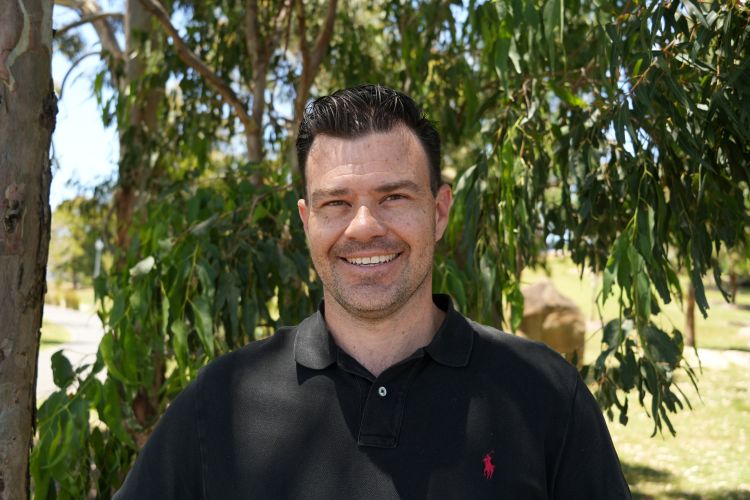
Ben Bowen
Ben has worked nationally and internationally, collaborating with both Indigenous Communities and government to create opportunities in education, health and economic development. He has extensive experience in systems leadership and strategy. Since 2007, he has worked for and with First Nations people in the not-for-profit sector, building programs, developing strategy, sourcing funding, collaborating with partners and shaping thought leadership within the university sector.
As a former professional athlete, Ben understands the power of teamwork and believes in leading from within the team, nurturing a sense of circular responsibility and accountability. He believes that we are lifelong learners and is passionate about early childhood education and the power of literacy.
This event is presented in partnership with the Indigenous Literacy Foundation.

 Assistance animals welcome

 Hearing induction loop

 Wheelchair accessible
Visit us
Find our opening times, get directions, join a tour, or dine and shop with us.