

Wangka Wakaṉutja: The Story of the Papunya Literature Production Centre

Wangka Wakaṉutja: The Story of the Papunya Literature Production Centre
Voiceover:
Papunya is a remote Aboriginal community 250kms north-west of Alice Springs. It’s famous for the desert painting movement that started there and as the home of the Warumpi Band.
Less well known is that between 1979 and 1990, Papunya’s writers, artists, elders, and literacy workers created hundreds of beautifully illustrated books at the Papunya Literature Production Centre.
These books hold accounts of moments of first contact, Dreaming stories, life in the community, plants, animals and more.
They were written and illustrated on Country, in the local language, and were produced for the school's bilingual program.
Our exhibition ‘Wangka Wakanutja: The Story of the Papunya Literature Production Centre’ opens at the National Library on the 4th of April.
Papunya is a remote Aboriginal community in the Western Desert region of the Northern Territory, and the birthplace of the internationally known Western Desert art movement.
Between 1979 and 1990, the Papunya Literature Production Centre (PLPC) produced hundreds of Pintupi-Luritja bilingual books guided by the community’s Elders, among them pioneers of the Western Desert Art movement.
The illustrated books were produced as literacy tools for local schoolchildren and tell stories of first contact, Dreamings, community life, plants, animals and more. Some are funny and wildly creative. Others are moving, dramatic and extraordinary.
‘Wangka Wakaṉutja’ is Pintupi-Luritja for ‘the story has been told’.
In the 10-year period the PLPC was operating, we received more than 350 readers under legal deposit provisions where they have remained in safekeeping.
The exhibition, Wangka Wakaṉutja: The Story of the Papunya Literature Production Centre, brings the readers to life and builds on a recent exhibition on show at the Library and Archives NT in Darwin. It features stories, drawings, photographs, manuscripts, ephemera and oral histories from the collections of the Papunya community, Papunya School, National Library of Australia, Australian National University, and other private collections.
The exhibition is curated by Karen McDonald, Roslyn Dixon, Kuḻaṯa Dennis Nelson, Priscilla Brown, Charlotte Phillipus, Vivien Johnson, Samantha Disbray, Dr Guy Hansen, Allister Mills and Loris Gulliver.
A landmark publication from NLA Publishing, also titled Wangka Wakaṉutja: The Story of the Papunya Literature Production Centre, will be released simultaneously with the exhibition opening. It shares the overarching story of this important Aboriginal literary movement, powered by collective creativity and cultural pride and the remarkable story of the books they made, from their creation and use to their loss and rediscovery. The book includes fully illustrated recreations of several Papunya readers in Pintupi-Luritja language.
Scroll down to learn more about the Pintupi-Luritja language, the book, and to head to Trove to read a selection of the Papunya readers online.
These stories are a small selection of hundreds created by Papunya authors and illustrators at the Papunya Literature Production Centre. They belong to the authors, their families, and the community of Papunya.
Exhibition highlights
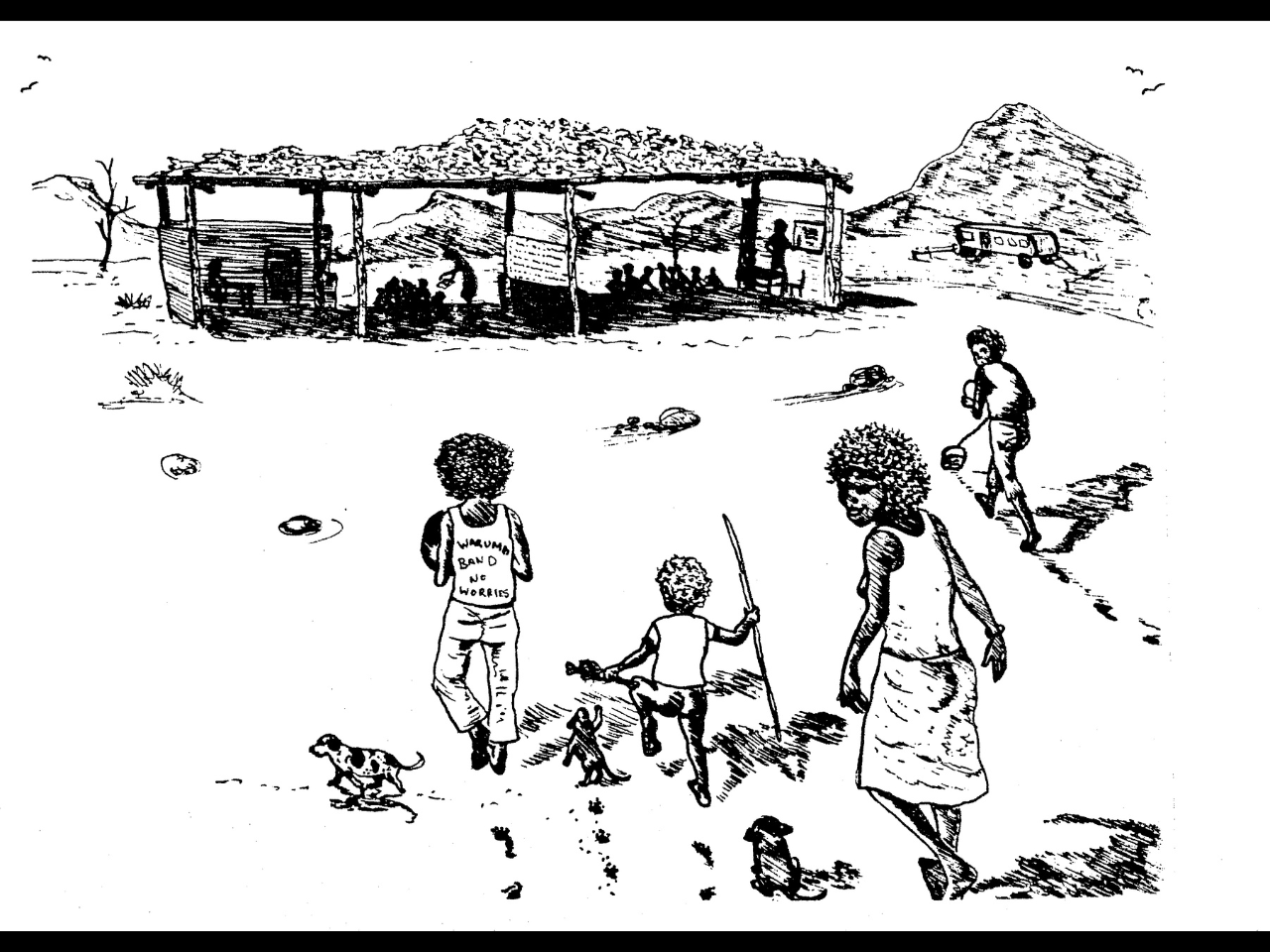
Thomas Stevens, Kantina, Kuula, Ngurra, 1985, nla.gov.au/nla.obj-3285322250
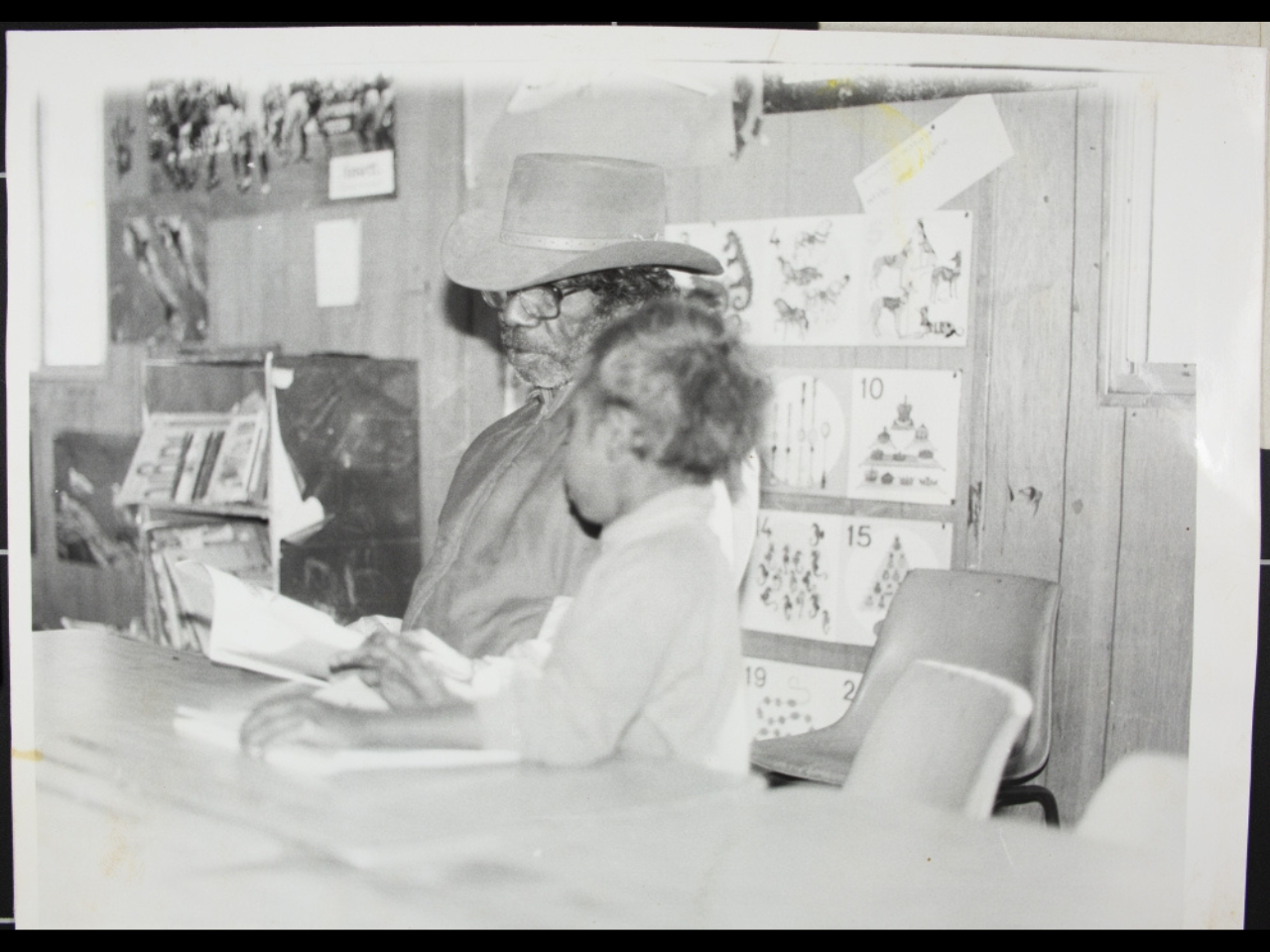
Murphy Roberts reading with children as part of the school’s ‘lap reading’ program, 1986, courtesy of the Papunya Literature Production Centre Archive
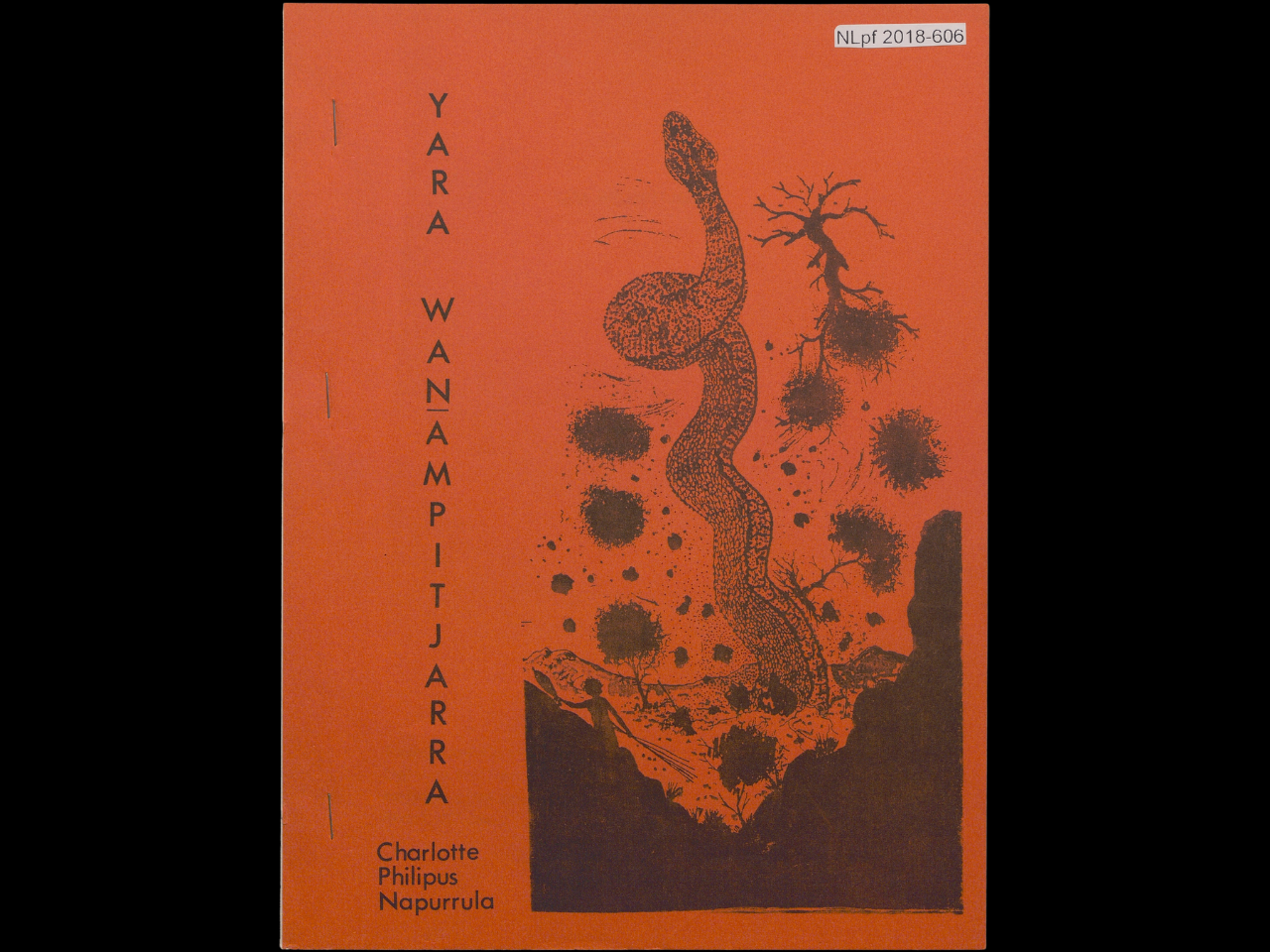
Charlotte Phillipus, Thomas Stevens and Papunya Literature Production Centre, Yara waṉampitjarra, 1984, nla.gov.au/nla.obj-3286274841
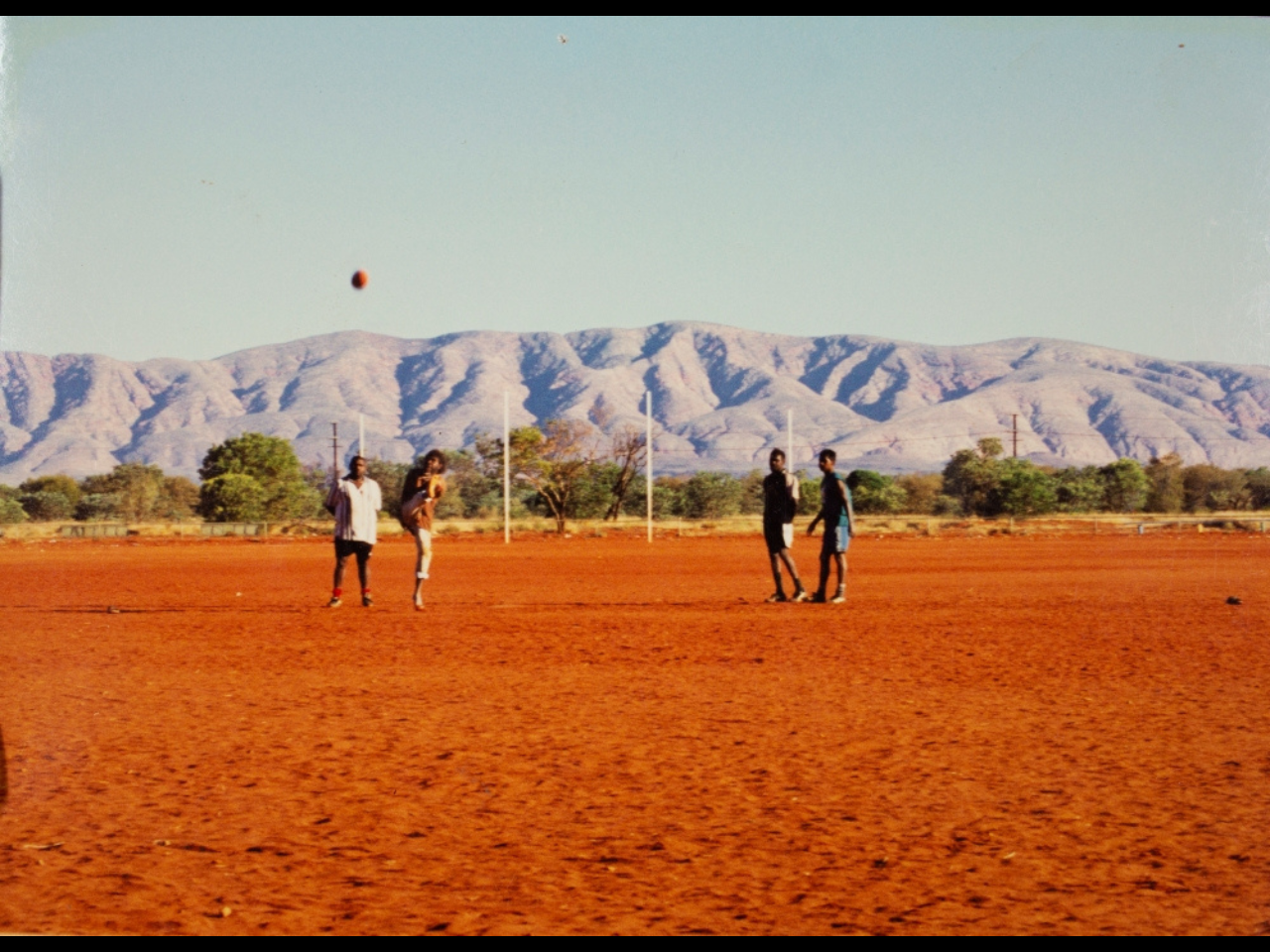
Football practice on the Theo Brown Oval, Papunya Hills behind, 1987, courtesy of the Papunya Literature Production Centre Archive
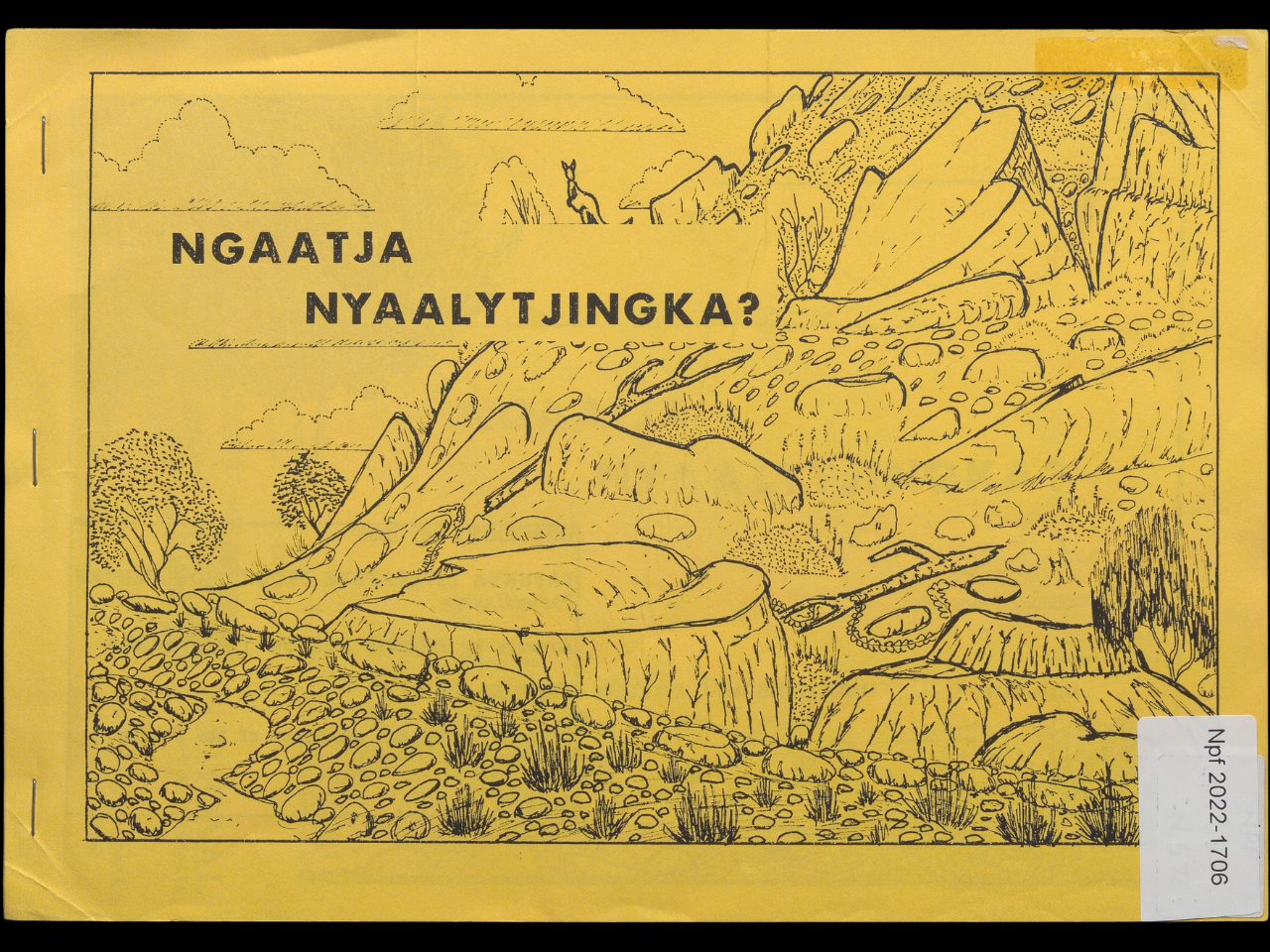
Kulata Dennis Nelson and Papunya Literature Production Centre, Ngaatja nyaalytjingka?, 1988, nla.gov.au/nla.obj-3285204701
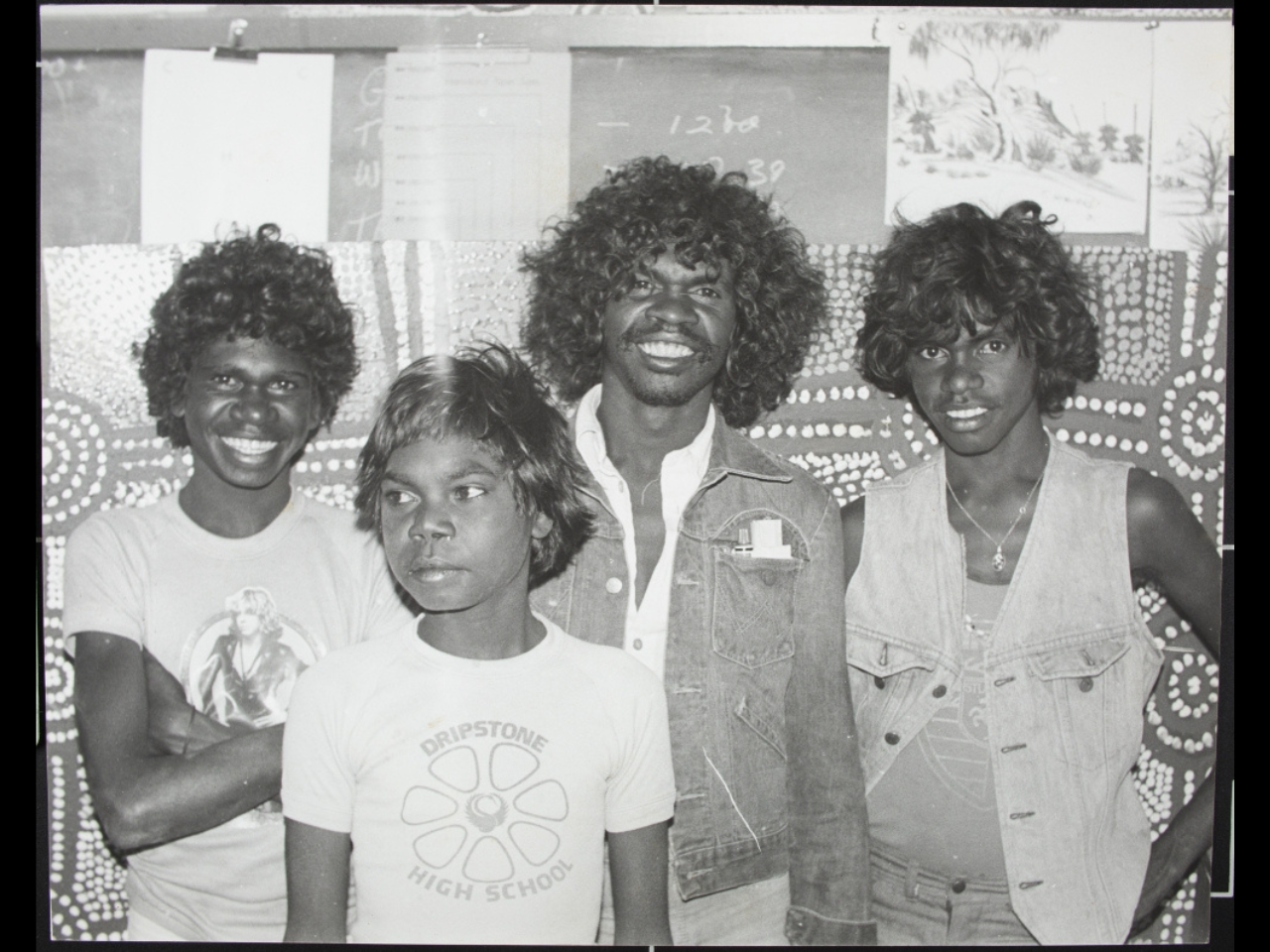
George Rrurrambu (second from right) with his brother Bruce Rrurrambu Burarrwanga and cousins Billy Rrurrambu Burarrwanga (left) and David Rrurrambu Burarrwanga (second from left) at Papunya, 1986, courtesy of the Papunya Literature Production Centre Archive
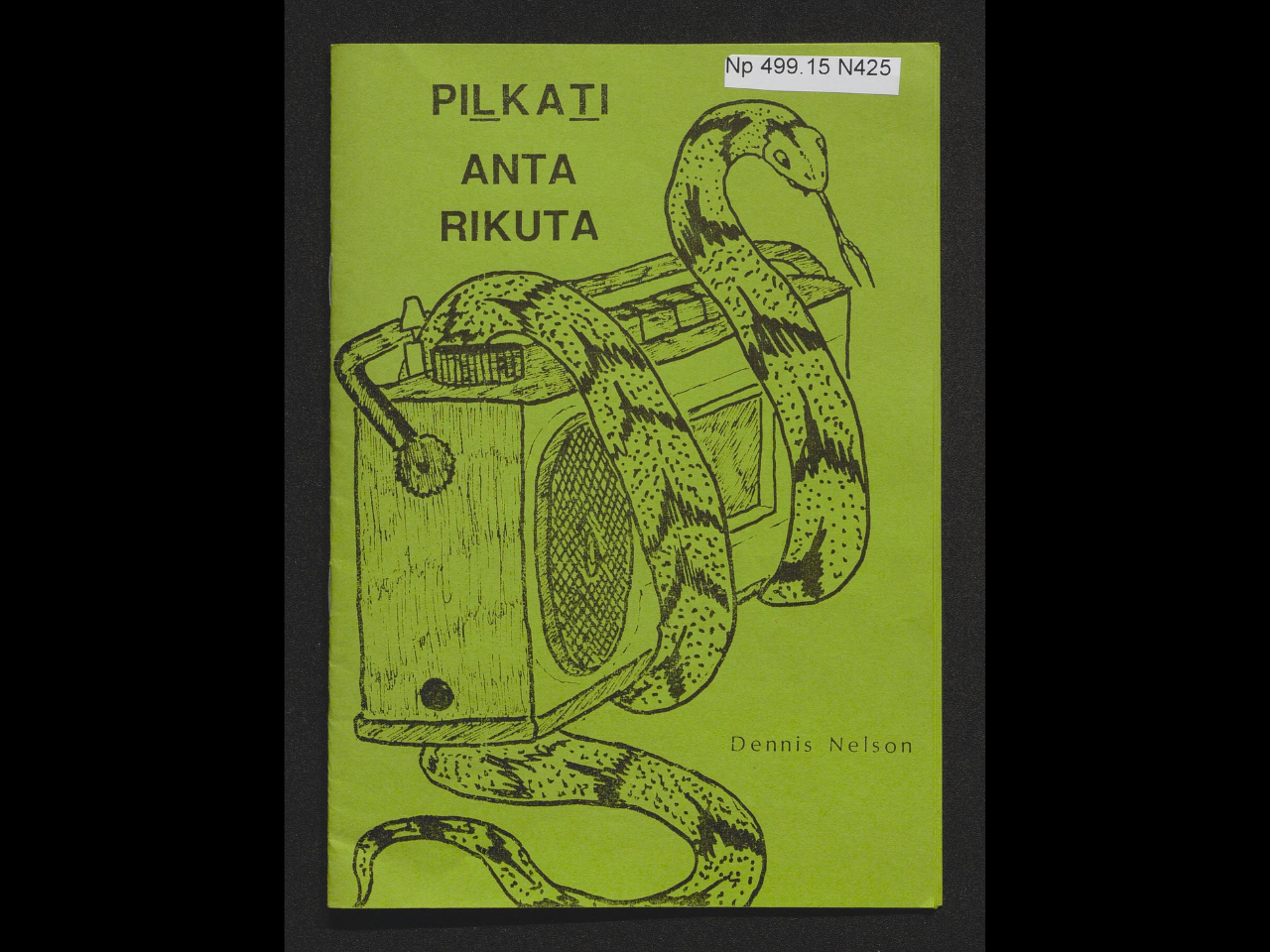
Kuḻaṯa Dennis Nelson and Papunya Literature Production Centre, Piḻkaṯi anta rikuta [The snake and the recorder], 1990, nla.obj-3286603500
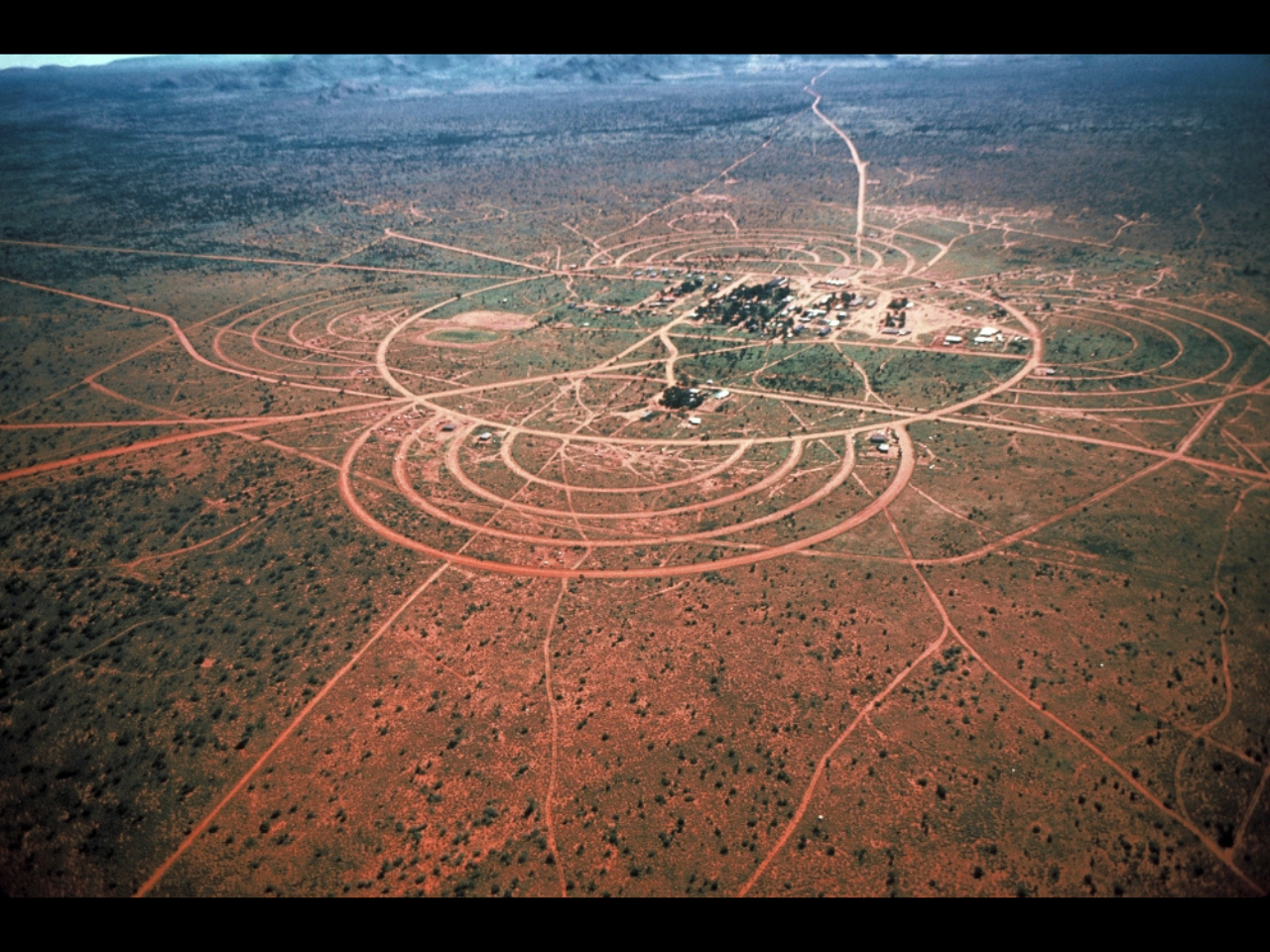
Max Stollznow, Aerial photograph of Papunya, c. 1976, courtesy of the photographer
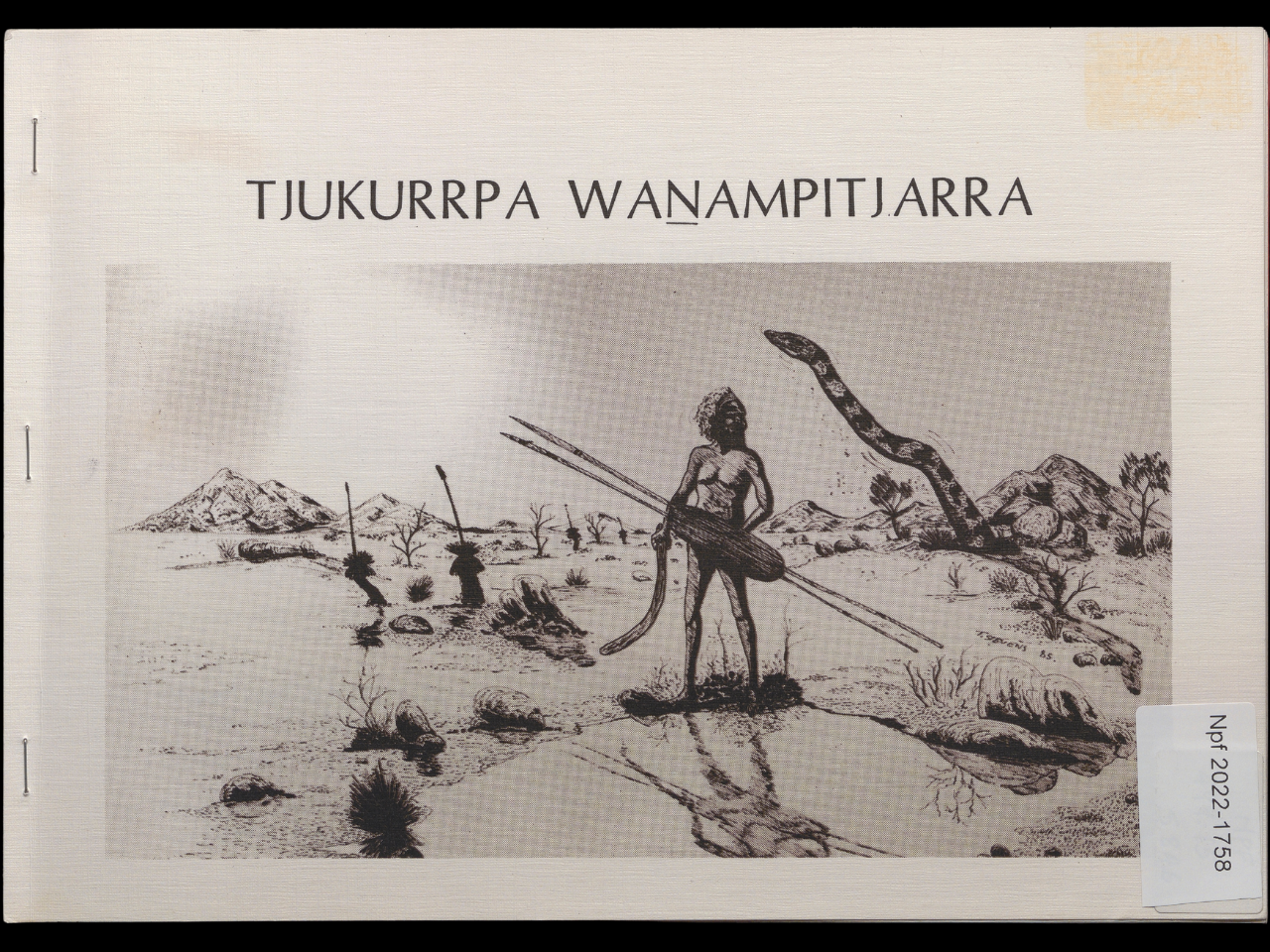
Thomas Stevens and Papunya Literature Production Centre, Tjukurrpa wanampitjarra, 1987, nla.gov.au/nla.obj-3286494931
Plan your visit


Continue your journey
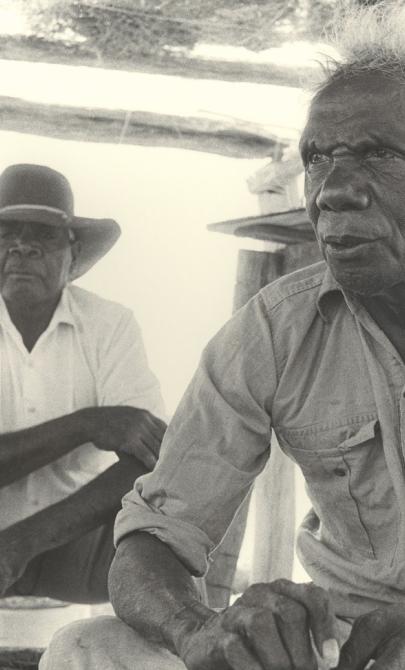
Michael Jensen, Vincent Lingiari at Wattie Creek [(Daguragu), Northern Territory] when they had water on tap, 1977, nla.gov.au/nla.obj-137086604


 Assistance animals welcome

 Quiet hours 9:00am - 11:00am

 Wheelchair accessible
Visit us
Find our opening times, get directions, join a tour, or dine and shop with us.