
Budgeting
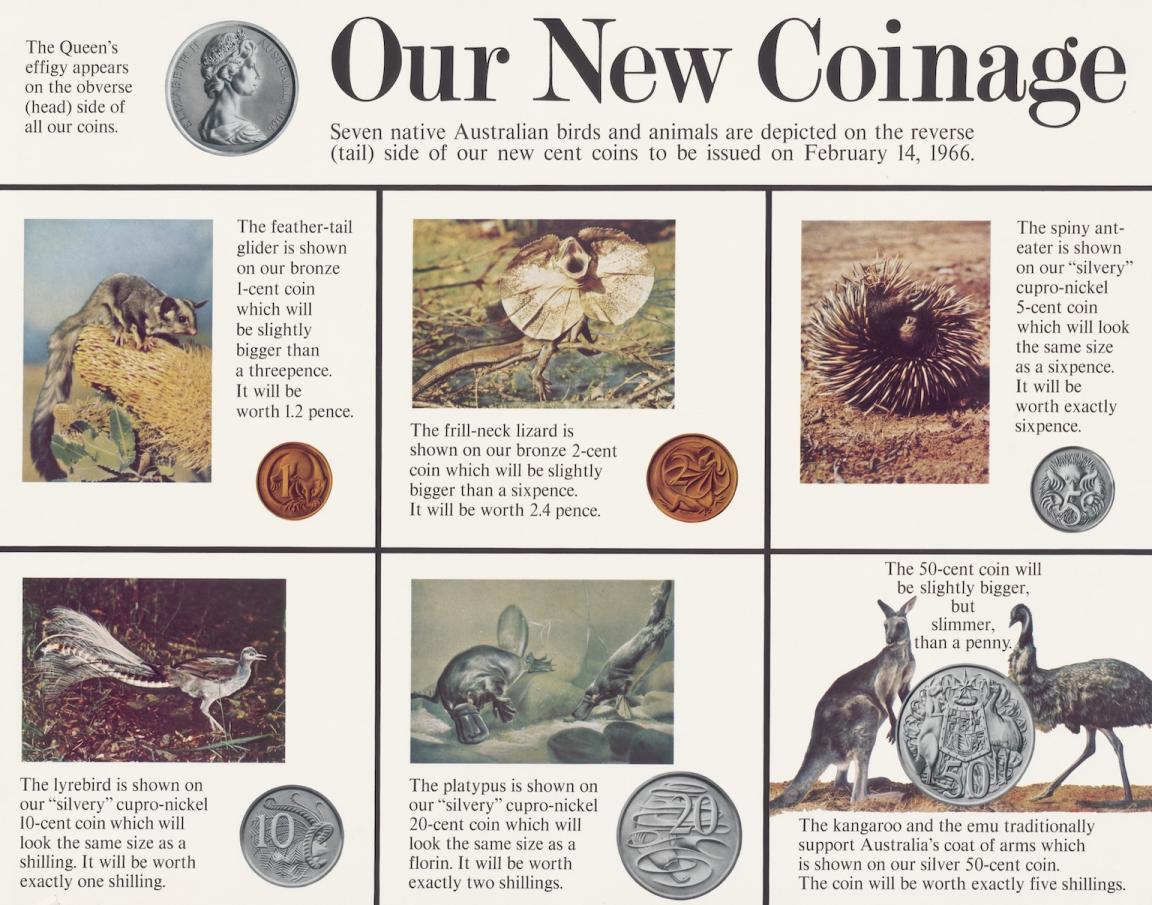
Our new coinage seven native Australian birds and animals are depicted on the reverse (tail) side of our coins to be issued on February 14, 1966, 1964, nla.gov.au/nla.obj-138391282
Our new coinage seven native Australian birds and animals are depicted on the reverse (tail) side of our coins to be issued on February 14, 1966, 1964, nla.gov.au/nla.obj-138391282
Decimal currency (dollars and cents) was formally introduced in Australia on 14 February 1966. Before that we used pounds and pence like the United Kingdom.
As the name suggests, decimal currency is a base 10 system, like the metric systems we use to measure distance and weight. Decimal currency was introduced to bring Australia into the system that was already being used by a majority of the world at the time.
As a base 10 system, decimal currency was much simpler to mentally calculate than pounds and pence, making it easier for Australians to engage in both new and existing commercial, business, government and international systems.
In the lead up to this day the government ran advertising campaigns to help members of the public become familiar and comfortable with our new money. We still use dollars and cents today, though some of our coins look a little different.
“What can I get for this much?”
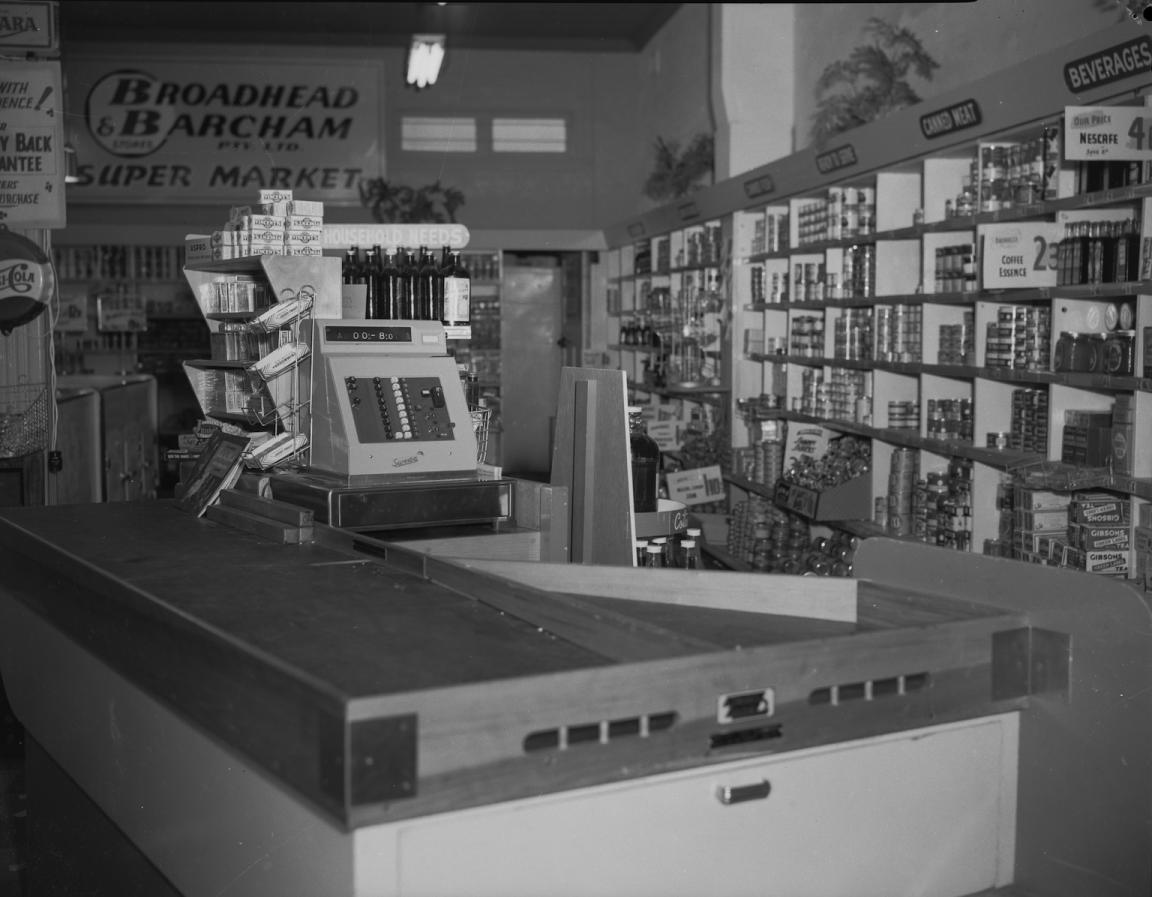
Newcastle Morning Herald and Miners' Advocate, Checkout area with cash register in a Broadhead & Barcham self service grocery store, Sydney, February 1957, nla.gov.au/nla.obj-464874872
Newcastle Morning Herald and Miners' Advocate, Checkout area with cash register in a Broadhead & Barcham self service grocery store, Sydney, February 1957, nla.gov.au/nla.obj-464874872
Activity 1
Give the class a budget of $20 (or whatever amount is appropriate) and distribute amongst the class catalogues from a variety of grocery stores.
Ask them to buy x number of different items.
Ask them if they could buy anything they wanted from the catalogue how much would it cost?
Cash for catering
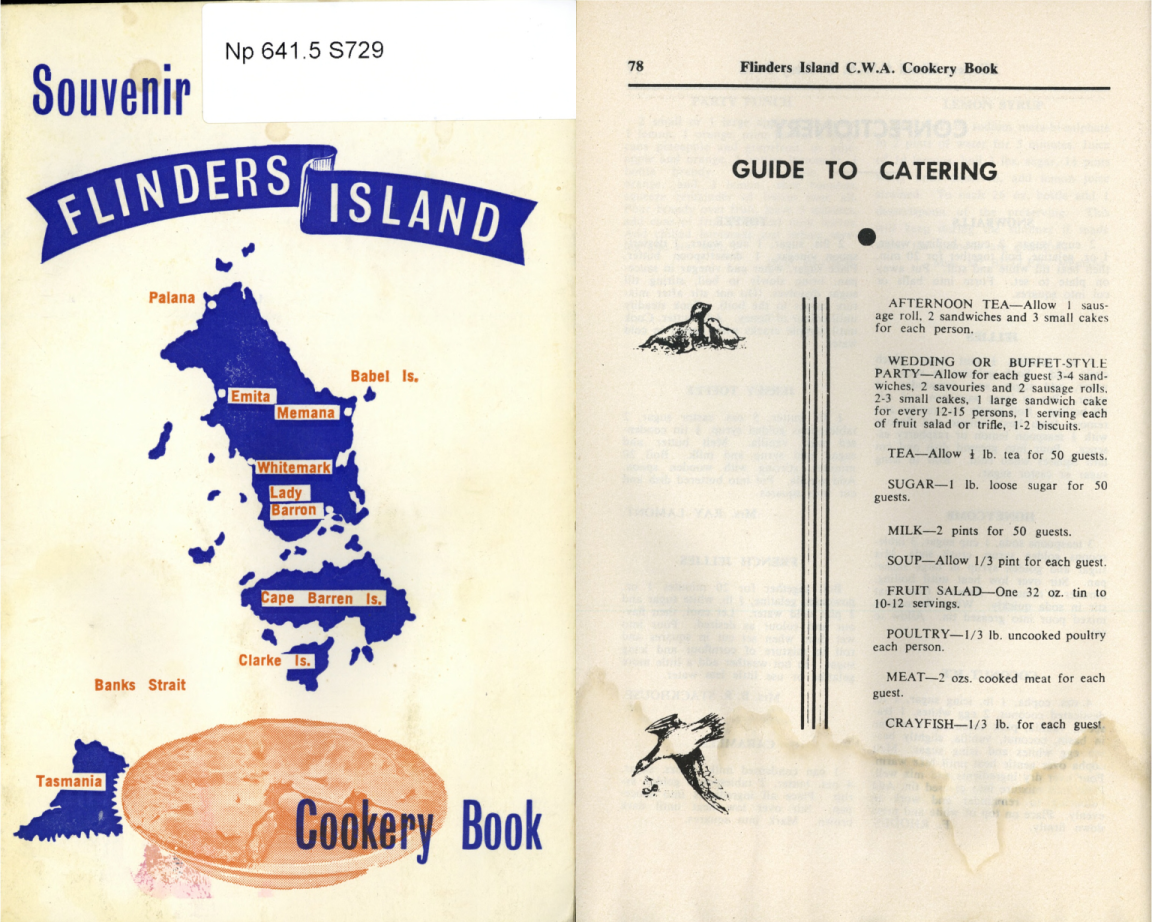
Country Women's Association in Tasmania. Flinders Island., Flinders Island : souvenir : cookery book, 1946, nla.gov.au/nla.obj-2531663107
Country Women's Association in Tasmania. Flinders Island., Flinders Island : souvenir : cookery book, 1946, nla.gov.au/nla.obj-2531663107
Activity 2
Bring back the catering guide from the Flinders Island CWA Cookery Book. Assign a price to the items on the list.
Give the students a range of scenarios based on number of guests, amount spent on food, and a budget.
Ask them to create a menu for a certain number of guests based on the catering guide.
- How much will this cost?
- How much is the cost per guest?
More to explore