Digital Classroom | National Library of Australia (NLA)

Digital Classroom

Explore Australia's history at the National Library's Digital Classroom, aligned with the Australian Curriculum. With over 10 million items, we support diverse learning styles, fostering inquiry-based learning for students to analyse sources and draw conclusions about the Australian story.
Showing 1 - 12 of 48 results
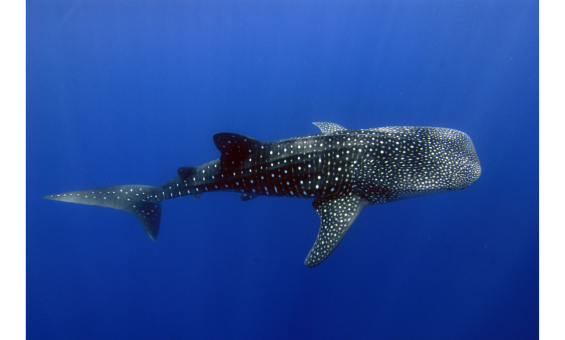
A photograph of a Whale Shark (black with white spots), swimming underwater, Copyright Commonwealth of Australia (Reef Authority).
K. Hoppen, Whale Shark, 2008. Copyright Commonwealth of Australia (Reef Authority).

Using science research to aid conservation

Topic
This topic uses an oral history interview with Bradley Norman talk about his research into Whale Sharks, particularly in reference to observations, data and evidence.

Science
Year 3
Year 4
Year 5
Year 6
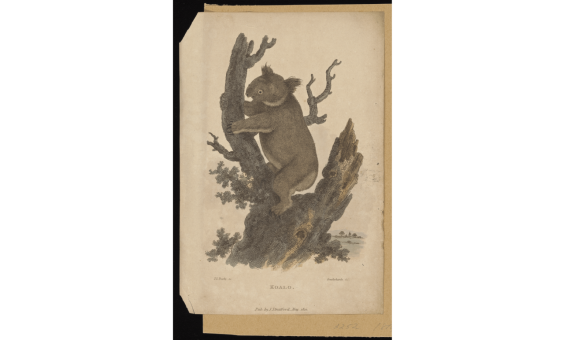
A hand drawn and colourised image of a koala hugging a tree branch from 1810.

Thomas Lord Busby and Isaac Cruikshank, Koalo [i.e. koala], 1810. nla.gov.au/nla.obj-133278770
Comparing early European illustrations of Australian fauna

Topic
This topic explores the early documentation of Australia’s unique flora and fauna.

Science
Year 3
Year 4
Year 5
Year 6
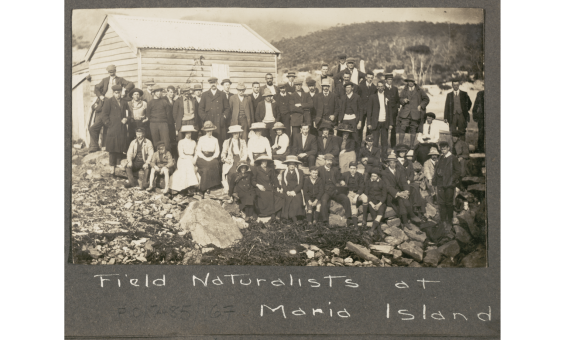
A black and white photo of a large group of men, women and children from a Tasmanian field expedition in 1912.

E.W Searle, Field naturalists at Maria Island, 1912 [Tasmania], 1912. http://nla.gov.au/nla.obj-142164875
Naturalist observations and citizen science

Topic
This topic explores the contribution of citizen science to scientific studies.

Science
Year 3
Year 4
Year 5
Year 6
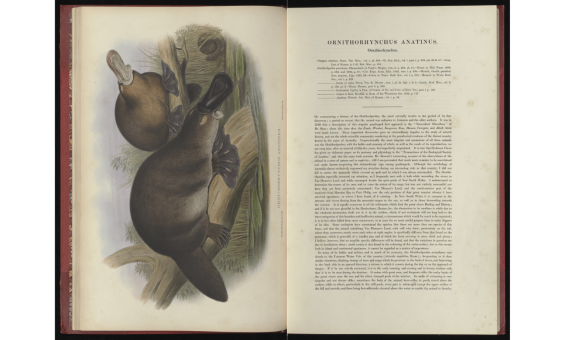
An image of an open book, with the left page featuring a full-page hand drawn colour image of two platypus from 1863 and the right page featuring a large block of text.

John Gould and Henry Constantine Richter, The mammals of Australia, 1863. http://nla.gov.au/nla.obj-2334463667
The Platypus Mystery

Topic
This topic encourages students to research why European naturalists and scientists first thought the platypus was a faked animal.

Science
Year 3
Year 4
Year 5
Year 6
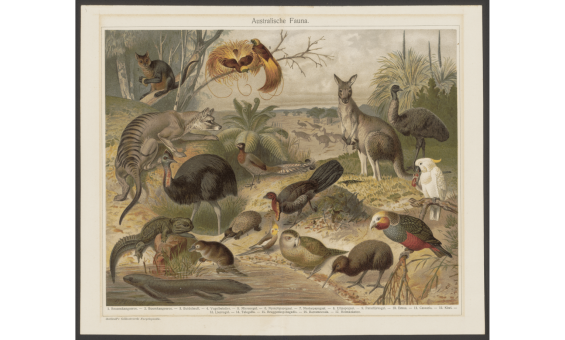
A hand drawn, colourised image of seventeen Australian animals including fish, lizards, birds and mammals from the early 1880s.

Gustav Mutzel, Australische fauna, c1880s. https://nla.gov.au/nla.obj-136360975
First Australians’ contributions to early Australian science

Topic
This topic encourages students to connect with local First Australians groups to explore traditional knowledge of flora and fauna.

Science
Year 3
Year 4
Year 5
Year 6
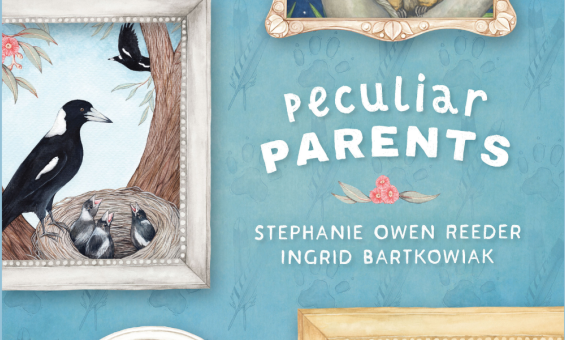
Cover for 'Peculiar Parents' by Stephanie Owen Reeder and illustrated by Ingrid Bartkowiak, featuring illustrations of framed animal pictures on a blue background
Peculiar Parents – Nature and the Development of Science

Module
This Digital Classroom module encourages students to dive into the science behind Australia’s peculiar fauna. Aligned with Australian Curriculum: Science and Humanities and Social Sciences for Year Three to Six students, this module encourages students to develop their understanding of how scientific research development and technologies has helped aid our understanding and ability to protect unique Australian fauna.

Science
Year 3
Year 4
Year 5
Year 6
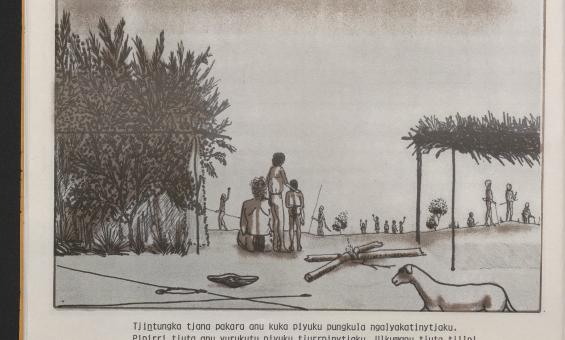
Page from 'maamangku mgurriningi palumpa yuntalpaku', line art depicting a group of three watching community

Sabrina Ferguson Nakamarra, Dennis Nelson and Papunya Literature Production Centre, Maamangku ngurriningi palumpa yuntalpaku, 1987, nla.gov.au/nla.obj-3285693260
Family, care, and responsibility

Topic
Family, kinship, care, responsibility

Arts
English
Humanities
Year 4
Year 5
Year 6
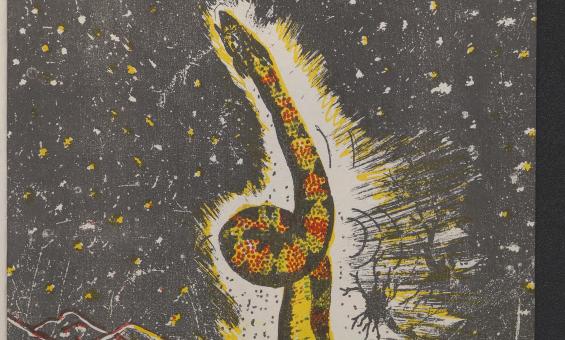
A black snake, with red and yellow snake emerging from the darkness a white and yellow glow surrounding it

Charlotte Phillipus Nupurrula, Thomas Stevens Tjapangati and Papunya Literature Production Centre, Yara waṉampitjarra, 1984, nla.gov.au/nla.obj-3286350047
Reading the Papunya Readers – themes and purposes

Topic
What stories do, and why they exist.

Arts
English
Humanities
Year 4
Year 5
Year 6
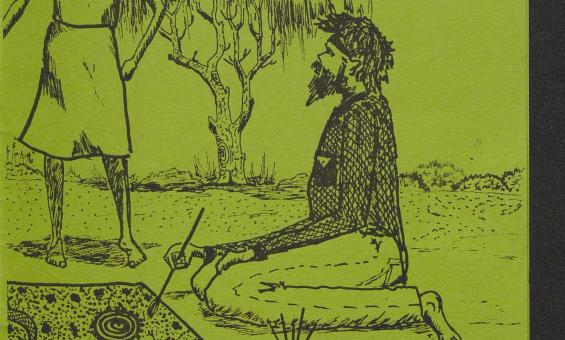
Green book cover, with a kneeling man painting, someone is talking to him, book is titled Palulanguru kungka ngalyankula wangkangu tjilpi palumpakutu

Kuḻaṯa Dennis Nelson and Papunya Literature Production Centre, Piḻkaṯi anta rikuta [The snake and the recorder], 1990, nla.gov.au/nla.obj-3286644847

Storytelling ways: oral, written, visual

Topic
How stories are shared and remembered.

Arts
English
Humanities
Year 4
Year 5
Year 6
Orange cover titled Rumiyakamu Lungkata

Charlotte Phillipus Nupurrula, Abraham Stockman Tjungarrayi and Papunya Literature Production Centre, Rumiyakamu lungkaṯa, 1987, nla.gov.au/nla.obj-3285463123

Papunya, Country, and Community

Topic
Focus: place, people, languages, everyday life 

Arts
English
Humanities
Year 4
Year 5
Year 6
Red text reading 'Wangka Wakanutja' on a yellow background
Wangka Wakanutja – The Papunya Readers

Module
This Digital Classroom module invites students and teachers to explore the Papunya readers. Aligned with the Australian Curriculum: HASS, English and The Arts and the Aboriginal and Torres Strait Islander Histories and Cultures cross-curriculum priority, this resource encourages students to learn about Country, language, storytelling and the purposes stories serve.

Arts
English
Humanities
Year 4
Year 5
Year 6
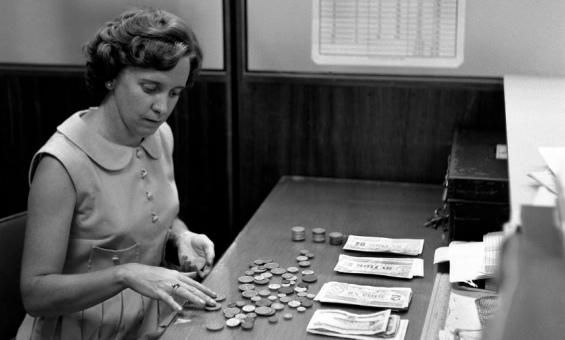
Black and white photo of a young woman counting coins and notes at a desk.

Ern McQuillan & Mike McQuillan, Waltons city department store employee being trained for the introduction of decimal currency, Sydney, 17 January, 1966, nla.gov.au/nla.obj-138111466

Budgeting

Topic

Decimal currency (dollars and cents) was formally introduced in Australia on 14 February 1966.

Mathematics
Year 3
Year 4

Need help?

Our librarians are here to guide you.

Ask a librarian