
Comparing early European illustrations of Australian fauna
Early European explorers of the 1700s and 1800s often wrote detailed journals, diaries and letters of their travels, describing the strange new landscape, flora and fauna of Australia. They saw these unique creatures through European eyes, depicting and often naming them based on the animals they were familiar with—for example, bears for koalas, porcupine anteater for echidnas and beavers or water moles for platypuses.
As settlement and exploration continued, so did the work of naturalists in documenting, painting and cataloguing Australian plants and animals, often taking specimens home overseas for further study. As science progressed, zoological studies became more specialised, focusing on gathering more information such as mating behaviours, shelters, food sources and classifying these animals into specific families and categories such as mammals, birds, amphibians, reptiles and fish.
Early recordings of Australian animals
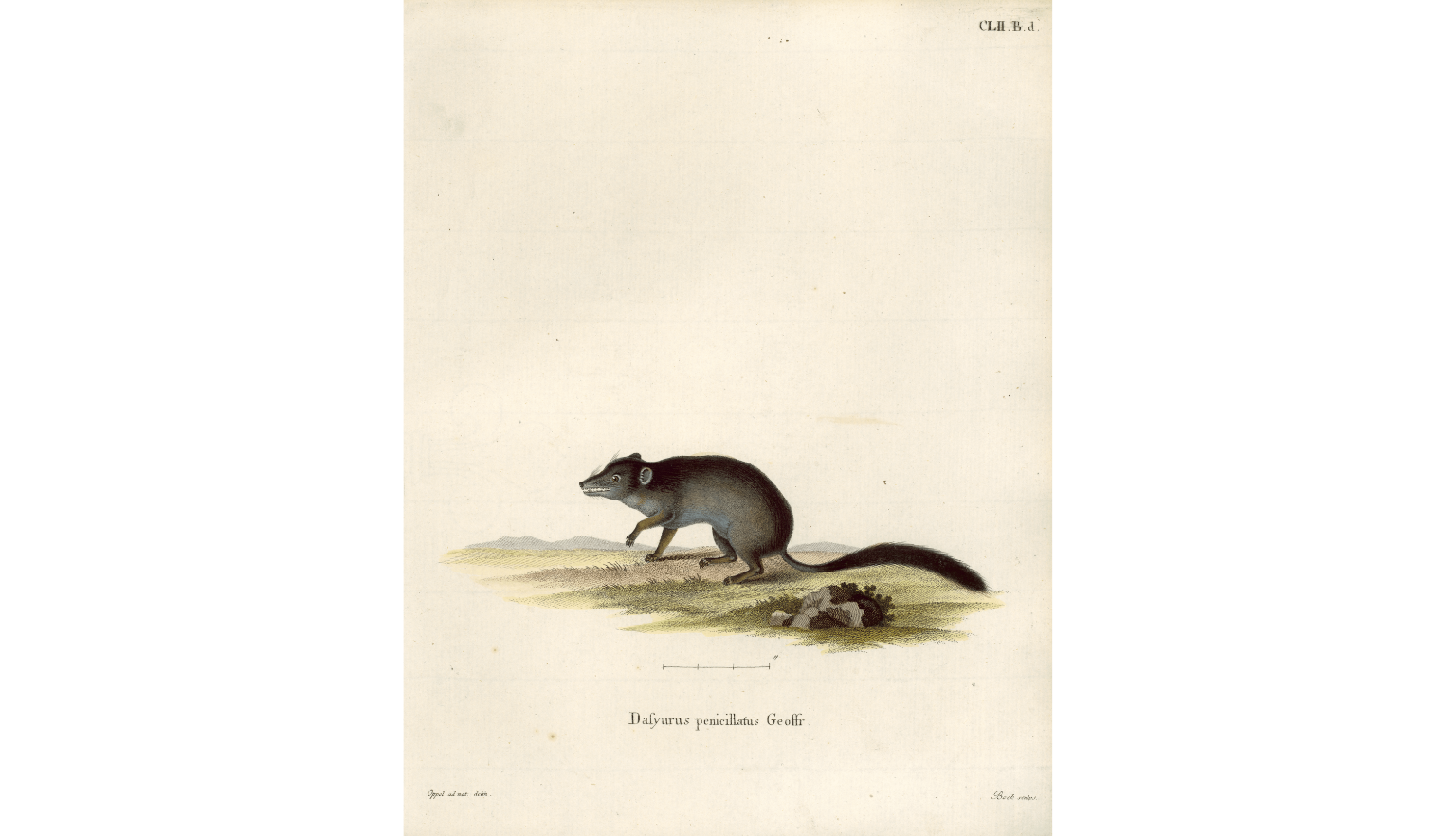
F.C. Brock & Oppel, Dasyurus penicillatus Geoffr [now known as Phascogale tapoatafa (Meyer, 1793), common name brush-tailed phascogale], 1830. nla.gov.au/nla.obj-146236366
F.C. Brock & Oppel, Dasyurus penicillatus Geoffr [now known as Phascogale tapoatafa (Meyer, 1793), common name brush-tailed phascogale], 1830. nla.gov.au/nla.obj-146236366
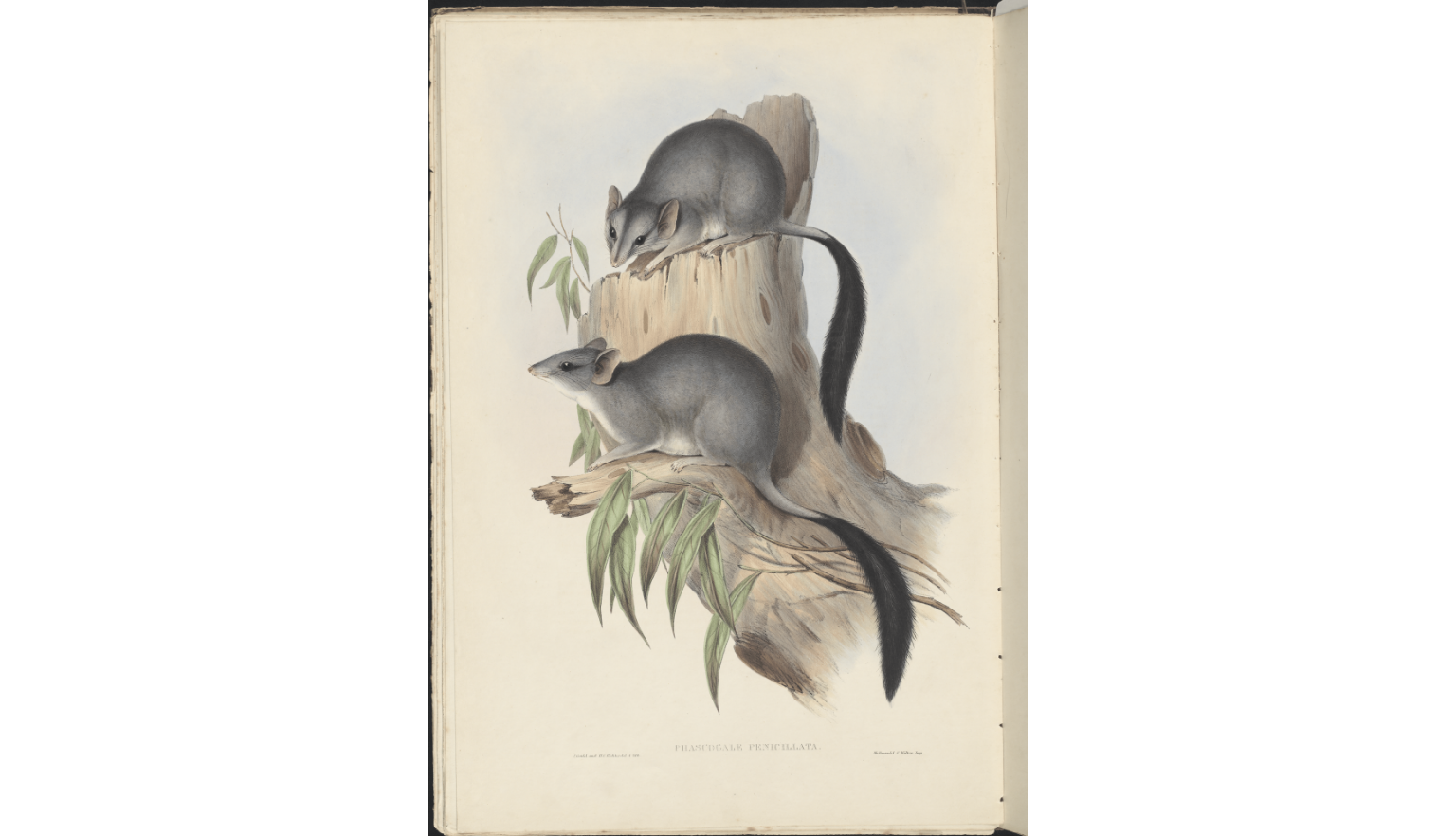
Henry Constantine Richter & John Gould, Phascogale penicillata, 1845, nla.gov.au/nla.obj-136175787
Henry Constantine Richter & John Gould, Phascogale penicillata, 1845, nla.gov.au/nla.obj-136175787
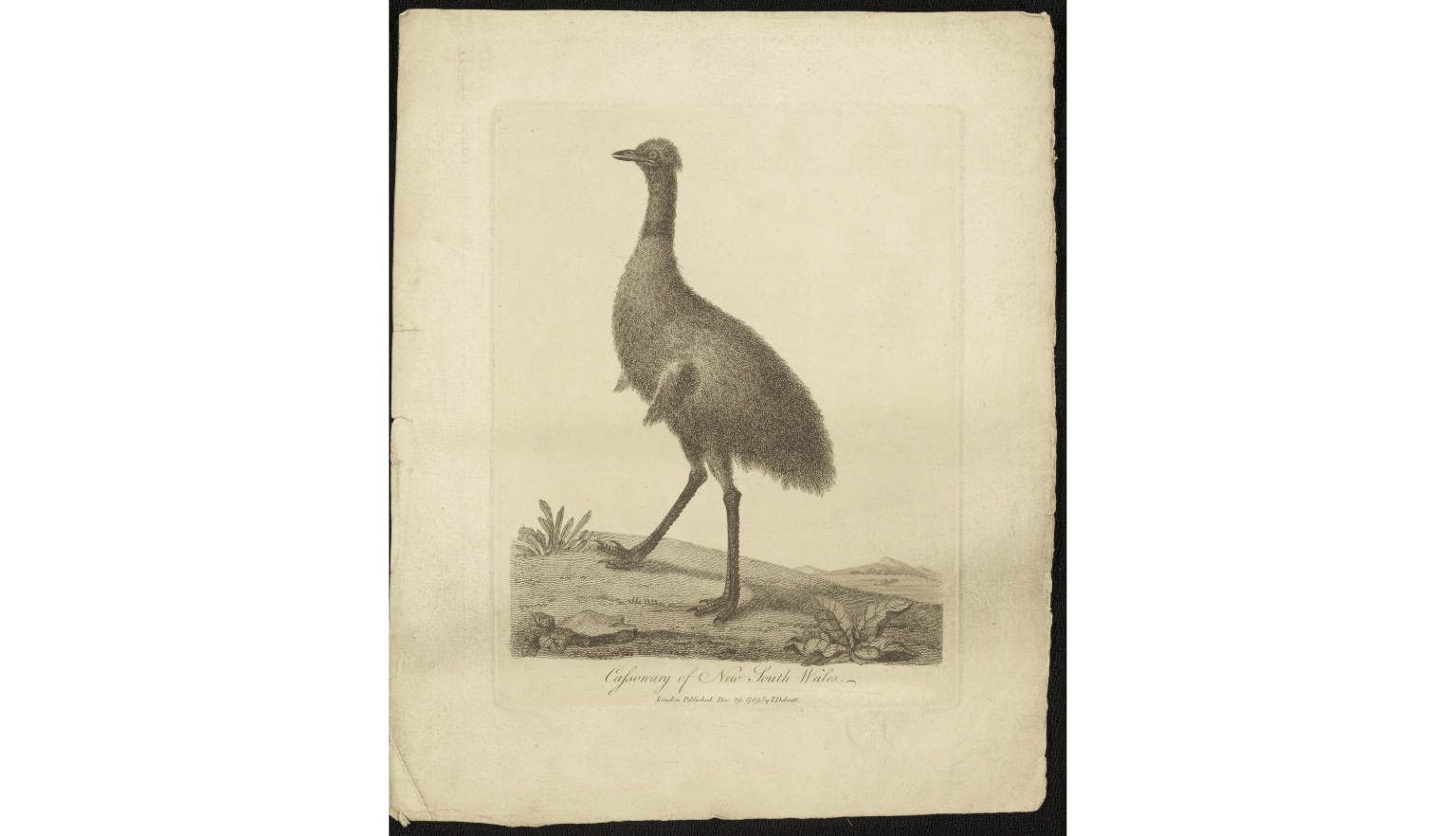
Cassowary of New South Wales, 1789, Published by J. Debrett, nla.gov.au/nla.obj-136201651
Cassowary of New South Wales, 1789, Published by J. Debrett, nla.gov.au/nla.obj-136201651
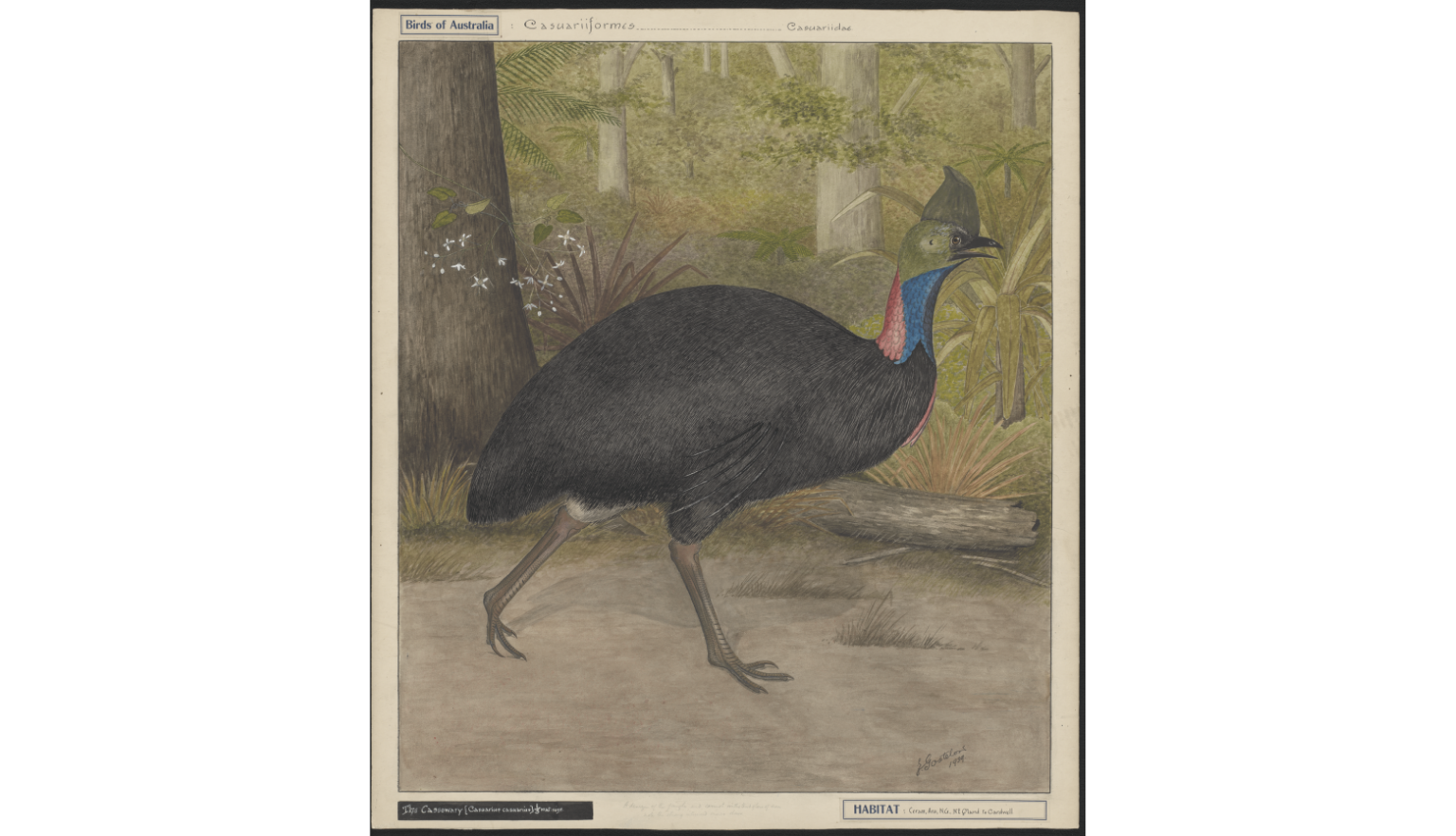
Ebenezer Edward Gostelow, The cassowary (Casuarius casuarius), 1939, nla.gov.au/nla.obj-134829906
Ebenezer Edward Gostelow, The cassowary (Casuarius casuarius), 1939, nla.gov.au/nla.obj-134829906
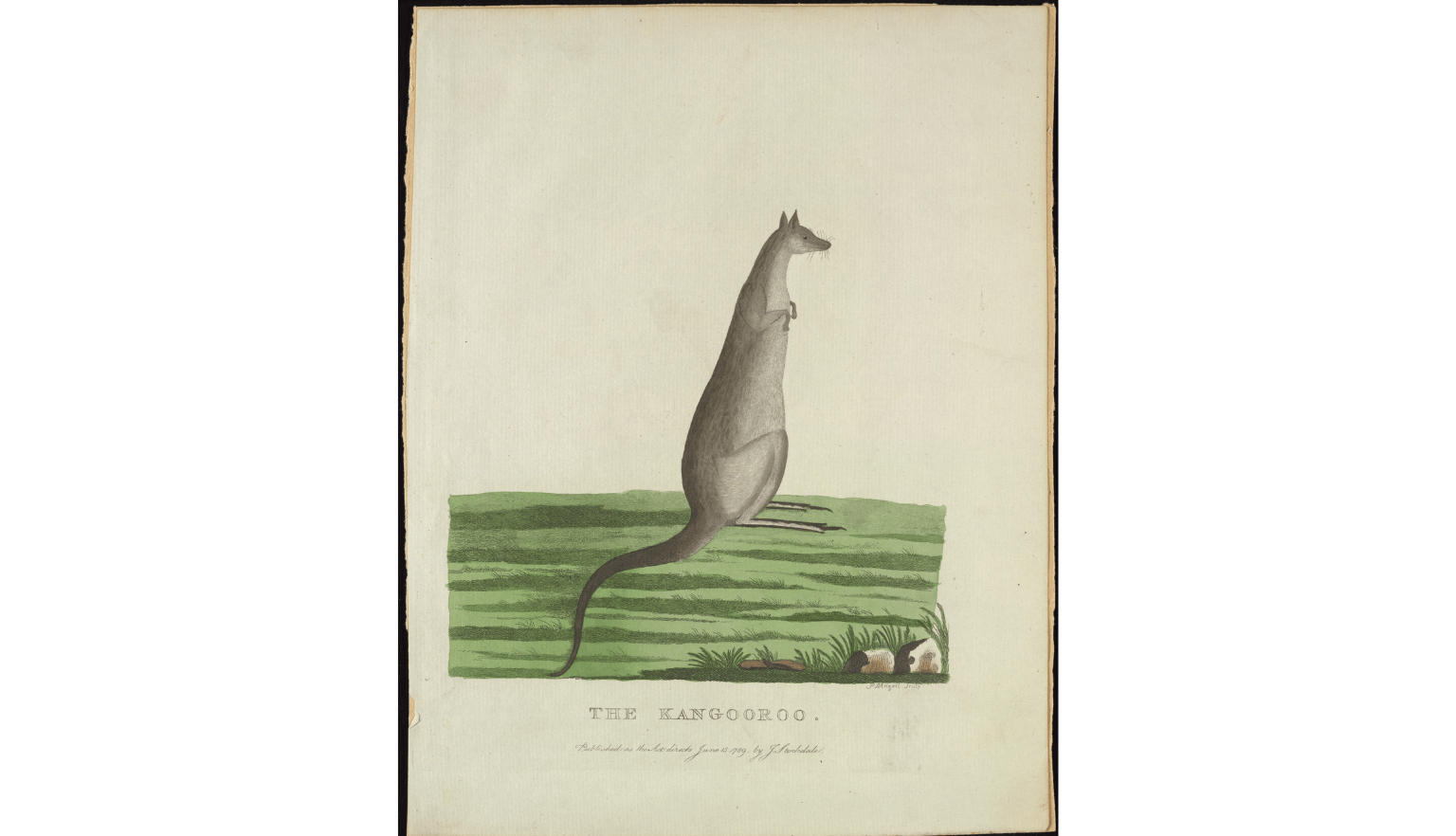
Peter Mazell & Arthur Phillip, The kangooroo [i.e. kangaroo], 1789. nla.gov.au/nla.obj-136105632
Peter Mazell & Arthur Phillip, The kangooroo [i.e. kangaroo], 1789. nla.gov.au/nla.obj-136105632
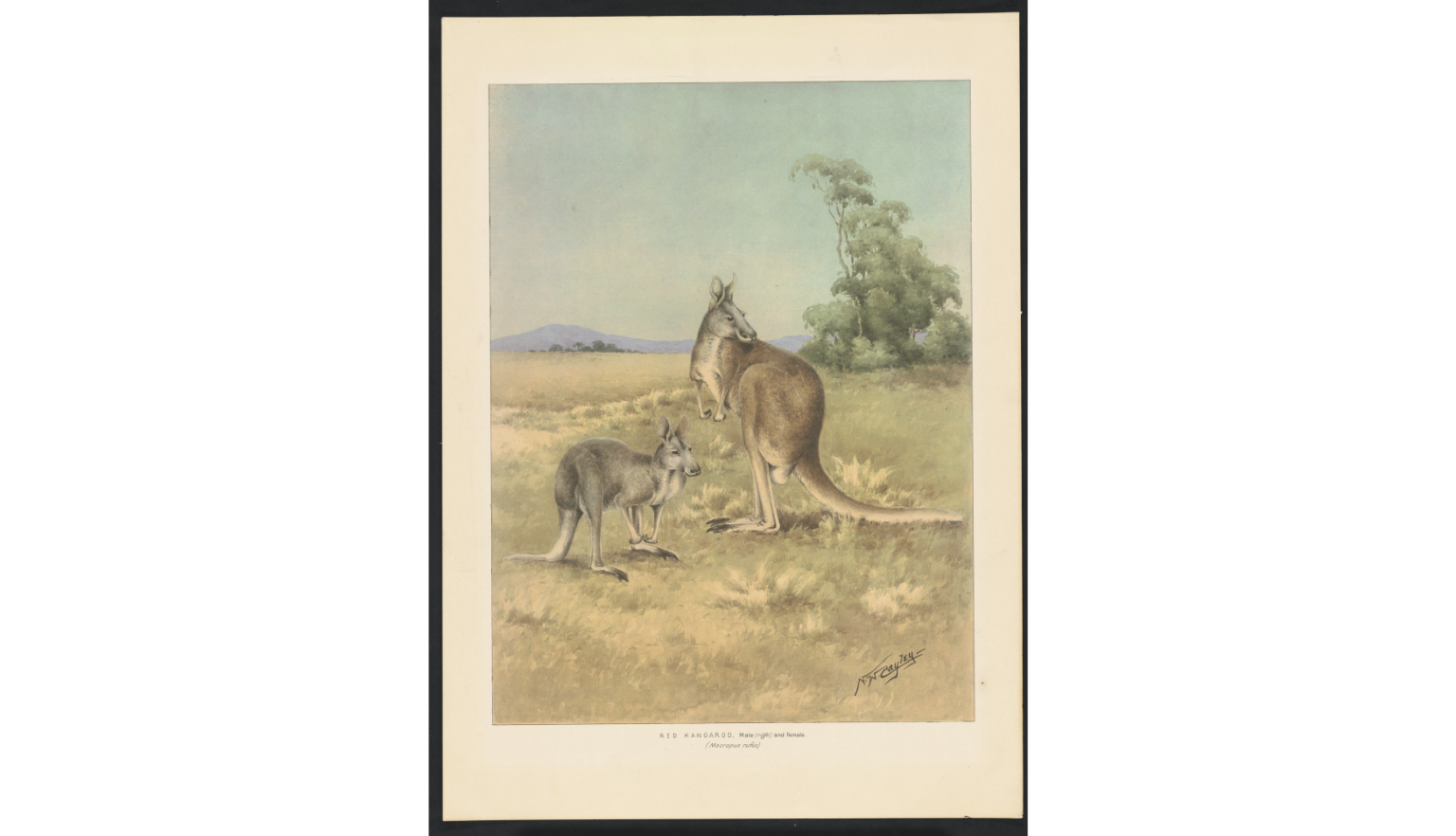
Neville William Cayley, Red kangaroo (Macropus rufus), male (right) and female, 195-?, nla.gov.au/nla.obj-151728822
Neville William Cayley, Red kangaroo (Macropus rufus), male (right) and female, 195-?, nla.gov.au/nla.obj-151728822
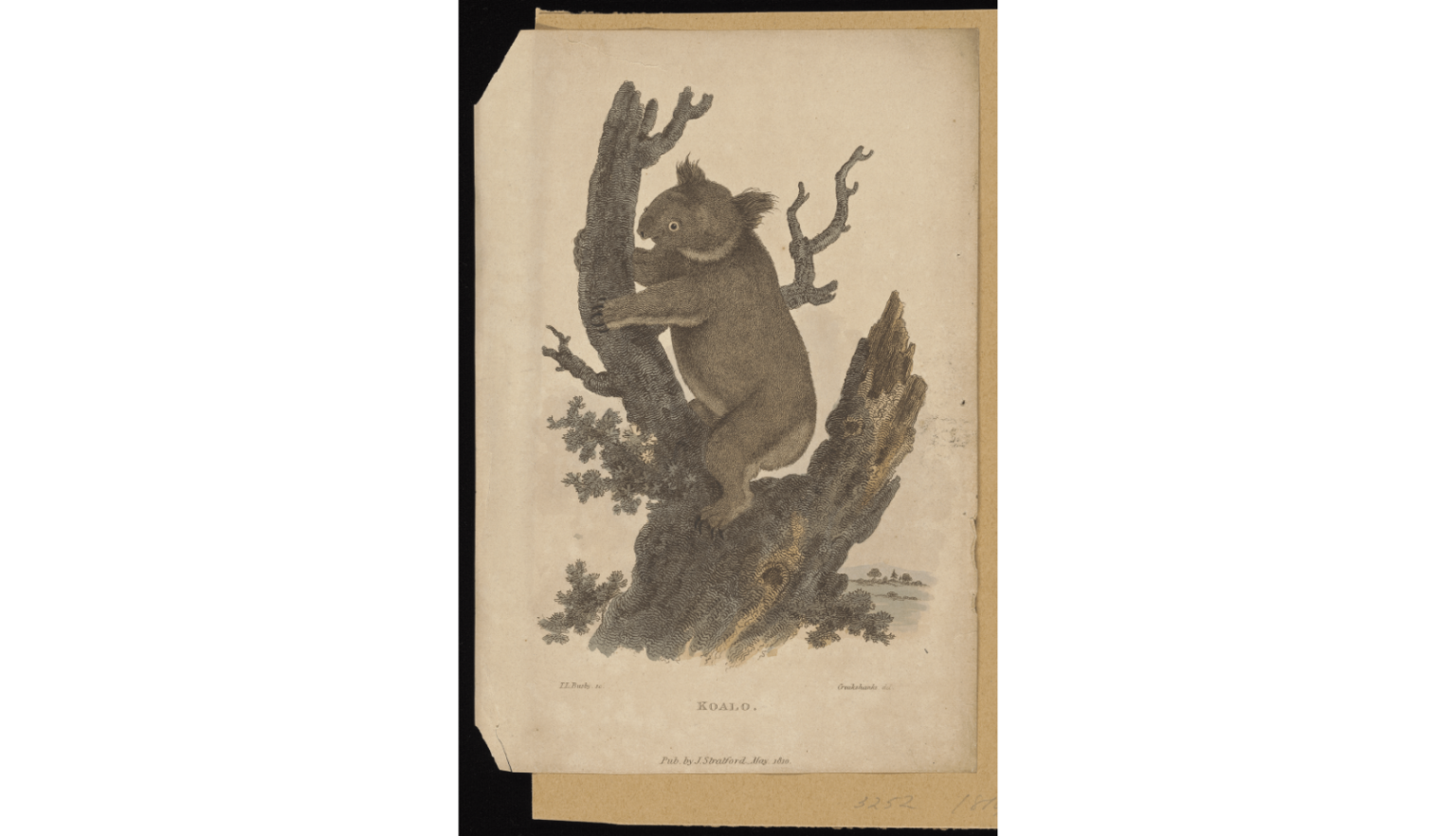
Thomas Lord Busby and Isaac Cruikshank, Koalo [i.e. koala], 1810. nla.gov.au/nla.obj-133278770
Thomas Lord Busby and Isaac Cruikshank, Koalo [i.e. koala], 1810. nla.gov.au/nla.obj-133278770
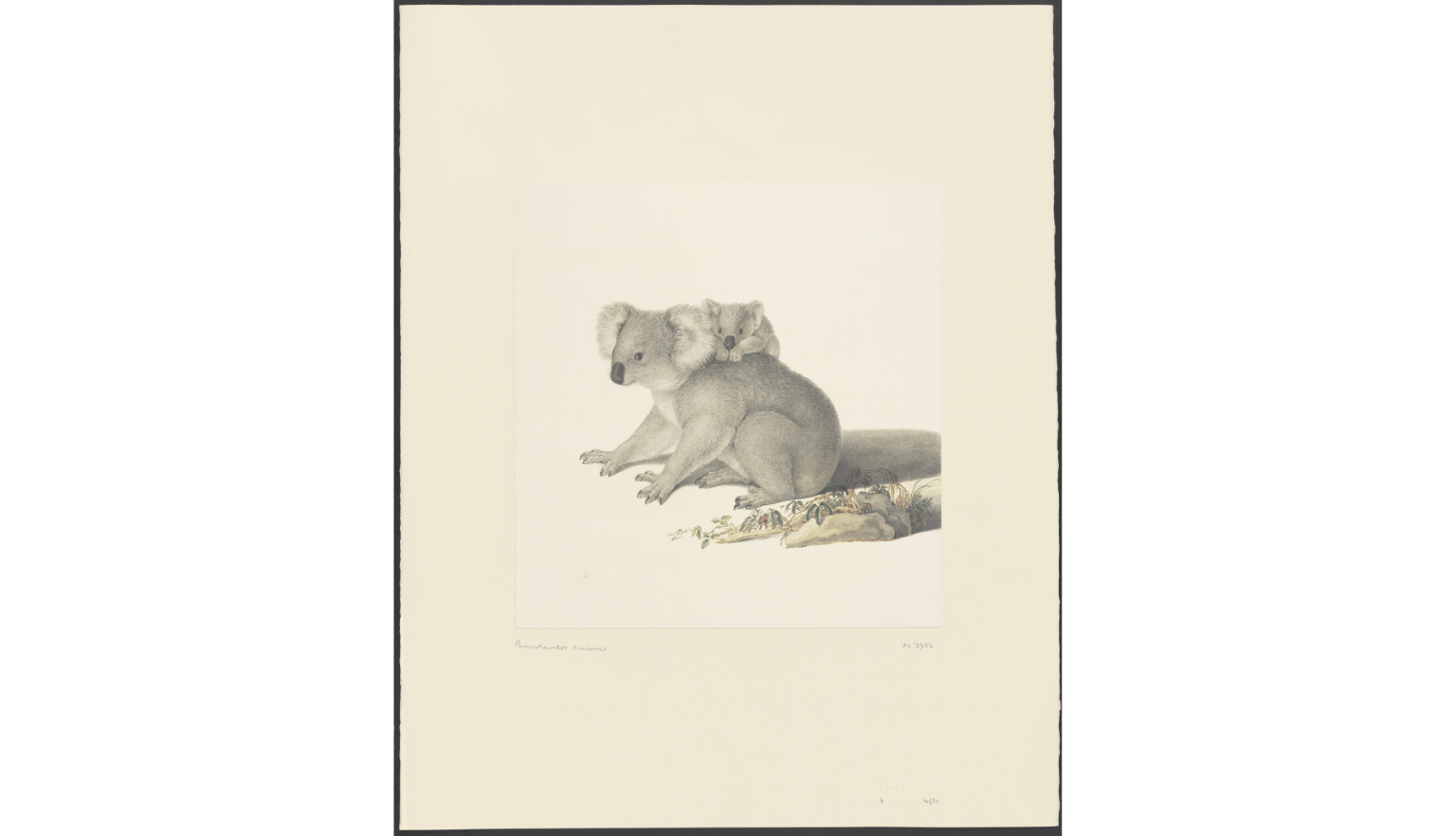
Ingrid Bartkowiak, Koala from Peculiar Parents, 2025
Ingrid Bartkowiak, Koala from Peculiar Parents, 2025
Using the images above, compare the early illustrations with the later version. Discuss:
- How does the artist’s own style and the context of the image influence how the animal is drawn?
- If you were the first person to observe this animal in the wild, what would you call it and why?
- Picture you are seeing these animals for the first time. What questions do you have about these animals? How could you find out this information using the technology of the time?
Paired Illustration Activity
- Working in pairs (one person will be the Describer, the other the Illustrator) attempt to describe and illustrate a chosen Australian animal.
- The Illustrator will face away from the screen while the Describer will look at the animal onscreen and provide clues about it WITHOUT saying its name, or what type of animal it is.
- The Illustrator will attempt to draw the animal, with pairs switching roles for the second animal.
- When finished compare your drawing to the animal provided.
- Discuss: What was challenging? How could this have affected scientists basing their observations on short encounters and descriptions found in journals / letters?
More to explore