
Naturalist observations and citizen science
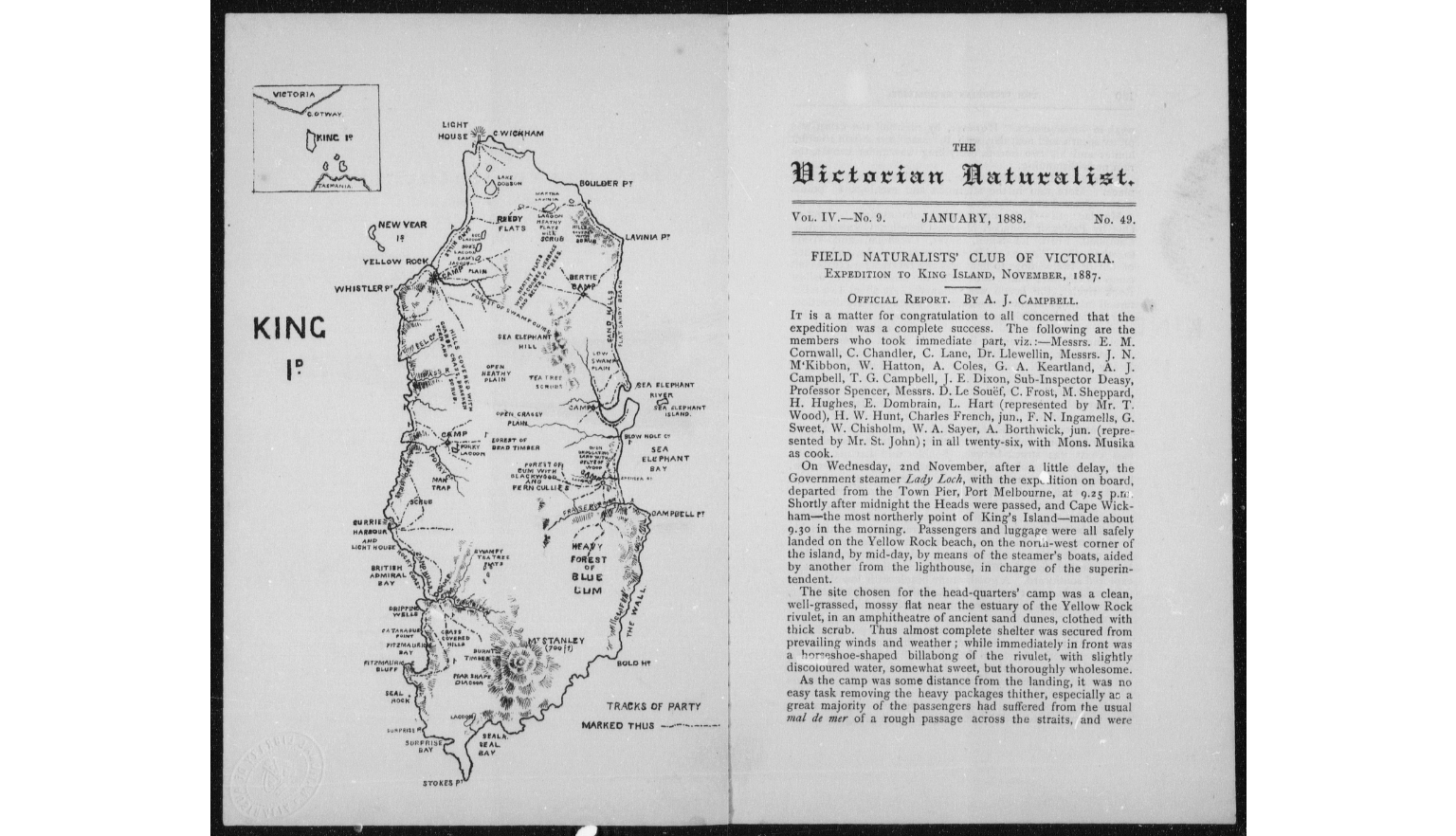
Field Naturalists' Club of Victoria, Field Naturalists' Club of Victoria expedition to King Island, November, 1887, 1887. nla.gov.au/nla.obj-3401799494
Field Naturalists' Club of Victoria, Field Naturalists' Club of Victoria expedition to King Island, November, 1887, 1887. nla.gov.au/nla.obj-3401799494
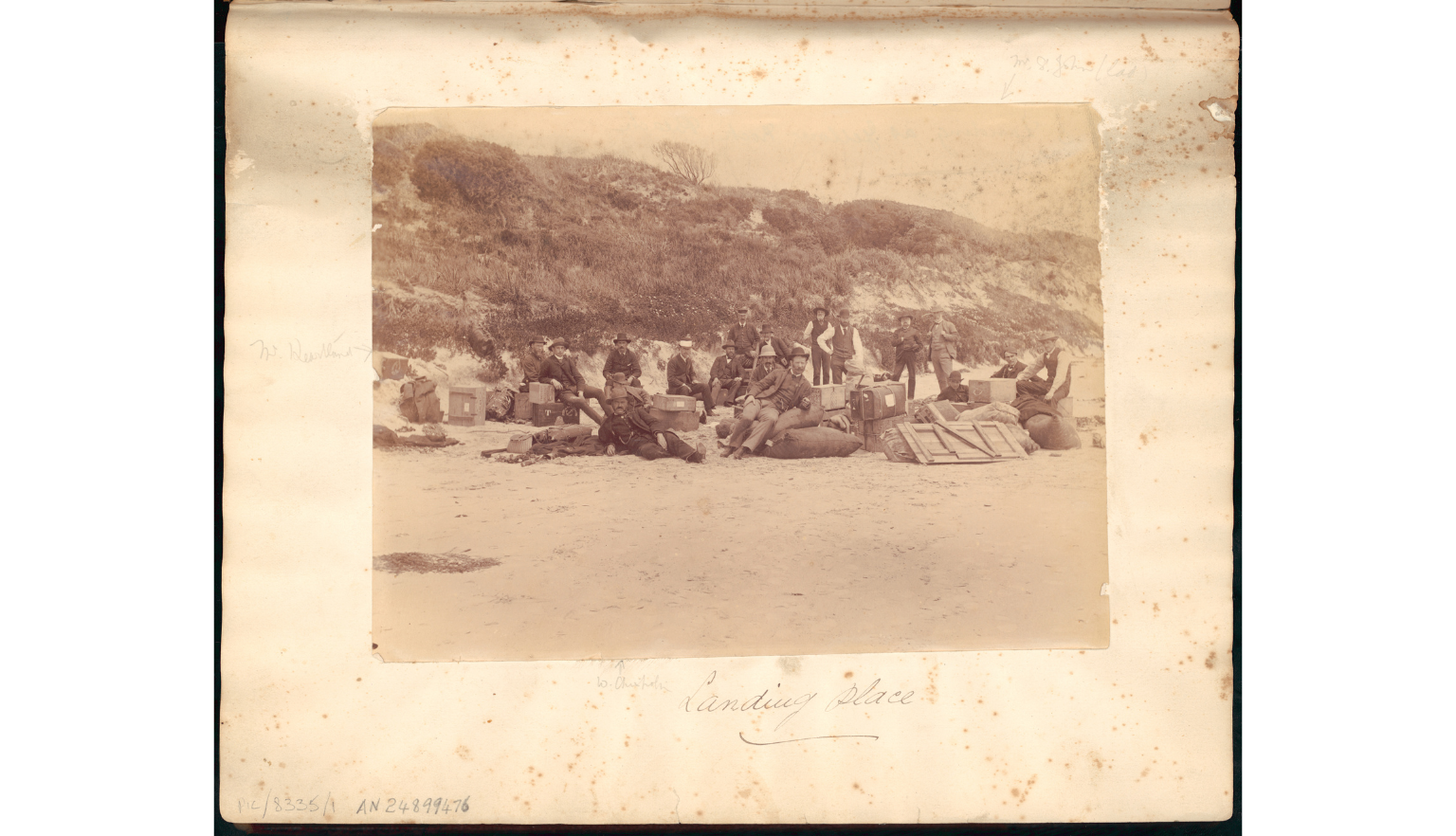
Landing place, 1887 Retrieved June 26, 2025, from http://nla.gov.au/nla.obj-147416535
Landing place, 1887 Retrieved June 26, 2025, from http://nla.gov.au/nla.obj-147416535
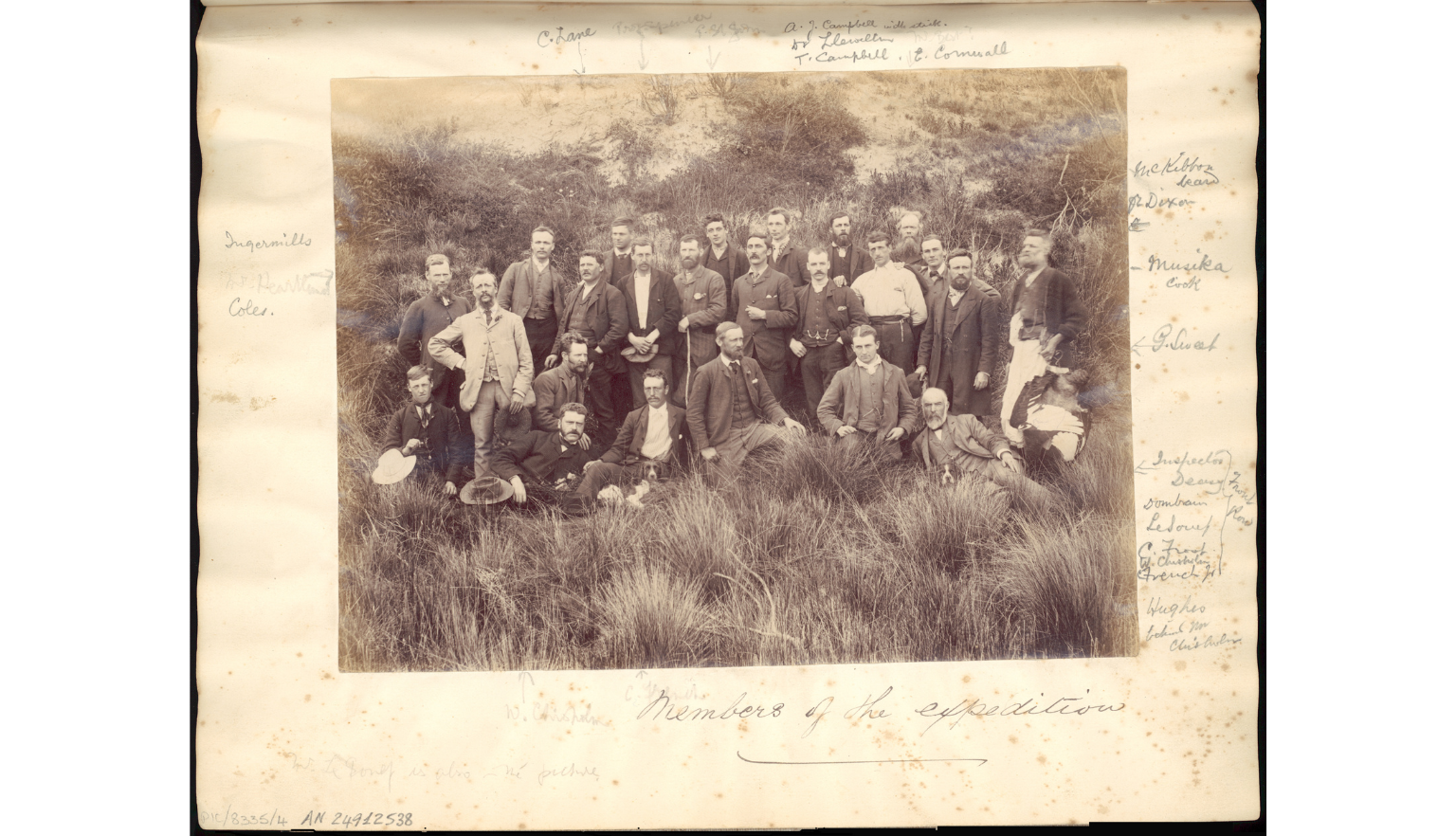
Members of the Expedition, Victorian Field Naturalists' expedition to King Island, 1887, 1887 nla.gov.au/nla.obj-147417531
Members of the Expedition, Victorian Field Naturalists' expedition to King Island, 1887, 1887 nla.gov.au/nla.obj-147417531
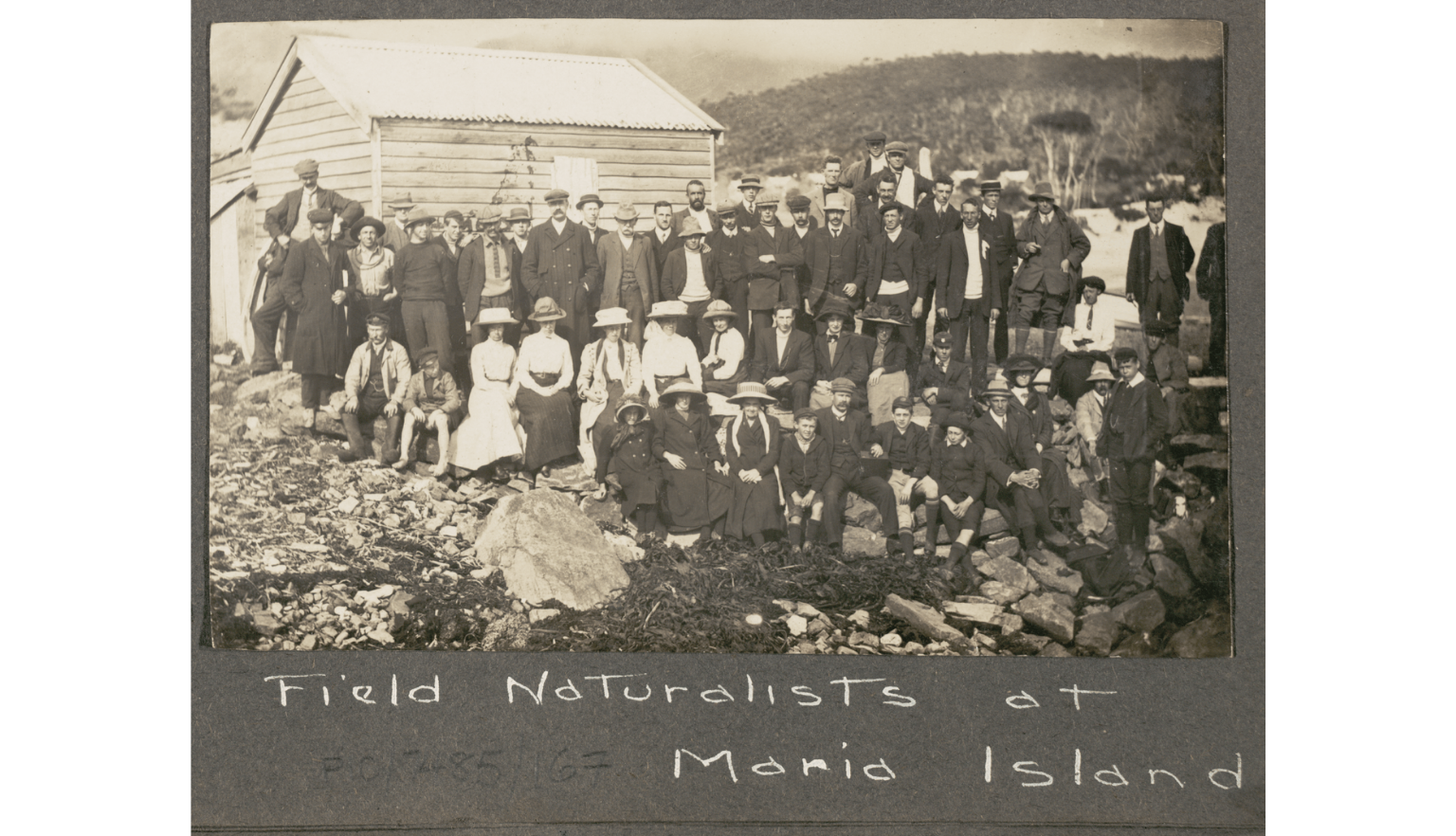
E.W Searle, Field naturalists at Maria Island, 1912 [Tasmania], 1912. nla.gov.au/nla.obj-142164875
E.W Searle, Field naturalists at Maria Island, 1912 [Tasmania], 1912. nla.gov.au/nla.obj-142164875
Naturalists were often employed by early European explorers during expeditions to help gather specimens and information on local flora and fauna of the landscape. While First Nations knowledge of the continent extends as far back as 65,000 years, to these Europeans Australia was such a “new” and peculiar continent that many of the species described had never been seen anywhere else. This curiosity and thirst to know more led to many more naturalists, zoologists, botanists and every day early settlers coming to catalogue, draw and document many of their observations and “knowledge” on these animals, either for personal or professional intent.
The Field Naturalists Club of Victoria is one of the earliest examples of a naturalist society in Australia and provided an opportunity for amateur and professional naturalists and scientists to conduct research, present ideas, learn about the natural world and educate the wider public. Naturalist clubs can still be found today, often holding field excursions, publishing journals and holding lecture nights.
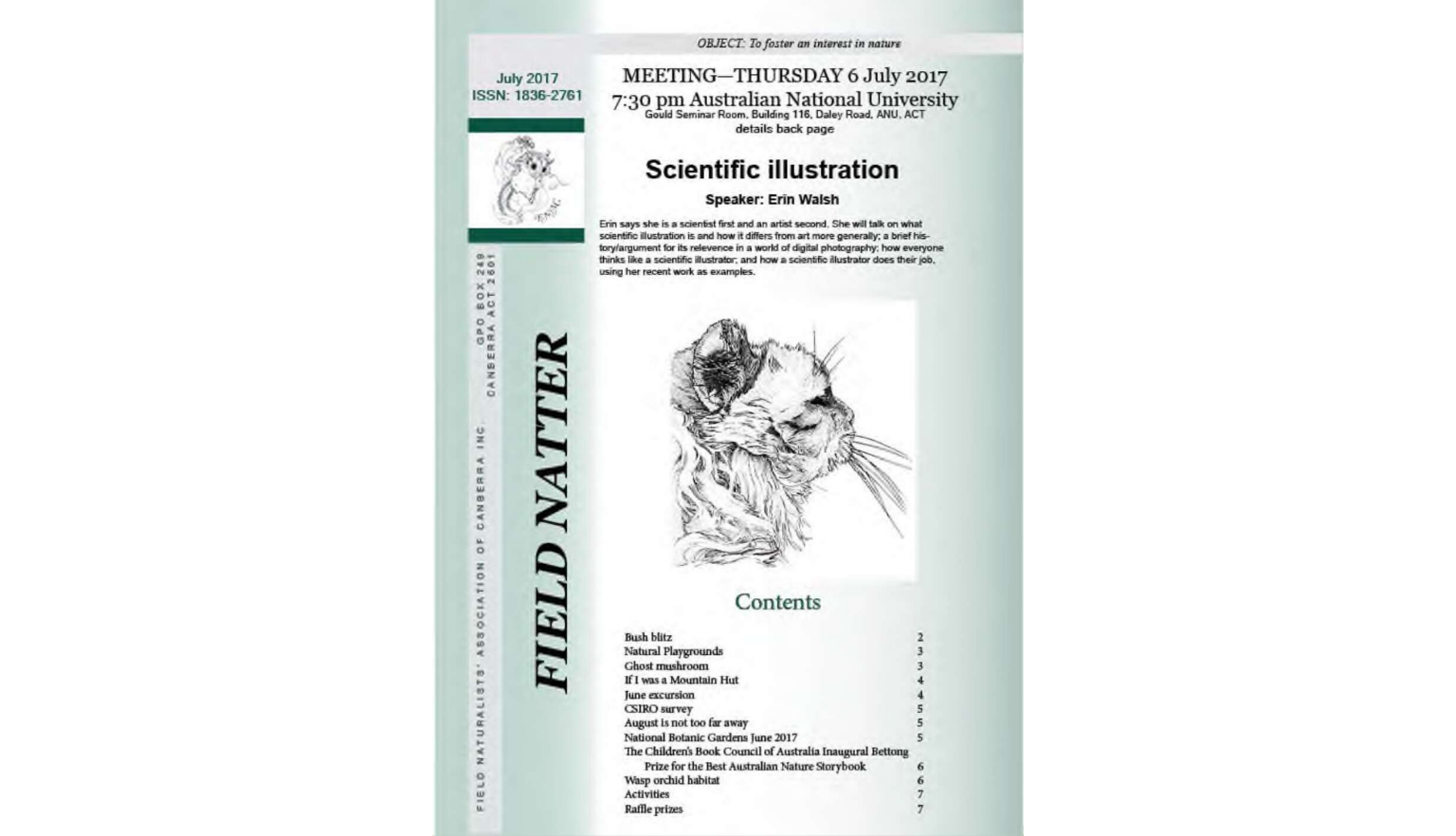
Field Naturalists Association of Canberra, Field natter, 2007. nla.gov.au/nla.obj-514975443
While Page Two of “Field Natter” references the “Bush Blitz” initiative, citizen scientists can conduct what is now known as a Bio Blitz, or in the time of the early naturalists – an expedition or “ramble”.
A Bio Blitz is a concerted effort to observe and record as many living things as possible within a designated area and time frame. To conduct a Bio Blitz with your class:
- Organise small groups and assign each group with a marked 1m x 1m area. Encourage each group to note the details of their space such as moisture levels, vegetation and terrain.
- Allow students time to search for, document and photograph both living and non-living elements in their space, promoting careful observation and data collection.
After exploring, facilitate a classroom discussion to collate and analyse findings between groups.
- Encourage students to reflect on plants and animals discovered.
- What environmental conditions, and factors support or hinder life in their area?
- How could this data be used? Consider whether it could support further environmental studies, address the impacts of human activity on local species or whether repeating this activity in different seasons could provide further data and insights.
More to explore