
Family, care, and responsibility
Family is central to Papunya, and many narratives reflect how families share responsibility and care while living on Country. Through these relationships, knowledge about looking after others and the Country on which they live are shared and reinforced over time and provides important context for learning how care and responsibly are practised in everyday ways.
Responsibility within families is learned gradually through shared experience, rather than through direct instruction. By watching, listening, and taking part in family life, children come to understand when to act, when to wait, and how to look after others. Stories shared within families support this process by reinforcing expectations and showing responsibility as something that is carried together, not held by one person alone.
In the readers, care is shown as an everyday practice shaped by attention, awareness, and respect. Actions such as working together, sharing responsibility, noticing surroundings, and looking out for others show how care is demonstrated through what people do and how they respond to those around them.
For children, stories shared within families support learning about care and responsibility in ways that feel familiar. By hearing and returning to these stories, they come to understand how care is carried through relationships.
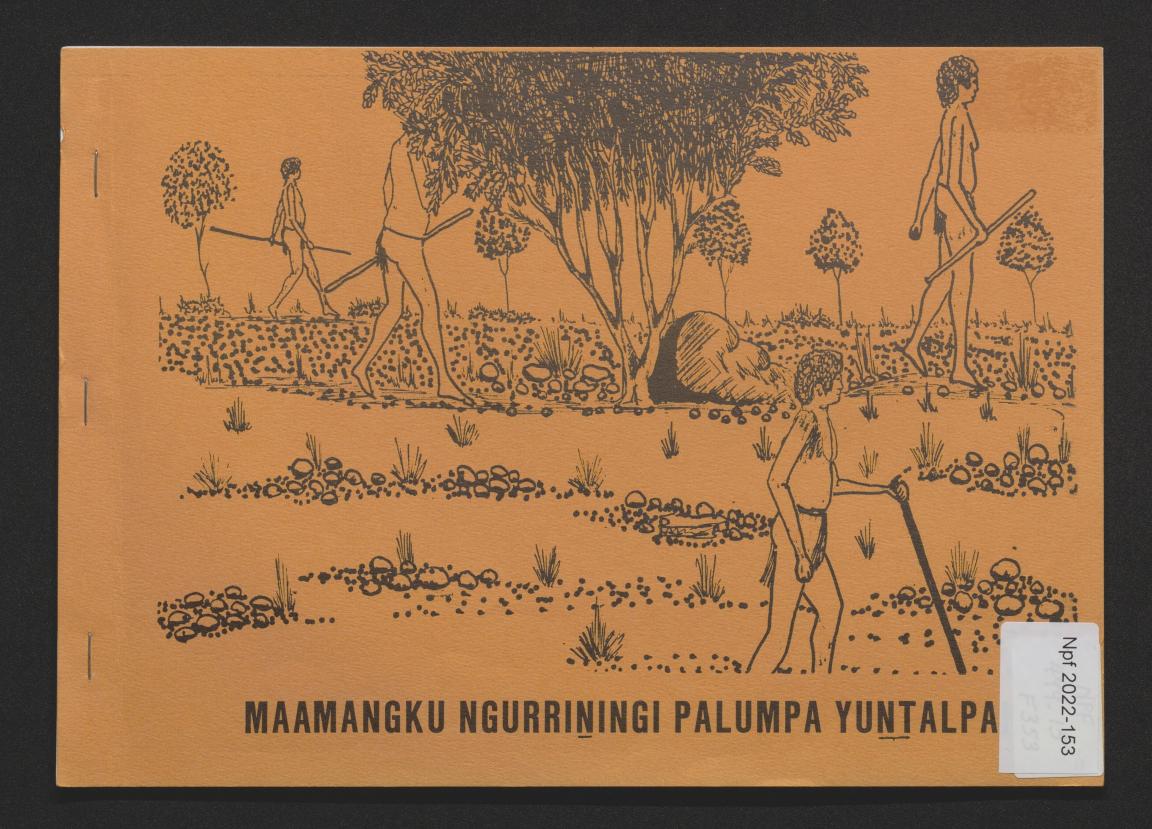
Sabrina Ferguson Nakamarra, Dennis Nelson and Papunya Literature Production Centre, Maamangku ngurriṉingi palumpa yuṉṯalpaku, 1987, nla.gov.au/nla.obj-3285667543
Sabrina Ferguson Nakamarra, Dennis Nelson and Papunya Literature Production Centre, Maamangku ngurriṉingi palumpa yuṉṯalpaku, 1987, nla.gov.au/nla.obj-3285667543
The importance of family, care and responsibility can be seen in Papunya readers such as Maamangku ngurriningi palumpa yuntalpaku. This story centres a mother’s ongoing search for her child, showing care as action rather than instruction. Through the relationships shown in the story, responsibility is shared, sustained and carried forward through family connections.
Activity: Roles and responsibilities in your community
Read the translation of Maamangku ngurriningi palumpa yuntalpaku. As you read, make a list of the roles and responsibilities that each of the community members have (the men, the women, the grandparents, the children). Can the students suggest ways in which the girl picking wild figs could have been safer? What happens when responsibilities are not carried out?
Focus now on students’ roles and responsibilities – at home, at school, in the community and in the world – using the Harvard Project Zero thinking routine – Circles of Action. This routine can help students to recognise opportunities to contribute to their social circles, the community and the world, and small actions they can take over time.
You might draw concentric circles (typically labelled inner, community, and world) on the board (for a whole class discussion) or invite small groups of students to draw them on large pieces of paper.
Once students have had a chance (either as a whole group or in small groups) to brainstorm possible contributions at each of the levels you might invite the whole class to discuss: what are the some of the challenges students could face when taking these actions?
Explore your school’s core values and responsibilities. What actions can students take to help younger students create a positive and purposeful school culture?
Discuss with students:
- How are these systems / values taught and carried on?
- How do you learn to be a responsible member of your community?
- What are some challenges you face in your roles?
- How can you help support each other to carry out these roles?
More to explore