

Wangka Wakanutja – The Papunya Readers
About this module
This module approaches Country as the foundation for story, learning and community life, providing a context for exploring the Papunya readers. ‘Wangka Wakaṉutja’ is Pintupi-Luritja for ‘the story has been told’.
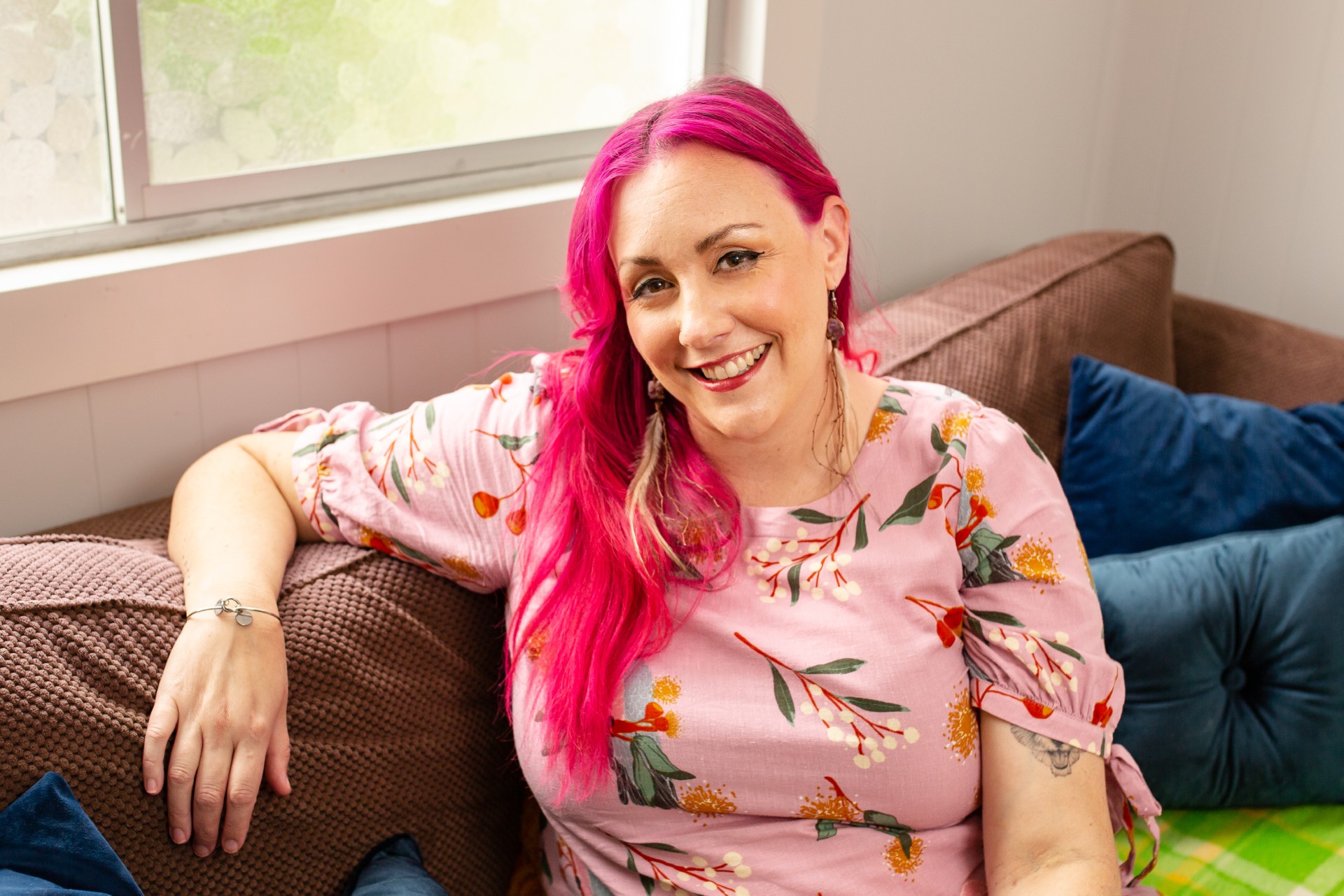
Dr Melanie Saward
This resource has been developed by, and in consultation with Dr Melanie Saward. Dr Saward is a proud Bigambul and Wakka Wakka woman, and a writer, editor, and academic. She lectures in the University of Queensland’s School of Communication and Arts and is the newly appointed Director of the Writing, Editing, and Publishing master’s program. Her research explores Indigeneity in romantic comedy fiction, focusing on diversity, intersectionality, and the Australian publishing industry. Melanie is the author of Burn and Love Unleashed, and co-author (with Brooke Blurton) of A Good Kind of Trouble, and its sequel Making Trouble.
Copyright for teachers
You can download all collection materials in this resource for education purposes. For more information, go to copyright for teachers.
Topics in this module
This module covers four key topics.
Each topic includes an introduction to key concepts, links to key resources in our collection and a series of learning activities that cater for a variety of classroom contexts:
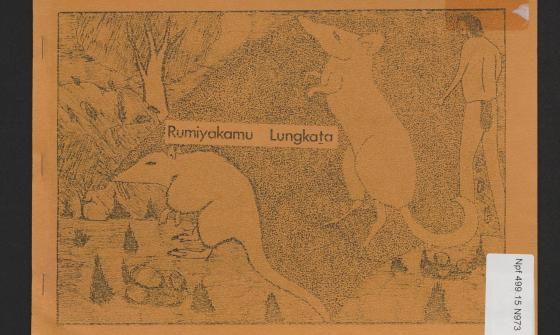
Charlotte Phillipus Nupurrula, Abraham Stockman Tjungarrayi and Papunya Literature Production Centre, Rumiyakamu lungkaṯa, 1987, nla.gov.au/nla.obj-3285463123
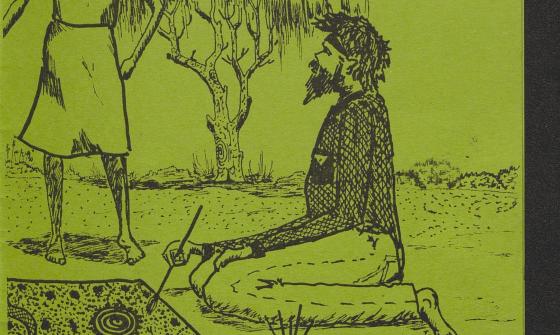
Kuḻaṯa Dennis Nelson and Papunya Literature Production Centre, Piḻkaṯi anta rikuta [The snake and the recorder], 1990, nla.gov.au/nla.obj-3286644847
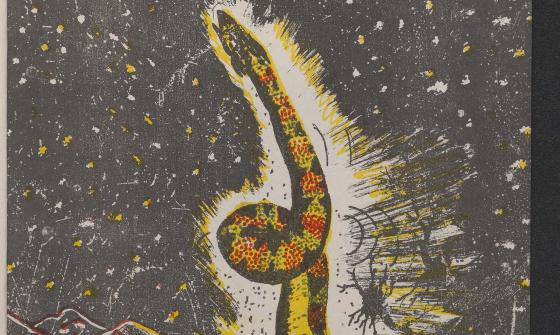
Charlotte Phillipus Nupurrula, Thomas Stevens Tjapangati and Papunya Literature Production Centre, Yara waṉampitjarra, 1984, nla.gov.au/nla.obj-3286350047
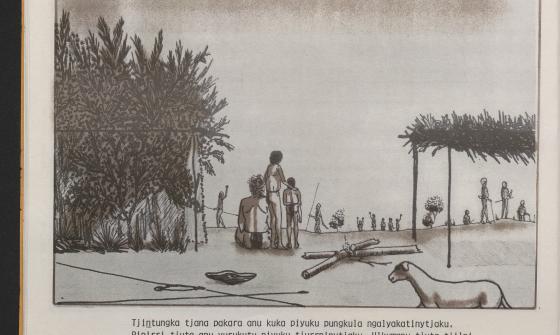
Sabrina Ferguson Nakamarra, Dennis Nelson and Papunya Literature Production Centre, Maamangku ngurriningi palumpa yuntalpaku, 1987, nla.gov.au/nla.obj-3285693260
Introductory activities
Papunya (also known as Warumpi) is an Aboriginal community in the Northern Territory, located 240 km northwest of Mparntwe (Alice Springs), in the Central Australian Desert.
Each Aboriginal language group has stories and practices specific to their Country. Stories in Papunya are told in closely related languages, referred to locally as Pintupi, Luritja and Pintupi-Luritja. These are the languages that you will hear spoken in Papunya and surrounding communities, in all locations and by people of all ages. They are grouped under the larger umbrella of Western Desert languages, reflecting the linguistic similarity among a large set of languages spoken across a large swathe of the western centre of the continent and the social connections among their speakers, now and pre-colonisation.
Papunya is an important honey-ant dreaming site. In the 1970s, senior lore men painted a mural of the honey-ant dreaming on the wall of the school. This work became a key moment in the development of the Western Desert Art movement, but it is also connected to the creation of illustrated books in Papunya. These early books were written and illustrated by community members and produced through what became the Papunya Literature Production Centre.
The Papunya readers were created by illustrators, artists, and community members to support children’s learning and literacy, responding to the Northern Territory’s Bilingual Education Program requirements. From the 1970s to the 1990s, the centre produced 350 books using local stories, languages, and experiences.
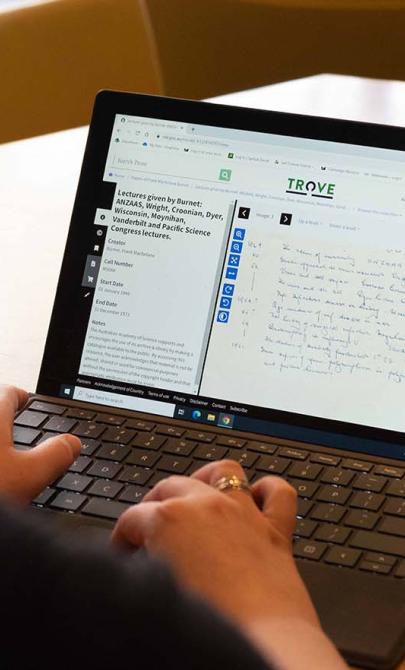
For many years, artists, interpreters, illustrators and community members have worked with academics to share the story of the Papunya Literacy Production Centre. This work first became the travelling exhibition Wangka Walytja, and has also led to the digitisation of the entire Papunya readers collection by the National Library of Australia. Digitisation allows these Country-specific stories to support learning in classrooms beyond Papunya, while recognising the Country and communities they come from and the care with which they are shared.
Activity 1: Where is Papunya?
The AIATSIS Map of Indigenous Australia aims to represent the diversity of language, social and nation groups found in Australia, showing the general locations and larger groupings of First Australians.
- Find Papunya on the AIATSIS map, located on Luritja lands, roughly 240 km northwest of Mparntwe (Alice Springs). Next, find your school’s location on the map. What traditional Country are you on? Compare the two locations, thinking about the similarities and differences in the location, environment and animals found. What more would you like to know about the Papunya community?
Activity 2: What is a reader?
Readers are specially designed picture books that contain simple sentences, sight words and repetitive phrasing that slowly progress in complexity to help students learn how to read independently.
- Explore your classroom and library. What examples of tools and methods of learning can students discover? These could be word walls, posters, classroom readers or chapter books, computer programs or journals.
- Collect your examples in a display, either on a wall or whiteboard, listing all the ways that students in your classroom are learning to read, write and share their ideas. Add new examples each time they are discovered throughout the year.
Concluding activities
Concluding activities help students reflect on the broad concepts explored in the module.
Activity 3: Make your own stories
The Pintupi-Luritja bilingual readers – illustrated books – were produced as literacy tools for local schoolchildren to record and teach their language and culture.
Encourage students to promote various forms of storytelling and recording within their school community. This could be reflected in publishing their own short, illustrated stories, producing videos, or creating artworks that record an important event or educational experience.
Activity 4: Storytelling Circuit
Encourage older students to share stories for younger classrooms, or vice versa. Have students pick a favourite book or create an original piece and practice how they will retell this story – either solo or in groups of 3 or 4.
When students feel confident, create a storytelling circuit where students visit another classroom. Encourage the audience class to respond or reflect on their experience by creating thank you notes or creating an artistic response to the story. These might include a recount, personal reflection, story board or artwork.
Activity 5: Recording Local Histories and Family Stories
Students can research their town or collect stories from the older people in their life or wider community. Can they discover any interesting people or legends? Historical events? This could be tied into an excursion to a local historical site or museum.
Students then retell these stories in picture book format to share with other classes.
Curriculum links
This resource has been developed with specific reference to content descriptions in Year 5 and 6 Australian Curriculum: HASS, English and The Arts.
It also supports the Aboriginal and Torres Strait Islander Histories and Cultures cross-curriculum priority, providing opportunities for all students to deepen their knowledge of Australia by learning about the world’s oldest continuous living cultures.
The cross-curriculum priority engages with Australian First Nations Peoples’ knowledges, experiences, values and perspectives. Students learn that contemporary First Nations Australian communities are strong, resilient, rich and diverse. It also allows Aboriginal and Torres Strait Islander students to see themselves and their cultures reflected in the curriculum.
(AC9HS5K04) The influence of people, including First Nations Australians and people in other countries, on the characteristics of a place.
(AC9HS5K02) The impact of the development of British colonies in Australia on the lives of First Nations Australians, the colonists and convicts, and on the natural environment.
(AC9HS5K03) The role of a significant individual or group, including First Nations Australians and those who migrated to Australia, in the development of events in an Australian colony.
(AC9E5LE01) Identify aspects of literary texts that represent details or information about historical, social and cultural contexts in literature by First Nations Australian, and wide-ranging Australian and world authors.
(AC9HS6K02) Changes in Australia's political system and to Australian citizenship after Federation and throughout the 20th century that impacted First Nations Australians, migrants, women and children.
(AC9E6LE01) Identify responses to characters and events in literary texts, drawn from historical, social or cultural contexts, by First Nations Australian, and wide-ranging Australian and world authors.
Music, Visual Arts, Drama, Dance, Media Arts
Explore the ways that First Nations Australians use arts to continue and revitalise cultures.
More to explore