
Papunya, Country, and Community
Stories from Papunya
Stories from Papunya often show everyday community life, including relationships between people, animals and place. Through familiar settings and characters, they reflect the places children know. In this way, the readers show how Country, community and story are closely connected. Some of the stories reflect everyday humour and life, while others share more cultural knowledge and ways of understanding the world. Together, these approaches show what it is like to interact with Country.
The Western Desert is home to many languages that are still spoken and remembered. People in this region often speak more than one language, with English commonly used as a second, third, or even fourth. Some of these languages share very similar words and sounds, and others are vastly different, reflecting the diversity of knowledges in the community. The term Pintupi-Luritja is often used by speakers in Papunya to describe the language written in Papunya Literature Production Centre publications and spoken by many Papunya today.
The Papunya readers showcase local art and languages first. Some will conclude with an English translation of the text while others have no English translation available. For the community, this positioning is important as it places local languages first, recognises visual literacy as an important way of teaching language, and using English as a supporting translation, rather than the starting—or even essential—point.
These connections can be seen in the reader such as Kata yurilpa which reflects everyday humour and familiar community experiences in ways that feel familiar to young readers. Rumiyakamu lungkata shares cultural knowledge through relationships with people, animals, and place.
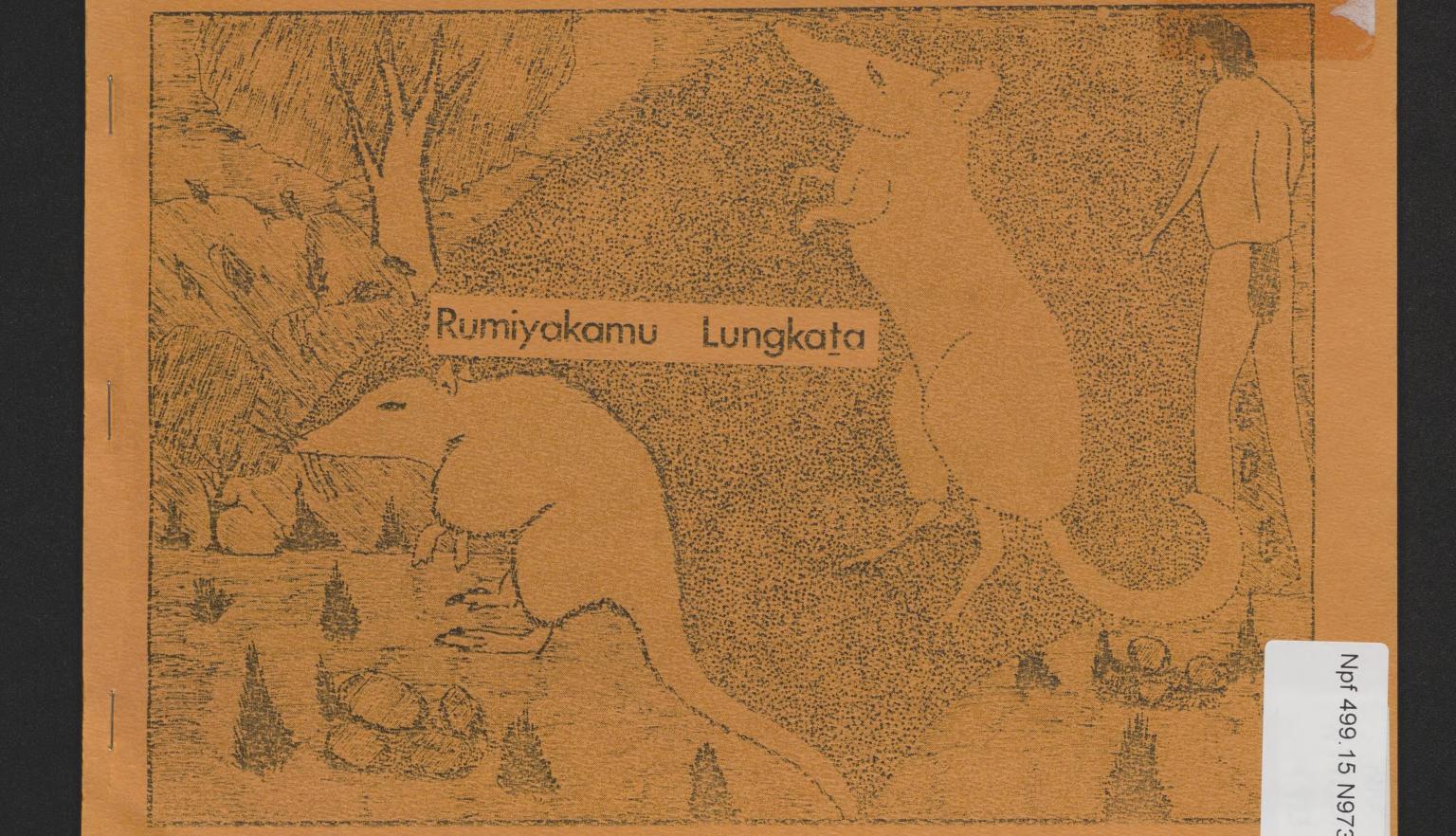
Charlotte Phillipus Nupurrula, Abraham Stockman Tjungarrayi and Papunya Literature Production Centre, Rumiyakamu lungkaṯa, 1987, nla.gov.au/nla.obj-3285463123
Charlotte Phillipus Nupurrula, Abraham Stockman Tjungarrayi and Papunya Literature Production Centre, Rumiyakamu lungkaṯa, 1987, nla.gov.au/nla.obj-3285463123
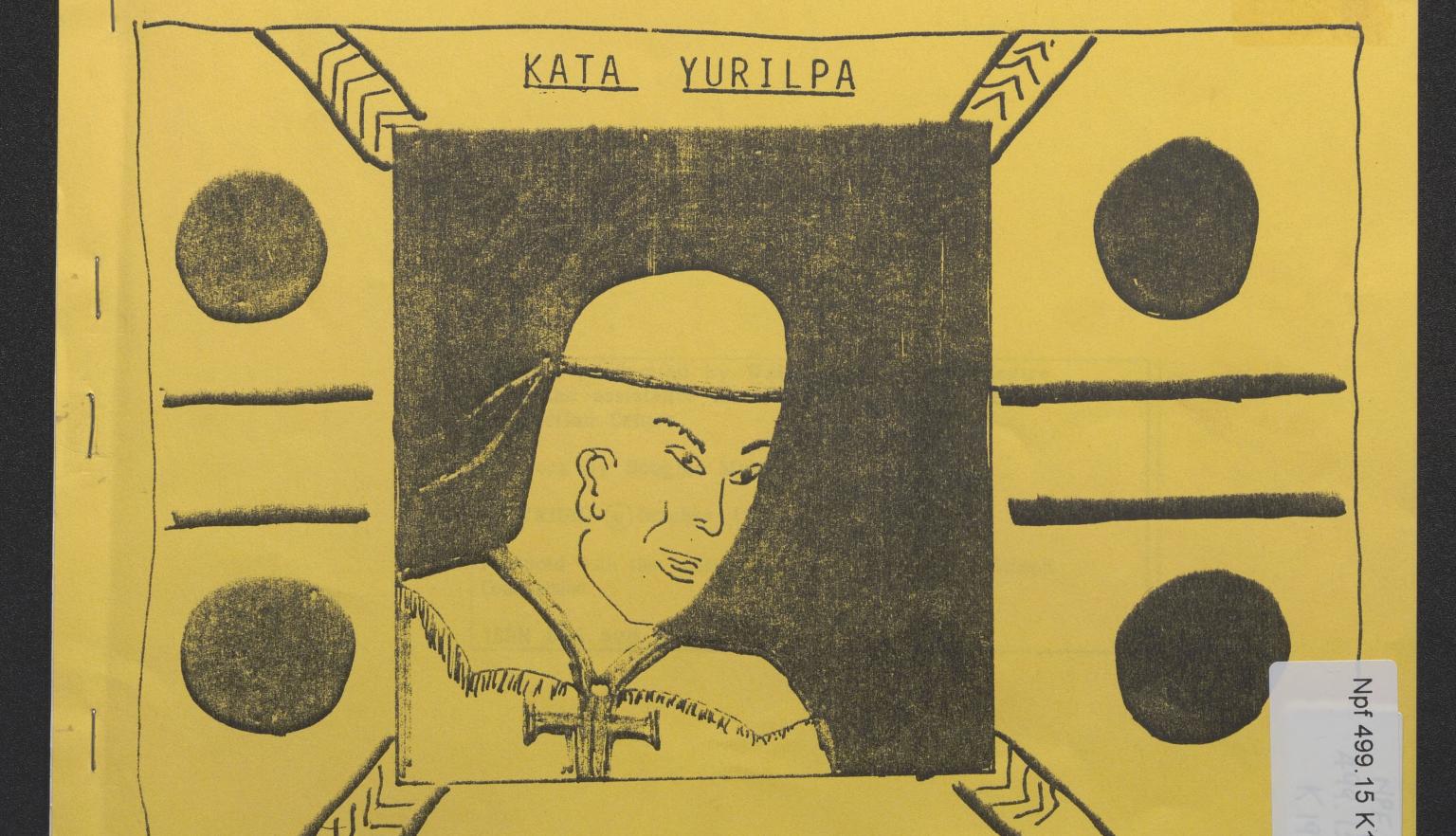
Douglas Multa Tjupurrula and Papunya Literature Production Centre, Kata yurilpa, 1987, nla.gov.au/nla.obj-3286494977
Douglas Multa Tjupurrula and Papunya Literature Production Centre, Kata yurilpa, 1987, nla.gov.au/nla.obj-3286494977
Activity: Recording of community information
Find examples of texts in your community such as posters, newsletters or newspapers. Have a look at the use of language. Is it formal, informative or humorous? Consider also the use of imagery in these texts. Are there languages other than English included? What can these texts tell you about people in the community? How do they reflect daily life, shared identity, or local voices?
Do these texts reflect your own experiences and interests? How can your school record and report on stories that matter to you?
More to explore