

The Memory Tapes: explore the collection
About the book
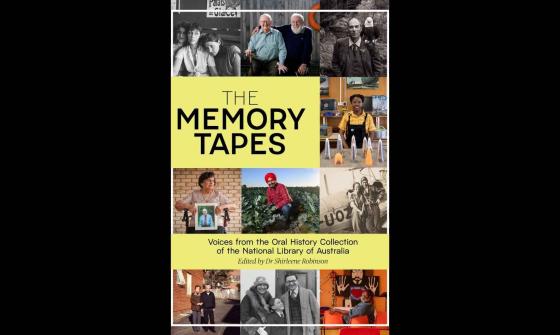
The National Library of Australia’s Oral History and Folklore Collection is the largest in the country, containing more than 58,000 recorded hours of interviews. Captured in the collection are memories from the mid-nineteenth century to today—deep time to deep space and everything in between. Interviewees describe major moments of social change, cultural creativity, political struggle and everyday experience that will both enhance and challenge your understanding of Australian history.
The Memory Tapes brings together hundreds of interview excerpts, organised into chapters on broad themes, from domestic life to politics. The excerpts capture lived experiences in all their complexities, emotion and contradictions. Readers will get a sense of the textures of memory—tone, hesitation, reflection—learning about the past from the people who lived it.
Each link will take you straight to the audio versions of the extracts, where possible, or to the full interview in the catalogue.
Listen to the voices
| Name | Biography | Audio excerpt |
|---|---|---|
| Megan Davis | Megan Davis (b.1975) is a Cobble Cobble Aboriginal constitutional lawyer and public policy scholar who has played a leading role in the movement for Indigenous constitutional recognition. | Listen to the 2022 Kenneth Myer lecture presented by Professor Megan Davis |
| Galarrwuy Yunupingu | Galarrwuy Yunupingu (1948–2023) was a Yolŋu man of the Gumatj clan and an advocate for Indigenous rights. He served as chairman of the National Land Council for over two decades. Four years after this speech at the Press Club, he would present the Barunga Statement, which demanded the recognition of land rights and a treaty, to then prime minister Bob Hawke. | Listen to Galarrwuy Yunupingu in an address at the National Press Club |
| Bruce Pascoe | Bruce Pascoe (b.1947) is a Bunurong, Tasmanian and Yuin writer, historian and farmer. | Listen to the 2018 Eric Rolls memorial lecture given by Bruce Pascoe |
| Miseron Bullio Levi | Miseron Bullio Levi (1935–2004) was a member of the Panai clan of the Mabuyag people of the Western Torres Strait. He grew up in the St Paul’s community on Moa Island, and was a composer and writer of Torres Strait Islander songs and music. | Listen to Miseron Bullio Levi interviewed by Karl Neuenfeldt |
| Essieina Goodgabah (Essie Coffey) | Essieina Goodgabah (Essie Coffey) (1941–1998) was a Muruwari filmmaker, singer, songwriter and activist. | Listen to Essie Coffey interviewed by Hazel de Berg |
| Herb Laughton | Herb Laughton (1927–2012) was a member of the Stolen Generations, a country musician and a drover. | Listen to Herb Laughton interviewed by Bruce Simpson and Bill Gammage |
| Charles 'Chicka' Dixon | Charles ‘Chicka’ Dixon (1928–2010) was a Yuin activist involved in the 1967 referendum and the 1972 Tent Embassy. In 1970, he also helped to establish Australia’s first Aboriginal Legal Service. | Listen to Chicka Dixon interviewed by Gary Foley |
| Charles Perkins | Charles Perkins (1936–2000) was an Arrernte and Kalkadoon man who played a pivotal role in the struggle for the rights of Aboriginal and Torres Strait Islander people. In 1965, he helped organise and lead the Freedom Ride through regional New South Wales, exposing segregation and discrimination. Perkins later became the first Aboriginal person to head a federal government department. | Listen to Charles Perkins interviewed by Peter Read |
| June Barker | June Barker (1935–2012) was born to a Yorta Yorta mother on Cummeragunja Mission. Her father was the son of William Ferguson, who founded the Aboriginal Progressive Association. | Listen to June Barker interviewed by Rob Willis |
| Eric Deeral | Eric Deeral (1932–2012) was a member of the Gamay clan of the Guugu Yimithirr people. During World War II, his Hope Vale Mission community was evacuated to Woorabinda in Central Queensland. He was the first Aboriginal member of the Queensland Parliament. | Listen to Eric Deeral interviewed by Phillip Connors |
| Joe McGinness | Joe McGinness (1914–2003) was a Kungarakany activist and trade unionist who played a major role in the national movement for Aboriginal rights in Australia. In 1961, he became the first Aboriginal president of the Federal Council for the Advancement of Aborigines and Torres Strait Islanders (FCAATSI). | Listen to Joe McGinness interviewed by Lloyd Hollingsworth |
| Dr Evelyn Scott | Dr Evelyn Scott (1935–2017) was an Indigenous activist who actively campaigned for the 1967 referendum. Amongst other roles, she was chair of the Council for Aboriginal Reconciliation in the late 1990s. | Listen to Evelyn Scott interviewed by Peter Read and Jackie Huggins |
| Lowitja O'Donoghue | Lowitja O’Donoghue (1932–2024) was a Yankunytjatjara nurse and public servant. In 1990, she became the inaugural chairperson of the Aboriginal and Torres Strait Islander Commission (ATSIC). | Listen to Lowitja O'Donoghue in an address at the National Press Club |
| Ruth Hegarty | Ruth Hegarty (b.1929) is an Aboriginal Elder and author of multiple books about her life and experiences, including her adolescence in Cherbourg Aboriginal Mission. | Listen to Ruth Hegarty interviewed by Lyn McLeavy |
| Brian Syron | Brian Syron (1924–1993) was a Biripi (Birpai) actor and director. He studied at the Stella Adler Theatre Studio in New York alongside actors such as Robert de Niro before returning to Australia. He co-founded the Aboriginal Black Theatre Arts and Cultural Centre and, with Justine Saunders, established the National Black Playwrights Conference and the Aboriginal National Theatre Trust in 1987. | Listen to Bryan Syron interviewed by Hazel de Berg |
| Patricia 'Pat' Turner | Patricia ‘Pat’ Turner (b.1952) is an Aboriginal woman of Gudanji-Arrernte heritage and a civil administrator who has advocated for rights of First Nations people to self-determination. She recently (2026) retired from her role as chief executive officer of the National Aboriginal Community Controlled Health Organisation. | Listen to Pat Turner interviewed by Nikki Henningham |
| John Newfong | John Newfong (1943–1999) was a Ngugi man from Queensland who became the first Aboriginal journalist to be employed in the mainstream Australian print media. In 1972, he became chief spokesperson for the Aboriginal Tent Embassy in Canberra. | Listen to John Newfong interviewed by Peter Read |
| Japarta Maurie Ryan | Japarta Maurie Ryan (b.1948) is a Gurindji man and the grandson of Vincent Lingiari. He was removed from his family at the age of four and placed into an institution. He later served in the Army, completed a degree, worked as a teacher and won the seat of Victoria River Downs for the Democrats. | Listen to Japarta Maurie Ryan interviewed by Glenys Dimond |
| Jenni Kemarre Martiniello | Jenni Kemarre Martiniello (b.1949) is an Arrente glass artist, based in Canberra. | Listen to Jenni Kemarre Martiniello interviewed by Mary Hutchison |
| Ruby Langford Ginibi | Ruby Langford Ginibi (1934–2011) was a Bundjalung author, historian and lecturer. | Listen to Ruby Langford Ginibi interviewed by Frank Heimans |
| Name | Biography | Audio excerpt |
|---|---|---|
| Dame Mary Gilmore | Dame Mary Gilmore (1865–1962) was a poet, writer and advocate for women’s and children’s rights. In 1896, she travelled to Paraguay to join a utopian commune called New Australia. In 1902, she returned to Australia. | Listen to Mary Gilmore interviewed by Hazel de Berg |
| Ethel 'Monte' Punshon | Ethel ‘Monte’ Punshon (1882–1989) was an artist and teacher who grew up in Ballarat. During the Second World War, she worked at an internment camp near Tatura, where she was credited with treating Japanese internees with kindness. After she reached the age of 100, she came out as a lesbian, joined MENSA, served as an ambassador for Expo ’88 in Brisbane and wrote her autobiography. | Listen to Ethel Punshon interviewed by Gwenda Davey |
| Dilys Budd | Dilys Budd (b.1936) was interviewed for the Forgotten Australians and Former Child Migrants Oral History Project. She rejects the term ‘Forgotten Australians’. She has built a loving family of her own, despite the hardships of her early life. | Listen to Dilys Budd interviewed by Ann-Mari Jordens |
| Donald Grey-Smith | Donald Grey-Smith (b.1931) was born in a small town on the Mornington Peninsula, Victoria. | Listen to Donald Grey-Smith interviewed by Peter Donovan |
| Angela Bowd | Angela Bowd (1913–2015) and her sister were raised by their aunt, after their mother died when she was not quite three years old. Angela’s father served in the First World War. | Listen to Angela Bowd interviewed by Matthew Higgins |
| Jean Whatman | Jean Whatman (b.1925) grew up in Canberra. Her father was a First World War veteran, who died when she was around ten. Jean worked at the Institute of Anatomy and the CSIRO, before having to leave the public service when she married. She had four children and recently celebrated her 100th birthday. | Listen to Jean Whatman interviewed by Mary Hutchison |
| Ruth Apps | Ruth Apps (1926–2020) was born in Wagga Wagga, New South Wales. Her father returned injured from the First World War and her parents became housing developers. She remembered a happy childhood, although her father suffered ongoing health issues as a result of his war service. She embraced ageing. | Listen to Ruth Apps interviewed by Frank Heimans |
| Mavis Appleyard | Mavis Appleyard (1927–2018) lived in England with her family until 1937, when, at ten years of age, she emigrated to Australia with the Fairbridge Farm School Scheme at Molong. Child abuse was common and she was impacted by her treatment there throughout her life. | Listen to Mavis Appleyard interviewed by Virginia Macleod |
| Merle Thornton | Merle Thornton (1930–2024) was a feminist activist, author and academic. In 1965, she and Rosalie Bogner chained themselves to a bar rail to protest against the ban on serving women drinks in public bars in Queensland. | Listen to Merle Thornton interviewed by Maryanne Dever and Margaret Henderson |
| John Leslie Wood | John Leslie Wood (1935–2009), a member of the Stolen Generations, was separated from his Aboriginal mother soon after his birth. He experienced abuse as a child in institutions, was not told about his Aboriginal heritage and was unable to discover very much information about his mother. This caused him ongoing trauma. | Listen to John Leslie Wood interviewed by Barbara Erskine |
| Libby Kosmala | Libby Kosmala (b.1942) is a paraplegic athlete. She represented Australia in shooting events at 12 Paralympics between 1972 and 2016, winning 13 medals, including nine gold. | Listen to Libby Kosmala interviewed by Nikki Henningham |
| Meg Huddleston | Meg Huddleston (b.1944) is a Wiradjuri woman who was born in Dubbo. Her grandfather, William Ferguson, was a significant figure in the movement for rights for First Nations people. | Listen to Meg Huddleson interviewed by Mary Hutchison |
| Oleksandr Vasiliovych 'Alex' Jesaulenko | Oleksandr Vasiliovych ‘Alex’ Jesaulenko (b.1945) is a former AFL player and coach who played for the Carlton Football Club and the St Kilda Football Club. He emigrated to Australia in 1949. His father was Ukrainian and his mother was Russian. He remembers experiencing racism and discrimination in his youth in the temporary Canberra suburb of Westlake. | Listen to Alex Jesaulenko interviewed by John Molony |
| Alison Fettell | Alison Fettell (b.1952) was born in Bankstown, New South Wales. Her views on ageing are not what she expected them to be. | Listen to Alison Fettell interviewed by Roslyn Burge |
| Ouranita Karadimas | Ouranita Karadimas (b.1958) was born in Albury on the border of New South Wales and Victoria. Her parents were Greek immigrants who were both born in Ithaka but emigrated separately to Australia and met in Sydney. | Listen to Ouranita Karadimas interviewed by Frank Heimans |
| Heather Mitchell | Heather Mitchell (b.1958) is an award-winning Australian actress who has appeared in Australian stage, television and film productions. She is a graduate of the National Institute of Dramatic Art, and a foundation director and board member of the Sydney Theatre Company. From her youth, she had an interest in storytelling and understanding the lives of others. | Listen to Heather Mitchell interviewed by Margaret Leask |
| Kim Bear | Kim Bear (b.1959) was born in Sydney. She moved to Queensland with her mother, sister and stepfather when she was seven. Her teenage years were spent on the Gold Coast. | Listen to Kim Bear interviewed by Nicole Curby |
| Netani Seru Coriakula | Netani Seru Coriakula (b.1960) was born in the Fijian village Levukaidaku, on the island of Matuku. He won a scholarship to study in Australia in 1983 and emigrated to Australia to be with his wife in 1985. | Listen to Netani Seru interviewed by Ruth Hazleton |
| Sevuloni Waqatairewa | Sevuloni Waqatairewa (b.1970) was born in Nausori, Fiji. His family emigrated to Sydney when he was in Year 5 at school. | Listen to Sevuloni Wagatairewa interviewed by Thelma Thomas |
| Dawna Li Kwan Leung | Dawna Li Kwan Leung (b.1976) was born in Warrington, Cheshire, in England. She came to Sydney in 2001. | Listen to Dawna Li Kwan Leung interviewed by Anna Zhu |
| Name | Biography | Audio excerpt |
|---|---|---|
| Melba Shannon | Melba Shannon (1899–1988) was born and grew up in Broken Hill. She was one of eight children and remembers the bathing rituals of her childhood. | Listen to Melba Shannon interviewed by Warwick Eather |
| Arthur Emblen | Arthur Emblen (1897–1999) was born on his father’s second selection in Tamworth. He remembers the home he grew up in. | Listen to Arthur Emblen interviewed by Gwen McGregor |
| Harold Coe | Harold Coe (b.1955) is a Wiradjuri man who remembers the removal of Aboriginal families from their homes at the Murie to Condobolin, New South Wales. | Listen to Harold Ceo interviewed by Rob Willis |
| Sera Waters | Sera Waters (b.1979) grew up in Mount Gambier, South Australia. She reflects on her hopes for her children and expresses her concerns about housing affordability | Listen to Sera Waters interviewed by Sera Waters |
| Phil May | Phil May (b.1962) reflects on starting his own family. | Listen to Phil May interviewed by Matthew Higgins |
| Fiona McQuisten | Fiona McQuisten (b.1971) was born in Perth. She reflects on the public visibility of more diverse households. | Listen to Fiona McQuisted interviewed by Shirleene Robinson |
| Ellie Byrnes | Ellie Byrnes (1908–2002) grew up in Millers Point, Sydney. She remembers some of the customs that guided early twentieth-century home life. | Listen to Ellie Byrnes interviewed by Judy Wing |
| Nishi Puri | Nishi Puri (b.1958) was born in New Delhi and emigrated to Australia with her family at the end of 1990. She emphasises the simple pleasures of connecting with community over shared food at home. | Listen to Nishi Puri interviewed by Janis Wilton |
| Sebastiano Monaco | Sebastiano Monaco (b.1946) was born in Italy and emigrated to Australia at age 16 with his older brother. | Listen to Sebastiano Monaco interviewed by Salvatore Rossano |
| Catherine Schulties | Catherine Schulties (b.1906) was born at Glebe in Sydney. Her family was not wealthy so special meals were a very rare treat. | Listen to Catherine Schulties interviewed by John Shields |
| Dorothy Beckhouse | Dorothy Beckhouse (b.1905) grew up around The Rocks in Sydney. At a time of sectarianism, Dorothy’s mother built strong friendships across religious lines. | Listen to Dorothy Beckhouse interviewed by Judy Wing |
| Diana Abdel-Rahman | Diana Abdel-Rahman (b.1960) grew up in Brisbane. She reflects on the role of faith in her home growing up. | Listen to Diana Abdel-Rahman interviewed by Helen McCue |
| Linlee Jordan | Linlee Jordan (b.1955) grew up in the 1960s when career options for women were limited to teaching, nursing or secretarial work. She became a nurse and remembers living in the nurses quarters at The Royal Brisbane Hospital. | Listen to Linlee Jordan interviewed by Virginia Macleod |
| Jonathon Cant Browne | Jonathon Cant Browne (b.1984) reflects on his share-house experience as a student at Macquarie University. | Listen to Jonathon Cant Browne interviewed by Greg Appel |
| Sister Noelene Quinane | Sister Noelene Quinane (b.1945) is a Josephite Sister who volunteered her services to CatholicCare Marymead in June 2020. In that year, MacKilllop House, previously a home for Sisters of Saint Joseph, re-opened as a refuge for women experiencing homelessness. | Listen to Sister Noelene Quinane interviewed by Bronwyn Ryan |
| Debbie Kilroy | Debbie Kilroy (b.1961) is the founder and CEO of Sisters Inside, which advocates for the human rights of women in the criminal justice system. Kilroy was sentenced to six years’ imprisonment in 1989. While in prison, she witnessed a murder and was stabbed. She also saw how important it was for children to be able to see that their family members were safe, through visits. | Listen to Debbie Kilroy interviewed by Nikki Henningham |
| Caroline Bowditch | Caroline Bowditch is the CEO of Arts Access Victoria and sits on the Creative Australia Board. She remembers birthday cake traditions. | Listen to Caroline Bowditch interviewed by Ruth Hazleton |
| Sandra Nelson | Sandra Nelson (b.1968) is a South Australian woman who started working at the Holden factory in 1987. She remembers her childhood home in Adelaide. | Listen to Sandra Nelson interviewed by Carolyn Collins |
| Name | Biography | Audio excerpt |
|---|---|---|
| Meg Dunn | Meg Dunn (b.1955) was born in Mudgee, New South Wales. Her family lived on a farm in Bylong Valley. | Listen to Meg Dunn interviewed by Frank Heimans |
| Dulcie Flower | As a child, Dulcie Flower (b.1938), a Miri woman of the Merriam nation in the Torres Strait, saw the significant challenges that remote communities experienced accessing health services. The death of one of her mother’s cousins due to a lack of health services motivated her to become a nurse. Flower also campaigned for constitutional change for Australia’s First Nations people in the 1967 referendum and worked with others to establish the Aboriginal Medical Service in the inner-Sydney suburb of Redfern, the first Aboriginal community-controlled health service in Australia. | Listen to Dulcie Flowers interviewed by Odette Best |
| Bernie O'Grady | Bernie O’Grady (b.1944) had polio as a child and often felt as though he was completely alone. A polio support group that he ran for 14 years helped him and others find connection. | Listen to Bernie O'Grady interviewed by Frances Rush |
| Denise Allen | Denise Allen (b.1954) was posted to Macquarie Island and Antarctica as an observer for the Bureau of Meteorology. | Listen to Denise Allen interviewed by Bruce Watson |
| Frances Wendy Birman | Frances Wendy Birman (1926–2021) grew up in Albany, Western Australia, and became a librarian. | Listen to Frances Wendy Birman interviewed by John Bannister |
| Anne Travers | Anne Travers (b.1925) grew up on her family’s property, Ingelara, in Queensland. Distance was a part of life. | Listen to Anne Travers interviewed by Bruce Simpson and Bill Gammage |
| Rev. Fred McKay | Reverend Fred McKay was a clergyman, church leader and superintendent of the Australian Inland Mission of the Presbyterian Church of Australia. He was inspired by Reverend John Flynn, the founder of the Royal Flying Doctor Service. | Listen to Fred McKay interviewed by Alec Bolton |
| John Bolton | John Bolton (1922–1993) was a pioneer in using radar as a means to detect radio emissions coming from distant galaxies. In 1961, he took up a position as the inaugural director of the Australian National Radio Observatory, overseeing the construction of the radio telescope at Parkes, New South Wales. The Parkes telescope relayed Neil Armstrong’s first steps on the moon in July 1969. | Listen to John Bolton interviewed by Lennard Bickel |
| Mohan Parasu | Mohan Parasu (b.1960) emigrated to Australia from India with his wife in 1992. | Listen to Mohan Parasu interviewed by Barry York |
| Emma Harding | Emma Harding (b.1997) started a PhD in February 2020, just as COVID-19 was about to have a global impact. | Listen to Emma Harding interviewed by Anna Zhu |
| Harry Messel | Canadian-born physicist Harry Messel (1922–2015) came to Australia in 1951. He was head of the School of Physics, University of Sydney, from 1952 to 1987. | Listen to Harry Messel interviewed by Hazel de Berg |
| Thomas McKernan | Thomas McKernan (1912–1979) was a journalist, an overseas correspondent and a publicity officer for the National Capital Development Commission. | Listen to Thomas McKernan interviewed by Mel Pratt |
| Ron Norris | Ron Norris (1916–2005) began his long droving career working as a jackarooo for Sir Sidney Kidman at remote Curdimurka, South Australia, on the Oodnadatta Track. | Listen to Ron Norris interviewed by Rob Linn and Bill Gammage |
| Alex Richardson | Alex Richardson (b.1889) was born in Sydney and worked as a dentist. | Listen to Alec Richardson interviewed by Jenny Salmon |
| Nancy Bird Walton | Nancy Bird Walton (1915–2009) was a pioneering Australian aviator who became one of the country’s first female commercial pilots and a major figure in the development of aviation for remote communities. She used aircraft in the 1930s to deliver medical supplies and support rural services in regional New South Wales and later co-founded the Australian Women Pilots’ Association in 1950. | Listen to Nancy Bird Walton interviewed by Hazel de Berg |
| Hudson Fysh | Hudson Fysh (1895–1974) was an Australian aviator and businessman who co-founded the Australian airline company Qantas after his service in the First World War. | Listen to Hudson Fysh, Bunny Hammond, Nigel Love and Charles Kingsford-Smith and the crew of the Southern Cross interviewed on the 50th anniversary of Ross Smith's flight from London to Australia |
| Name | Biography | Audio excerpt |
|---|---|---|
| Joan Hume | Joan Hume (1947–2017) was born in Sydney and was an advocate for people with disability. She acknowledges the special role played by a dearly missed friend. | Listen to Joan Hume interviewed by Nikki Henningham |
| Ginette Matalon | Ginette Matalon (1936–2024) was born in Cairo. She shares memories of the love between her and her husband Ralph. | Listen to Ginette Matalon interviewed by Frank Heimans |
| Rachel Marks | Rachel Marks (1903–1992) grew up in Sydney. She describes being Jewish in a non-Jewish community, her family life and travel, and attendance at the Sydney Conservatorium of Music. | Listen to Rachel Marks interviewed by Brenda Factor |
| Michelle 'Mickey' Dewar | Michelle ‘Mickey’ Dewar (1956–2017), an Australian historian, reflects on how her relationship with her husband developed. | Listen to Michelle Dewar interviewed by Susan Marsden |
| Donald Grey-Smith | Donald Grey-Smith (b.1931) reflects on the rich variety of relationships in his life. | Listen to Donald Grey-Smith interviewed by Peter Donovan |
| Lynne Sanders-Braithwaite | Lynne Sanders-Braithwaite (1949–2019) grew up in Sydney’s western suburbs. | Listen to Lynne Sanders-Braithwaite interviewed by Jo Kijas |
| Vilma Ryan | Vilma Ryan (b.1939) is a Wiradjuri woman. Her grandfather was born at Tyrell and grandmother at Gundabooka Mountain. They were significant people in Vilma’s life. | Listen to Vilma Ryan interviewed by Rob Willis and John Morseu |
| Betty Marginson | Betty Marginson (1923–2015), a teacher and former counsellor on Hawthorn Local Council, reflects on the relationship between her parents. | Listen to Betty Marginson interviewed by Ann Turner |
| Simon Prendergast | Simon Prendergast (b.1989) grew up in Canberra. The COVID-19 pandemic was challenging for him but he formed important relationships. | Listen to Simon Prendergast interviewed by Helen Ross-Browne |
| Ron Austin | Ron Austin (1929–2019) was born in Maitland, New South Wales. He was one of the founders of the Sydney Gay and Lesbian Mardi Gras in 1978. After leaving school at age 16, he entered a monastery for four years. | Listen to Ron Austin interviewed by James Waites |
| Vera Entwistle | Vera Entwistle (b.1938) shares the story of how her teenage boyfriend became her husband. In 1983, she founded Camp Quality, a program to support children living with cancer. | Listen to Vera Entwistle interviewed by Virginia Macleod |
| Hazel Hollander | Hazel Hollander (1906–2002) worked in radio plays during the 1920s and 1930s. She remembers her first love. | Listen to Hazel Hollander interviewed by Ros Bowden |
| Beth Meryl Kathleen Taylor | Beth Meryl Kathleen Taylor (b.1978) lives in Sydney. She talks about the importance of friendships. | Listen to Beth Meryl Kathleen Taylor interviewed by Jeannine Baker |
| Syd Jackson | Syd Jackson (b.1945) was three years old when he and his two sisters were removed from their mother. He lived at Roelands Mission, Western Australia, until a white family fostered him at the age of 15. Jackson played in the WANFL and later VFL. | Listen to Syd Jackson interviewed by Helen Belle Curzon-Siggers |
| Barry York | Barry York (b.1951) is a researcher and one of the National Library’s most experienced oral history interviewers, including on the Maltese-Australian experience. He was interviewed by his wife, Joan. | Listen to Barry York interviewed by Joan Garvan |
| Name | Biography | Audio excerpt |
|---|---|---|
| Matthew Ryan | Matthew Ryan (1873–1974) travelled from Ireland to Australia in 1897 at the age of 23. His oral history, which recounts his journey, is most likely the oldest emigration journey captured in this form. | Listen to Matthew Ryan interviewed by Hazel de Berg |
| Kathleen Golder | Kathleen Golder (b.1920) felt very mixed emotions when she left England for Australia in 1953. | Listen to Kathleen Golder interviewed by Ben Ross |
| May-Britt Mosshammer | May-Britt Mosshammer (b.1967) emigrated to Australia from Denmark. | Listen to May-Britt Mosshammer interviewed by Elena Volkova |
| Van Thi-The Huynh | Van Thi-The Huynh (b.1944) escaped from Vietnam after the fall of Saigon in 1975. She undertook a perilous boat journey with her ill sons to Malaysia, encountered Thai pirates, swam ashore to a Malaysian island, where, after three days, she was subsequently rescued by the United Nations. She was eventually accepted as a refugee to Australia. | Listen to Van Thi-The Huynh interviewed by Ann-Mari Jordens |
| Mustafa Jawadi | Mustafa Jawadi (b.1991) was born in Kabul, Afghanistan. Due to persecution, his family fled Afghanistan for Australia but were detained on Christmas Island and then Nauru. They were eventually able to settle in Canberra. | Listen to Mustafa Jawadi interviewed by Ann-Mari Jordens |
| Gustav Nossal | Gustav Nossal (b.1931) is an Austrian-born Australian immunologist who emigrated to Australia as a child after fleeing Nazi persecution. He became a pioneering researcher in immunology and long-time director of the Walter and Eliza Hall Institute, making major contributions to understanding how the immune system produces antibodies. | Listen to Gustav Nossal interviewed by Ann Moyal |
| Rosalind Crawford | Rosalind Crawford (b.1937), born in Newcastle upon Tyne, England, shares her first impressions after her journey to Australia on the S.S. Ormond. Her trip had been made more difficult by the circumstances of her leaving England. | Listen to Rosalind Crawford interviewed by Rob Willis |
| George Klim | George Klim (1926–2014) was born in Lodz, Poland, and came to Australia in 1949. He was an activist and prominent figure in the Polish communities of Maitland and Newcastle in the 1950s and ’60s. | Listen to George Klim interviewed by Barry York |
| Lino Vella | Lino Vella (1936–2022) emigrated to Australia in the 1950s and was editor of The Maltese Herald. | Listen to Lino Vella interviewed by Barry York |
| Vian Zixin Lin | Vian Zixin Lin (b.1986) reflects on the emotions felt when departing a country of origin. | Listen to Vian Zixin Lin interviewed by Amy Chien-Yu Wang |
| Roland Chin | Roland Chin (b.1960) discusses his family’s connection with Darwin, which spans a number of generations. | Listen to Roland Chin interviewed by Rob Willis and Olya Willis |
| Gladys Phillips | Gladys Phillips (b.1914) had a Solomon Islander father and an Aboriginal mother from Stradbroke Island. Her father passed to her accounts of the brutal treatment he experienced as a kidnapped indentured labourer. | Listen to Gladys Phillips interviewed by Inge Riebe |
| Peter Katsoulis | Peter Katsoulis (b.1896) was born at Potamos, Kythera, Greece, and emigrated to Australia in 1912. | Listen to Peter Katsoulis interviewed by Dimitri Rontidis |
| Peter Herbst | Peter Herbst (1919–2007) was persecuted as a Jewish person in 1930s Germany. He was sent to England as the persecution intensified, but was arrested and interned after his graduation. He then emigrated to Fremantle, Australia, in 1941 and volunteeredfor the Australian Army in 1942. He later became a professor of philosophy at the Australian National University. | Listen to Peter Herbst interviewed by Stewart Harris |
| Paul Said | Paul Said (b.1902) migrated to Australia from Malta in 1927. | Listen to Paul Said interviewed by Barry York |
| Len Magee | Len Magee (b.1947) was one of a group of child emigrants, placed in Australian homes, orphanages and other out-of-home care. | Listen to Len Magee interviewed by Jennifer Barrkman |
| Armand Leeuwendal | Armand Leeuwendal (1922–2014) was born in Soerabaja, Indonesia (then the Netherlands East Indies). He enlisted in the Royal Dutch East Indies Army and was taken prisoner of war by the Japanese forces. He emigrated to Australia in September 1955. Once he had settled, he brought his fiancée out to Australia. | Listen to Armand Leeuwendal interviewed by Edith van Loo |
| Michael Cigler | Michael Cigler (1923–1990) was a multicultural historian, educator and a Czech refugee to Australia. | Listen to Michael Cigler interviewed by Barry York |
| Everest Pitt | Everest Pitt (b.1953) emigrated to Australia in 1974 after meeting her Australian husband in Fiji. | Listen to Everest Pitt interviewed by Hamish Sewell |
| Merrion 'Mem' Fox | Merrion ‘Mem’ Fox (b.1946) is the author of popular children’s books, such as Possum Magic (1983). | Listen to Mem Fox interviewed by Rob Linn |
| Salvin Kumar | Salvin Kumar (b.1986) was born in Lautoka, Fiji. She has assisted other immigrants to settle into Australia as a migrant support worker. | Listen to Salvin Kumar interviewed by Ponipate Ravula |
| Bobby Le Brun | Bobby Le Brun (1910–1985) was a vaudeville performer. | Listen to Bobby Le Brun interviewed by Bill Stephens |
| Name | Biography | Audio excerpt |
|---|---|---|
| Anna Bligh | Anna Bligh (b.1960) served as premier of Queensland from 2007 to 2012 and led the state during the devastating 2010–2011 floods. | Listen to Anna Bligh interviewed by Malcolm McMillan |
| Maria Kravchenko | Maria Kravchenko (b.1931) grew up in Brisbane with a strong attachment to her Russian heritage. She was 80 years of age at the time the Queensland floods reached her Brisbane suburb. She recalls the impact of the natural disaster but also the kindness neighbours showed. | Listen to Maria Kravchenko interviewed by Elena Volkova |
| Peter Bate | Peter Bate (b.1948), an aviation forecaster, had early concerns about a looming cyclone approaching Darwin on Christmas Eve, 1974. He and his wife Helen shared a terrifying night together as the cyclone bore down. | Listen to Peter Bate and Helen Bate interviewed by Rob Willis |
| Eddie Quong | Eddie Quong (1925–2006) was a former baker and leader of the Chinese-Australian community in Darwin. | Listen to Eddie Quong interviewed by Diana Giese |
| Ken Stagg | Ken Stagg (b.1959) is a member of the Stolen Generations. One night, in 1974, he had booked a room at a boarding house in Darwin. He had a premonition that something was wrong. | Listen to Ken Stagg interviewed by Colleen Hattersley |
| Len Wilmington | Len Wilmington (b.1941) was an RAAF air traffic controller and pilot who was sent to Darwin immediately after Cyclone Tracy. | Listen to Len Wilmington interviewed by Rob Linn |
| Dr Ella Stack | Dr Ella Stack (1929–2023) provided Darwin residents with essential medical aid and recorded people’s experiences of the cyclone. In 1979, Dr Stack was elected lord mayor of Darwin, becoming the first female lord mayor of any Australian city. She helped lead the rebuilding of Darwin. She ensured that the memories she had recorded would be preserved into the future by sending a copy to the National Library of Australia. | Listen to Ella Stack interviewed by Phyllipa Wyatt |
| Sadhana Mahajani | Sadhana Mahajani (b.1938) is an Indian-born doctor who has lived in the Northern Territory for over 40 years, including during Cyclone Tracy. In the aftermath of the cyclone, she continued to provide medical services from a demountable building. | Listen to Sadhana Mahajani interviewed by Madonna Grehan |
| Gary Tippet | Gary Tippet (b.1953) is a Melbourne-based journalist who has covered natural disasters such as Thredbo Ski Resort landslide. | Listen to Gary Tippet interviewed by Andrew Dodd |
| Barbara Pamphilon | Barbara Pamphilon (b.1948) was living in Duffy with her partner Peter at the time of the 2003 Canberra bushfire. Her sister also lived in the suburb and was significantly impacted. Barbara found the response of the broader Canberra community to be meaningful at this very difficult time. | Listen to Barbara Pamphilon interviewed by Mary Hutchison |
| Ronnie Ayliffe | Ronnie Ayliffe (b.1966) is an artist who was born, raised and remains in the small community of Cobargo in New South Wales. In the aftermath of the devastating Badja Forest Road Fire, the Ayliffe family donated land on which a future Cobargo Bushfire Resilience Centre could be built, to ensure memories of the devastation and accounts of hope and resilience would be preserved. Ayliffe was also integral in developing and maintaining a partnership with the National Library to ensure that the Badja Forest Road Fire Oral History Project could be undertaken in a way that met the needs of the community. | Listen to Ronnie Ayliffe interviewed by Scott McKinnon |
| Mark Ayliffe | Mark Ayliffe (b.1969) was Cobargo Rural Fire Service captain and a long-term resident of Cobargo. | Listen to Mark Ayliffe interviewed by Virginia Macleod |
| Anthony Allen | Anthony Allen (b.1947) is a dairy farmer whose family have lived in the Cobargo region for generations. | Listen to Anthony Allen interviewed by Daniel Connell |
| Andrew Olsson | Andrew Olsson (b.1960), who lived through the Badja Forest Road Fire, is advocating for better solutions to bushfire and disaster management. | Listen to Andrew Olsson interviewed by Virginia Macleod |
| Wendy Douch | Wendy Douch (b.1953) describes the feeling in her community in the leadup to the Badja Forest Road Fire. | Listen to Wendy Douch interviewed by Daniel Connell |
| Jonathon Zilber | Jonathon Zilber (b.1989) was born in Canberra and his family lost their home in the 2003 bushfire. He reflects on what it’s like to be caught in a life-changing event. | Listen to Jonathon Zilber interviewed by Matthew Higgins |
| Patricia 'Trish' Lemin | Patricia 'Trish' Lemin (b.1961) is a trauma clinical nurse consultant, named the NSW Nurse of the Year in 2020. | Listen to Patricia (Trish) Lemin interviewed by Anna Zhu |
| Marjorie Jones | Marjorie Jones (b.1944) shares experiences of emergency service work during natural disasters. | Listen to Marjorie Jones interviewed by Kay Lawrence |
| Kate Campbell | Kate Campbell (b.1952) was raised in the Dandenongs, Victoria, by adoptive parents. She reflects on discovering her Aboriginality and learning the story of her birth mother. | Listen to Kate Campbell interviewed by Carla Pascoe Leahy and Julia Hurst |
| Name | Biography | Audio excerpt |
|---|---|---|
| Sir Sidney Nolan | Sir Sidney Nolan (1917–1992) was one of the most influential Australian artists of the twentieth century. A pioneer of Australian modernism, he worked across multiple mediums and often drew inspiration from the Australian landscape and historical figures. His iconic series depicting Ned Kelly and the Kelly Gang ranks among the most celebrated works of Australian art. | Listen to Sidney Nolan interviewed by Hazel de Berg |
| Brett Whiteley | Brett Whiteley (1939–1992) was an Australian painter known for his intensely expressive style and imaginative use of line and colour. Working across painting, drawing and sculpture, he explored subjects ranging from the Australian landscape to the human figure and urban life. In 1978, he became the only artist to win the Archibald, Wynne and Sulman prizes in the same year. | Listen to Brett Whiteley interviewed by Hazel de Berg |
| John Olsen | John Olsen (1928–2023) was a leading Australian painter celebrated for his vivid and expressive depictions of the Australian landscape. Over a career spanning more than seven decades, he drew on modernist techniques to portray the unique rhythms and life of the natural environment. His painting, Sydney Sun (1965), exemplifies his lively and imaginative style. | Listen to John Olsen interviewed by Hazel de Berg |
| Mirka Mora | Mirka Mora (1928–2018) was a French-born Australian artist known for her vibrant and innovative paintings, murals and sculptures. A Jewish survivor of wartime persecution and internment in Nazi-occupied France, she emigrated to Australia in 1951. She became a central figure in Melbourne’s artistic and café culture, particularly through the renowned Mirka Café. Her work, often populated by angels, animals and fantastical figures, brought a distinctive sense of colour, imagination and European influence to Australian art. | Listen to Mirka Mora interviewed by Hazel de Berg |
| Judith Wright McKinney | Judith Wright McKinney (1915–2000) was a poet, author and advocate. She was born at Thalgaroch Station, near Armidale in New South Wales, and studied at the University of Sydney. | Listen to Judith Wright McKinney interviewed by Hazel de Berg |
| David Williamson | David Williamson (b.1942) is one of Australia’s most celebrated and prolific playwrights, known for his insightful observations of Australian society and politics. Emerging in the early 1970s, he became a central figure in the revival of Australian theatre with plays such as Don’s Party and The Removalists. His work has helped to shape modern Australian drama. | Listen to David Williamson interviewed by Hazel de Berg |
| Doris Pilkington-Garimara | Doris Pilkington-Garimara (1937–2014) was a Martu woman and the author of Follow the Rabbit-Proof Fence (1996). The book recounts the story of her mother, Molly Craig, a member of the Stolen Generations, and her extraordinary escape from the Moore River Native Settlement near Perth. In 2002, it was adapted into an internationally acclaimed film that brought global attention to the forced removal of Aboriginal and Torres Strait Islander children from their families. | Listen to Doris Pilkington interviewed by John Bannister |
| Gabrielle Wang | Gabrielle Wang (b.1963) is an Australian author and illustrator of children’s and young adult books. Her work often explores themes of identity, family and belonging, and reflects her Chinese and Australian heritage. In 2022, she was appointed the Australian Children’s Laureate for 2022–2023, where she championed the theme ‘Imagine a Story’ and promoted the importance of reading and storytelling for young people. | Listen to Gabrielle Wang interviewed by Anna Zhu |
| Charlotte Wood | Charlotte Wood (b.1965) is an Australian novelist known for her incisive explorations of power, gender and social dynamics. Her novel The Natural Way of Things (2015) received widespread critical acclaim and won the Stella Prize. In 2024, her novel Stone Yard Devotional was shortlisted for the Booker Prize, cementing her reputation as a distinctive voices in contemporary Australian literature. | Listen to Charlotte Wood interviewed by Hamish Sewell |
| Colleen McCullough | Colleen McCullough (1937–2015) was an Australian author best known for her internationally bestselling novel, The Thorn Birds (1977). Before becoming a full-time writer, she worked as a neuroscientist and researcher. Her novels, often set in Australia, reached a global audience and helped bring Australian stories and landscapes to international readers. | Listen to Colleen McCullough interviewed by Hazel de Berg |
| May Gibbs | May Gibbs (1877–1969) was one of Australia’s most beloved children’s authors and illustrators. She created the iconic Snugglepot and Cuddlepie characters. Her work drew inspiration from the Australian environment and played an important role in shaping a uniquely Australian children’s literature. | Listen to May Gibbs interviewed by Hazel de Berg |
| John Bell | John Bell (b.1940) is an Australian actor and director who has played a transformative role in the development of theatre in Australia. In 1990, he founded Bell Shakespeare, a theatre company dedicated to performing the works of William Shakespeare for Australian audiences. Through his performances, directing and leadership, Bell has helped make Shakespeare’s plays widely accessible and influential in Australian theatre. | Listen to John Bell interviewed by Hazel de Berg |
| Ruth Cracknell | Ruth Cracknell (1925–2002) was an Australian actor whose distinguished career spanned radio, theatre, film and television. Emerging as a leading performer with the Old Tote Theatre Company in the 1960s, she became one of the most respected figures in Australian stage acting. Known for performances that combined warmth, intelligence and humour, she later became widely loved for her role in Mother and Son, which ran for six seasons. | Listen to Ruth Cracknell interviewed by Michelle Potter |
| Georgie Stone | Georgie Stone (b.2000) is an Australian actor best known for her role on Neighbours. Joining the cast in 2019, she became the first transgender actor to play a transgender character in a regular role on Australian television. | Listen to Georgie Stone interviewed by Darby Carr |
| Max Dupain | Max Dupain (1911–1992) was one of Australia’s most influential twentieth-century photographers. Known for his striking modernist style, he captured images of Australian life, architecture and landscape with clarity and precision. His photograph Sunbaker (1937) became one of the most iconic images in Australian photography, shaping visual representations of the beach and national identity. | Listen to Max Dupain interviewed by Ken Russell Henderson |
| Olive Cotton | Olive Cotton (1911–2003) was one of the most significant Australian photographers of the twentieth century. She was known for her lyrical and carefully composed images of everyday life and the natural world. Working in the tradition of modernist photography, she produced both still lifes and landscapes that revealed beauty in ordinary subjects. Her photograph Teacup Ballet (1935) is among the most celebrated images in Australian photography and helped establish her reputation as a pioneering female photographer. | Listen to Olive Cotton interviewed by Diana Ritch |
| William Yang | William Yang (b.1943) is an Australian photographer, visual artist and storyteller whose work explores identity, migration, sexuality and community. Born in far north Queensland to a Chinese-Australian family, he is known for combining photography with autobiographical performance and for documenting Sydney’s social and artistic circles, including the emerging gay community of the 1970s and 1980s through works such as Sydneyphiles (1977) and Sydney Diary (1984). His work has been widely exhibited in Australia and internationally, including at the National Gallery of Australia, the Museum of Contemporary Art and the National Gallery of Victoria. | Listen to William Yang interviewed by Daniel Connell |
| Lindy Morrison | Lindy Morrison (b.1951) is a musician and activist. She was the drummer for punk band Zero before joining Brisbane indie rock band The Go-Betweens in 1980. | Listen to Lindy Morrison interviewed by Rob Willis |
| Kev Carmody | Kev Carmody (b.1946) is a Bundjalung and Lama Lama singer-songwriter from northern Queensland. His music blends folk, rock and Indigenous storytelling, and foregrounds the experiences of First Nations peoples, history and activism. His song, From Little Things Big Things Grow, co-written with Paul Kelly, became a powerful musical tribute to the Gurindji Strike and the struggle for Aboriginal and Torres Strait Islander land rights. | Listen to Kevin Carmody in an address at the National Press Club on 22 April 1992 |
| Carla Zampatti | Carla Zampatti (1942–2021) was a fashion designer renowned for her elegant and contemporary designs. After launching her fashion label in 1965, she became one of the most influential figures in Australian fashion. Born in Lovero, a small village in Lombardy, Italy, she drew inspiration from the fashion and style she observed in her childhood. | Listen to Carla Zampatti interviewed by Caroline Baum |
| Jenny Kee | Jenny Kee (b.1947) is an Australian fashion designer known for her vibrant knitwear and bold designs inspired by Australian landscapes, wildlife and cultural symbols. In the 1970s, she co-founded the influential Sydney boutique Flamingo Park, which became a hub for bold, distinctly Australian fashion and creativity. | Listen to Jenny Kee interviewed by Michelle Potter |
| Robin Boyd | Robin Boyd (1919–1971) was a modernist Australian architect, writer, teacher and social commentator. | Listen to Robin Boyd interviewed by Hazel de Berg |
| Penny van Praagh | Peggy van Praagh (1910–1990) was a British-born ballet dancer and teacher who became a central figure in the development of professional ballet in Australia. In 1962, she was appointed the founding artistic director of the Australian Ballet, where she helped establish high artistic standards and a national company. Her leadership played a crucial role in shaping the growth of ballet and dance culture in Australia. | Listen to Peggy Van Praagh interviewed by Hazel de Berg |
| Kim Walker | Kim Walker (b.1960) is a dancer and choreographer, whose career began with the Aboriginal and Islander Dance Theatre in 1976. He was a principal dancer with Sydney Dance Company for ten years. Walker has choreographed and directed major productions and is the CEO of the National Aboriginal and Islander Skills Development Association. | Listen to Kim Walker interviewed by Lee Christofis |
| Sir Robert Helpmann | Sir Robert Helpmann (1909–1986) was an internationally acclaimed dancer, choreographer, actor and director. Born in Mount Gambier, South Australia, he became a leading dancer with the Sadler’s Wells Ballet in London during the 1930s and 1940s. He later served as co-artistic director of the Australian Ballet from 1965 to 1976 with Dame Peggy van Praagh, helping to establish it as a major national company. Helpmann also achieved international recognition as an actor in theatre and film and was knighted in 1968 for his outstanding contribution to dance and the performing arts. | Listen to Robert Helpmann interviewed by Hazel de Berg |
| Name | Biography | Audio excerpt |
|---|---|---|
| Dame Elisabeth Murdoch | Dame Elisabeth Murdoch (1909–2012) was born in Melbourne. She devoted most of her life to philanthropy, supporting academia, the arts, children, the environment, heritage, medical research and social welfare. She was married to Australian journalist and newspaper publisher Sir Keith Murdoch (1885–1952). | Listen to Dame Elisabeth Murdoch interviewed by John Farquharson |
| Jack Luscombe | Jack Luscombe (b.1873) began working as a shearer at a young age in Queensland. He was active in the 1891 shearers’ strike, one of Australia’s most significant industrial disputes, which led to the formation of the Australian Labor Party. | Listen to Jack Luscombe interviewed by John Meredith |
| Sharan Burrow | Sharan Burrow (b.1954) is an Australian trade unionist who served as president of the Australian Council of Trade Unions from 2000 to 2010. In 2010, she became general secretary of the International Trade Union Confederation, a role she held until 2022. | Listen to Sharan Burrow interviewed by Dani Cooper |
| Peter Williams | Peter Williams (b.1961) was born in Wangaratta in north-eastern Victoria. | Listen to Peter Williams interviewed by Jesse Adams Stein |
| Patricia Clarke | Patricia Clarke (1926–2026) was a writer, historian and former journalist. She was the first and only woman on the Melbourne staff at the Australian News and Information Bureau in the early 1950s, before she moved to the press gallery at Parliament House in the 1960s. | Listen to Patricia Clarke interviewed by Ann Moyal |
| Leslie Robinson | Leslie Robinson (b.1947) was born in Sydney and found his first job at the age of 14. | Listen to Leslie Robinson interviewed by Hamish Sewell |
| Arthur Coles | Arthur Coles (1892–1982) was a prominent Australian businessman and philanthropist. In the 1920s, with his brothers, he founded Coles Variety Stores, now the Coles Group. | Listen to Arthur Coles interviewed by Mel Pratt |
| George Vassallo | George Vassallo (b.1952), an engineer, was one of many members of his family to work for Holden. His father, grandfather, sons and a number of other relations were all employed by the company. | Listen to George Vassallo interviewed by Carolyn Collins |
| Greg Mills | Greg Mills (b.1951) was born in Lismore, New South Wales. | Listen to Greg Mills interviewed by Carolyn Collins |
| Sir John Holland | Sir John Holland (1914–2009) was an Australian engineer and construction magnate. In 1949, he founded the John Holland Construction Group (later named John Holland (Holdings) Pty Ltd). | Listen to John Holland interviewed by Rob Linn |
| Arvi Parbo | Arvi Parbo (1926–2019) was a business executive born in Tallinn, Estonia. He began his career in mining as a surveyor and eventually became concurrent chairman of Alcoa World Alumina and Chemicals, Munich Re and Zurich Australian Insurance, three of the largest companies in Australia. | Listen to Arvi Parbo interviewed by Rob Linn |
| Janet Holmes à Court | Janet Holmes à Court (b.1943) is an Australian business leader and philanthropist. She became chair of Heytesbury Pty Ltd following the death of her husband, Robert Holmes à Court, in 1990. | Listen to Janet Holmes à Court interviewed by Rob Linn |
| Penelope Prusakowski | Penelope Prusakowski (b.1950) emigrated to Australia from England with her brothers and sister in 1959. | Listen to Penelope Prusakowski interviewed by Rosemary Francis |
| Andy Alexander | Andy Alexander (b.1905) came to Australia from New Zealand to seek work but, during the Depression, he found himself freight-hopping and was persecuted by the police. | Listen to Andy Alexander interviewed by Wendy Lowenstein |
| Ted Bull | Ted Bull (1914–1997) was a communist trade unionist and secretary of the Victorian Branch of the Waterside Workers Federation, 1967–1979. He remembers poverty, even before the Depression of the 1930s. | Listen to Ted Bull interviewed by Barry York |
| Tristan Migliore | Tristan Migliore (1970–2011) was interviewed in Perth during a time of high unemployment. He was 15 and had struggled to find work since leaving school at 14. His interviewer noted that Tristan had given him a tape of breakdancing music produced by him and his friends. | Listen to Tristan Migliore interviewed by Stuart Reid |
| Constance Shaw | Constance Shaw (b.1937) was born in Utrecht in Holland. She emigrated to Fremantle with her family in 1954. | Listen to Constance Shaw interviewed by John Bannister |
| David Hudson | David Hudson (b.1962) is a Western Yalanji man who saw his mother live under restrictive legislation. | Listen to David Hudson interviewed by Karl Neuenfeldt |
| Brian Corkhill | Brian Corkhill (b.1935) left school at the age of 16. His first job was working on his family’s farm. | Listen to Brian Corkhill interviewed by Matthew Higgins |
| Name | Biography | Audio excerpt |
|---|---|---|
| Mark Oliphant | Mark Oliphant (1901–2000) was an Australian physicist whose pioneering work in nuclear physics contributed to the development of radar and the atomic bomb during the Second World War. He later helped establish the Research School of Physical Sciences at the Australian National University and served as governor of South Australia from 1971 to 1976. | Listen to Mark Oliphant interviewed by Hazel de Berg |
| Sir Lawrence Bragg | Sir Lawrence Bragg (1890–1971) was an Australian-born physicist who pioneered the use of X-ray crystallography to determine the structure of crystals. In 1915 he shared the Nobel Prize in Physics with his father, William Henry Bragg, becoming the youngest Nobel laureate in science. | Listen to Lawrence Bragg interviewed by Hazel de Berg |
| Susan Wyber Serjeantson | Susan Wyber Serjeantson (b.1946) is an Australian geneticist and professor of genetics at the John Curtin School of Medical Research at the Australian National University. | Listen to Susan Serjeantson interviewed by Ann Moyal |
| Howard Florey | Howard Florey (1898–1968) was an Australian pharmacologist who played a leading role in developing penicillin into the first widely used antibiotic. For this work, Florey won a Nobel Prize. | Listen to Howard Walter Florey interviewed by Hazel de Berg |
| William Hudson | William Hudson (1896–1978) led construction of the Snowy Mountains Scheme for hydroelectricity and irrigation from 1949 to 1967. | Listen to William Hudson interviewed by Mel Pratt |
| Frank Fenner | Frank Fenner (1914–2010) was a virologist whose research on infectious diseases made a major contribution to the global eradication of smallpox. | Listen to Frank Fenner interviewed by Ann Moyal |
| Grace Cuthbert-Browne | Grace Cuthbert-Browne (1900–1988) emigrated from Scotland in 1901. She served as Director of Maternal and Baby Welfare in the New South Wales Department of Public Health from 1937 to 1965. | Listen to Grace Cuthbert Browne interviewed by Hazel de Berg |
| Isobel Bennett | Isobel Bennett (1909–2008) was a marine biologist. She was among the first women to visit the Antarctic. | Listen to Isobel Bennett interviewed by Amy McGrath |
| Harvey McKay Carey | Harvey McKay Carey (1917–1989) was a medical researcher and professor of obstetrics and gynaecology at the University of New South Wales from 1964 to 1984. | Listen to Harvey McKay Carey interviewed by Hazel de Berg |
| Peter Doherty | Peter Doherty (b.1940) is an immunologist whose research transformed understanding of how the immune system recognises virus-infected cells. In 1996, he was awarded a Nobel Prize. | Listen to the 2001 Kenneth Myer lecture presented by Peter Doherty |
| Phillip Garth Law | Phillip Garth Law (1912–2010) was a scientist, administrator and Antarctic explorer. He was director of the Australian National Antarctic Research Expeditions (ANARE) from 1949 to 1966. | Listen to Phillip Garth Law interviewed by Lennard Bickel |
| Ronald Penny | Ronald Penny (1936–2019) was an immunologist who established the first clinical immunology unit in New South Wales in 1967, and made the first diagnosis of AIDS in Australia in 1982. | Listen to Ron Penny interviewed by Diana Ritch |
| Prof. Fiona Stanley | Professor Fiona Stanley (b.1946) is a paediatric epidemiologist whose achievements include co-discovering a critical link between a lack of folate in maternal diets and neurological tube defects (NTD) including spina bifida, anencephaly and encephalocele in babies. In 2003, she was Australian of the Year. | Listen to Fiona Stanley interviewed by Peter Pockley |
| Prof. Fiona Wood | Professor Fiona Wood (b.1958) is a plastic surgeon and burns specialist. She is also, with Marie Stoner, the inventor of a technology to treat burns: spray-on skin. In 2002, Professor Wood led the team who worked to try to save 28 patients who had been evacuated to Perth after the Bali bombings. | Listen to Fiona Wood interviewed by Peter Pockley |
| Barry Marshall | Barry Marshall (b.1951) is professor of clinical microbiology and co-director of the Marshall Centre at the University of Western Australia. In 2005, he and colleague Dr Robin Warren received a Nobel Prize ‘for their discovery of the bacterium Helicobacter pylori and its role in gastritis and peptic ulcer disease.’ | Listen to Barry Marshall interviewed by Peter Pockley |
| Brian Schmidt | Brian Schmidt (b.1967) is an astrophysicist who led the international team that discovered the accelerating expansion of the universe through observations of distant supernovae. For this work he shared the 2011 Nobel Prize in Physics. From 2016 to 2024, he served as vice-chancellor of the Australian National University. | Listen to Brian Schmidt interviewed by Shirleene Robinson |
| Ian Chubb | Ian Chubb (b.1943) is an Australian neuroscientist and academic, who was the chief scientist of Australia from 2011 to 2016. | Listen to Ian Chubb interviewed by Gary Sturgess |
| Karlie Alinta Noon | Karlie Alinta Noon (b.1990) is a descendant of the Gamilaroi and Wiradjuri nations, an astrophysicist, a science communicator and an advocate for Indigenous-led approaches to science and space exploration. | Listen to Karlie Noon interviewed by Louise Whelan |
| Natasha Maimbo | Natasha Maimbo (b.1997) is an engineer working at the CSIRO. | Listen to Natasha Maimbo interviewed by Louise Whelan |
| Julian Druce | Julian Druce (b.1964) is the Virus Identification Laboratory head at the Victorian Infectious Diseases Reference Laboratory, based at the Peter Doherty Institute in Melbourne. | Listen to Julian Druce interviewed by Michael Green |
| Graeme Clark | Graeme Clark (b.1935) is a medical doctor and the pioneer of the ‘bionic ear’, the first multi-channel cochlear implant. In more than 80 countries, this implant has provided people with severe-to-profound hearing loss with hearing and speech understanding. | Listen to Graeme Clark interviewed by Diana Giese |
| Katherine Bennell-Pegg | Katherine Bennell-Pegg (b.1984) is a space engineer and astronaut. In 2024, she became the first qualified astronaut under the Australian flag and is the 2026 Australian of the Year. | Listen to Katherine Bennell-Pegg interviewed by Louise Whelan |
| Name | Biography | Audio excerpt |
|---|---|---|
| Bill Eriksen | Bill Eriksen (1891–1983) was a miner from Broken Hill. | Listen to Bill Eriksen interviewed by Edward Stokes |
| Hilda Ferguson | Hilda Ferguson (b.1890), the daughter of a teamster father, grew up in Broken Hill. | Listen to Hilda Ferguson interviewed by Edward Stokes |
| Enid Ross | Enid Ross (1896–1995) was a mother and homemaker. | Listen to Enid Ross interviewed by Warwick Eather |
| Ethel Brunton Gibb | Ethel Brunton Gibb (1902–1995) was a well-known actor, whose career on radio began in 1924. She remembers the influenza epidemic (‘Spanish Flu’)of 1919. | Listen to Ethel Brunton Gibb interviewed by Catherine Johnson |
| Eva Nowlan | Eva Nowlan (1910–2003) grew up on a dairy farm in Casino, northern New South Wales. | Listen to Eva Nowlan interviewed by Inge Riebe |
| Roy 'Panzee' Douglas Wright | Roy ‘Panzee’ Douglas Wright (1907–1990) graduated with a Master’s of Surgery in 1932 from the University of Melbourne. He became the university's vice chancellor in 1972, then chancellor from 1980 to 1989. He was founding director of the Australian Kidney Foundation (1968) and medical director, Cancer Institute, Peter MacCallum Clinic (1971–1975). | Listen to Roy Douglas Wright interviewed by Lennard Bickel |
| Rebecca Round | Rebecca Round (b.1930) grew up in Railton, Tasmania, and became a teacher. | Listen to Rebecca Round interviewed by Frances Rush |
| John Bal | John Bal (b.1961) retrained as a palliative care nurse during the height of the HIV and AIDS epidemic in Australia. | Listen to John Bal interviewed by Shirleene Robinson |
| Robert McLean | Robert McLean (b.1956) was born in Adelaide and worked in the public health area, particularly with Torres Strait Islander people. | Listen to Robert McLean interviewed by James Waites |
| John Gerrard | John Gerrard (b.1960) was the former chief health officer of Queensland, beginning the role in December 2021. His background in the area of emerging infectious diseases and vaccine development includes AIDS in Australia and volunteering to assist with the Ebola outbreak in West Africa in 2014. | Listen to John Gerrard interviewed by Shirleene Robinson |
| Alison McMillan | Alison McMillan (b.1960) is Australia’s chief nursing and midwifery officer. In 2021, she received the Public Service Medal, for outstanding public service in driving the government’s national health response priorities during the COVID-19 pandemic, particularly in infection-prevention measures. | Listen to Alison McMillan interviewed by Madonna Grehan |
| Edward Holmes | Edward Holmes (b.1965) is professor of virology at the University of Sydney, known for his work on the evolution and emergence of infectious diseases. | Listen to Edward Holmes interviewed by Michael Green |
| Sonya McPherson | Sonya McPherson (b.1981) has a background as a youth worker and a social worker. | Listen to Sonya McPherson interviewed by Virginia Macleod |
| Rachel Stephen-Smith | Rachel Stephen-Smith (b.1977) is an Australian Labor Party member of the Australian Capital Territory Legislative Assembly. She has held the health portfolio since 2019. | Listen to Rachel Stephen-Smith interviewed by Daniel Connell |
| John Backo | John Backo (b.1963) has worked for St John WA for 19 years, including 13 years as a frontline paramedic. | Listen to John Backo interviewed by Philip Gostelow |
| Bayvick Lawrance | Bayvick Lawrance (b.1993) is a Fijian-born Australian fashion designer, artist and community advocate based in Sydney. | Listen to Bayvick Lawrance interviewed by Thelma Thomas (MC Trey) |
| Leroy Johnson | Leroy Johnson is a Barkindji/Malyangaapa man and chairman of the Mutawintji Local Aboriginal Land Council. | Listen to Leroy Johnson interviewed by Peter Read |
| Jenna Love | Jenna Love (b.1988) is a sex worker and president of the Scarlet Alliance, the national peak body for sex workers and sex worker organisations. | Listen to Jenna Love interviewed by Shirleene Robinson |
| Katy Hunt | Katy Hunt (b.1969) is a nurse in Western Australia. | Listen to Katy Hunt interviewed by Philip Gostelow |
| Mark Veitch | Mark Veitch is Tasmania’s director of public health. | Listen to Mark Veitch interviewed by Daniel Connell |
| Name | Biography | Audio excerpt |
|---|---|---|
| Jessie Street | Jessie Street (1889–1970) was a women’s rights activist, civil rights campaigner and advocate for social justice, renowned for her work advancing women’s equality, equal pay and the rights of First Nations Australians. She was the only woman in the Australian delegation to the founding conference of the United Nations in 1945, where she successfully lobbied for sex to be included alongside race, language and religion in the Charter’s human rights provisions. Through decades of activism in Australia and internationally, Street played a significant role in advancing human rights. | Listen to Jessie Street interviewed by Hazel de Berg |
| Faith Bandler | Faith Bandler (1918–2015) was a civil rights activist and author of South Sea Islander and Scottish-Indian heritage, whose father had been taken from Vanuatu to Queensland as part of the blackbirding trade. She was a key figure in the Federal Council for the Advancement of Aborigines and Torres Strait Islanders and played a leading role in the decade-long campaign that culminated in the success of the 1967 referendum, where more than 90 per cent of Australians voted to remove constitutional provisions that discriminated against Aboriginal and Torres Strait Islander people. | Listen to Faith Bandler interviewed by Hazel de Berg |
| Ita Buttrose | Ita Buttrose (b.1942) is a journalist, editor and media executive who has been a prominent figure in print, radio and television for more thansix decades. She was the founding editor of Cleo and in 1981 became the first woman to edit a major Australian metropolitan newspaper. She served as chair of the Australian Broadcasting Corporation from 2019 to 2024. | Listen to Ita Buttrose in an address to the National Press Club on 14 November 1984 |
| Paul Keating | Paul Keating (b.1944) was prime minister of Australia from 1991 to 1996. He spoke about the impact of the Mabo Decision in his address to the National Press Club in 1993, rejecting the warning of his Liberal counterpart that the government should not ‘go beyond Mabo’ in its legislative response. Edward (Eddie) Koiki Mabo (1936–1992) was a charismatic and determined trailblazer from Mer Island in the Torres Strait. Realising that he could not inherit land because it had been declared Crown land, he became the principal plaintiff in a landmark High Court case on native land title. After a decade-long process, the court handed down their ruling in June 1992, six months after Mabo had died. | Listen to Paul Keating in an address at the National Press Club on 22 July 1993 |
| Germaine Greer | Germaine Greer (b.1939) is a writer and academic and one of the major voices of second-wave feminism. Her landmark book The Female Eunuch (1970) became an international bestseller and a defining text of the women’s liberation movement. | Listen to Germaine Greer in an address at the National Press Club on 19 January 1972 |
| Merle Thornton | Merle Thornton (1930–2024) was a feminist activist, academic and writer. In 1965, she and fellow activist Rosalie Bogner chained themselves to the public bar of Brisbane's Regatta Hotel to protest against laws that excluded women from public bars, an action that contributed to the subsequent repeal of those laws. | Listen to Merle Thornton interviewed by Maryanne Dever and Margaret Henderson |
| Anne Summers | Anne Summers (b.1945) is an author, editor, academic and feminist who has been a prominent voice in debates about gender equality for more than five decades. A founding member of the women’s liberation movement, she helped establish Elsie in 1973, Australia’s first refuge for women escaping domestic violence, and wrote Damned Whores and God’s Police (1975), a landmark analysis of the position of women in Australian society. She later served as head of the Office of the Status of Women under Prime Minister Bob Hawke, worked as an adviser to Prime Minister Paul Keating, and has continued to write widely on issues including domestic violence and misogyny. | Listen to Anne Summers interviewed by Hazel de Berg |
| Thomas King | Thomas King (b.1960) is an Indigenous leader and community figure in the Kimberley. He was chair of the Mamabulanjin Aboriginal Corporation in Broome, a community organisation providing social services. | Listen to Thomas King interviewed by Colin Davis |
| Rosie Batty | Rosie Batty (b.1962) is a campaigner against family violence. After the death of her son Luke at the hands of his father in Victoria in 2014, she spoke publicly about her experience and the failures of family law and protection systems, bringing sustained national attention to domestic and family violence. | Listen to Rosie Batty interviewed by Daniel Connell |
| Sue Salthouse | Sue Salthouse (1949–2020) was a disability rights advocate and community leader based in Canberra who became one of the most prominent voices for women with disabilities in Australia. After a horse-riding accident in 1995 left her a permanent wheelchair user, she devoted her life to improving outcomes for people with disability. | Listen to Sue Salthouse interviewed by Nikki Henningham |
| Jennifer Robinson | Jennifer Robinson (b.1981) is a human rights lawyer and barrister whose practice spans press freedom, climate justice and gender equality. She is best known for defending WikiLeaks founder Julian Assange, securing political asylum for West Papuan independence leader Benny Wenda, acting for Vanuatu and the Marshall Islands in climate change proceedings before the International Court of Justice, and advocating for a woman’s right to speak out about violence and sexual abuse. | Listen to Jennifer Robinson interviewed by Shirleene Robinson |
| Philipa Cracknell | Philipa Cracknell (b.1937) worked for 17 years at Bonnie’s Women’s Refuge, the second women’s refuge to open in Australia. A survivor of domestic violence herself, she made a remarkable long-term contribution to the safety and security of survivors, providing assistance navigating a complex legal system, including appearing in court with women, offering practical support, advocacy and care in a high-stress environment. | Listen to Philipa Cracknell interviewed by Shirleene Robinson |
| Bob Brown | Bob Brown (b.1944) is an environmentalist, doctor and former politician best known for his leadership of the environmental movement. He helped lead the successful campaign to stop the Franklin Dam in Tasmania in the early 1980s and later entered politics. | Listen to Bob Brown interviewed by Gregg Borschmann |
| Jack Mundey | Jack Mundey (1929–2020) was a trade unionist, elected secretary of the New South Wales Builders’ Labourers Federation in 1968. Mundey believed trade unions should engage in wider social and political action. He led the BLF in its ‘green bans’—strike action to protect Sydney’s natural and heritage environment—and encouraged immigrant workers and women to seek positions in the union’s executive. | Listen to Jack Mundey interviewed by Ann Turner |
| Claudia Contessini | Claudia Contessini (b.1948), along with Marion Norman Paull, was a co-founder of the Daughters of Bilitis, established in Melbourne in 1969 as Australia’s first homosexual rights group. Although the organisation disbanded in 1973, Contessini continued her involvement in lesbian community-building. In the early stages of the Daughters of Bilitis, Contessini considered ways to promote the new group. | Listen to Claudia Contessini interviewed by Shirleene Robinson |
| John Ware | John Ware (1939–2011) was a pioneering gay rights activist and co-founder, with Christabel Poll, of CAMP, Sydney’s first lesbian and gay political organisation. On 19 September 1970, Ware and Poll publicly came out in an article in The Australian, announcing their sexualities and intention to organise. The act was groundbreaking for its time and marked the beginning of open, visible and organised gay and lesbian activism in Australia. | Listen to John Ware interviewed by Sara Dowse |
| Ron Taylor | Ron Taylor (1934–2012) made the unusual decision in 1968 to shift from spearfishing to conservation. With his wife, Valerie Taylor, he has been credited with drawing worldwide attention to the need for healthy shark populations. | Listen to Ron Taylor interviewed by Gregg Borschmann |
| Ted Noffs | Ted Noffs (1926–1995) was a Methodist minister and social reformer who founded the Wayside Chapel in Kings Cross in 1964, creating a pioneering model of community ministry for marginalised and at-risk people. He helped establish several influential organisations, including Lifelineand the Foundation for Aboriginal Affairs in Sydney with Arrernte and Kalkadoon man Charles Perkins. | Listen to Ted Noffs interviewed by Hazel de Berg |
| Tim Costello | Tim Costello (b.1955) is a Baptist minister, social justice advocate and public commentator. Over several decades, he has been an influential figure in Australian public life, contributing to national debates on poverty, gambling reform and humanitarian policy through his roles in church leadership, the charity sector and civic advocacy. | Listen to the 2005 Kenneth Myer Lecture presented by Tim Costello |
| Linda Burney | Linda Burney (b.1957) is a Wiradjuri woman who served as the federal member for Barton from 2016 to 2025 and as minister for Indigenous Australians from 2022 to July 2024. She was the first Aboriginal person elected to the New South Wales Parliament and the first Aboriginal woman elected to the House of Representatives. | Listen to Linda Burney interviewed by Jackie Huggins and Peter Read |
| Galarrwuy Yunupingu | Galarrwuy Yunupingu (1948–2023) was a Yolŋu man of the Gumatj clan and an advocate for the rights of First Nations people, centred around land, sovereignty and self-determination, for his entire adult life. | Listen to Galarrwuy Yunupingu interviewed by Jackie Huggins and Peter Read |
| Peter Greste | Peter Greste (b.1965) is an award-winning foreign correspondent who, with two colleagues, was arrested and charged in Egypt in 2013 with spreading false news and aiding terrorism. He spent 400 days in prison. Since his release, Greste has become a prominent advocate for press freedom and journalists’ rights. | Listen to Peter Greste presenting Press Freedom in Australia and Why It Is in Crisis |
| Name | Biography | Audio excerpt |
|---|---|---|
| Joe McGinness | Joe McGinness (1914–2003), a Kungarakan man, was the first Aboriginal president of the Federal Council for the Advancement of Aborigines and Torres Strait Islanders. This was a key civil rights group in the 1950s and 1960s. | Listen to Joe McGinness interviewed by Lloyd Hollingsworth |
| Peter Black | Peter Black (b.1979) was the Queensland director of Australian Marriage Equality during the postal survey of 2017. | Listen to Peter Black interviewed by Shirleene Robinson |
| Patrick Chiappalone | Patrick Chiappalone (b.1965) outlines his idea for a union to support and advocate for people who are experiencing homelessness. | Listen to Patrick Chiappalone interviewed by Hannah Garvan |
| William Sergeant | William Sergeant (b.1950) is a queer activist and historian from Adelaide. | Listen to William Sergeant interviewed by Graham Willett |
| Jo Vallentine | Jo Vallentine (b.1948) grew up in Perth. She is a peace activist who became a parliamentarian. | Listen to Jo Vallentine interviewed by Mary Anne Jebb |
| Verity Burgmann | Verity Burgmann (b.1952) is an academic and activist, who became involved in the anti-apartheid movement and the Aboriginal land rights campaign in the 1970. | Listen to Verity Burgmann interviewed by Nikki Henningham |
| Phillip Toyne | Phillip Toyne (1947–2015) was an environmentalist, Indigenous rights advocate, lawyer and founder of Landcare Australia. | Listen to Phillip Toyne interviewed by Susan Boden |
| Lesley Hall | Lesley Hall (1954–2013) became increasingly involved in advocacy for rights of people with disability from the 1970s onwards. | Listen to Lesley Hall interviewed by Nikki Henningham and Rosemary Francis |
| Dennis Altman | Dennis Altman (b.1943) is a queer theorist and gay rights activist. | Listen to Dennis Altman interviewed by Robert Reynolds |
| Suzanne Bellamy | Suzanne Bellamy (1948–2022) was heavily involved with the women’s liberation movement. | Listen to Suzanne Bellamy interviewed by Biff Ward |
| Barbara Krickl | Barbara Krickl (b.1962) was born in Stuttgart, Germany, and was involved in anti-nuclear activism. | Listen to Barbara Krickl interviewed by Frank Heimans |
| Patricia Barrkman | Patricia Barrkman (b.1933) was living in South Australia during the 1960s. | Listen to Patricia Barrkman interviewed by Hamish Sewell |
| Geraldine Box | Geraldine Box (b.1949) was born in Blackheath, New South Wales, to parents who were from the Riverina. She remembers the ferment of the late 1960s and early 1970s. | Listen to Geraldine Box interviewed by John Bannister |
| Gary Shearston | Gary Shearston (1939–2013) was a singer-songwriter and Anglican priest who became closely connected with the movement for Aboriginal and Torres Strait Islander rights in the 1960s. He wrote music set to the poetry of Oodgeroo Noonuccal to show his support. | Listen to Gary Shearston interviewed by Edgar Waters |
| Stuart Graham | Stuart Graham (b.1954) moved to Tasmania from Sydney after finishing school. There, he developed a strong love for the bush. | Listen to Stuart Graham interviewed by Rob Willis |
| Tim O'Loughlin | Tim O’Loughlin (b.1958) was imprisoned for his participation in the Franklin River Blockade in 1982. | Listen to Tim O'Loughlin and Angie McGowan interviewed by Rob Willis |
| Peter Galvin | Peter Galvin (b.1951) was opposed to conscription and took action. | Listen to Peter Galvin interviewed by Matthew Higgins |
| Name | Biography | Audio excerpt |
|---|---|---|
| Jack Lang | Jack Lang (1876–1975) was a Labor Party politician who served twice as premier of New South Wales, from 1925 to 1927 and again from 1930 to 1932. He pursued populist policies aimed at helping workers during the Great Depression. His refusal to follow federal economic policies led to a constitutional crisis and his dismissal by Governor Philip Game in 1932. | Listen to Jack Lang interviewed by Hazel de Berg |
| Sir Robert Menzies | Sir Robert Menzies (1894–1978) was a politician and lawyer who served as prime minister from 1939 to 1941 and again from 1949 to 1966. The founder of the Liberal Party of Australia, he is the longest-serving prime minister in the nation’s history. In September 1939, he addressed the nation by radio to announce that Australia was at war. | Listen to Sir Robert Menzies delivering Speech on the Outbreak of War |
| Dame Enid Lyons | Dame Enid Lyons (1897–1981) was a politician and public figure who, in 1943, became the first woman elected to the House of Representatives. A member of the Liberal Party, she became the first woman to serve in the federal cabinet in 1949, when she was appointed vice-president of the Executive Council of Australia in the Menzies government. | Listen to Dame Enid Lyons interviewed by Mel Pratt |
| Don Chipp | Don Chipp (1925–2006) was a minister in successive Liberal Party governments, before joining a new party, the Australian Democrats, as its leader in 1977. He retired in 1986, having spent 25 years in parliament. | Listen to Don Chipp interviewed by Garry Sturgess |
| Barry Jones | Barry Jones (b.1932) is a writer, teacher, lawyer, social activist and former politician. A member of the Labor Party since 1950, he was elected to the Victorian Parliament in 1972 and to the House of Representatives in 1977. In the Hawke government, he served as minister for science. Earlier in his life he was also widely known as a quiz champion on 1960s television program Pick a Box. | Listen to Barry Jones interviewed by Garry Sturgess |
| Gough Whitlam | Gough Whitlam (1916–2014) served as prime minister from 1972 to 1975 and led the Labor Party to government after 23 years of conservative rule. His government introduced wide-ranging reforms, including the creation of Medibank, the abolition of university tuition fees, and new policies supporting the arts, education and Indigenous rights. Whitlam’s term ended dramatically during the 1975 Australian constitutional crisis, when he was dismissed by Governor General John Kerr. | Listen to Gough Whitlam interviewed by Jenny Hocking |
| Graham Freudenberg | Graham Freudenberg (1934–2019) was a journalist, author and political adviser. He worked with the Labor Party for more than 40 years. He was chief speechwriter to Gough Whitlam, responsible for drafting many of Whitlam’s defining speeches. | Listen to Graham Freudenberg interviewed by John Farquharson |
| Elizabeth Reid | Elizabeth Reid (b.1940) became the world’s first adviser on women’s affairs in 1973, when she was appointed to the role by Prime Minister Gough Whitlam. She helped shape early federal policies on women’s rights, childcare and workplace equality. She later worked in international development and HIV/AIDS policy with organisations including the United Nations Development Programme. | Listen to Elizabeth Reid interviewed by Sara Dowse |
| Neville Bonner | Neville Bonner (1922–1999) was a Jagera and Ugarapal man and the first Indigenous person to become a member of the Parliament of Australia. He was a Liberal Senator for Queensland from 1971 to 1983. | Listen to Neville Bonner interviewed by Pat Shaw |
| Bill Hayden | Bill Hayden (1933–2023) was a politician and diplomat who served as leader of the Australian Labor Party from 1977 to 1983. In 1989, he was appointed governor-general, serving until 1996. | Listen to Bill Hayden interviewed by Lindsay Marshall and Malcolm McMillan |
| Bob Hawke | Bob Hawke (1929–2019) was a trade union leader and politician who served as prime minister from 1983 to 1991. As leader of the Labor Party, he oversaw major economic reforms, including financial deregulation and the floating of the dollar, and social policies such as the introduction of Medicare. | Listen to Bob Hawke in an address at the National Press Club |
| Malcolm Turnbull | Malcolm Turnbull (b.1954) is a lawyer and businessman who served as prime minister from 2015 to 2018. He was the founding chair of the Australian Republican Movement. Turnbull became prime minister after replacing Tony Abbott as leader of the Liberal Party in 2015. | Listen to Malcolm Turnbull in an address at the National Press Club |
| Tony Abbott | Tony Abbott (b.1957) served as prime minister from 2013 to 2015 and leader of the Liberal Party from 2009 to 2015. He was executive director of Australians for Constitutional Monarchy between 1993 and 1994. | Listen to Tony Abbott in an address at the National Press Club |
| Paul Keating | Paul Keating (b.1944) served as prime minister from 1991 to 1996 and treasurer from 1983 to 1991. He entered federal parliament in 1969 at the age of 25, becoming one of the youngest members ever elected. | Listen to Paul Keating interviewed by Tim Bowden |
| Judy Lambert | Judy Lambert (b.1944) is an environmental scientist, pharmacist and councillor. She was the first national campaign coordinator and policy coordinator for the Australian Greens. She remembers receiving a phone call from Greens leader Bob Brown. | Listen to Judy Lambert interviewed by Carla Pascoe Leahy |
| John Howard | John Howard (b.1939) is the country’s second-longest-serving prime minister (1996–2007). Significant reforms during his time in office included the introduction of the Goods and Services Tax and changes to gun laws following the Port Arthur massacre. | Listen to John Howard in an address at the National Press Club |
| Tim Fischer | Tim Fischer (1946–2019) was the leader of the National Party of Australia. He served as deputy prime minister and minister for trade in the Howard government from 1996 to 1999. He was Australia’s ambassador to the Holy See from 2009 to 2012. | Listen to Tim Fischer interviewed by Rob Linn |
| Donna Meehan | Donna Meehan (b.1954) was removed from her Aboriginal family as a child and placed into foster care before later being adopted. In 2008, she travelled to Canberra to hear Prime Minister Kevin Rudd deliver the National Apology to the Stolen Generations. She recalls an extraordinary response from people as she returned home following the historic moment. | Listen to Donna Meehan interviewed by Rob Willis |
| Susan Lees | Susan Lees (b.1961) is a former teacher and current funeral celebrant who reflected on the significance of Australia’s first female prime minister, Julia Gillard AC, and Australia’s first female governor-general, Dame Quentin Bryce. | Listen to Susan Lees interviewed by John Bannister |
| David Marr | David Marr (b.1947) is a journalist, author and commentator known for his influential reporting and political analysis. | Listen to David Marr interviewed by Matthew Ricketson |
| Michelle Grattan | Michelle Grattan (b.1944) is a political journalist and commentator. She joined the Canberra press gallery in 1971 and became the first female Canberra bureau chief of The Age in 1976. In 1993, she became the first woman to edit a major Australian metropolitan daily newspaper. Over more than five decades she has played a leading role in shaping political reporting. | Listen to 2007 Kenneth Myer Lecture presented by Michelle Grattan |
| Thomas Mayo | Thomas Mayo (b.1977) is a Kaurareg Aboriginal and Kalkalgal and Erubamle Torres Strait Islander trade unionist and advocate for constitutional recognition for First Nations Australians. He was involved in the dialogues that led to the Uluru Statement from the Heart and was a prominent advocate during the campaign for the 2023 Australian Indigenous Voice to Parliament referendum. | Listen to Thomas Mayo at the launch of Finding the Heart of the Nation |
| Name | Biography | Audio excerpt |
|---|---|---|
| John Brown | John Brown (1881–1981) was a veteran of the Boer War (South African War), serving with the Cape Mounted Riflemen, as well as the First World War, where he served in Egypt and Gallipoli with the Australian Imperial Force. Originally from London, he emigrated to Australia in 1906. | Listen to John Brown interviewed by Neil Bennetts |
| John 'Jock' Davidson | John ‘Jock’ Davidson (1883–1973) emigrated to Australia in 1910. At 16, he travelled to South Africa with the Gordon Highlighanders to participate in the Boer War. During the First World War, he enlisted with the 1st Australian Light Horse Regiment. He was wounded at Gallipoli and was carried out on Simpson’s donkey with a head wound and taken away on a hospital ship. He returned again to Gallipoli as a sergeant-major, leading his regiment back to Pope’s Hill. After he became sick again, he was taken to Malta to recover. He later rejoined the First Light Horse Regiment. He was awarded the Military Cross for actions in Rafa. He returned to Australia and was discharged in 1919. | Listen to John 'Jock' Davidson interviewed by James 'Jim' Davidson |
| Harold Clive Newman | Harold Clive Newman (1896–1983) enlisted in the Australian Imperial Force on 27 November 1914. He was posted to the 9th Light Horse Regiment and served at Gallipoli from May to December 1915. In April 1917, he was shot in the elbow in at the second battle of Gaza, Palestine. He was repatriated and discharged as a sergeant in October 1917. He subsequently established a successful career in the Australian Public Service, including serving as auditor-general of the Commonwealth of Australia from 1955 to 1961. He also played a key role in the establishment of the organisation known today as the Returned and Services League of Australia. | Listen to Harold Clive Newman interviewed by Ian Hamilton |
| Edgar Percival | Edgar Percival (1897–1984) was an aircraft designer and aviator. In December 1915, he enlisted in the Australian Imperial Force and served with the 7th Light Horse Regiment and the 2nd Light Horse Regiment. In June 1916, he joined the Royal Flying Corps to pursue his lifelong passion for flying. He attained the rank of captain. Following the First World War, Percival’s career included stunt flying and barnstorming, film work, operating a charter flight company, becoming an Air Ministry test pilot in England and establishing his own firm to produce his aircraft designs. In 1935, Percival became the first person to fly from England to Africa and back in one day. | Listen to Edgar Percival interviewed by Neil Bennetts |
| Tony Pickrell | Tony Pickrell (b.1937), a retired school primary school teacher, had a father who served in the First World War. Tony expresses his pride in his father, as well as some of the challenges he faced as a result of service. | Listen to Tony Pickrell interviewed by Selena Williams |
| Lt. Col. Vivian Bullwinkel | Lieutenant Colonel Vivian Bullwinkel (1915–2000) enlisted inthe Australian Army Nursing Service in 1941 at the age of 25. In 1942, she was the sole survivor when 22 nurses were machine-gunned by Japanese captors on Bangka Island. She hid with an injured British soldier for 12 days, caring for him until his death. She then surrendered to the Japanese and was interned as a prisoner of war for three-and-a-half years. In 1992, she returned to Bangka Island to unveil a shrine to the nurses who had lost their lives. | Listen to Vivian Bullwinkel interviewed by John Clements |
| Ellen Mavis 'Nell' Hannah | Ellen Mavis ‘Nell’ Hannah (later Nell Allgrove) (1910–1993) commenced her nursing training at the Royal Adelaide Hospital in 1936 and worked in the hospital’s blood transfusion unit until 1940, when she was called up to the Australian Army Nursing Service. In 1941 she joined the 2/4 Casualty Clearing Station and was posted to Malaya. She was among those who escaped from Singapore shortly before its capture by Japanese forces in February 1942. When the ship, Vyner Brooke, was sunk in Bangka Strait, she and her fellow nurses were taken prisoner by the Japanese. Hannah was one of 24 nurses from a total of 65 who survived until their release in September 1945. | Listen to Ellen Mavis Hannah interviewed by Amy McGrath |
| Air Marshal Sir Richard Williams | Air Marshal Sir Richard Williams (1890–1980) was the first military pilot trained in Australia and commanded Australian and British fighter units during the First World War. He was awarded the Distinguished Service Order for rescuing a pilot shot down behind enemy lines. He tabled proposals for the establishment of the Royal Australian Air Force and was its first chief of the air staff. He served as director-general of civil aviation from 1946 to 1955. | Listen to Richard Williams interviewed by Mel Pratt |
| Veronica Schwarz | Veronica Schwarz (b.1939) was born in Darwin and spent her early childhood on Victoria River Downs Station. She became a teacher and was retired at the time of her interview. | Listen to Veronica Schwarz interviewed by Katie Holmes |
| Prudence Frank | Prudence Frank (1907–1988) was evacuated from Port Moresby during the Second World War. She returned after the war and worked at a school, for the Department of Education in the typing and copying office, and then as instructress, Public Service Institute. In 1962, she left Papua New Guinea. | Listen to Prudence Frank interviewed by Veronica Keraitis |
| Ray Chin | Ray Chin (1923–2013) arrived in Darwin in 1928 at the age of five. He witnessed the spread of conflict in the Second World War when he was studying in China and Canton was bombed. It took him a year to get back to his family. Two weeks after the bombing of Darwin in February 1942, he took his grandfather to Adelaide. He worked in an ammunitions factory by day and in a restaurant his family established in the evenings. He spent three months trying to enlist before being accepted by the Air Force. After the war, his family returned to Darwin. He was president of the Chung Wah Society, secretary of the RSL and chief executive officer of the Northern Territory Legislative Assembly. | Listen to Ray Chin interviewed by Diana Giese |
| Elsie Solly | Elsie Solly (1924–2007) enlisted in the Australian Women’s Army Service in Northam, Western Australia, in March 1942. She served at Northam Army Camp for about 18 months, as well as depots in Western Australia, Darwin and Melbourne. She was discharged from service on 8 January 1947 at the rank of sergeant. She was a foundation staff member of the Canberra College of Advanced Education (now University of Canberra) and has been recognised for her service to education and the veterans community. | Listen to Elsie Solly interviewed by Louise Douglas |
| Wilfred Burchett | Wilfred Burchett (1911–1983) was a journalist who wrote one of the first reports of the dropping of the atomic bomb on Hiroshima. | Listen to Wilfred Burchett interviewed by Hazel de Berg |
| Tom Uren | Tom Uren (1921–2015) was deputy leader of the Labor Party from 1975 to 1977 and the member for Reid from 1958 to 1990. He enlisted in the Army in 1939 and was serving in Timor when he was taken as a prisoner of war by the Japanese. Over the next three-and-a-half years, he was incarcerated at Changi, forced to work on the Thai–Burma railway and sent to Japan as a slave labourer. His camp at Omuta was only 80 kilometres away from Nagasaki, where the atomic bomb was dropped. | Listen to Tom Uren interviewed by Clare Martin |
| Kath Harvey | Kath Harvey (1923–2015) was born in Wagga Wagga. Her father signed up for service in the First World War but was medically repatriated before seeing action. Harvey grew up in a soldier-settlement home near Tarcutta, in New South Wales. She later joined the Voluntary AID Detachment, which became the Army at the outbreak of the Second World War. | Listen to Kath Harvey interviewed by Selena Williams |
| Dorothy Drain | Dorothy Drain (1909–1996) was one of Australia’s first female war correspondents. She was also a journalist, editor and poet who spent nearly four decades at The Australian Women’s Weekly, including five years as its editor. In 1946, she travelled to Japan, reporting on the Allied occupation. She later covered events in Singapore and Malaya during the Emergency Period, and reported from South Korea during the Korean War. She was also the first Australian woman journalist to visit troops serving in Vietnam. | Listen to Dorothy Drain interviewed by Amy McGrath |
| John Schnaars | John Schnaars (b.1946) is a Noongar man who served in the Vietnam War in 1968 as a gunner signaller with the 1st Forward Delivery Troop, 1st Armoured Regiment. In 2005, he founded Honouring Indigenous War Graves to recognise the significant contribution First Nations people have made in the Australian military. | Listen to John Schnaars interviewed by Noah Riseman |
| Nola Strawbridge | Nola Strawbridge (b.1944) joined the Women’s Australian Army Corps (WAAC) at a time when LGBTIQ service was banned. The WAAC provided her with skills in cartography, but she left the service after six years due to persecution of lesbian women. | Listen to Nola Strawbridge interviewed by Shirleene Robinson |
| Sue Gordon | Sue Gordon (b.1943) is a Yamatji (Ngoonooru Wadjari) woman from Western Australia. She was forcibly separated from her mother and family at the age of four as a member of the Stolen Generations and was raised in Sister Kate’s Children’s Home. After leaving school, she joined the Women’s Royal Australian Army Corps as a full-time soldier, serving between 1961 and 1964. She worked as a signals operator in Carnarvon when the Gemini and Apollo space missions were launched. In 1986, she became the first Aboriginal person to head a government department in Western Australia. In 1988, she became Western Australia’s first Aboriginal magistrate and first full-time children’s court magistrate. In 1990, she was one of five commissioners appointed to the first board of the Aboriginal and Torres Strait Islander Commission (ATSIC). | Listen to Sue Gordon interviewed by Noah Riseman |
| Jason Johnson | Jason Johnson (b.1981) was born in Cairns and enlisted in the Australian Defence Force in 2001. His overseas deployments have included East Timor, two deployments to Iraq and a deployment to Afghanistan. At the time of his oral history interview, he was a senior non-commissioned officer at the Royal Military College, Duntroon. | Listen to Jason Johnson interviewed by Matthew Higgins |
| Ephraim Finch | Ephraim Finch (b.1981) is a retired director of a chevra kadisha ( Jewish burial society) in Melbourne. He chronicled the lives of the people he buried, many of whom were Holocaust survivors. | Listen to Ephraim Finch interviewed by Garry Sturgess |
| Name | Biography | Audio excerpt |
|---|---|---|
| Mina Wylie | Mina Wylie (1891–1984) was a swimming champion who competed alongside fellow Australian swimmer Fanny Durack at the 1912 Olympic Games in Stockholm, the first Olympic Games to include swimming events for women. Wylie won the silver medal in the 100-metre freestyle and Durack won the gold medal.They were the first Australian women to win medals at an Olympic Games. | Listen to Mina Wylie interviewed by Neil Bennetts |
| Ian Chappell | Ian Chappell (b.1943) captained the national cricket squad for four years, during which time Australia never lost a series. The 1974–75 Ashes series and Australia’s 1975 tour of England saw aggressive short-pitched bowling from Chappell’s fast-bowling duo Dennis Lillee and Jeff Thomson. | Listen to Ian Chappell in an address to the National Press Club |
| Lisa Jackson | Lisa Jackson (1972) is a Bundjalung and Noongar person, born in Surry Hills, New South Wales. She reflects on the experience of watching Cathy Freeman win gold at the Sydney 2000 Olympics. | Listen to Lisa Jackson interviewed by Frank Heimans |
| Jack Tonkin | Jack Tonkin (b.1900) grew up around Sydney’s eastern beaches and in Newcastle. In 1914–1915, he remembers seeing the celebrated Hawaiian swimmer, lifeguard and surfer Duke Kahanamoku who popularised surfing in Australia. | Listen to Jack Tonkin interviewed by Marjorie Biggins |
| Sally Murray | Sally Murray (b.1899) was born at Mittagong, New South Wales, and enjoyed playing a range of sports growing up and while attending Sydney Teachers’ College. | Listen to Sally Murray interviewed by Claire Williams |
| Heather Reid | Heather Reid (b.1956) is a former football administrator. She was involved in establishing the Australian National University’s Women’s Soccer Club in 1978 and the ACT Women’s Soccer Association. Throughout her career she has held numerous leadership positions, including as a member of the Football Federation of Australia (FFA) Board. | Listen to Heather Reid interviewed by Samantha Lewis |
| Deirdre Hyland | Deirdre Hyland (1936–2016) was a netball administrator. She was president of state, national and international netball associations and inducted into three sporting Halls of Fame. Australia’s 1991 victory over New Zealand in the 8th World Netball Championships is regarded as one of the greatest games ever played. | Listen to Deirdre Hyland interviewed by Ian Jobling |
| Reg Gasnier | Reg Gasnier (1939–2014) was a rugby league footballer and coach, nicknamed ‘Puff the Magic Dragon’. He played for the St George Dragons in the 1960s and represented Australia in 36 tests and three World Cup games. | Listen to Reg Gasnier interviewed by Neil Bennetts |
| Michael Wenden | Michael Wenden (b.1949) is a swimmer who won two gold medals, as well as a silver and bronze medal, at the 1968 Olympic Games. He set world records in the 100- and 200-metre freestyle events, though the 200-metre race took a heavy toll. | Listen to Michael Wenden interviewed by Ian Jobling |
| David Cooper | David Cooper (b.1959) was born in Bonbeach, Victoria. School was difficult, but he found affirmation and self-esteem through sports. | Listen to David Cooper interviewed by Alistair Thomson |
| Elizabeth Edmondson | Elizabeth Edmondson (b.1950) became paraplegic after contracting polio in early childhood. She was the youngest competitor at the 1964 Tokyo Summer Paralympics, and the youngest paralympic gold medallist for Australia until 2012. She reflects on winning three gold medals. | Listen to Elizabeth Edmondson interviewed by Ian Jobling |
| John Newcombe | John Newcombe (b.1944) is a former professional tennis player who at one time was ranked world No. 1 in both the men’s singles and the men’s doubles. He won Grand Slam singles titles at Wimbledon, the Australian Open and the US Open. | Listen to John Newcombe interviewed by Rob Linn |
| Lionel Rose | Lionel Rose (1948–2011) was a Gunditjmara boxer from western Victoria, and the first Indigenous Australian to win a world boxing title. In February 1968, in Tokyo, he defeated Fighting Harada to win the World Bantamweight Championship, becoming a national sporting hero. His wife, Jenny, was the daughter of his trainer, Frank Oakes. | Listen to Lionel Rose and Jenny Rose interviewed by Rob Willis |
| Cyril Towers | Cyril Towers (1906–1985), born in Mansfield, Victoria, was a rugby union player who represented Australia internationally. He recalls being selected for the 1927–1928 New South Wales rugby union tour of the British Isles, France and Canada at the age of 21. The tour took nine months. | Listen to Cyril Towers interviewed by Neil Bennetts |
| Harold 'Ally' Coe | Harold ‘Ally’ Coe (b.1955), a Wiradjuri man who grew up on the Murie, Condobolin, New South Wales, reflects on the sporting talent within his community, as well as broader barriers to participation for many First Nations people during this era. | Listen to Harold Coe interviewed by Rob Willis |
| Gai Waterhouse | Gai Waterhouse (b.1954) is one of Australia’s most successful thoroughbred racehorse trainers. She was inducted into the Australian Racing Hall of Fame in 2007. | Listen to Gai Waterhouse and Robbie Waterhouse interviewed by Nikki Henningham |
| Josephine Bavatu Maejiirs | Josephine Bavatu Maejiirs (b.1976) was born in Fiji and emigrated to Australia when she was 13. When she was in her 30s, she discovered and pursued a passion for rugby. She is the captain of the Fijian Women’s NRL Team Bulikula. | Listen to Josephine Bavatu Maejiirs interviewed by Thelma Thomas |
| John Maynard | John Maynard (b.1954) is a Worimi man from the Port Stephens region of New South Wales and emeritus professor of Indigenous studies at the University of Newcastle. His father, Mervyn Maynard, also a Worimi man, was a talented jockey, who rode more than 1,500 winners between 1949 and 1994. | Listen to John Maynard interviewed by Hamish Sewell |
| Herb Elliott | Herb Elliott (b.1938) is an Australian middle-distance runner widely considered as one of the greatest athletes of his era. He won the 1,500-metre gold medal at the 1960 Summer Olympics, setting a world record in the final. | Listen to Herb Elliott interviewed by Ian Jobling |
| Murray Rose | Murray Rose (1939–2012) was an Olympic swimmer who dominated middle-distance freestyle events in the late 1950s. At the 1956 Summer Olympics in Melbourne, he won three gold medals in the 400-metre freestyle, 1,500-metre freestyle and the 4 × 200-metre freestyle relay, becoming one of the stars of the Games. He won a further gold medal in the 400-metre freestyle at the 1960 Summer Olympics. | Listen to Murray Rose interviewed by Neil Bennetts |
| John Kennedy Snr | John Kennedy Snr (1928–2020) played Australian rules football for Hawthorn Football Club. He later became a coach, and oversaw the first VFL premiership in the club’s history in 1961, plus several more in later years. | Listen to John Kennedy interviewed by Michael McKernan |
More to explore
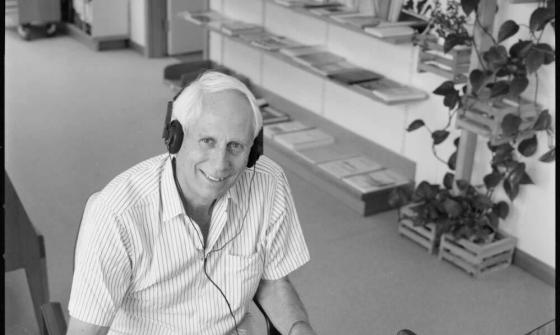
Loui Seselja, Portrait of Geoffrey Dutton seated in the Oral History collection at the National Library of Australia, 1992, nla.gov.au/nla.obj-151764316

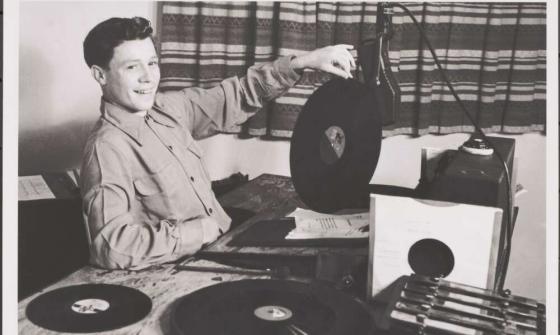
Douglas Thompson, Radio announcer Ted Reeves of 2CA radio station holding a record, Canberra, 1951, nla.gov.au/nla.obj-138073414