Digital Classroom | National Library of Australia (NLA)

Digital Classroom

Explore Australia's history at the National Library's Digital Classroom, aligned with the Australian Curriculum. With over 10 million items, we support diverse learning styles, fostering inquiry-based learning for students to analyse sources and draw conclusions about the Australian story.
Showing 13 - 24 of 27 results
Logo saying Dirk Hartog, 1616-2016, Marking our history, celebrating our future
Dirk Hartog 1616–2016: 400 years of Dutch-Australian connections

Module

This resource is aligned to the Australian Curriculum: History for Year 10 students.

Humanities
Year 10
Explorers
black and white photograph of japanese world war two plane

Mitsubishi A6M Zero-Sen, a Japanese single seat monoplane fighter, 1940, nla.gov.au/nla.obj-144931273
Dutch–Australian connections in World War II

Topic

As World War II broke out across Europe in 1939, the Dutch had initially remained neutral. When Germany occupied the Netherlands in 1940, the Dutch lost the ability to defend their colonies in the Netherlands East Indies.

Humanities
Year 10
Explorers
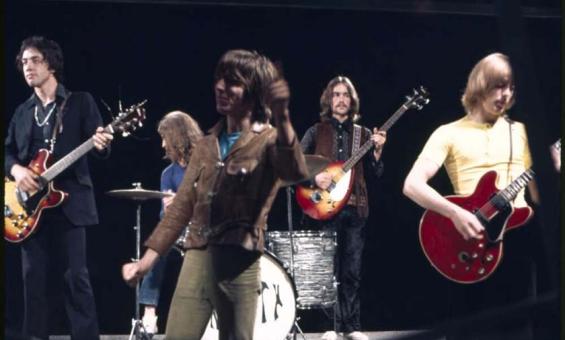
The world famous pop group the Easybeats visited the CBN 8 CWN Channel 6 studios in 1970 for a tape session to be included in a local programme

Stephen Fleay, The Easybeats rehearsing at the CBN 8 and CWN 6 television studios, Orange, New South Wales, 1970, nla.gov.au/nla.obj-151176759
Dutch experiences in Australia

Topic

After World War II, the people of the Netherlands found themselves with a long journey ahead of them, resurrecting a war-ravaged country that was struggling to overcome recent famine and mass casualties in the Holocaust.

Humanities
Year 10
Explorers
Logo saying Dirk Hartog, 1616-2016, Marking our history, celebrating our future
Dirk Hartog 1616–2016: 400 years of Dutch-Australian connections

Module

This resource is aligned to the Australian Curriculum: Humanities and Social Sciences for Year 4 students.

Humanities
Year 4
Explorers
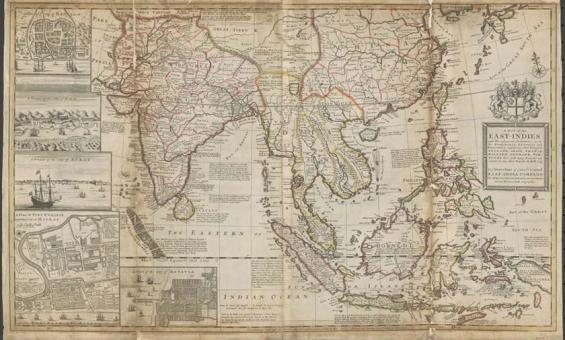
A map of southern Asia which details the early development of the English East India Company.

Herman Moll & William Dampier, Collection of voyages, A map of the East-Indies and adjacent countries [cartographic material] : with settlements, factories, and territories : explaining what belongs to England, Spain, France, Holland, Denmark, Portugal, etc. with many remarks not extant in any other map, 1729, nla.gov.au/nla.obj-231221936
The Vereenigde Oostindische Compagnie

Topic

The Vereenigde Oostindische Compagnie from the Netherlands (VOC or United East Indies Company) was established in 1602 with the purpose of buying spices from East Asia for trade on the European market.

Humanities
Year 4
Explorers
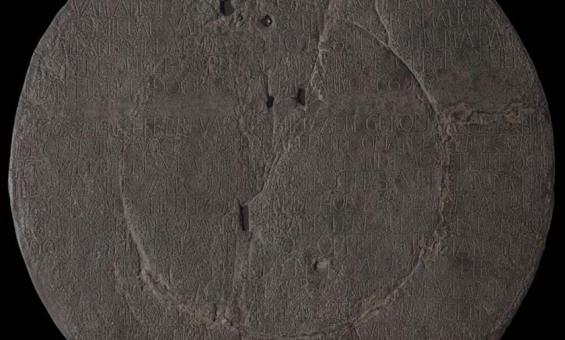
Image of a pock marked copper plate with writing inscribed across it from top to bottom.

Replica of the Vlamingh Plate [realia], 1950, nla.gov.au/nla.obj-135734827
Dirk Hartog and the Tale of Two Plates

Topic

As captain of the newly built Eendracht, Dirk Hartog was bound for the East Indies in 1616, along with other VOC ships.

Humanities
Year 4
Explorers
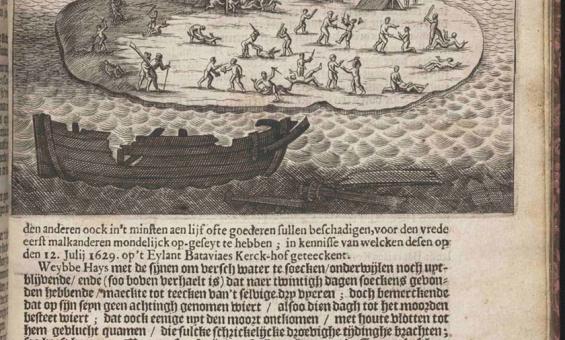
An image from an old Dutch book showing some text with a pen drawing above the text of several tents on an island and many people fighting with each other.

Francisco Pelsaert, Ongeluckige voyagie van't schip Batavia na Oost-Indien uyt-gevaren onder de E. Franç̧ois Pelsaert : gebleven op de Abriolhos van Frederick Houtman op de hooghte van 28 en een half graden by Zuyden de Linie Equinoctiael : vervattende 't verongelucken des schips, en de grouwelijcke moorderyen onder 't scheeps-volck, op't eylandt Bataviaes Kerck-hoff nevens de straffe der handtdadigers in de Jaren 1628 en 1629 ; hier achter is by- gevoeght eenige discourssen der Oost-Indische Zee-vaert als mede de gantsche gelegentheyt der Koopmanschappen diemen in Indien doet., 1649, nla.gov.au/nla.obj-39984464
Shipwrecked!

Topic

At least four VOC ships were shipwrecked on the Western Australian coast in the seventeenth and eighteenth centuries.

Humanities
Year 4
Explorers
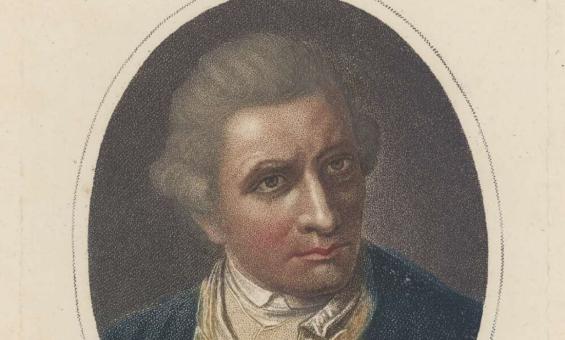
Engraved portrait of James Cook in an 18th-century naval uniform, featuring a high-collared coat with buttons and light-coloured waistcoat. The illustration includes a small scene below showing a group of people interacting near the shore.

J. Chapman sculpsit, Captain Cook [picture], nla.gov.au/nla.obj-240952710
The legend and legacy of James Cook

Module

Explore the historical impact and legacy of James Cook's voyages in this learning module.

Humanities
Senior Secondary
Australian history
Explorers
First Australians
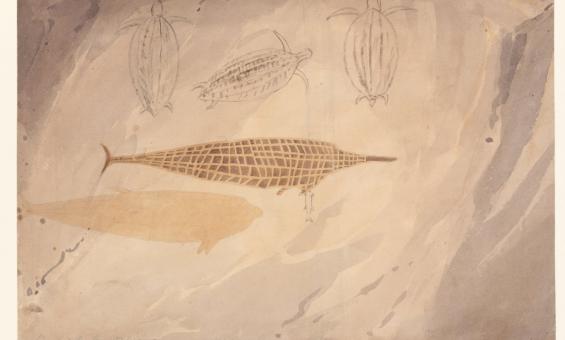
A watercolor painting showing a central elongated figure resembling a fish or marine mammal, with a grid-like pattern. Above the main figure, three smaller, simpler outlines of turtles are sketched. The background consists of soft, earthy tones and textured brushstrokes.

William Westall, Chasm Island, native cave painting, 1803, nla.gov.au/nla.obj-138890494
Connections to Country

Topic 

Explore early European encounters with Aboriginal and Torres Strait Islander art through the work of William Westall and engage students in considering the cultural significance of special places.

Humanities
Year 3
Australian history
Explorers
First Australians
An Aboriginal person dressed in a red coat with white breeches and black boots stands on a beach, just at the edge of the water. They wear a tricorn hat with a red naval officer jacket and holds a scroll. In the background, a large, multi-masted sailing ship with white sails is anchored on calm waters under an overcast sky.

Michael Cook, Undiscovered #4, 2010, nla.gov.au/nla.obj-708299938

Reshaping narratives of Australian history

Topic

Examine how increasing recognition of First Nations cultures and perspectives is reshaping the national conversation about Australia's post-European settlement history.

Humanities
Senior Secondary
Australian history
Explorers
First Australians
Digital Classroom: Teaching resources
First contacts

Module

Explore the themes of discovery, cultural encounters, and the European settlement of Australia. 

Humanities
Year 4
Australian history
Explorers
First Australians
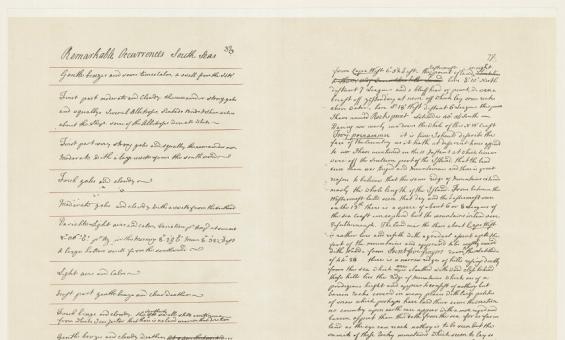
This image shows two handwritten journal pages: the left features structured, titled entries, while the right is filled with continuous cursive text, densely covering the page in a narrative style.

James Cook, Excerpt from Captain James Cook's Journal of the H.M.S. Endeavour, Friday, 23rd March, 1770, nla.gov.au/nla.obj-2354391495
Who writes history?

Topic

How did our national story take shape? In this lesson, students explore how and why Captain James Cook has been portrayed so prominently in Australian history.

Humanities
Senior Secondary
Australian history
Explorers
First Australians

Need help?

Our librarians are here to guide you.

Ask a librarian