Digital Classroom | National Library of Australia (NLA)

Digital Classroom

Explore Australia's history at the National Library's Digital Classroom, aligned with the Australian Curriculum. With over 10 million items, we support diverse learning styles, fostering inquiry-based learning for students to analyse sources and draw conclusions about the Australian story.
Showing 1 - 12 of 25 results
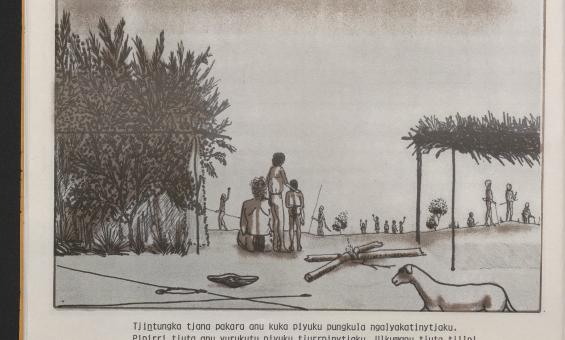
Page from 'maamangku mgurriningi palumpa yuntalpaku', line art depicting a group of three watching community

Sabrina Ferguson Nakamarra, Dennis Nelson and Papunya Literature Production Centre, Maamangku ngurriningi palumpa yuntalpaku, 1987, nla.gov.au/nla.obj-3285693260
Family, care, and responsibility

Family, kinship, care, responsibility

Arts
English
Humanities
Year 4
Year 5
Year 6
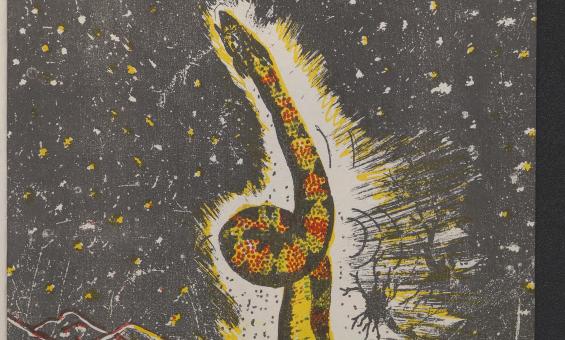
A black snake, with red and yellow snake emerging from the darkness a white and yellow glow surrounding it

Charlotte Phillipus Nupurrula, Thomas Stevens Tjapangati and Papunya Literature Production Centre, Yara waṉampitjarra, 1984, nla.gov.au/nla.obj-3286350047
Reading the Papunya Readers – themes and purposes

What stories do, and why they exist.

Arts
English
Humanities
Year 4
Year 5
Year 6
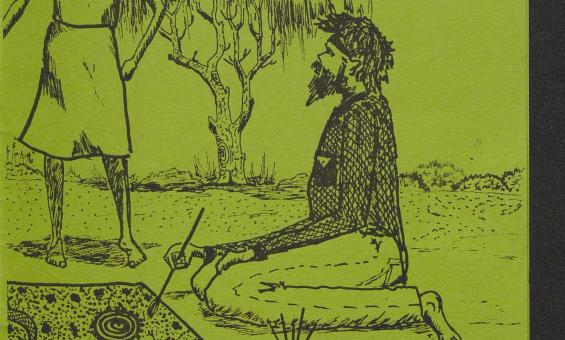
Green book cover, with a kneeling man painting, someone is talking to him, book is titled Palulanguru kungka ngalyankula wangkangu tjilpi palumpakutu

Kuḻaṯa Dennis Nelson and Papunya Literature Production Centre, Piḻkaṯi anta rikuta [The snake and the recorder], 1990, nla.gov.au/nla.obj-3286644847

Storytelling ways: oral, written, visual

How stories are shared and remembered.

Arts
English
Humanities
Year 4
Year 5
Year 6
Orange cover titled Rumiyakamu Lungkata

Charlotte Phillipus Nupurrula, Abraham Stockman Tjungarrayi and Papunya Literature Production Centre, Rumiyakamu lungkata, 1987, nla.gov.au/nla.obj-3285463123

Papunya, Country, and Community

Focus: place, people, languages, everyday life 

Arts
English
Humanities
Year 4
Year 5
Year 6
Red text reading 'Wangka Wakanutja' on a yellow background
Wangka Wakanutja – The Papunya Readers

This Digital Classroom module invites students and teachers to explore the Papunya readers. Aligned with the Australian Curriculum: HASS, English and The Arts and the Aboriginal and Torres Strait Islander Histories and Cultures cross-curriculum priority, this resource encourages students to learn about Country, language, storytelling and the purposes stories serve.

Arts
English
Humanities
Year 4
Year 5
Year 6
Black and yellow uniform made up of a long-sleeve button up jacket on a mannequin

Convict uniform and two caps [realia], 1830, nla.gov.au/nla.cat-vn2398685
Convicts, conflict and confrontation

Module

This resource is aligned to the Australian Curriculum: HASS for Year 5 students. It adopts an inquiry learning approach that develops students’ skills as historians.

Humanities
Year 5
Australian history
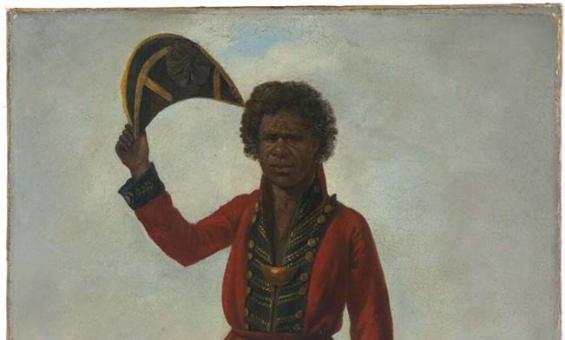
A portrait of a man. He has dark skin and hair. He is an Australian Indigenous man and is wearing a European style officers coat and trousers. His trousers are tattered at the cuffs. He is holding a tricorn hat in the air. In the background sailing ships can be see on the harbour. A large fort can be seen on a spit of land.

Augustus Earle, Portrait of Bungaree, a native of New South Wales, with Fort Macquarie, Sydney Harbour, in background [picture], 1826, nla.gov.au/nla.obj-134114940

Indigenous experiences

Topic

Augustus Earle (1793–1838) was an artist working in the colony of New South Wales around 1825. He painted several portraits of Bungaree, a notable Aboriginal leader.

Humanities
Year 5
Australian history
First Australians
convict assignment uniform

Convict uniform and two caps  between 1830 and 1849, nla.gov.au/nla.obj-139411772

A secondary punishment uniform from the transportation era, coloured to distinguish continuing offenders. Hand stitched. From Van Diemens Land.
Convict experiences

Topic

The convict uniform held at the National Library of Australia is the only complete, original convict uniform in Australia. It consists of a jacket, a pair of trousers marked with a broad arrow, a waistcoat, a leather cap and a woollen cap.

Humanities
Year 5
Australian history
First Australians
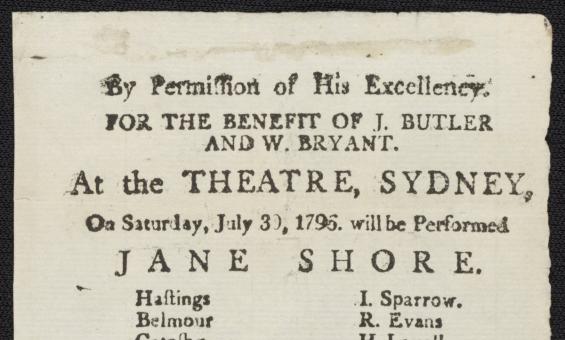
Copy of a printed playbill containing details for a performance of Jane Shore at the Sydney Theatre in 1796.

George Hughes (Government Printer), Playbill for a performance of Jane Shore, The Wapping Landlady and The Miraculous Cure at the Theatre, Sydney 30 July 1796, nla.gov.au/nla.obj-1419486
An early arts scene

Topic

This playbill, or poster, advertising a theatrical performance at the ‘Theatre, Sydney’ on 30 July 1796, is the oldest surviving printed document produced in Australia.

Humanities
Year 5
Australian history
First Australians
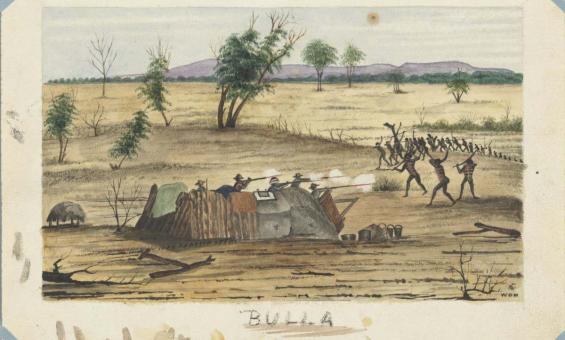
A water colour painting of men firing rifles from a tent at a tribe of First Australians on an outback plain.

William Oswald Hodgkinson, Bulla, Queensland, 1861, nla.gov.au/nla.obj-147606769
Frontier conflict

Topic

This image, depicting frontier conflict, is contained in an album compiled and originally owned by Miss Eliza Younghusband.

Humanities
Year 5
Australian history
First Australians
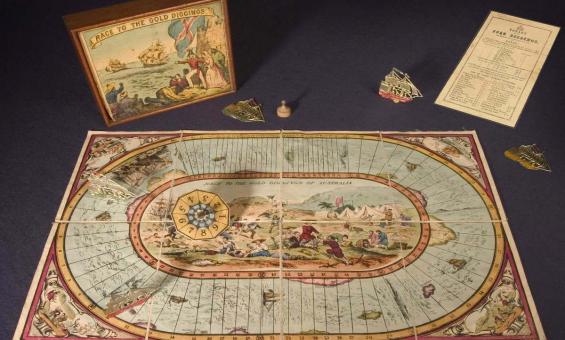
Gold Digging Boardgame

Board game titled: Race to the gold diggings of Australia] [realia], 1855, nla.gov.au/nla.obj-139615708
The promise of gold

Topic

Race to the Gold Diggings of Australia is a boxed, children’s board game produced in England around 1855. It is the earliest known board game that has Australia as its theme.

Humanities
Year 5
Australian history
First Australians
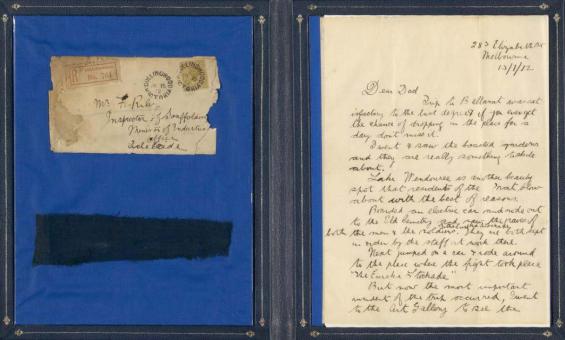
Display of an old stained, sepia coloured envelope, a sepia coloured letter and a portion of the Eureka stockade flag.

Portion of the flag flown by the miners at the Eureka Stockade, 1854, nla.gov.au/nla.obj-139600656

Flag of the Southern Cross

Topic

Housed in a blue-bound folder, in a collection at the National Library of Australia, is a fragment of blue fabric that represents the pursuit of Australian democracy. The folder contains a portion of the Eureka Flag flown at Ballarat, Victoria, during the 1854 Eureka Rebellion. The folder also houses an accompanying explanatory letter dated 13/1/1912 from Fred (F.J.) Riley to his father, Fred Riley.

Humanities
Year 5
Australian history
First Australians

Need help?

Our librarians are here to guide you.

Ask a librarian