Digital Classroom | National Library of Australia (NLA)

Digital Classroom

Explore Australia's history at the National Library's Digital Classroom, aligned with the Australian Curriculum. With over 10 million items, we support diverse learning styles, fostering inquiry-based learning for students to analyse sources and draw conclusions about the Australian story.
Showing 1 - 12 of 25 results
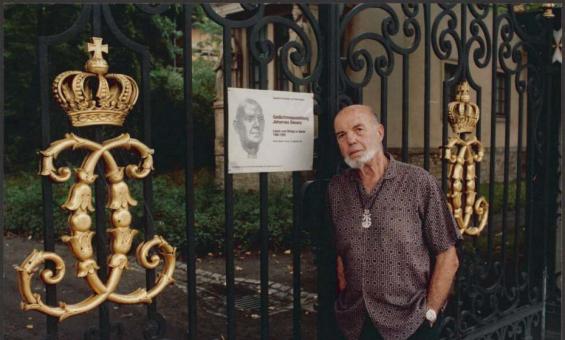
Man leaning against gate

Wolfgang Sievers, [Photograph of Wolfgang Sievers], Berlin, Germany, 1991, nla.gov.au/nla.obj-161009403
Wolfgang Sievers

Topic

Wolfgang Georg Sievers, AO (1913–2007) was a well-known modernist photographer who documented Australian architecture and industry over a career spanning almost 60 years.

Humanities
Technologies
Year 5
Year 6
Architecture and design
Photography
Science and technology
Red text reading 'Wangka Wakanutja' on a yellow background
Wangka Wakanutja – The Papunya Readers

Module
This Digital Classroom module invites students and teachers to explore the Papunya readers. Aligned with the Australian Curriculum: HASS, English and The Arts and the Aboriginal and Torres Strait Islander Histories and Cultures cross-curriculum priority, this resource encourages students to learn about Country, language, storytelling and the purposes stories serve.

Arts
English
Humanities
Year 4
Year 5
Year 6
Gold Digging Boardgame

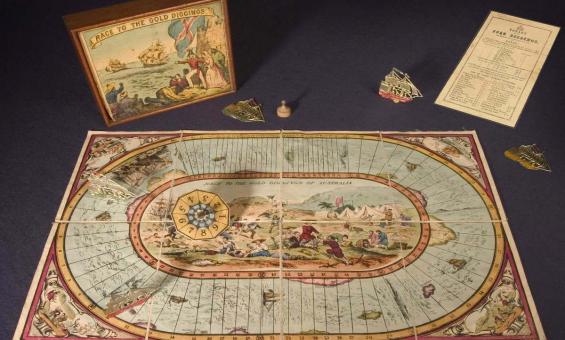
Board game titled: Race to the gold diggings of Australia] [realia], 1855, nla.gov.au/nla.obj-139615708
The promise of gold

Topic

Race to the Gold Diggings of Australia is a boxed, children’s board game produced in England around 1855. It is the earliest known board game that has Australia as its theme.

Humanities
Year 5
Australian history
First Australians
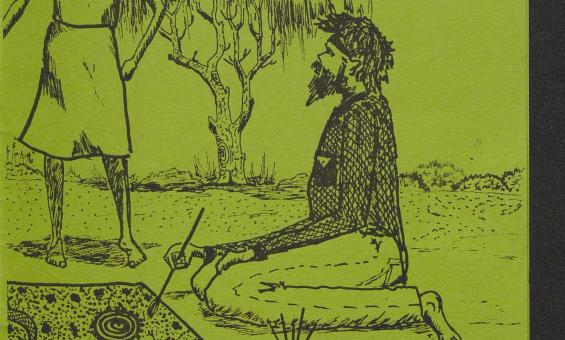
Green book cover, with a kneeling man painting, someone is talking to him, book is titled Palulanguru kungka ngalyankula wangkangu tjilpi palumpakutu

Kuḻaṯa Dennis Nelson and Papunya Literature Production Centre, Piḻkaṯi anta rikuta [The snake and the recorder], 1990, nla.gov.au/nla.obj-3286644847

Storytelling ways: oral, written, visual

Topic
How stories are shared and remembered.

Arts
English
Humanities
Year 4
Year 5
Year 6
A sepia image of a weather almanac for 1894.

New South Wales weather almanac for ... : a general handbook for the year, 1894, nla.gov.au/nla.obj-406743496
Recording weather

Topic

In colonial Australia, there was a useful household book called an almanac. It contained lots of information, including weather forecasts and pictures of the flags used to signify approaching storms.

Humanities
Science
Year 4
Year 5
Year 6
Environment and biodiversity
Geography
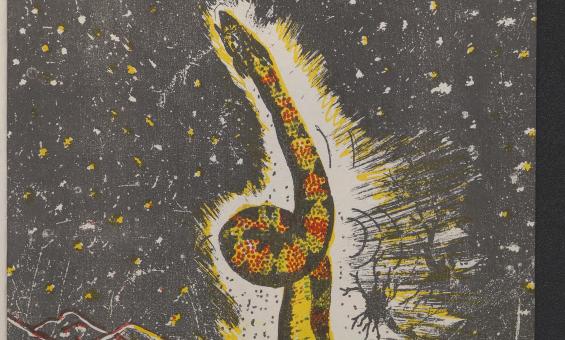
A black snake, with red and yellow snake emerging from the darkness a white and yellow glow surrounding it

Charlotte Phillipus Nupurrula, Thomas Stevens Tjapangati and Papunya Literature Production Centre, Yara waṉampitjarra, 1984, nla.gov.au/nla.obj-3286350047
Reading the Papunya Readers – themes and purposes

Topic
What stories do, and why they exist.

Arts
English
Humanities
Year 4
Year 5
Year 6
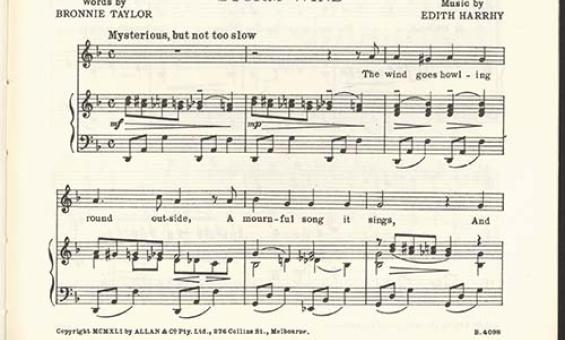
Sheet music featuring an illustration of a child looking out an open window

Edith Harrhy and Bronnie Taylor, Songs for young Australians [music] / words by Bronnie Taylor ; music by Edith Harrhy, 1941, nla.gov.au/nla.obj-175231656

Presenting weather

Topic

The weather is an important part of our lives, and this is reflected in the arts and other sources we consume.

Humanities
Science
Year 4
Year 5
Year 6
Environment and biodiversity
Geography
Orange cover titled Rumiyakamu Lungkata

Charlotte Phillipus Nupurrula, Abraham Stockman Tjungarrayi and Papunya Literature Production Centre, Rumiyakamu lungkata, 1987, nla.gov.au/nla.obj-3285463123

Papunya, Country, and Community

Topic
Focus: place, people, languages, everyday life 

Arts
English
Humanities
Year 4
Year 5
Year 6
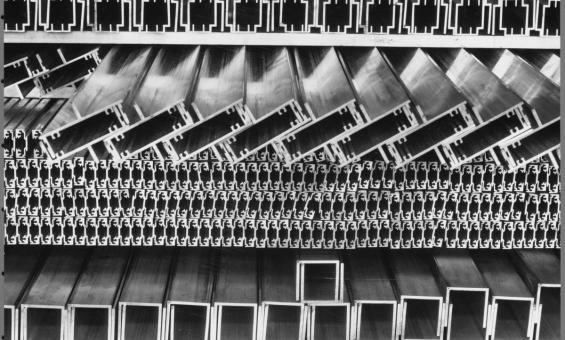
stacks of aluminium profiles

 Wolfgang Sievers, Aluminium profiles at Comalco's plant at Yennora, New South Wales, 1965, nla.gov.au/nla.obj-160295127
Modernism

Topic

Modernism was a cultural movement that influenced visual arts, architecture, music, literature and design in the first half of the twentieth century.

Humanities
Technologies
Year 5
Year 6
Architecture and design
Photography
Science and technology
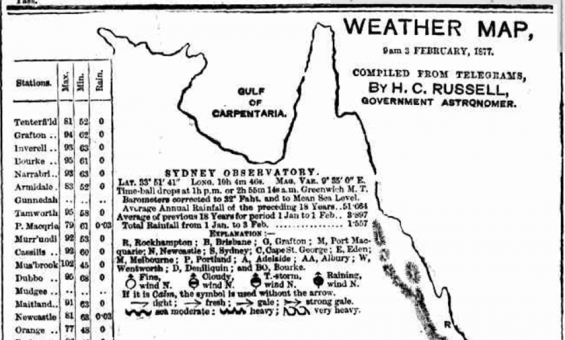
an image of a map showing an outline of the eastern half of Australia with about 30 towns down the side with their minimum and maximum temperatures.

WEATHER MAP, 9 am 3 FEBRUARY, 1877. (1877, February 5). The Sydney Morning Herald (NSW : 1842 - 1954), p. 6. nla.gov.au/nla.news-article13389140
Mapping weather

Topic

In 1877, meteorologist and astronomer Henry Russell produced the first published weather map for the colony of New South Wales.

Humanities
Science
Year 4
Year 5
Year 6
Environment and biodiversity
Geography
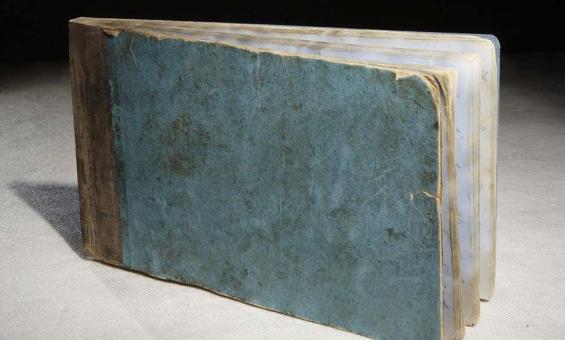
A photo of a tattered old blue book.

Burke and Wills Expedition (1860-1861), Robert O'Hara Burke (1821-1861), William John Wills (1834-1861), John King (1841-1872), FH Hawkins and DW Roberts (1860), Papers relating to the Burke and Wills Expedition, 1860-1861 [manuscript], nla.gov.au/nla.obj-229121922
Inland adventures

Topic

The Burke and Wills Expedition (also known as the Victorian or the Australian Exploring Expedition), was organised by the Royal Society of Victoria. It was the first expedition to cross the Australian continent from south to north.

Humanities
Year 5
Australian history
First Australians
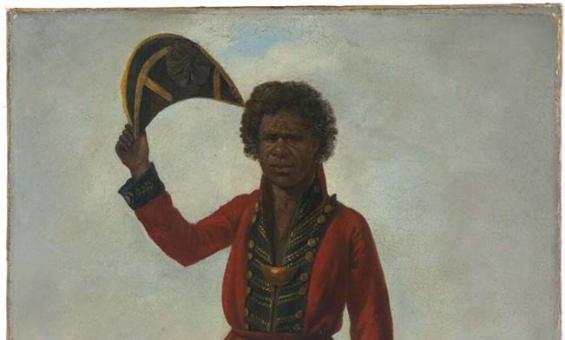
A portrait of a man. He has dark skin and hair. He is an Australian Indigenous man and is wearing a European style officers coat and trousers. His trousers are tattered at the cuffs. He is holding a tricorn hat in the air. In the background sailing ships can be see on the harbour. A large fort can be seen on a spit of land.

Augustus Earle, Portrait of Bungaree, a native of New South Wales, with Fort Macquarie, Sydney Harbour, in background [picture], 1826, nla.gov.au/nla.obj-134114940

Indigenous experiences

Topic

Augustus Earle (1793–1838) was an artist working in the colony of New South Wales around 1825. He painted several portraits of Bungaree, a notable Aboriginal leader.

Humanities
Year 5
Australian history
First Australians

Need help?

Our librarians are here to guide you.

Ask a librarian