Digital Classroom | National Library of Australia (NLA)

Digital Classroom

Explore Australia's history at the National Library's Digital Classroom, aligned with the Australian Curriculum. With over 10 million items, we support diverse learning styles, fostering inquiry-based learning for students to analyse sources and draw conclusions about the Australian story.
Showing 1 - 12 of 159 results
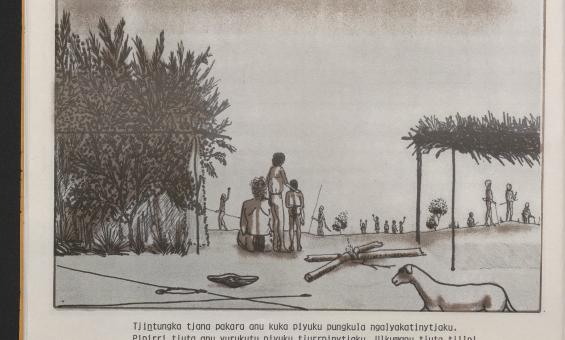
Page from 'maamangku mgurriningi palumpa yuntalpaku', line art depicting a group of three watching community

Sabrina Ferguson Nakamarra, Dennis Nelson and Papunya Literature Production Centre, Maamangku ngurriningi palumpa yuntalpaku, 1987, nla.gov.au/nla.obj-3285693260
Family, care, and responsibility

Topic
Family, kinship, care, responsibility

Arts
English
Humanities
Year 4
Year 5
Year 6
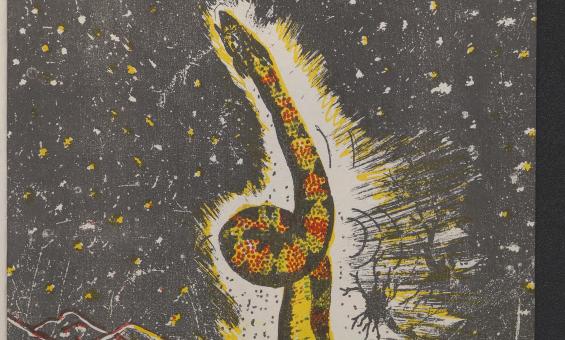
A black snake, with red and yellow snake emerging from the darkness a white and yellow glow surrounding it

Charlotte Phillipus Nupurrula, Thomas Stevens Tjapangati and Papunya Literature Production Centre, Yara waṉampitjarra, 1984, nla.gov.au/nla.obj-3286350047
Reading the Papunya Readers – themes and purposes

Topic
What stories do, and why they exist.

Arts
English
Humanities
Year 4
Year 5
Year 6
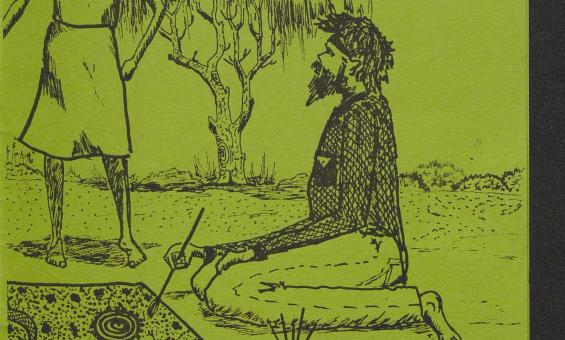
Green book cover, with a kneeling man painting, someone is talking to him, book is titled Palulanguru kungka ngalyankula wangkangu tjilpi palumpakutu

Kuḻaṯa Dennis Nelson and Papunya Literature Production Centre, Piḻkaṯi anta rikuta [The snake and the recorder], 1990, nla.gov.au/nla.obj-3286644847

Storytelling ways: oral, written, visual

Topic
How stories are shared and remembered.

Arts
English
Humanities
Year 4
Year 5
Year 6
Orange cover titled Rumiyakamu Lungkata

Charlotte Phillipus Nupurrula, Abraham Stockman Tjungarrayi and Papunya Literature Production Centre, Rumiyakamu lungkata, 1987, nla.gov.au/nla.obj-3285463123
Papunya, Country, and Community

Topic
Focus: place, people, languages, everyday life 

Arts
English
Humanities
Year 4
Year 5
Year 6
Red text reading 'Wangka Wakanutja' on a yellow background
Wangka Wakanutja – The Papunya Readers

Module
This Digital Classroom module invites students and teachers to explore the Papunya readers. Aligned with the Australian Curriculum: HASS, English and The Arts and the Aboriginal and Torres Strait Islander Histories and Cultures cross-curriculum priority, this resource encourages students to learn about Country, language, storytelling and the purposes stories serve.

Arts
English
Humanities
Year 4
Year 5
Year 6
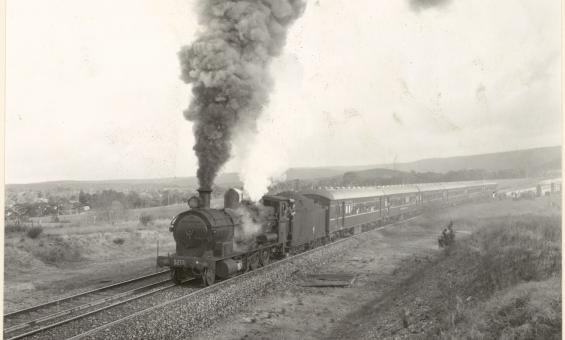
A black and white photograph showing a steam train on a track

Ian Mitchell & Australian News and Information Bureau, Steam locomotive hauling a passenger train on the Southern Highlands of New South Wales, 1970, nla.gov.au/nla.obj-137739465

Transport

Topic

In the 1970s, the ways people moved around the country and around the world was changing. 

Humanities
Year 3
Australian history
A publication showing a range of new colour televisions with the words Colour TV, what to look for when buying a set

Australian Consumers' Association, Colour TV: what to look for when buying a set, 1977, nla.gov.au/nla.cat-vn1285282

Communication

Topic

In the 1970s, technology started to change quickly, in a period known as a ‘tech boom’. 

Humanities
Year 3
Australian history
A colour photograph showing a teacher and children in a classroom in the 1970s

Wolfgang Sievers, Teacher and small children in a classroom at Tom Price, Western Australia, 1975, nla.gov.au/nla.obj-160837401

Daily life for kids in the 70s

Topic

Have you ever wondered what life was like for people in the past? 

Humanities
Year 3
Australian history
Photo of several young children in 1970s-era clothing playing on a swing set on a sunny cloudless day

Wolfgang Sievers, Children on a swing at Tom Price, Western Australia, 1975, nla.gov.au/nla.obj-160837526
1975: Then and now

Module

This resource is aligned with the Australian Curriculum: HASS for Year 1, 2, and 3 students

Humanities
Year 3
Australian history
An oval shaped bronze medal. The oval is made of a belt buckled at the bottom. At the top is a stylised royal crown. In the centre of the oval is a monogram made up of an intertwined "V.A." Behind the monogram is pattered red glass. Around the oval in raised letters are the words 'For gallantry in saving life on land'. The medal is held by a ribbon of red and white vertical stripes

Albert Medal presented to Aya-I-Ga, also known as Neighbour, for gallantry, 1911 [realia], 1912, nla.gov.au/nla.obj-139608611

Neighbour and his bravery

Topic

Aya-I-Ga, known as Neighbour, risked everything to save a life and became one of Australia’s bravest heroes. 

Humanities
Year 6
Australian history
A colour pencil hand drawing of Murray Island with hand written notes.

Bryan Keon-Cohen, Greg McIntyre,  Queensland Supreme Court and Australia High Court, Papers of Bryan Keon-Cohen [manuscript] : the Mabo case, 1981-2000, 1981, nla.gov.au/nla.obj-224077217

Edward Koiki Mabo

Topic

In 1992, a decade-long legal battle over Indigenous land rights came to an end.

Humanities
Year 6
Australian history
A gold medal standing upright on a white cotton surface. The medal shows a figure holding a trumped and a wine amphorae. Behind the figure is a bust on a stand. In raised lettering around the edge of the medal are the words 'Olympiska Spelen Stockholm' The year '1912' is also present.

Olympic gold medal won by Miss Fanny Durack at Stockholm, 1912, nla.gov.au/nla.obj-139311257

Fanny Durack

Topic

One of the most significant events at the 1912 Stockholm Olympics was the admission of women into the Olympic swimming competition.

Humanities
Year 6
Australian history
Sport and recreation

Need help?

Our librarians are here to guide you.

Ask a librarian