Digital Classroom | National Library of Australia (NLA)

Digital Classroom

Explore Australia's history at the National Library's Digital Classroom, aligned with the Australian Curriculum. With over 10 million items, we support diverse learning styles, fostering inquiry-based learning for students to analyse sources and draw conclusions about the Australian story.
Showing 97 - 108 of 215 results
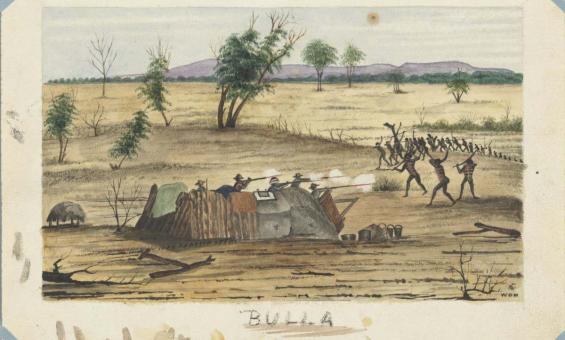
A water colour painting of men firing rifles from a tent at a tribe of First Australians on an outback plain.

William Oswald Hodgkinson, Bulla, Queensland, 1861, nla.gov.au/nla.obj-147606769
Frontier conflict

Topic

This image, depicting frontier conflict, is contained in an album compiled and originally owned by Miss Eliza Younghusband.

Humanities
Year 5
Australian history
First Australians
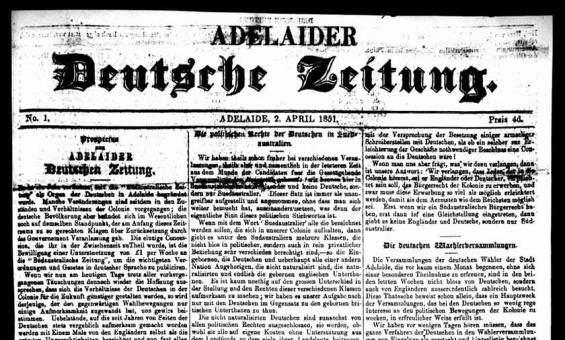
A page from the Adelaider Deutsche Zeitung, 1851.

(1851). Adelaider Deutsche Zeitung (SA: 1851–1862), nla.gov.au/nla.news-title277

German

Topic

German migrants came to Australia as founding pioneers following colonisation, with 10,000 migrating during the gold rushes of the 1850s.

Languages
Year 7
Year 8
Year 9
Year 10
Languages
Photo portrait of Gillian Triggs with a small smile

Gillian Triggs interviewed for oral history
Gillian Triggs - Human Rights Lawyer

Topic

Gillian Triggs is a lawyer and former President of the Australian Human Rights Commission. She has held the position of Professor of Law at the University of Melbourne Law School and published books about her work to advocate for human rights in Australia.

Humanities
Year 10
Australian women
Law and legislation
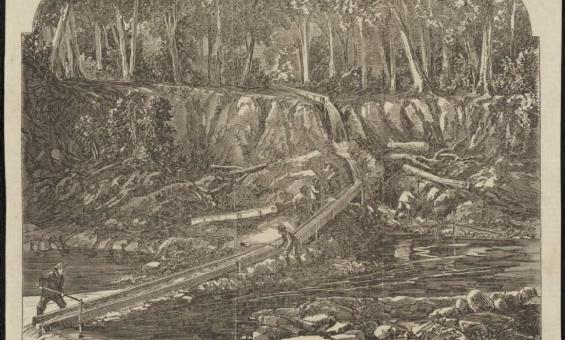
A detailed 1867 wood engraving illustrating Chinese miners engaged in ground-sluicing near Beechworth, Victoria. The scene captures a forested landscape with miners working along a wooden sluice system directing water through rocky terrain. The foreground features a still water pool, while the background shows cascading water and dense trees.

Nicholas Chevalier and Frederick Grosse, Chinese people ground-sluicing, near Beechworth, Victoria, 1867, nla.gov.au/nla.obj-135653408
Gold and exploration

Topic

Explore the impact of migration during the gold rush and how people from around the world shaped Australian cities and industries and transformed the nation with this teaching resource.

Humanities
Year 6
Migration and immigration
handwritten papers

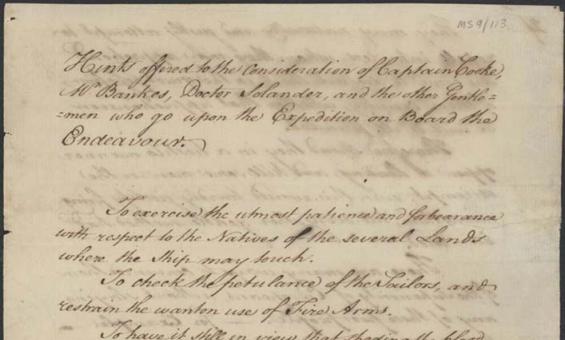
Joseph Banks, Papers of Sir Joseph Banks, 1745-1923 (bulk 1745-1820), nla.gov.au/nla.obj-223065342
Hints offered to the consideration of Captain Cook

Topic

Preserved in the National Library of Australia’s Manuscripts Collection, along with Cook’s handwritten journal, are another set of instructions.

Humanities
Senior Secondary
Explorers
World cultures and history
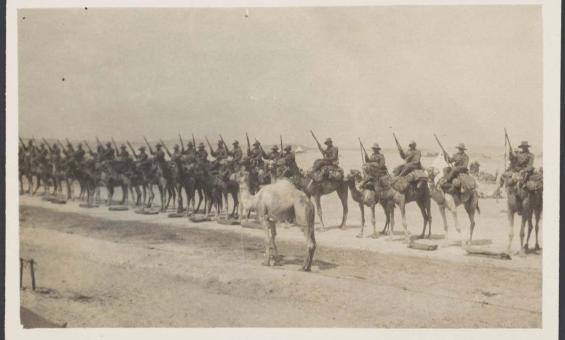
Sepia photograph of World War One soldiers mounted on camels lined up for inspection on the sand

Imperial Camel Corps in Palestine, 1917-1918. nla.gov.au/nla.obj-153422443
Historian interview: Australia's context in a global war

Topic

Military historian, Dr. Aaron Pegram, explores the experience of Australian men and women across the 4 year conflict.

Humanities
Year 9
Military history
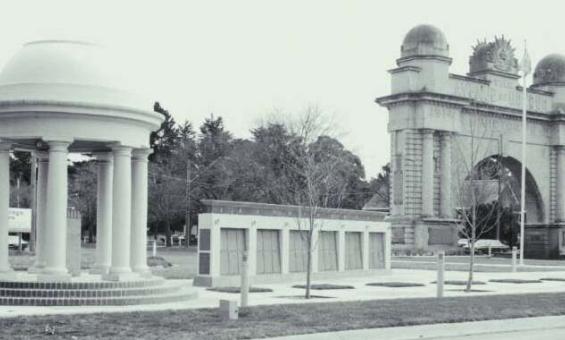
Black and white photo of war memorial and Arch of Victory in Ballarat

Grant Ellmers, War memorial and Arch of Victory, Ballarat, Victoria, 1994, nla.gov.au/nla.obj-141817558
Historian interview: Commemoration

Topic

Historian Dr. Jennifer Wellington explores the similarities and differences of commemorative ceremonies in Australia with the rest of the world and unpacks the question of whether what we are commemorating is based in truth or myth.

Humanities
Year 9
Military history
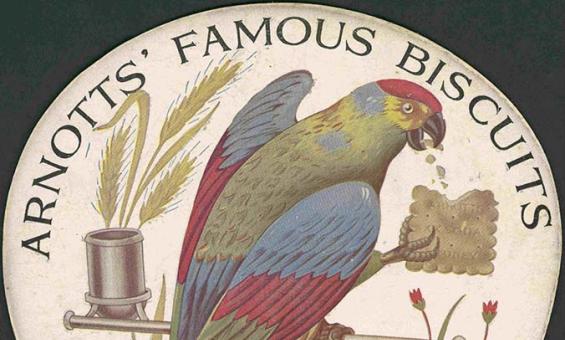
fan depicting king parrot eating an Arnott's cracker

[Food industry - biscuits and cakes : trade catalogues ephemera collected by the National Library of Australia], nla.gov.au/nla.obj-84640628
Iconic brands and early ads

Topic

Advertising campaigns for iconic Australian brands and early ads.

Arts
English
Humanities
Year 10
Art, drawing and illustration
Australian history
Literature and writing
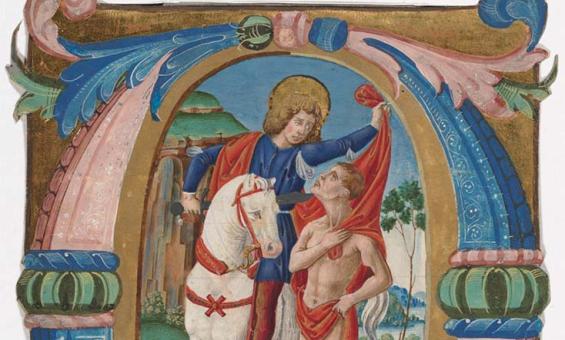
A large very ornate illuminated letter 'O'. The letter is drawn in gold (the original is guilded and shiny, the digital copy is matt). Surrounding the letter are columns of blue and pink. Leaves and fronds decorate the top and bottom. Within the middle of the "O" is a figure in a blue and red robe riding a white horse. He has a halo on his head. He is leaning off of his horse to drape his red cloak over a naked man walking alongside his horse. The men are looking at each other.

Early Flemish, German, Italian, Spanish, French woodcuts. /Item PIC/14340/41, ([14--?]), nla.gov.au/nla.obj-2902124787

Illuminating the dark

Topic

As time progressed, the number of people who could read did begin to increase, as some countries began to increase the emphasis on educating their people to basic levels.

Humanities
Year 8
World cultures and history
colour painting of man with pack and billy can

Mahony, Frank, 1862-1916. (1896). Henry Lawson in 1896 [picture] / F.P. Mahony. nla.gov.au/nla.obj-136254778

Illustration and black-and-white art

Topic

The publication of the Picturesque Atlas was situated within a ‘golden age’ of illustration: the great global explosion of mass-produced images that occurred between 1850 and 1900 with the rise of the illustrated press.

Arts
Year 9
Year 10
Art, drawing and illustration
Cover of book All Among the Fairies

Ethel Jackson Morris, All among the fairies, 1909, nla.gov.au/nla.obj-22387121

Imagination and fantasy

Topic

Authors and illustrators of children’s books bring imaginary and distorted worlds to life, creating works inhabited by curious creatures and magical beings. These works include fairy tales and fantasy books.

English
Year 4
Literature and writing
A colourful drawn map of the 'ancient world'. The territory of the Roman Empire is shaded in yellow. Inset around the map and border are depictions of people and cultures around the map.

Ellis Luciano Silas and Evans Brothers Ltd, A picture map of the ancient world / specially painted by Ellis Silas, 1939, nla.gov.au/nla.obj-2378561352

Imperium Romanum - The Roman Empire

Topic

Throughout human history, societies have grown, matured, and then collapsed, making way for new innovations, people and philosophies to begin the cycle again, building on what came before. The history of Medieval Europe is no different: it has its roots in the collapse of the western Roman Empire in 456 CE.

Humanities
Year 8
World cultures and history

Need help?

Our librarians are here to guide you.

Ask a librarian