
Digital Classroom | National Library of Australia (NLA)

Digital Classroom

Explore Australia's history at the National Library's Digital Classroom, aligned with the Australian Curriculum. With over 10 million items, we support diverse learning styles, fostering inquiry-based learning for students to analyse sources and draw conclusions about the Australian story.
Showing 13 - 24 of 25 results
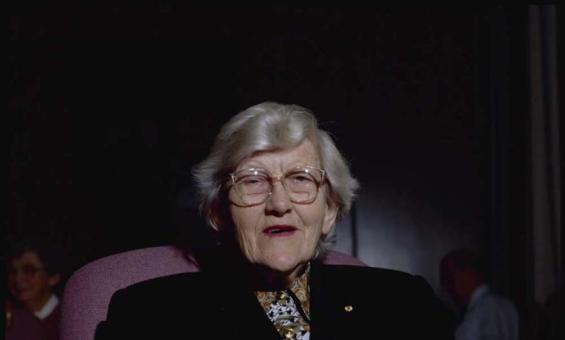
photograph of Nancy Millis

Damian McDonald, Portrait of Nancy Millis, 1999, nla.gov.au/nla.obj-144499251
Oral history: Emeritus Professor Nancy Millis

Topic

Professor Nancy Millis was an Australian microbiologist who worked and studied microbial growth and the fermentation process.

Science
Year 9
Science and technology
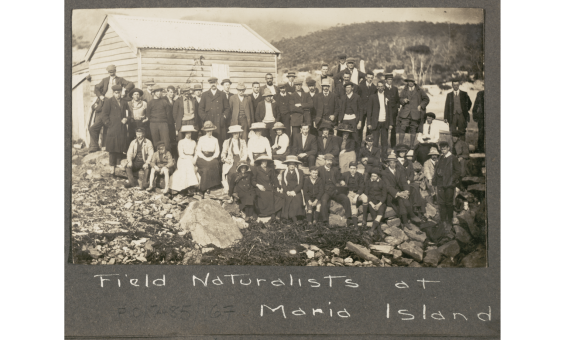
A black and white photo of a large group of men, women and children from a Tasmanian field expedition in 1912.

E.W Searle, Field naturalists at Maria Island, 1912 [Tasmania], 1912. http://nla.gov.au/nla.obj-142164875
Naturalist observations and citizen science

Topic
This topic explores the contribution of citizen science to scientific studies.

Science
Year 3
Year 4
Year 5
Year 6
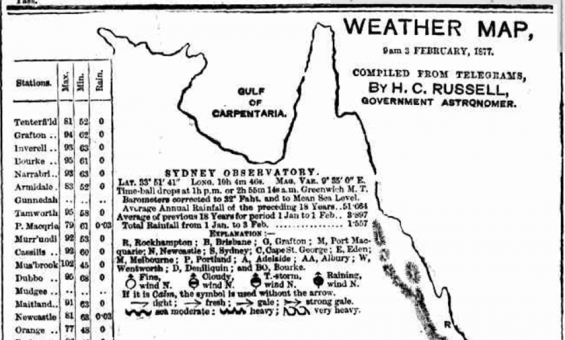
an image of a map showing an outline of the eastern half of Australia with about 30 towns down the side with their minimum and maximum temperatures.

WEATHER MAP, 9 am 3 FEBRUARY, 1877. (1877, February 5). The Sydney Morning Herald (NSW : 1842 - 1954), p. 6. nla.gov.au/nla.news-article13389140
Mapping weather

Topic

In 1877, meteorologist and astronomer Henry Russell produced the first published weather map for the colony of New South Wales.

Humanities
Science
Year 4
Year 5
Year 6
Environment and biodiversity
Geography
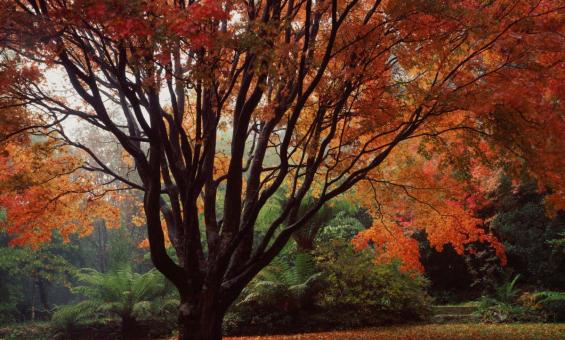
A large autumnal fern tree with a canopy that takes up most of the image. It's leaves a brilliant reds and oranges. Many leaves have fallen on the grass below. In the background many lush green ferns can be seen

Peter Dombrovskis, Acer in autumn, Dombrovskis' garden, Fern Tree, Tasmania, 1993, nla.gov.au/nla.obj-150387361
Intertwined

Topic

The Earth is inhabited by a vast number of living creatures. Some scientists believe there are around 8.7 million species of plants and animals that call our planet home. These living creatures exist in almost every corner of our world with only the most barren of deserts and deepest of oceans remaining unpopulated save for microscopic organisms.

Science
Year 4
Environment and biodiversity
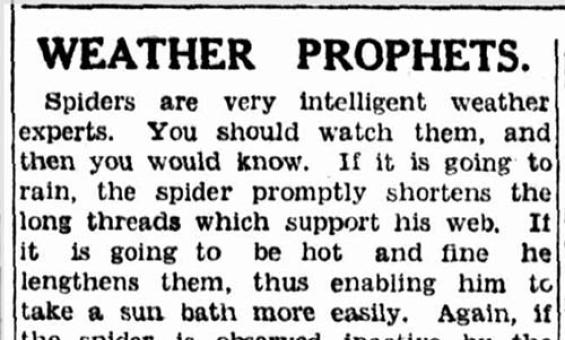
Clipping of a newspaper article titled 'Weather Prophets'.

WEATHER PROPHETS, The Age (Melbourne, Vic. : 1854 - 1954), p. 17, 4 November 1937 nla.gov.au/nla.news-article205560442
Forecasting weather

Topic

As cub reporter Betty Wilson (aged nine in 1937) tells us, forecasting the weather is not all about maps and laboratory science!

Humanities
Science
Year 4
Year 5
Year 6
Environment and biodiversity
Geography
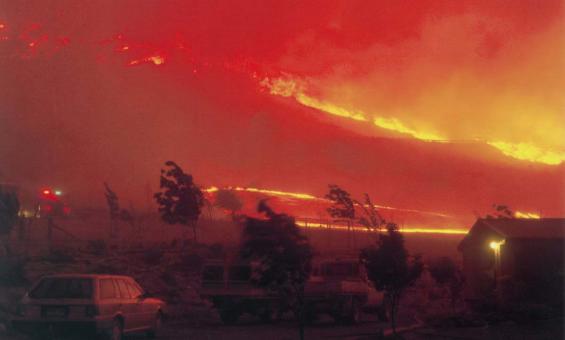
A scene of a hillside completely ablaze. A large fire front is moving up the hillside. The image is blanketed with smoke. The lights of a fire engine can be seen through the smoke. A station wagon is parked in the forground.

Cutting, Jeff, 1945-. (2003). Freshening north-westerly winds drove the Stockyard fire down Apollo Road onto Ballineen in the hour before midnight on 17th January 2003. [picture] / Jeff Cutting. nla.gov.au/nla.obj-149584789
Forces of nature

Topic

The Earth and its environments are constantly changing. For millions of years, the wind has shaped and eroded mountains and sand dunes; the constant crashing of waves has changed and sculpted the coastline; and drought and fire have charred and renewed bushland. This process is ongoing and is a natural part of life.

Science
Year 4
Environment and biodiversity
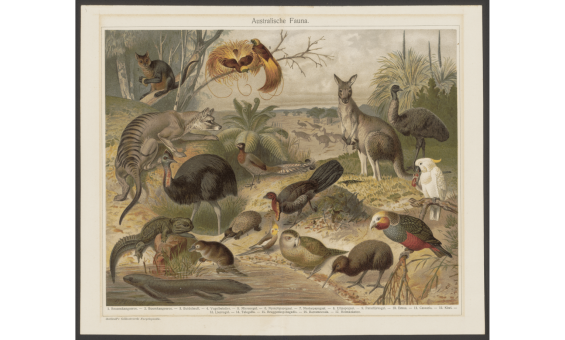
A hand drawn, colourised image of seventeen Australian animals including fish, lizards, birds and mammals from the early 1880s.

Gustav Mutzel, Australische fauna, c1880s. https://nla.gov.au/nla.obj-136360975
First Australians’ contributions to early Australian science

Topic
This topic encourages students to connect with local First Australians groups to explore traditional knowledge of flora and fauna.

Science
Year 3
Year 4
Year 5
Year 6
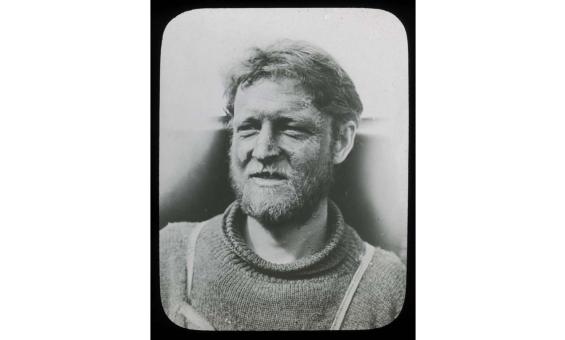
A black and white photo of a man with a frostbitten face.

Frank Hurley, Madigan's frostbitten face, Adelie Land [Australasian Antarctic Expedition, 1911-1914], nla.gov.au/nla.obj-145067660
Exploring weather

Topic

Antarctica has been explored by meteorologists since the early 1900s. Blizzards are common there.

Humanities
Science
Year 4
Year 5
Year 6
Environment and biodiversity
Geography
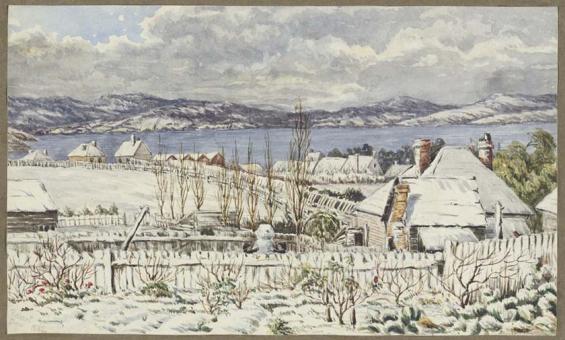
Image of a colour sketch of a heavily snow covered town of Hobart houses with water and mountains in the background in 1882

HJ Graham, Severe snow storm over Hobart, 1882, nla.gov.au/nla.obj-135529606
Experiencing weather

Topic

There are many stories of extreme weather and descriptions from those who survived the ordeals of droughts, bushfires, floods and cyclones in Australia.

Humanities
Science
Year 4
Year 5
Year 6
Environment and biodiversity
Geography
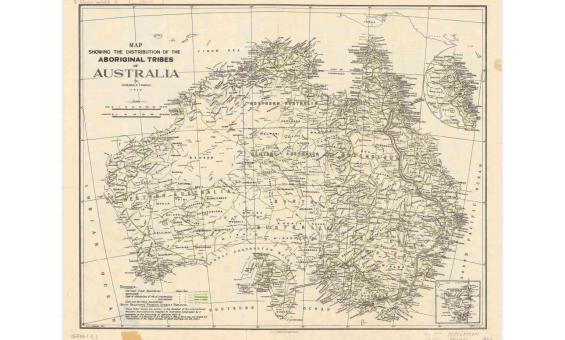
An old map of Australia showing the distribution of Aboriginal tribes across the country.

Norman B Tindale, Map showing the distribution of the Aboriginal tribes of Australia, 1940, nla.gov.au/nla.obj-230054338
Describing weather

Topic

Colonial settlers brought with them to Australia the concept of four distinct seasons. While this works for much of southern Australia, non-Indigenous people in the other parts of Australia identify seasonal change as wet and dry.

Humanities
Science
Year 4
Year 5
Year 6
Environment and biodiversity
Geography
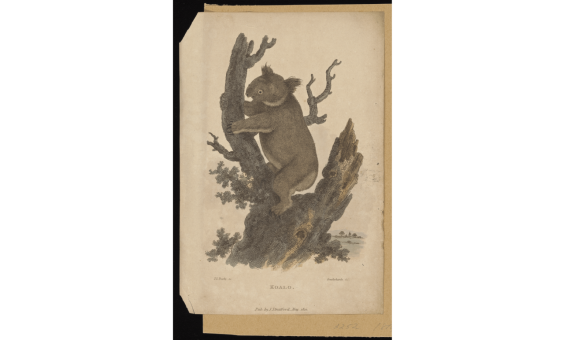
A hand drawn and colourised image of a koala hugging a tree branch from 1810.

Thomas Lord Busby and Isaac Cruikshank, Koalo [i.e. koala], 1810. nla.gov.au/nla.obj-133278770
Comparing early European illustrations of Australian fauna

Topic
This topic explores the early documentation of Australia’s unique flora and fauna.

Science
Year 3
Year 4
Year 5
Year 6
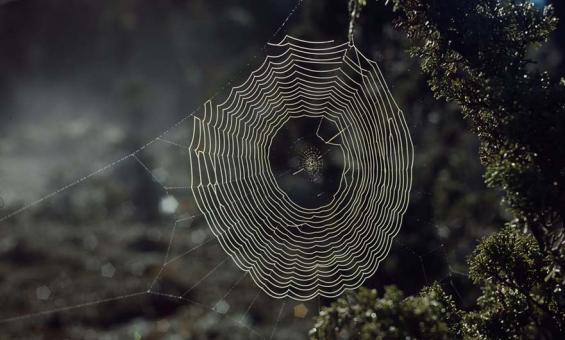
A spiderweb illuminated by the sun. The web is strung between the branches of a green leafy tree.

Peter Dombrovskis, Spiderweb detail, Cradle Mountain, Cradle Mountain-Lake St Clair National Park, Tasmania, 1986, nla.gov.au/nla.obj-151194004

Circle of life

Topic

Every living thing is part of a cycle. Plants and animals are born, they grow, they consume or produce, and they eventually die, making way for new life in their place. Without this cycle of life, ecosystems and the biosphere would not be able to survive.

Science
Year 4
Environment and biodiversity

Need help?

Our librarians are here to guide you.

Ask a librarian