

National Library of Australia Fellowships
Applications for 2027 National Library of Australia Fellowships opened on 23 February and closed on 7 April 2026.
About National Library of Australia Fellowships
Our Fellowships offer experienced researchers an opportunity to undertake deep and sustained research at the Library using our collections. Fellowships are available to researchers who require onsite access to our uniquely held or extensive collections to advance their research towards publication or other public outcomes.
Applicants may work in any field or discipline where the our collections have appropriate depth and breadth to support the desired outcomes.
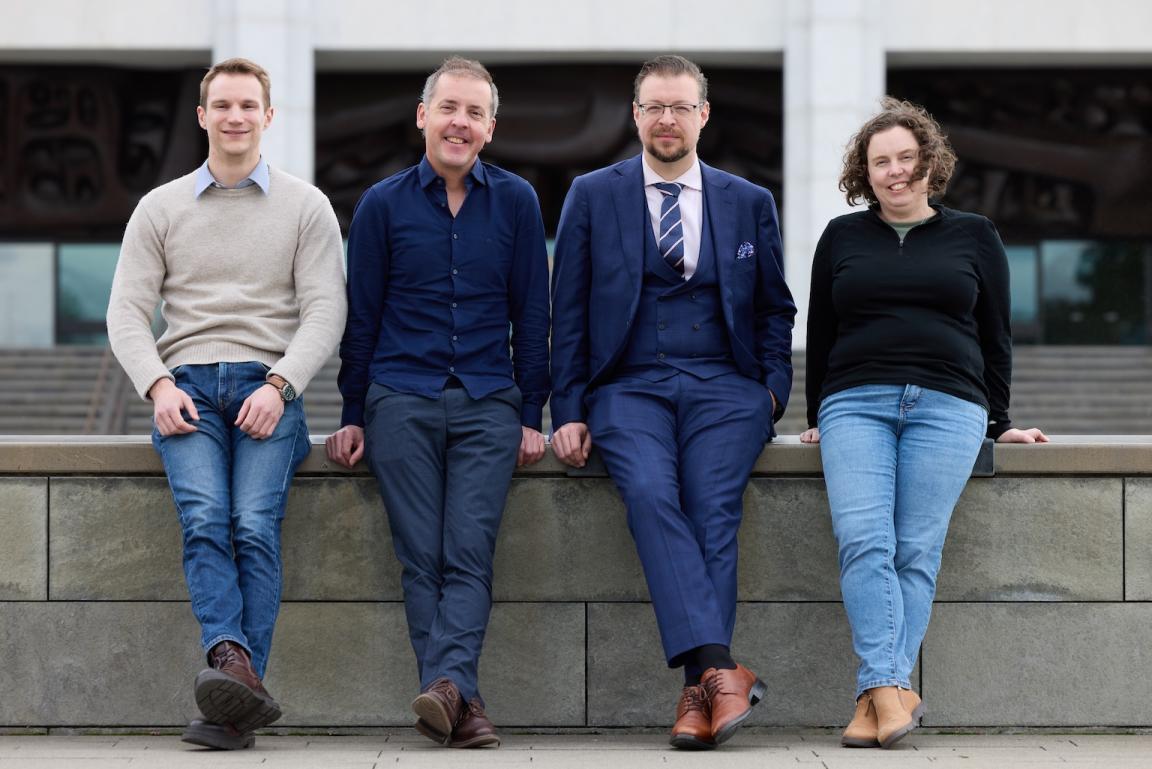
2025 National Library of Australia Fellows and Scholars Mr Jesse Seeberg-Gordon, Prof John Morrissey, Dr Andrew Carr and Dr Anna Kent
2025 National Library of Australia Fellows and Scholars Mr Jesse Seeberg-Gordon, Prof John Morrissey, Dr Andrew Carr and Dr Anna Kent
Types of National Library Fellowships
Up to 7 funded National Library Fellowships are available for 2027. Of these, 4 are for research on any subject, and 3 are for identified fields of research.
- Any subject: 3 Fellowships supported by the Stokes Family; one supported by the Alan Ives Bequest
- Asian studies: one Fellowship in memory of Cheng King Law; one supported by the Harold S. Williams Trust
- Australian literature: one Fellowship supported by the Ray Mathew and Eva Kollsman Trust
What Fellows receive
- $35,000 to support sustained research at the Library
- Funding is based on 12 weeks onsite at the Library but Fellows are welcome to extend their research period as required without additional funding. Fellows have 24 months to complete their research.
- Supported access to our collections
- Use of the Petherick Reading Room
- Increased borrowing privileges to maximise access to the collection
- A Copies Direct allowance of $1,500 for high resolution digital copies of collection materials for publication or other public uses (subject to copyright, licensing and access conditions)
Who can apply
National Library of Australia Fellowships are open to experienced researchers for projects at any stage of development, as well as those undertaking research which forms part of a larger project.
National Library of Australia Fellowships are open to:
- Australian residents, and international residents eligible to apply for a visa to Australia.
- International residents will be responsible for securing their own visas
- individuals only.
- If your research is contributing to a collaborative project, you must demonstrate your own research component
- researchers who are able to demonstrate their experience and ability to undertake advanced research with clear, planned public outcomes.
You must be able to undertake your residency in Canberra between 18 January 2027 and 8 December 2028.
You cannot apply if:
- you are currently undertaking PhD studies.
- Your PhD must be conferred before 7th April 2026 to be eligible to apply. Proof of completion may be requested.
- you have received a research Fellowship or Scholarship from the Library within the last 5 years, i.e. funding was received in one of the Library’s 2022-2026 program rounds
- your research supports writing a literary work or creating an artistic work.
- These projects are supported through the National Library of Australia Creative Arts Fellowships.
If your research falls within one of the subject-specific Fellowship categories, please indicate this on the application form by selecting the relevant research field (ie Asian Studies, Australian Literature, or Australian rural, regional or environmental history). You may nominate for more than one category should your project fit the criteria.
National Library Fellowships are open to researchers, working within or outside academic institutions, who are able to demonstrate their experience and ability to undertake advanced research with clear, planned public outcomes. Researchers may hold a PhD, equivalent work experience and/or demonstrate a strong publications or public outcomes record relative to opportunity.
As a guide, we use the following career stage definitions, based broadly on those used by the Australian Research Council.
- Early career researcher: A researcher working for a period of less than or equal to 5 years at the time of their application, excluding any breaks in their career
- Mid-career researcher: A researcher with between 5 and 15 years of advanced research experience at the time of their application
- Experienced researcher: A researcher with over 15 years of advanced research experience
Selection criteria
Your application should demonstrate the following.
- An excellent research concept and an innovative approach, including the application of the our Indigenous Cultural and Intellectual Property (ICIP) protocols and ethical research principles where appropriate.
- A clear explanation of research goals and expected progress during the Fellowship, including a timeline of when you plan to be working onsite at the Library.
- The relevance and value of our unique, rare or comprehensive collections to support the research outcomes, along with an awareness of any access permissions that may be required for collection material.
- A demonstrated record of high-quality research or scholarship, relative to opportunity, including a relevant record of publication or other professional outcomes.
- The project’s potential benefit to wider scholarship and/or professional practice, as well as the potential for increasing public knowledge of our collections.
More information
Ensure you read our FAQ page before applying.
How to apply
Before you start your application, make sure you read our FAQ page to understand the full requirements and what your application needs to include.
You must apply through SmartyGrants online platform, via the ‘Apply now’ button on this page. We don’t accept hardcopy or offline applications.
Meet our Fellows
We awarded 8 National Library of Australia Fellowships for 2026.
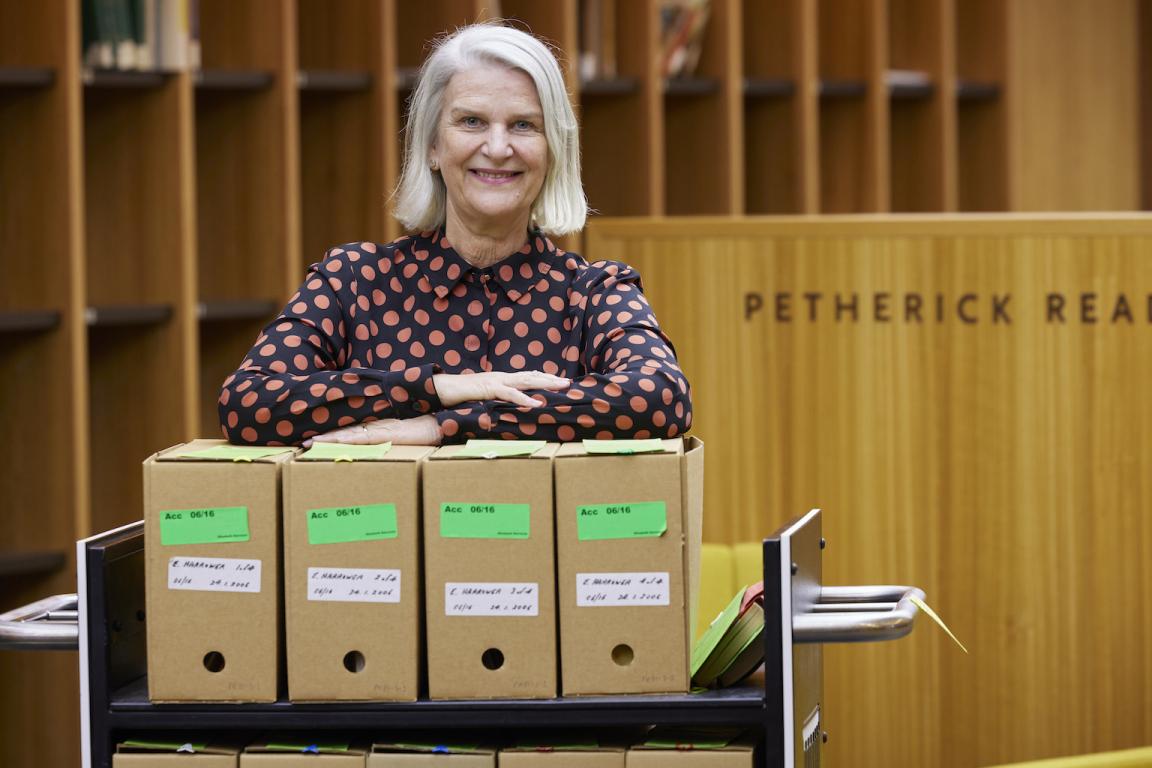
2024 National Library of Australia Fellow, Ms Susan Wyndham
2024 National Library of Australia Fellow, Ms Susan Wyndham
More to explore
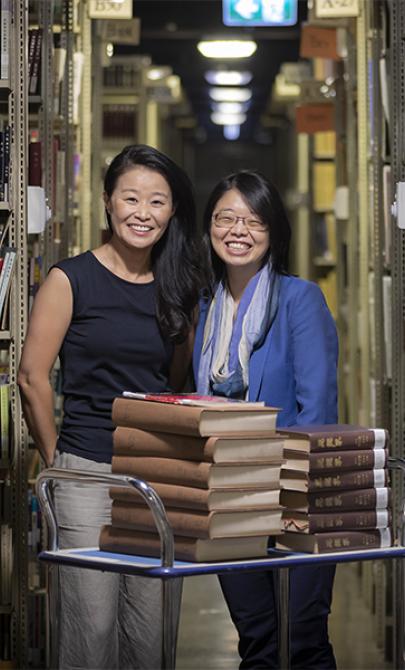
2022 Asia Study Grants recipients Ms Younghye Whitney and Dr Mei-Fen Kuo.

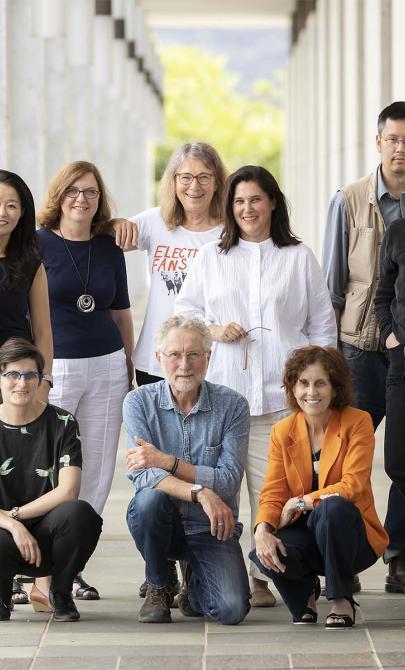
Summer Scholars, NLA Fellows and Asia Study Grant recipients in residence at the National Library in February 2022.

Matthew Sleeth, Australian singer Kylie Minogue performs at the Tour of Duty concert at Dili Stadium, East Timor, 21 December 1999, nla.gov.au/nla.obj-147368307
Be inspired by our Fellows work
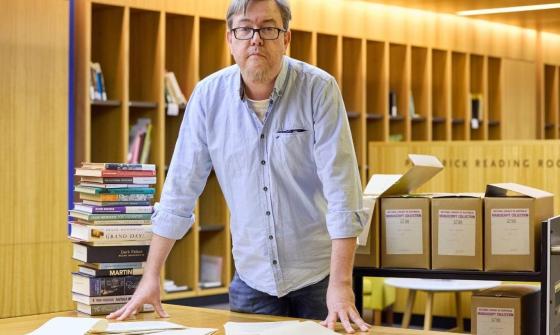
Dr Matthew Lamb, 2026 National Library of Australia Fellow
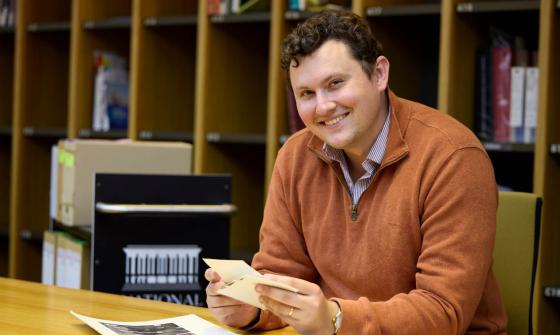
Dr Samuel White, 2025 National Library of Australia Fellow
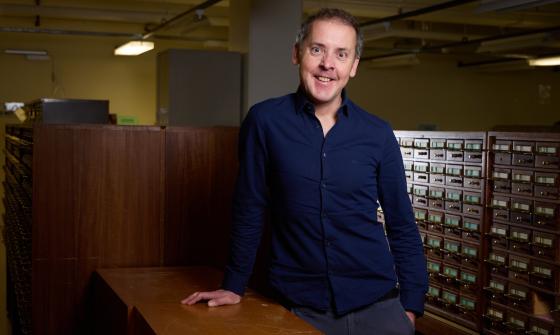
Prof. John Morrissey, 2025 National Library of Australia Stokes Fellow